
Sievietes Portrets Ovālā Formāta Zelta Rāmī— Demailly, Francija, 1923 (6325)
Sievietes Portrets Ovālā Formāta Zelta Rāmī— Demailly, Francija, 1923 (6325)
€480.00
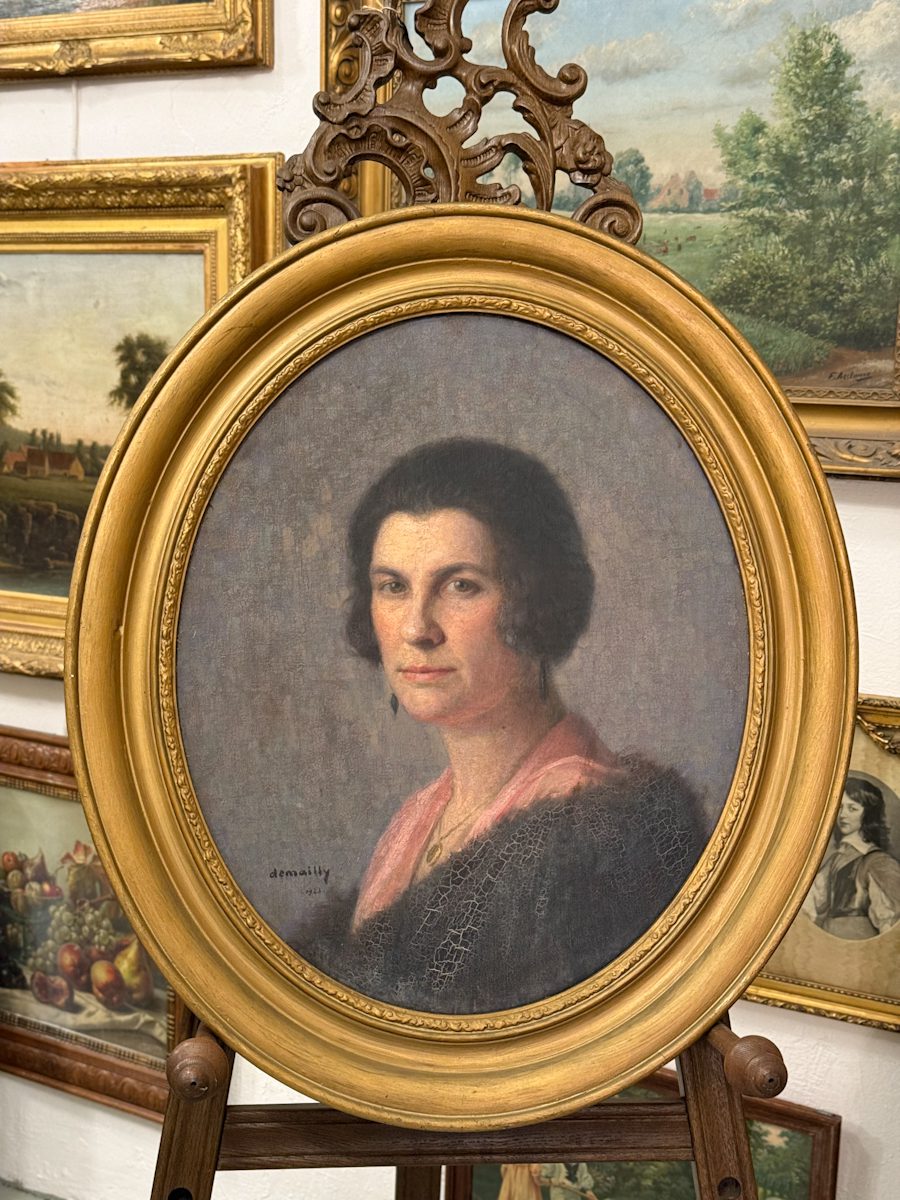
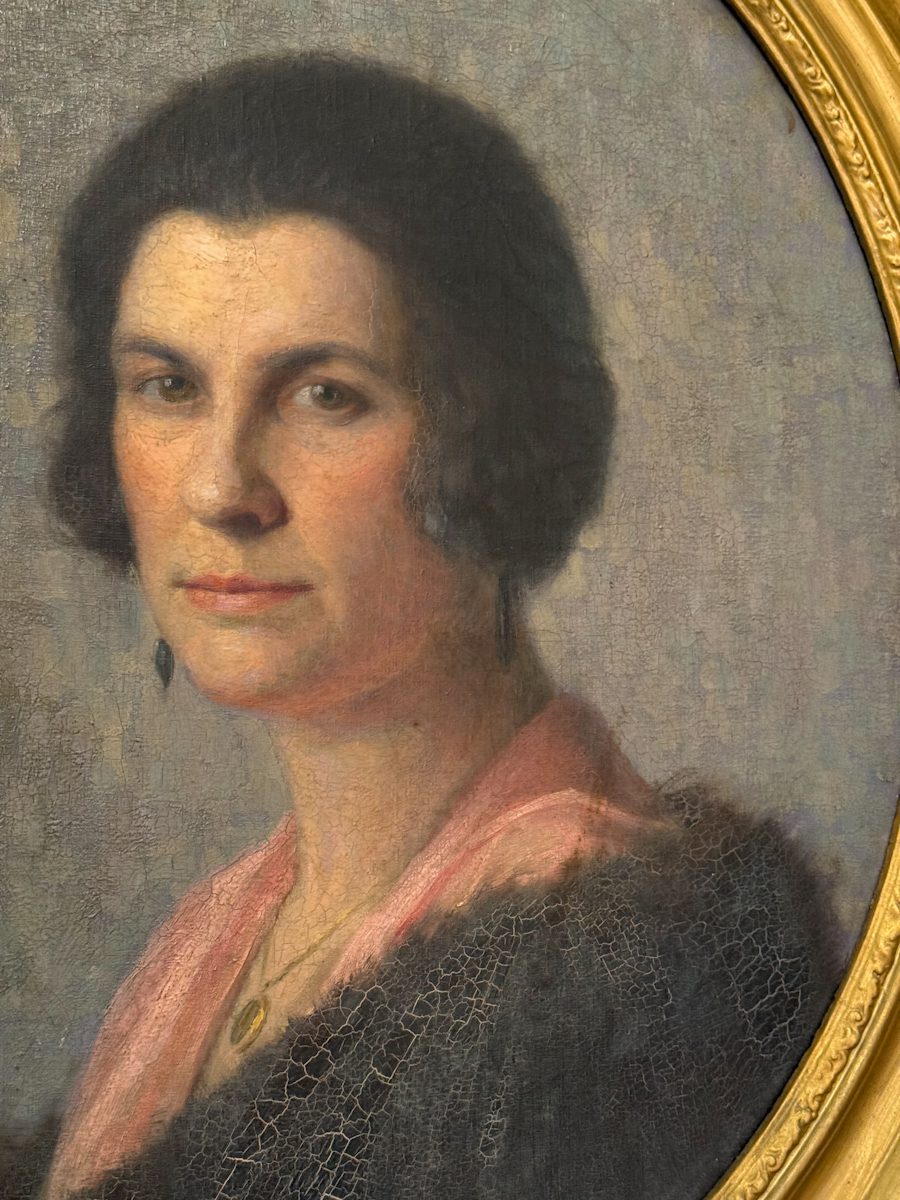
Eļļas glezna uz audekla ovālā formātā zeltītā rāmī. Parakstīts: Demailly, 1923. Akadēmiskais reālisms, Francija. Augstums 70,5 cm × platums 60,1 cm. Dabiska craquelure, oriģināls rāmis.
📐 IZMĒRI Augstums 70,5 cm × platums 60,1 cm (kopā ar rāmi). Vidēji viegla.
―――――――――――――――――――――
Sievietes Portrets Ovālā Formātā — Demailly, Francija, 1923.
―――――――――――――――――――――
🏛️ IZGATAVOŠANAS PERIODS, MĀKSLAS STILS, LAIKMETS
Šis portrets gleznots 1923. gadā — starpkaru perioda sākumā, kad Francijas mākslas dzīve piedzīvoja intensīvu radošu aktivitāti. Laikmets stāvēja uz divām estētikām: akadēmiskais reālisms ar tradicionālo belle peinture meistarību vēl turēja savu spēku, taču avant-garde viļņi — postimpresionisms, kubisms, École de Paris — jau mainīja Parīzes galeriju pasauli. Demailly šajā darbā izvēlas klasisko ceļu — precīzs portrets ar maigu sfumato tehnikas ietekmētu gaismēnu risinājumu sejā, kolorīta atturīgumu un cienīgu psiholoģisko vērojumu, kas raksturo labākos salon portraitistes — salonu portretistu — darbus.
Portreta formāts — ovāls uz audekla zeltītā aplī — ir tipisks augstākās buržuāzijas un aristokrātijas pasūtījumu tradīcijai, kas saglabājās no 18. gadsimta cauri visam 19. gadsimtam un vēl turpinājās 20. gadsimta sākumā. Šis priekšmets pieder tam nobeiguma brīdim, kad akadēmiskais reālisms vēl baudīja pilnīgu cieņu pasūtītāju aprindās, bet modernisma uzplūdi jau mainīja jaunās paaudzes gaumi — abas pasaules šeit sadzīvo: tradicionālā forma un 1920. gadu sievietes tēls.
―――――――――――――――――――――
⚜️ RAŽOTĀJS UN MĀKSLINIEKA PARAKSTS
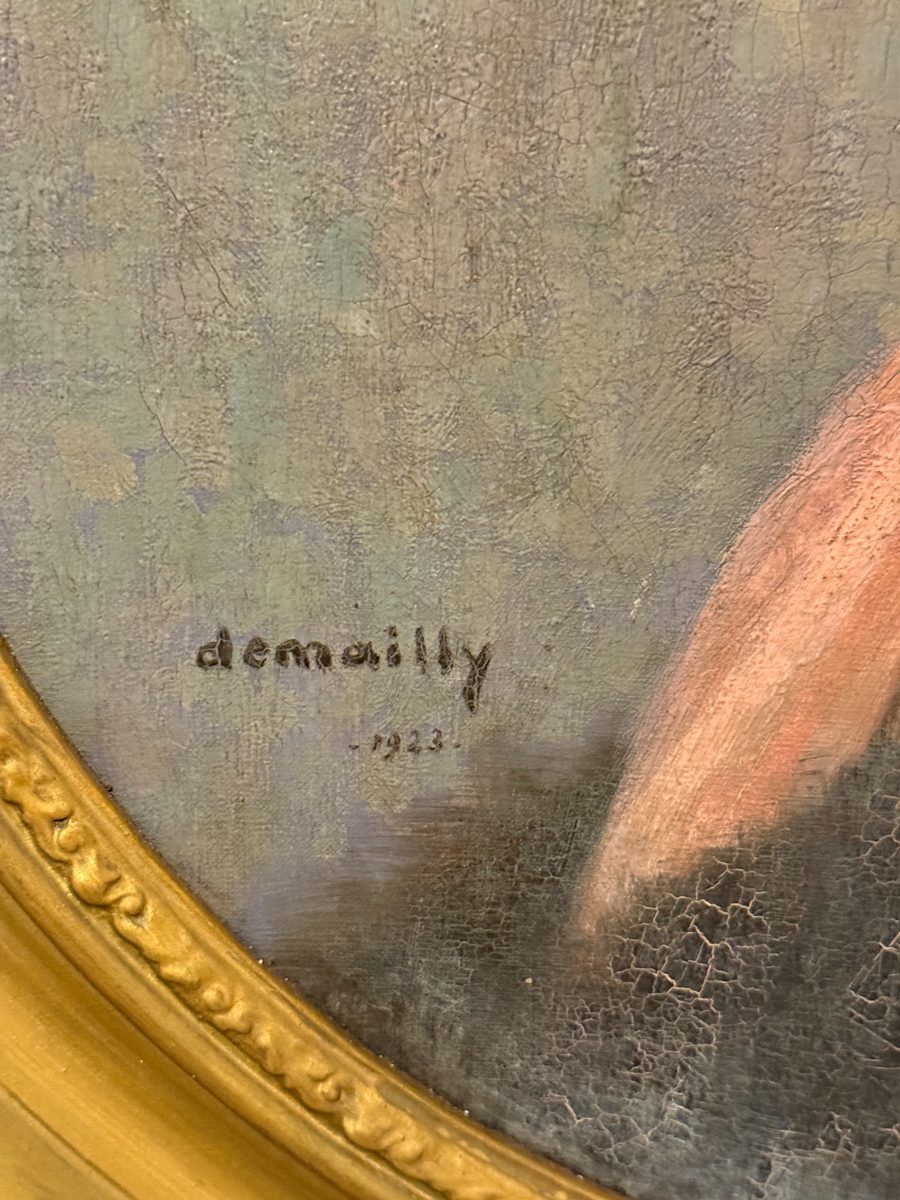
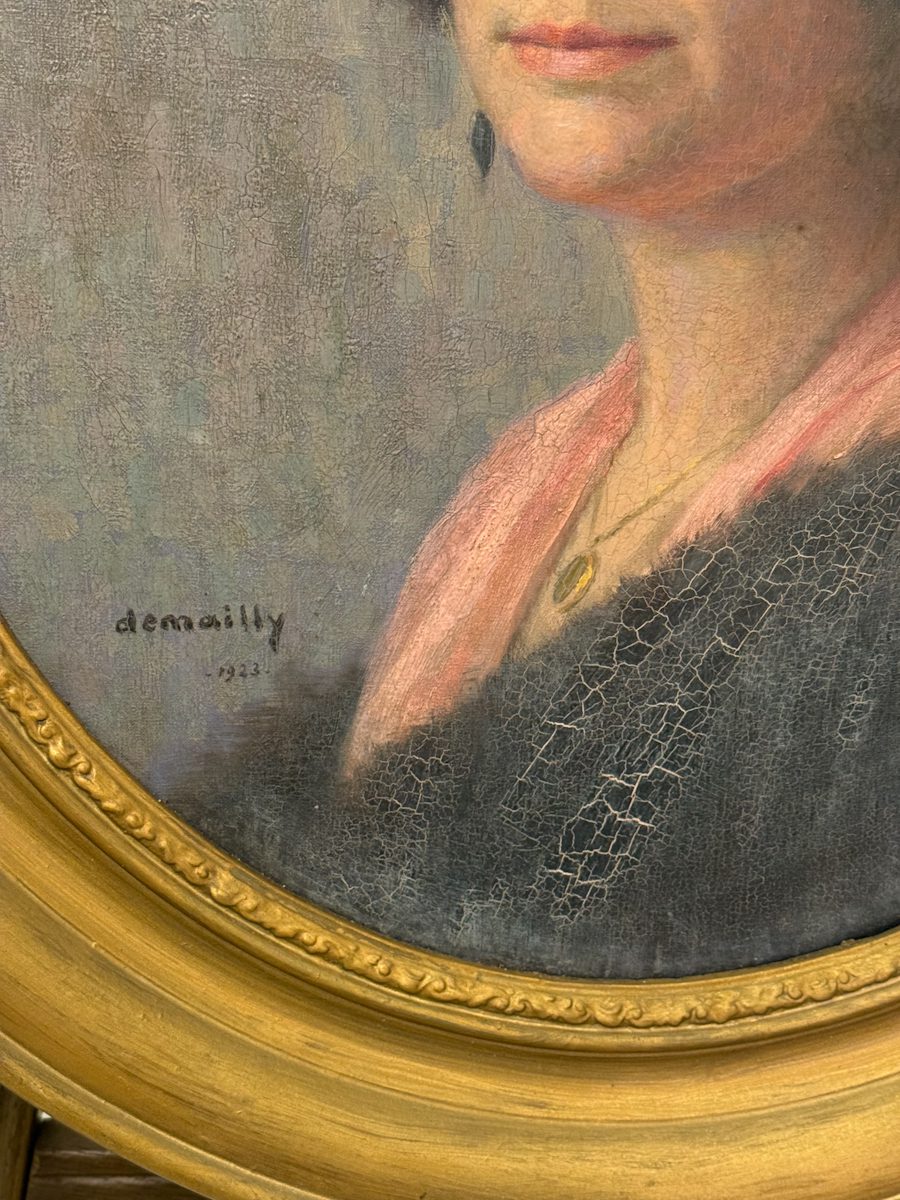
Glezna skaidri parakstīta kreisajā pusē ar autora uzvārdu un gadu: demailly — 1923. Paraksts redzams divās fotogrāfijās un ir salasāms bez šaubām.
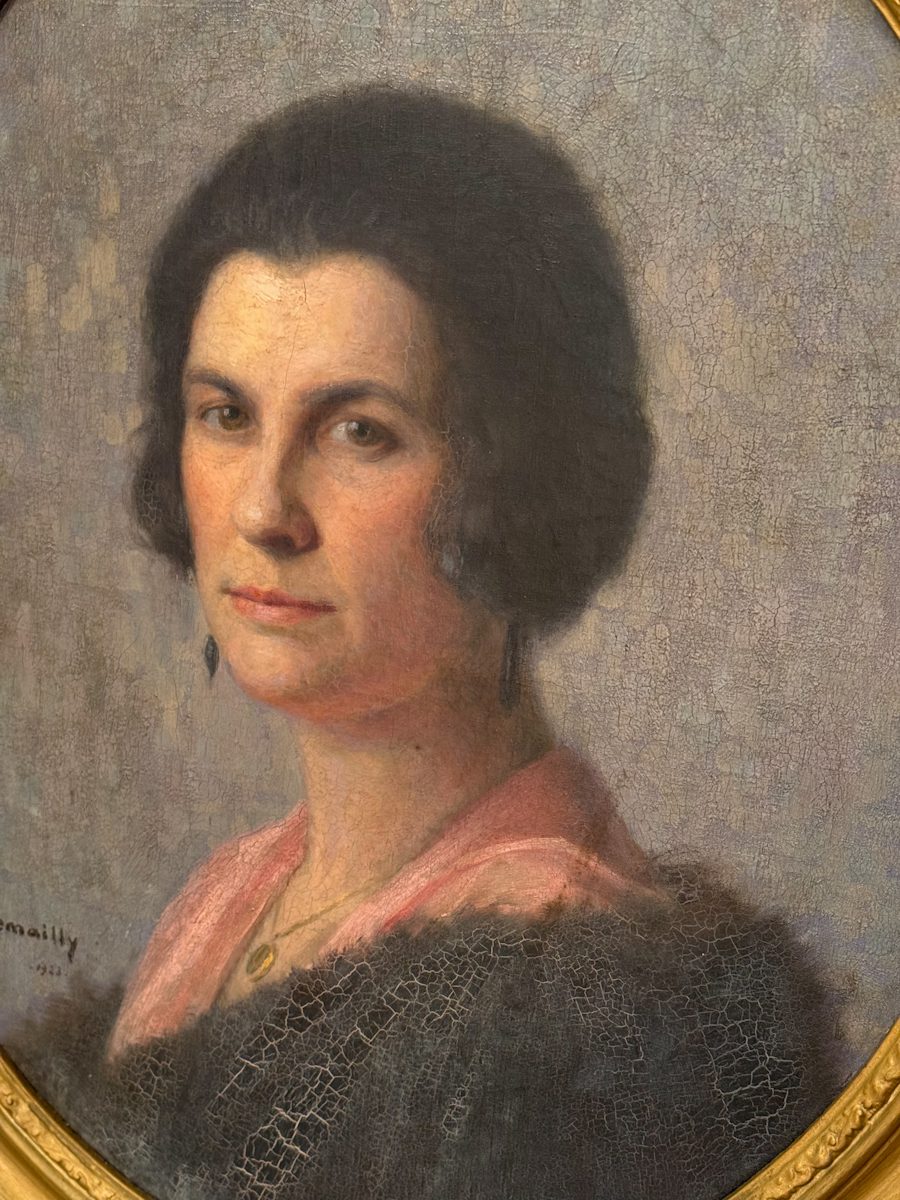
Demailly ir Francijas portretistu tradīcijai piederīgs mākslinieks, kura darbi liecina par akadēmisku izglītību un labu tehnisku sagatavotību. Portretista prasme — sejas modelēšana ar precīzu gaismēnu gradāciju, acenī iespiestu skatien dziļumu, kosmētiskas detaļas kā auskari un kulons — norāda uz pieredzi pasūtījumu portretistu sfērā. Glezna tapusi, visticamāk, pēc privāta pasūtījuma — tā ir konkrētas personas attēls, nevis studija vai izdomāts tēls.
―――――――――――――――――――――
💎 RETUMS UN NOZĪME
Parakstīti, datēti Francijas starpkaru perioda portreti ar precīzu atribūciju un oriģinālu zelta rāmi — antikvāru un mākslas tirgū pieprasīta kategorija. Ovālais formāts ar aplveidīgu zeltītu rāmi ir klasiskāks un retāks nekā standarta taisnstūra formāts, kas piešķir papildu kolekcionāru interesi. Šis darbs ir dokumentēts vēstures gabals — konkrēts laikmets, konkrēts mākslinieks, konkrēts gads.
―――――――――――――――――――――
🕯️ PIELIETOJUMS INTERJERĀ, DIZAINĀ UN FOTOGRĀFIJĀ
Ovāls portrets zeltītā rāmī ir klasiskā interjera kvintesence — tas iederēsies viesistabā, kabinetā, bibliotēkā vai hallē gan klasiskā, gan eklektiskā, gan mūsdienīgā interjerā kā vēsturiskais akcents. Interjera stilistiem un fotogrāfiem šāds darbs ir nenovērtējams kadra elements — ovāla forma, zeltījums un reālistiskā seja rada vizuālu dziļumu un naratīvu. Portreta anonimitāte (attēlotā persona nav identificēta publiski) to padara par universālu priekšteču portretu, ko var iekļaut jebkurā vēsturiskā naratīvā.
―――――――――――――――――――――
🎁 DĀVANA UN PERSONALIZĀCIJA
Šis portrets ir izcilas klases dāvana cilvēkam ar dziļu mākslas izjūtu — kolekcionāram, mākslas mīļotājam, vēsturniekam vai izsmalcināta interjera īpašniekam. Tas der arī kā korporatīva dāvana augstākajā līmenī — advokātu birojam, privātbankieram, galeristam. Parakstīta un datēta glezna ar konkrētu mākslinieku ir arī ieguldījums, nevis tikai dekorācija.
―――――――――――――――――――――
🔍 STĀVOKLIS
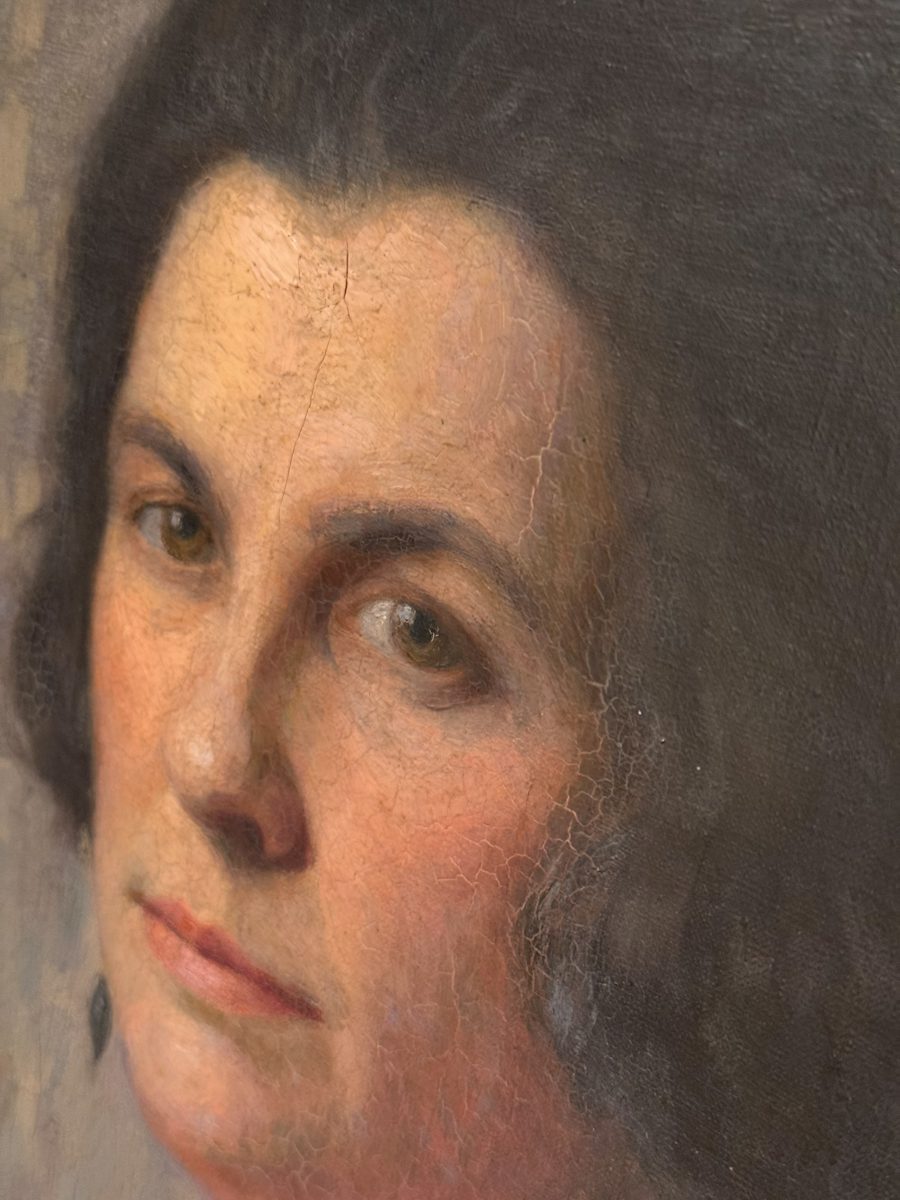
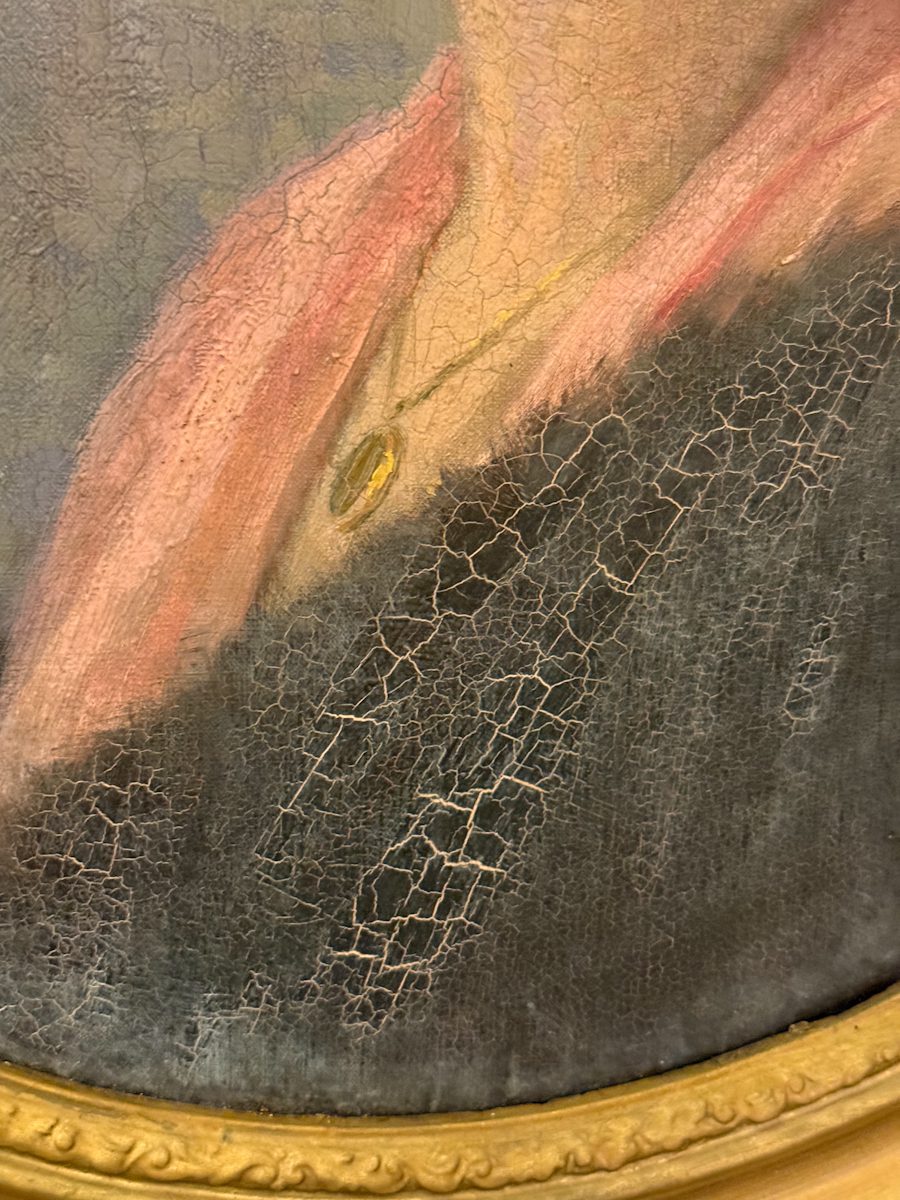
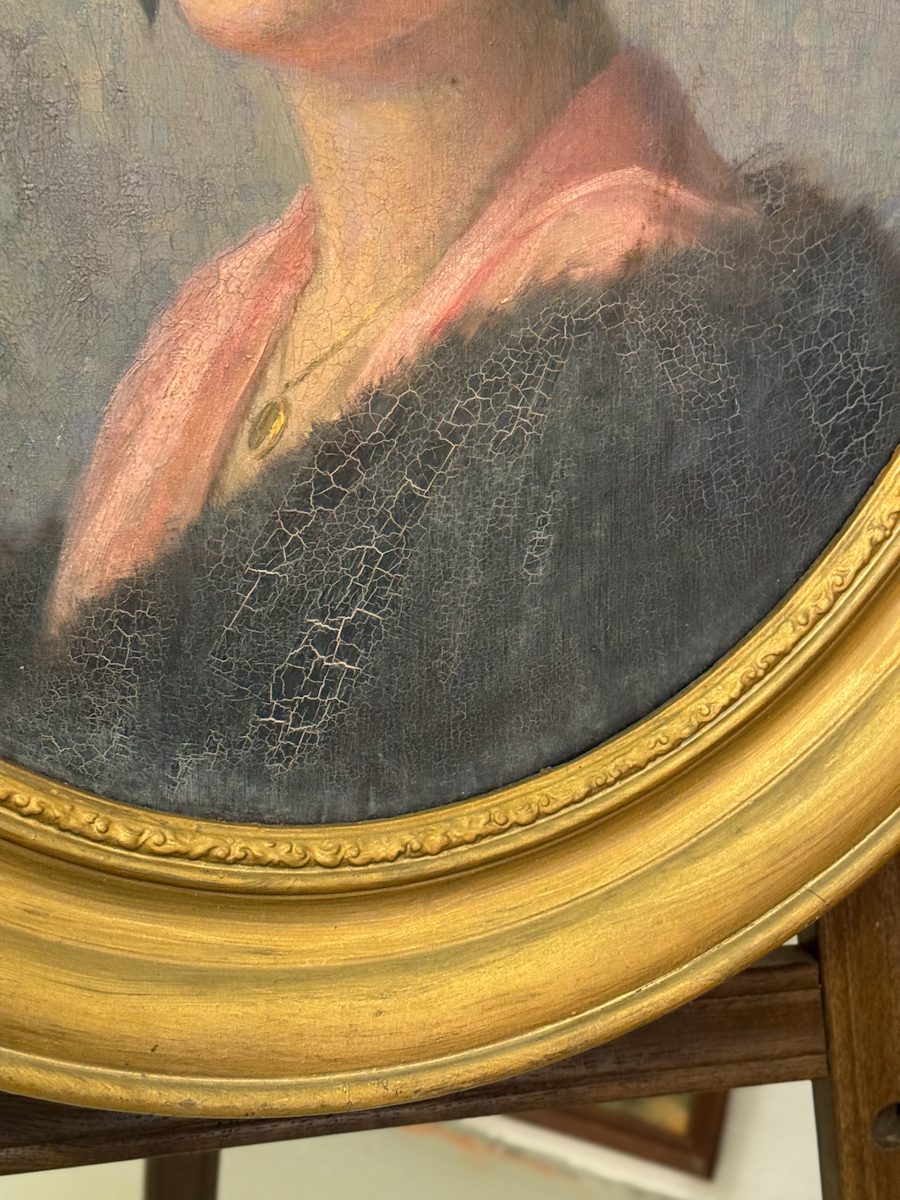
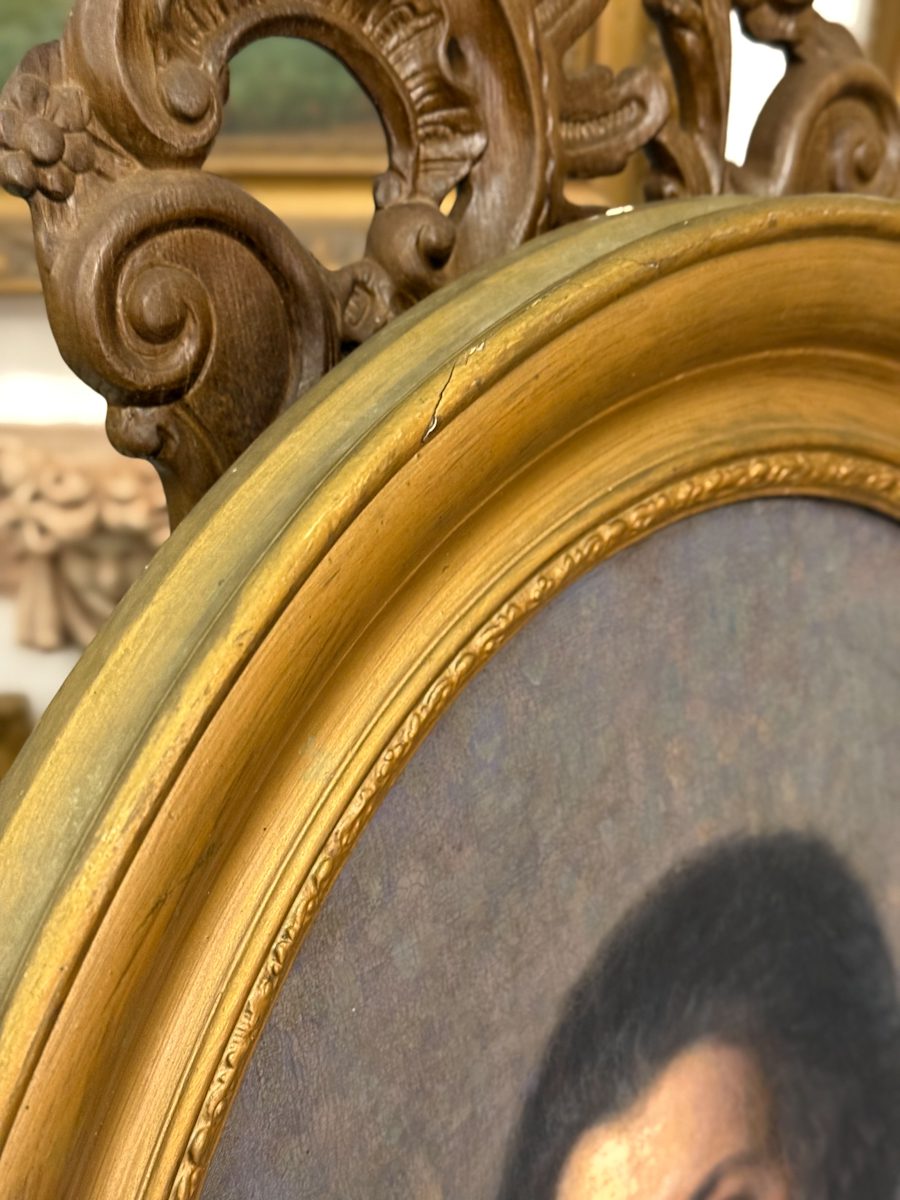
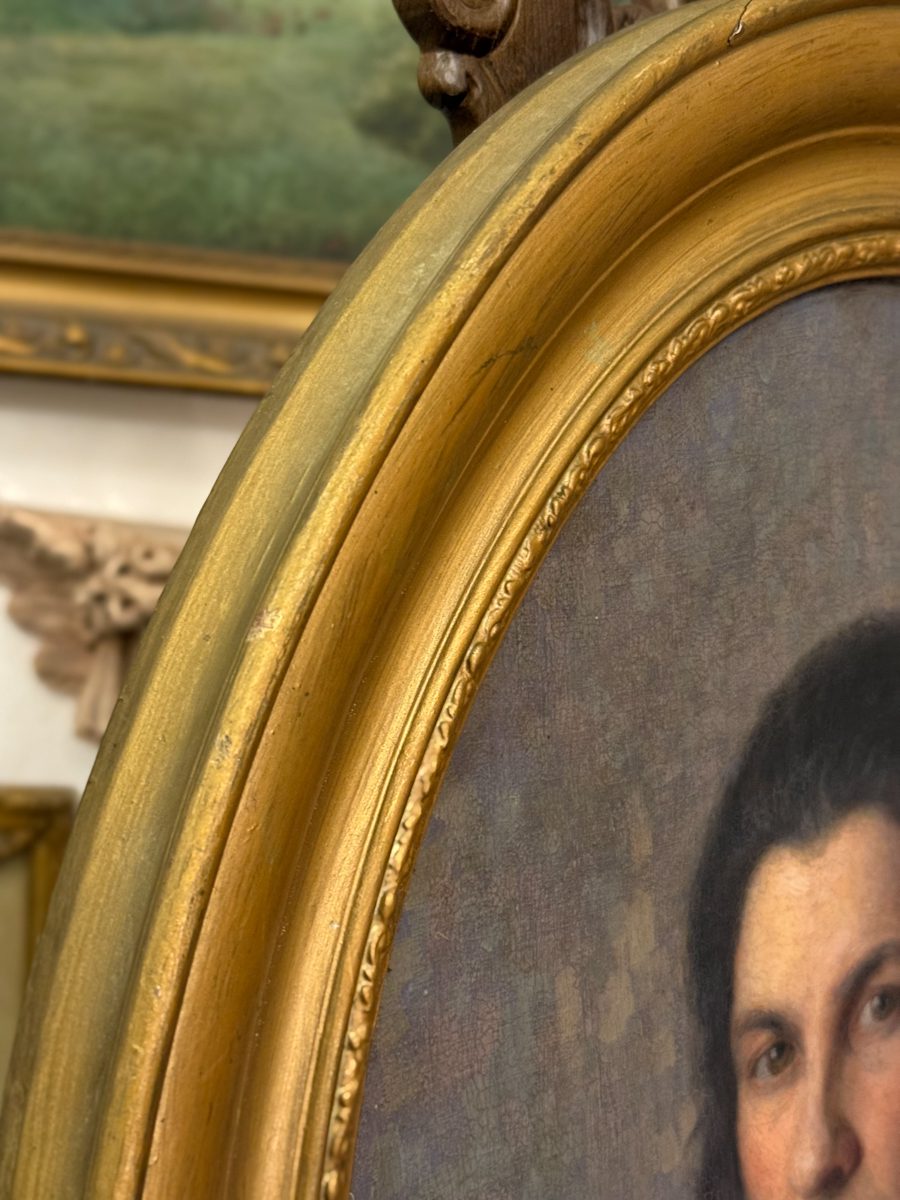
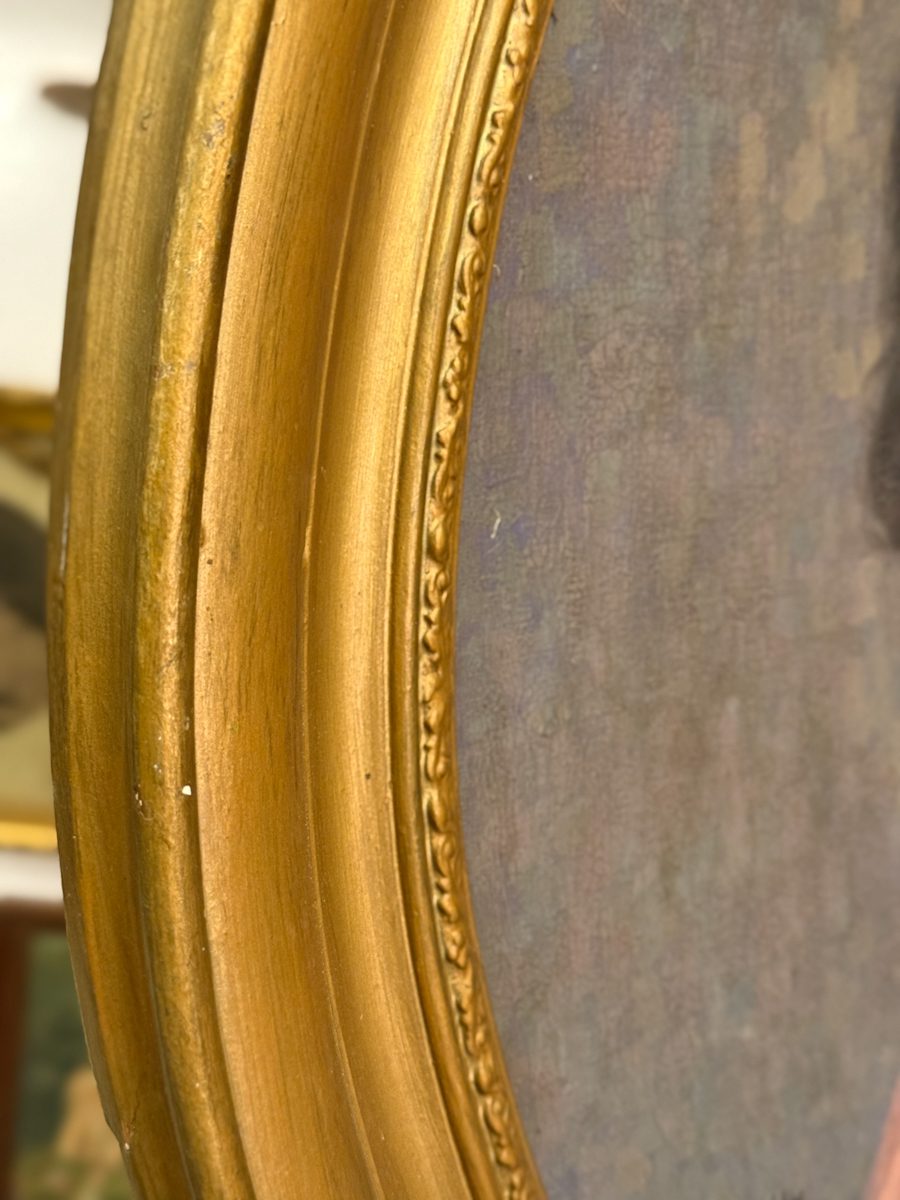
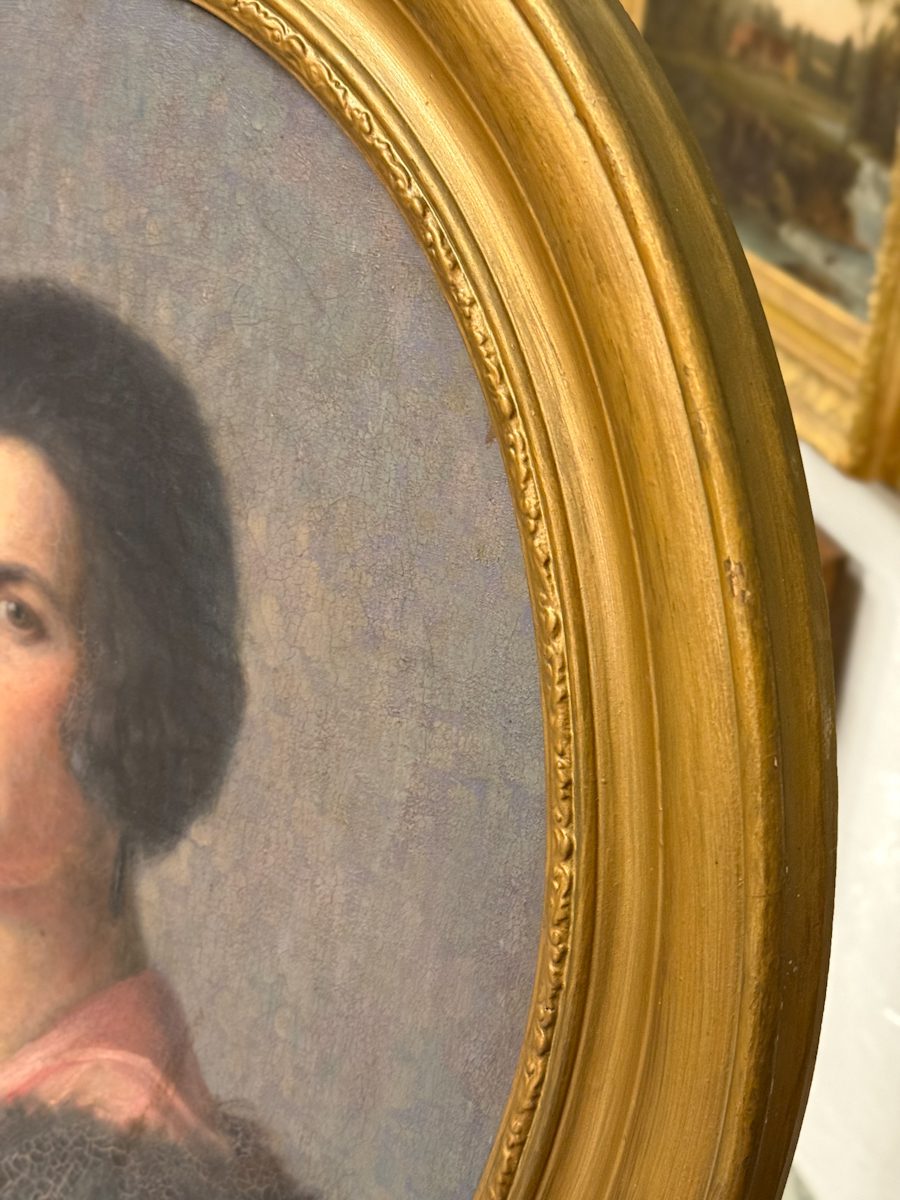
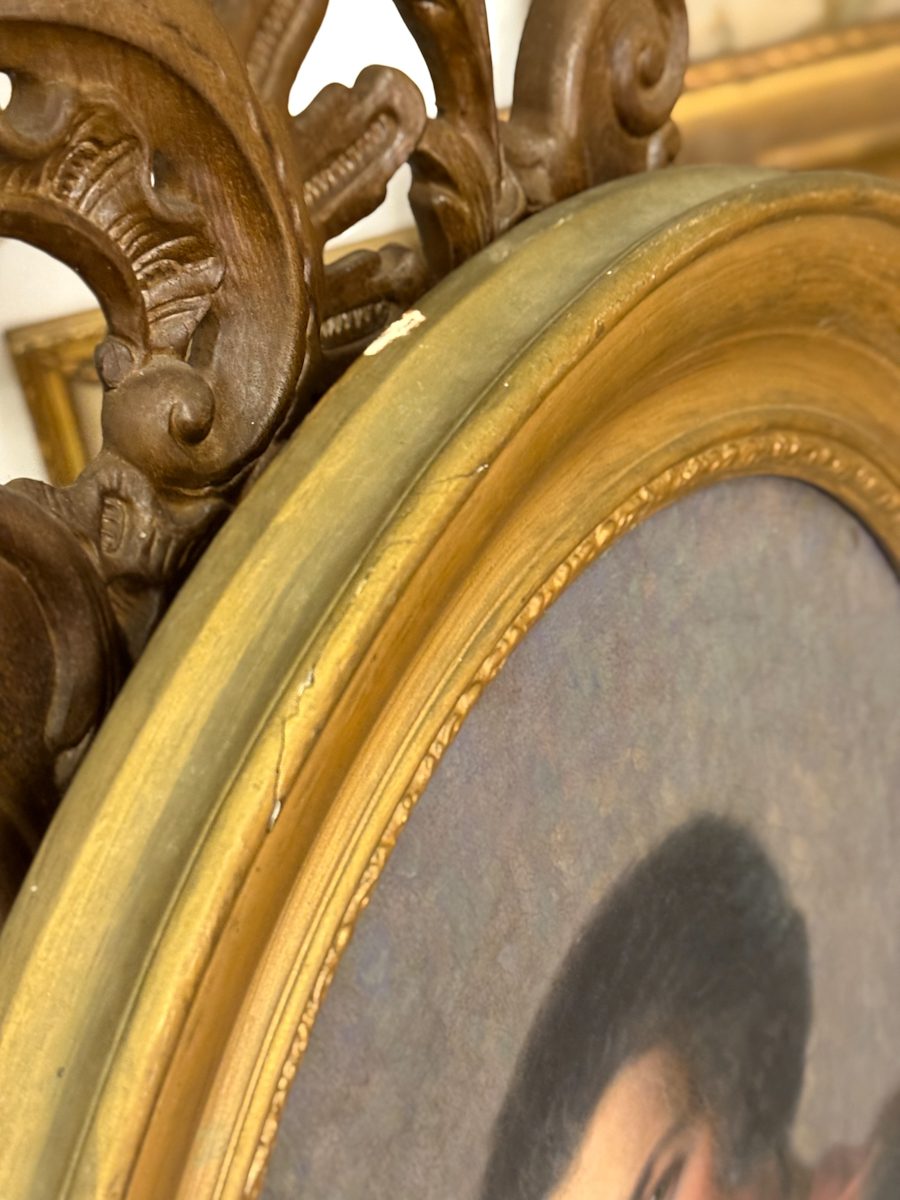
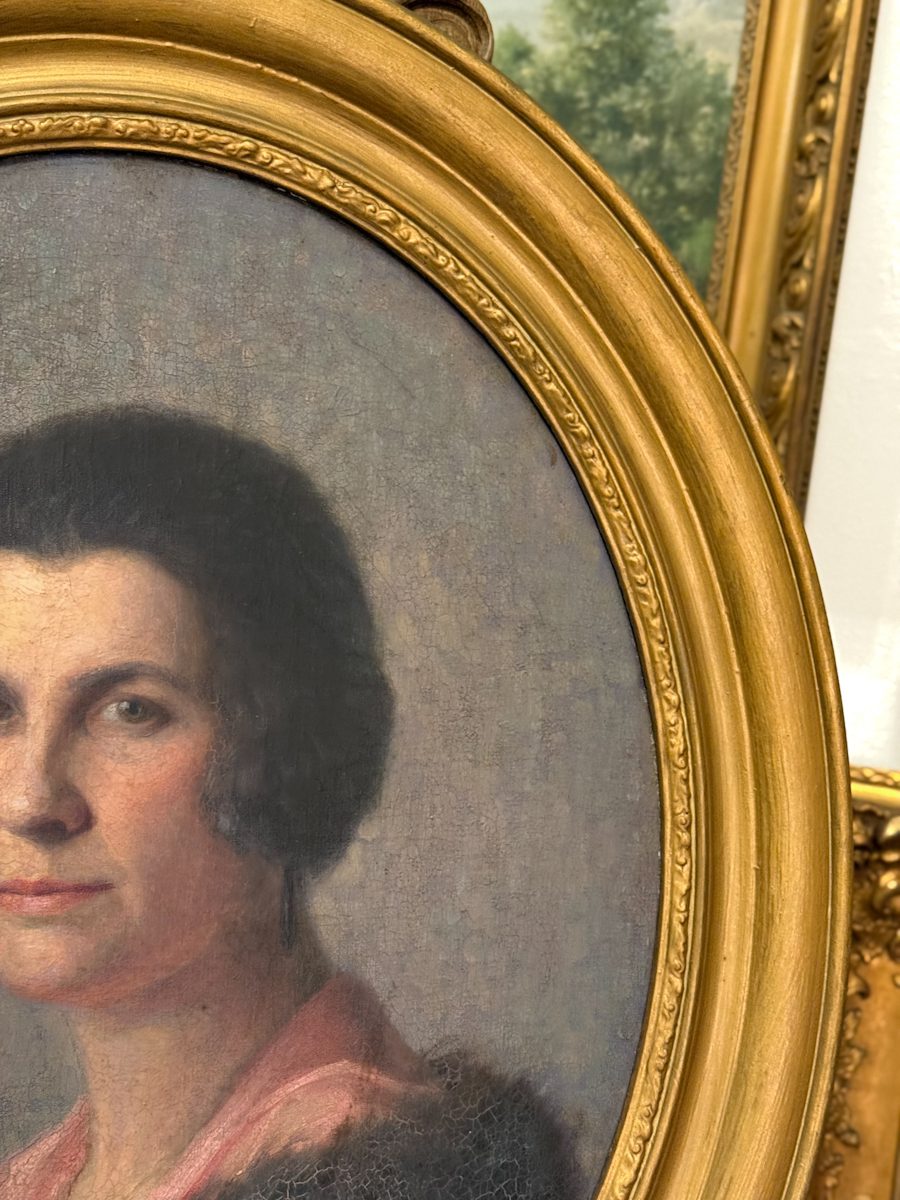
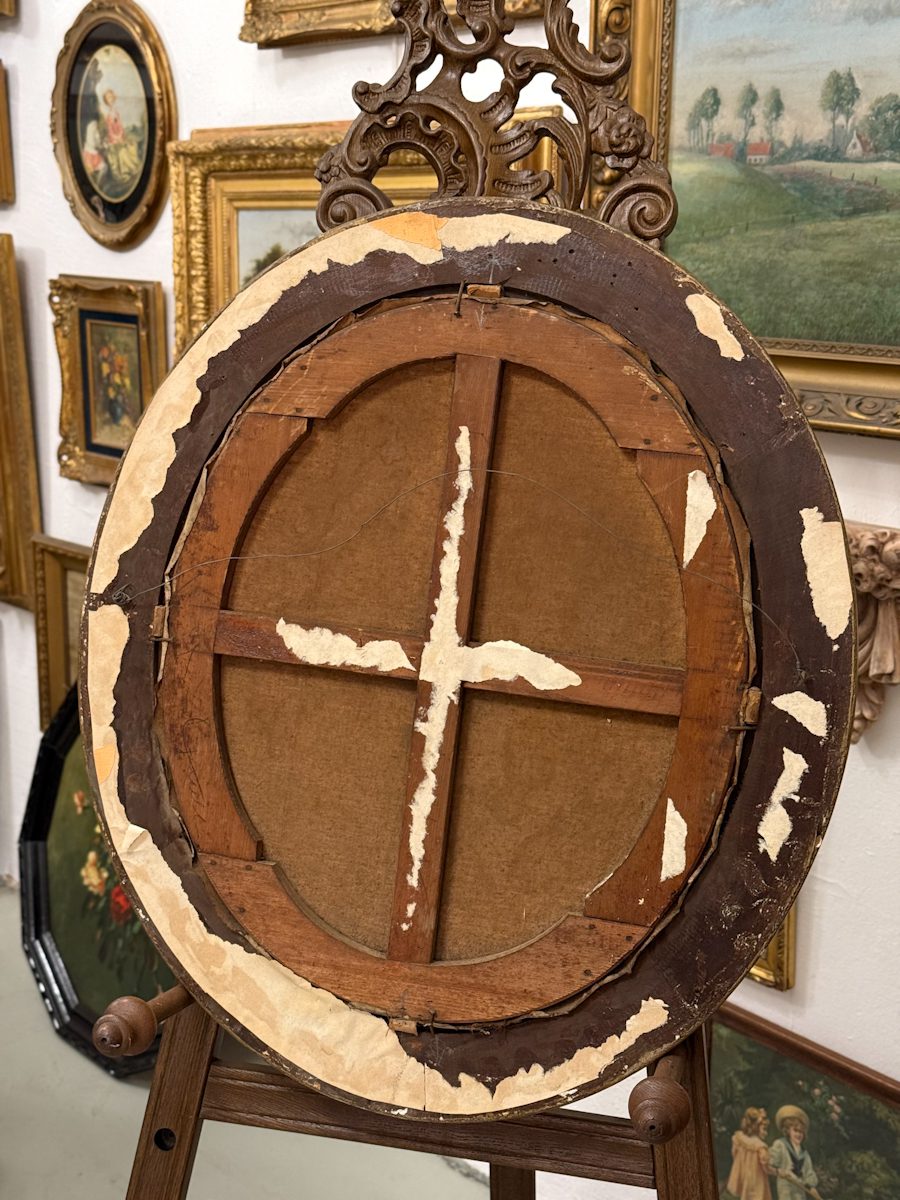
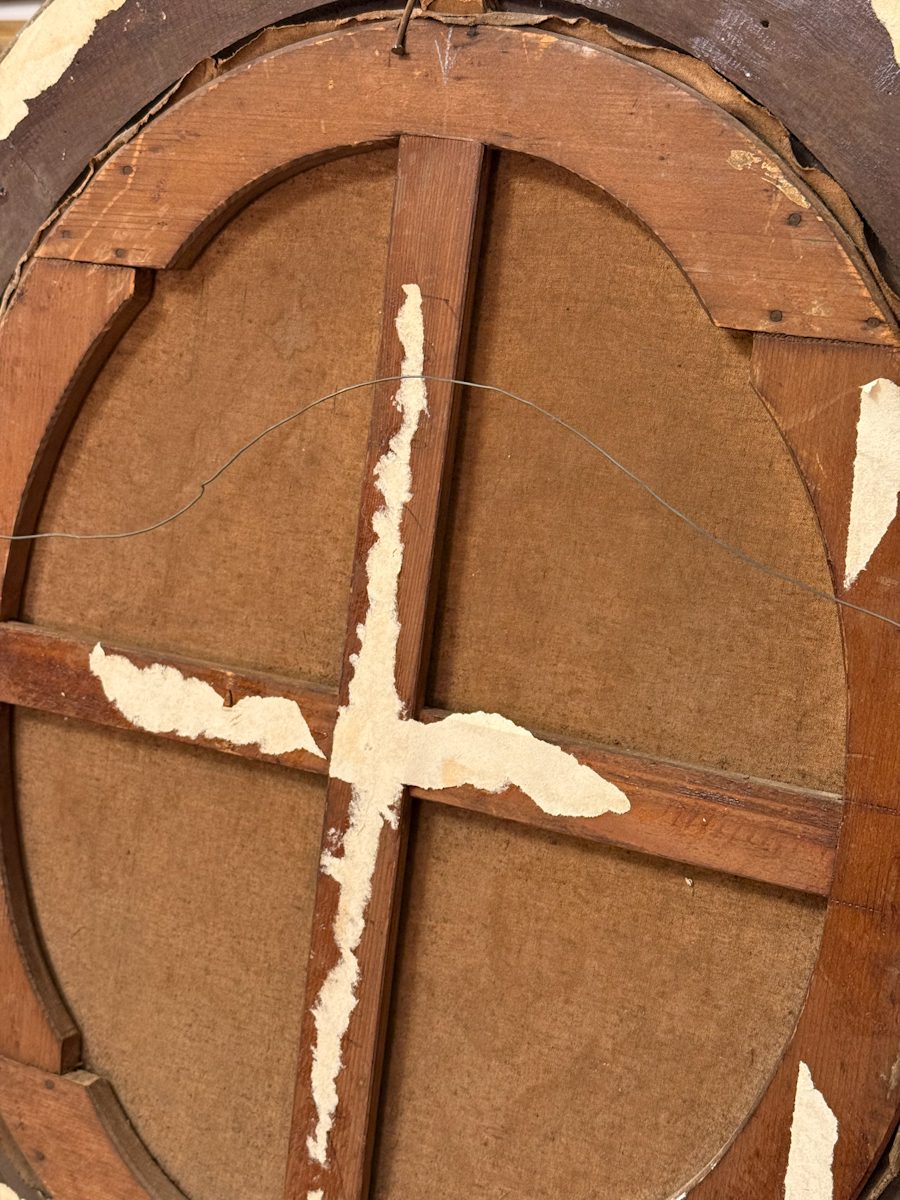
Glezna kopumā labā vispārējā stāvoklī, ņemot vērā vecumu. Audeklam redzama dabiska craquelure — plaisājuma raksts visā gleznojuma virsmā, kas ir normāla un gaidāma 100 gadus vecas eļļas gleznas pazīme. Apģērba daļā (tumšais audums) craquelure ir izteiktāka un vietām dziļāka — redzams fotoattēlos. Sejas un fona daļā craquelure ir smalka un vienmērīga, netraucē uztveri. Uz pieres apvidus redzama neliela vertikāla plaisas līnija — dokumentēta fotogrāfijās. Acīs manāma neliela krāsas zuduma vieta. Zeltītais ovālais rāmis labā stāvoklī ar dabiskas vecuma patinas pēdām; rāmī redzama neliela craquelure augšdaļā — skatāms fotoattēlā. Rāmja aizmugure ar koka pastiprināmiem un vecuma pēdām.
Lietas stāvoklis pilnībā atspoguļots fotogrāfijās.
―――――――――――――――――――――
🇬🇧 DESCRIPTION IN ENGLISH
📐 DIMENSIONS Height 70.5 cm × width 60.1 cm (frame included). Medium weight.
―――――――――――――――――――――
Portrait of a Woman in Oval Format — Demailly, France, 1923.
―――――――――――――――――――――
🏛️ PERIOD, ARTISTIC STYLE, ERA
This portrait was painted in 1923 — at the opening of the interwar period, when France’s artistic life was in a state of intense creative ferment. The era stood at the meeting point of two aesthetic worlds: academic realism with its tradition of belle peinture still commanded deep respect, while the avant-garde currents of post-impressionism, cubism, and the École de Paris were already reshaping the Parisian gallery world. Demailly here chooses the classical path — a precise, psychologically attentive portrait with subtle sfumato-influenced modelling of the face, a restrained palette, and the dignified poise that characterises the finest salon portraitistes of the period.
The format — oval on canvas within a gilded circular frame — belongs to the long tradition of the highest haute bourgeoisie and aristocratic portrait commissions, practised from the 18th century through the 19th and into the early 20th. This piece occupies a transitional moment: academic realism still commanded the full respect of private patrons, while the tastes of a younger generation were already shifting toward Modernism — both worlds coexist here in a single object.
―――――――――――――――――――――
⚜️ ARTIST’S SIGNATURE
The painting is clearly signed at lower left: demailly — 1923. The signature and date are legible and confirmed in multiple photographs.
Demailly is a portraitist working within the French academic tradition, demonstrating solid technical training and professional experience as a commissioned portrait painter. The skill evident in the facial modelling — precise light-and-shadow gradation, depth of gaze, carefully observed details such as the drop earring and oval pendant — points to an experienced atelier practitioner working to a private commission. The subject is clearly a specific individual, not a studio model or invented figure.
―――――――――――――――――――――
💎 RARITY AND SIGNIFICANCE
Signed and dated French interwar portraits with clear attribution and an original gilt frame constitute a sought-after category on the antique and fine art market. The oval format within a rounded gilt frame is both more classical and rarer than the standard rectangular format, adding further collector appeal. This work is a documented historical object — a specific era, a specific artist, a specific year.
―――――――――――――――――――――
🕯️ USE IN INTERIORS, DESIGN AND PHOTOGRAPHY
An oval portrait in a gilt frame is the quintessence of the classical interior — it will complement a drawing room, study, library, or entrance hall equally well in classical, eclectic, or contemporary settings as a historical accent piece. For interior stylists and photographers, such a work is an invaluable compositional element — the oval shape, gilding, and realistic face create visual depth and narrative. The anonymity of the sitter (the subject is not publicly identified) makes this a universal ancestral portrait, available to any historical interior narrative.
―――――――――――――――――――――
🎁 AS A GIFT
This portrait is a gift of exceptional distinction for anyone with a deep appreciation for art — a collector, art lover, historian, or owner of a refined interior. It is equally fitting as a high-level corporate gift for a law firm, private bank, or gallery. A signed and dated painting with a named artist is an investment as well as an object of beauty.
―――――――――――――――――――――
🔍 CONDITION
The painting is in generally good condition for its age. Natural craquelure — the characteristic network of fine cracks in aged oil paint — is present across the surface and is a normal, expected feature of a canvas of this period. In the dark clothing area, the craquelure is more pronounced and deeper in places, as documented in the photographs. In the face and background areas, the craquelure is fine and even, and does not impair the reading of the image. A small vertical crack line is visible in the forehead area, documented in the photographs. Minor paint loss is visible in the eye area. The gilded oval frame is in good condition with natural age patina; a small crack is visible in the upper section of the frame, documented in the photographs. The reverse shows original wooden stretcher bars with age-related wear.
Condition is fully represented in the photographs.
―――――――――――――――――――――