
Komplekts – Bronzas figūra “Medūza’ sudraba krāsā + betona kolonna/podests (6314)
Komplekts – Bronzas figūra “Medūza’ sudraba krāsā + betona kolonna/podests (6314)
€3,950.00
Gan figūra, gan podests ir smagi pēc svara.
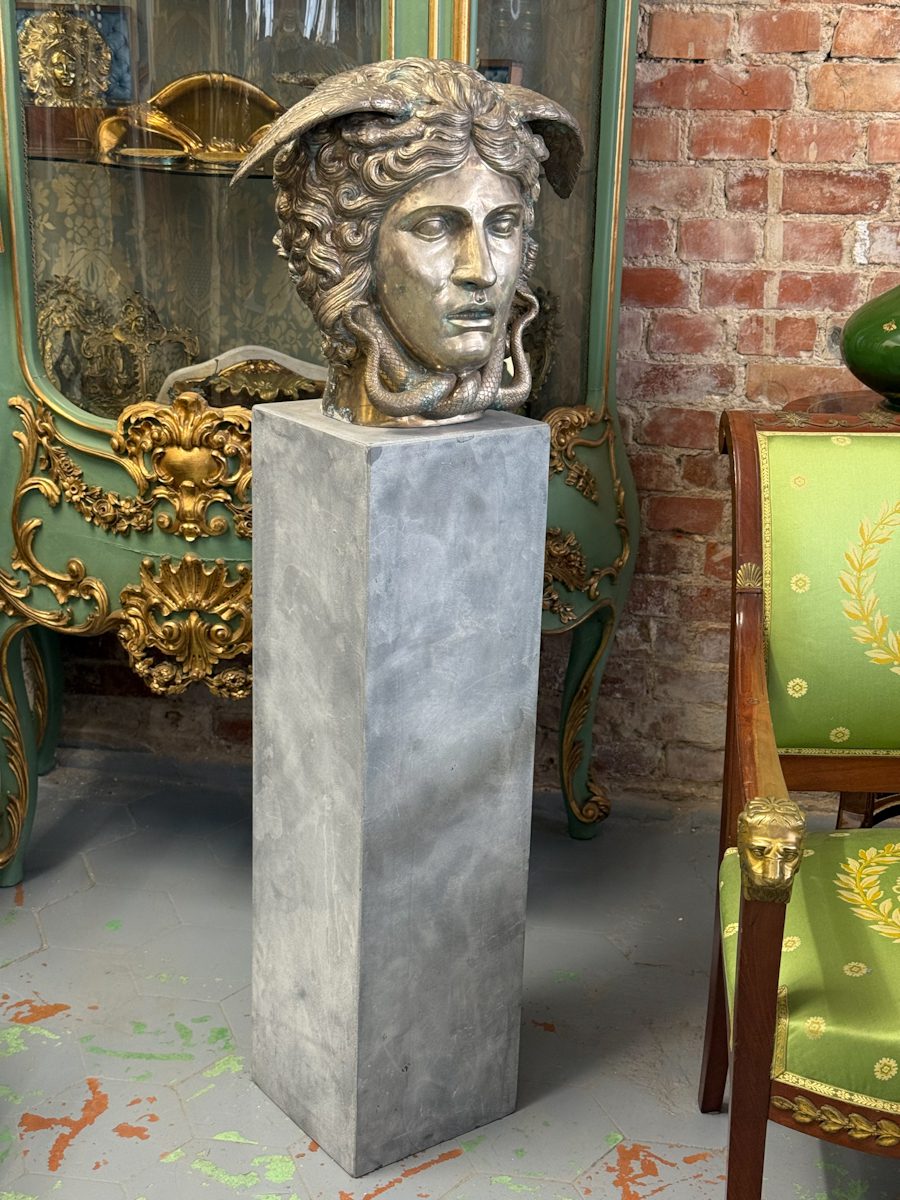
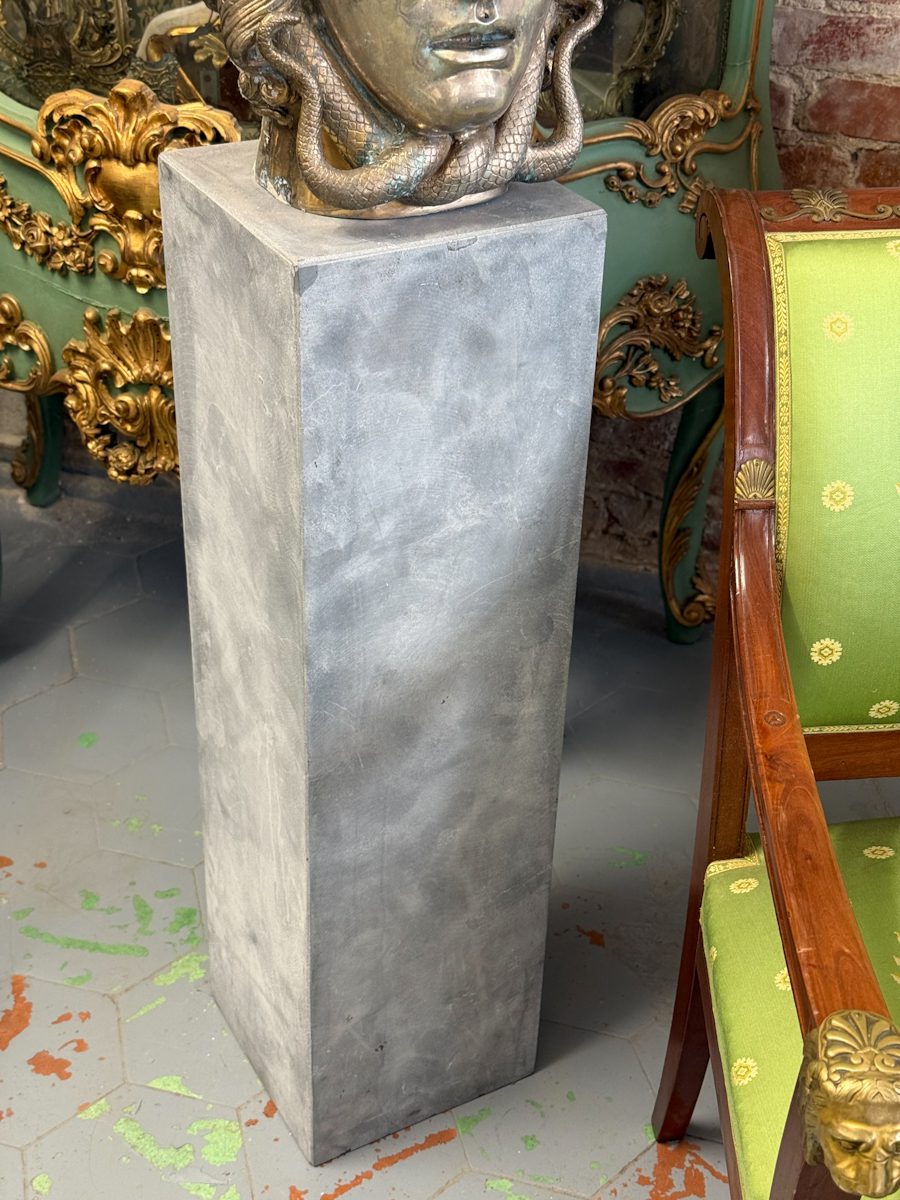
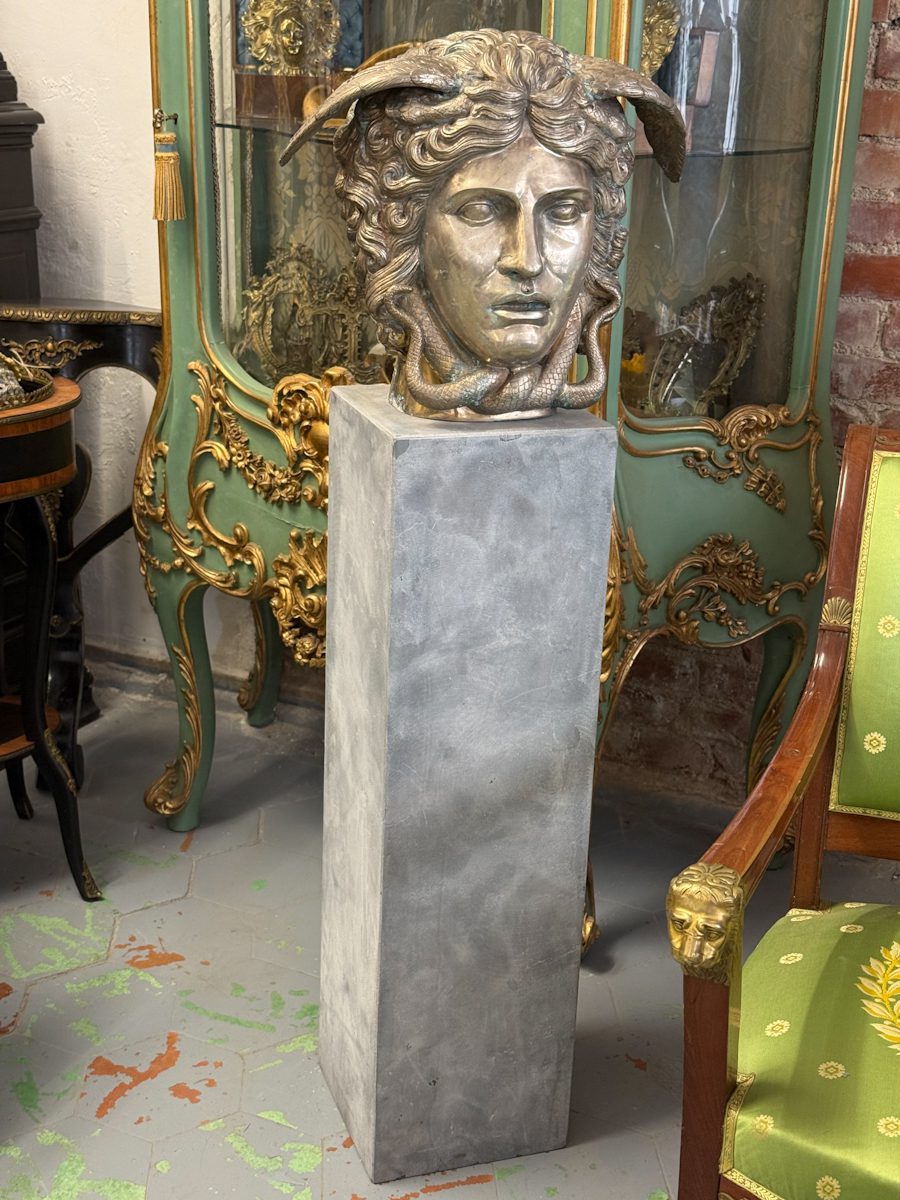
Podests – Augstums 90cm, platums 25cm
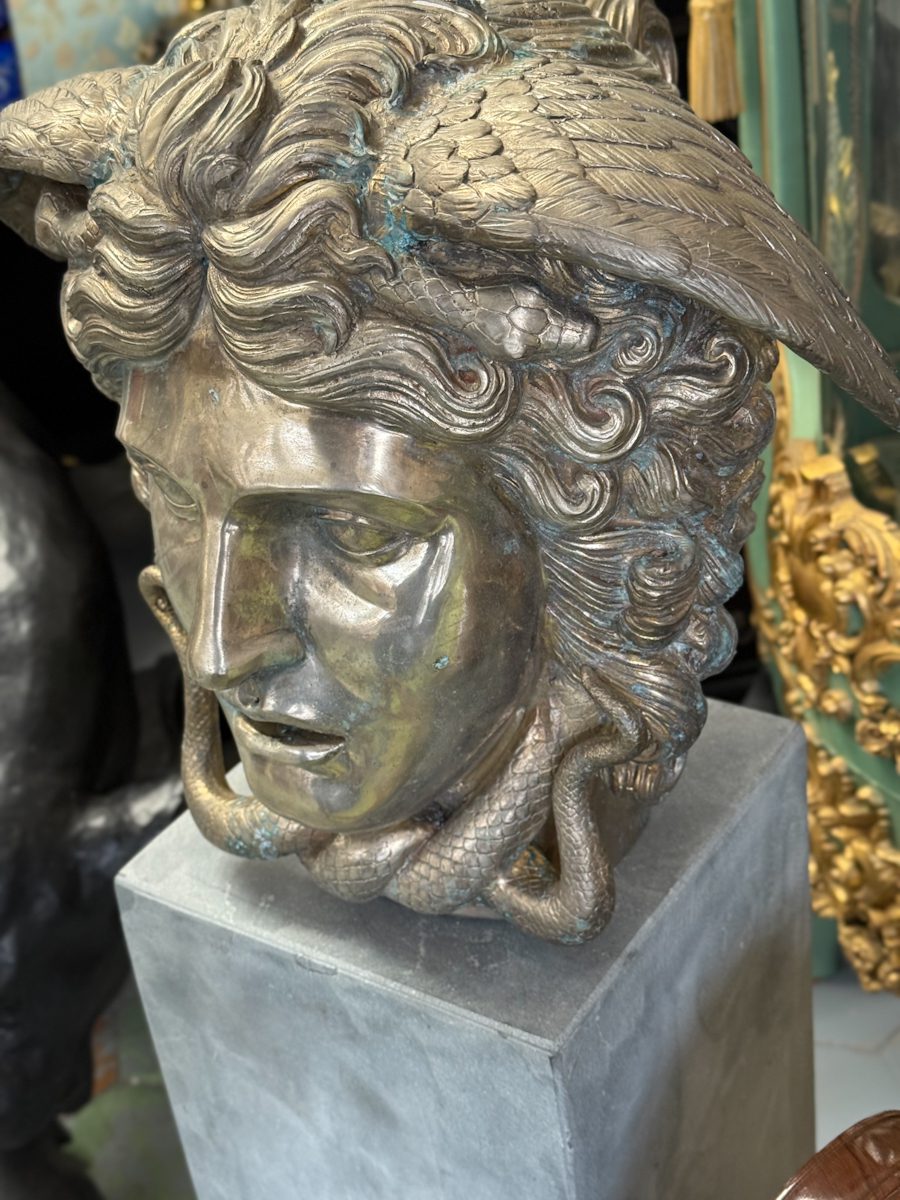
Galvas figūra – Augstums 37.5cm, platums 50cm x 32cm
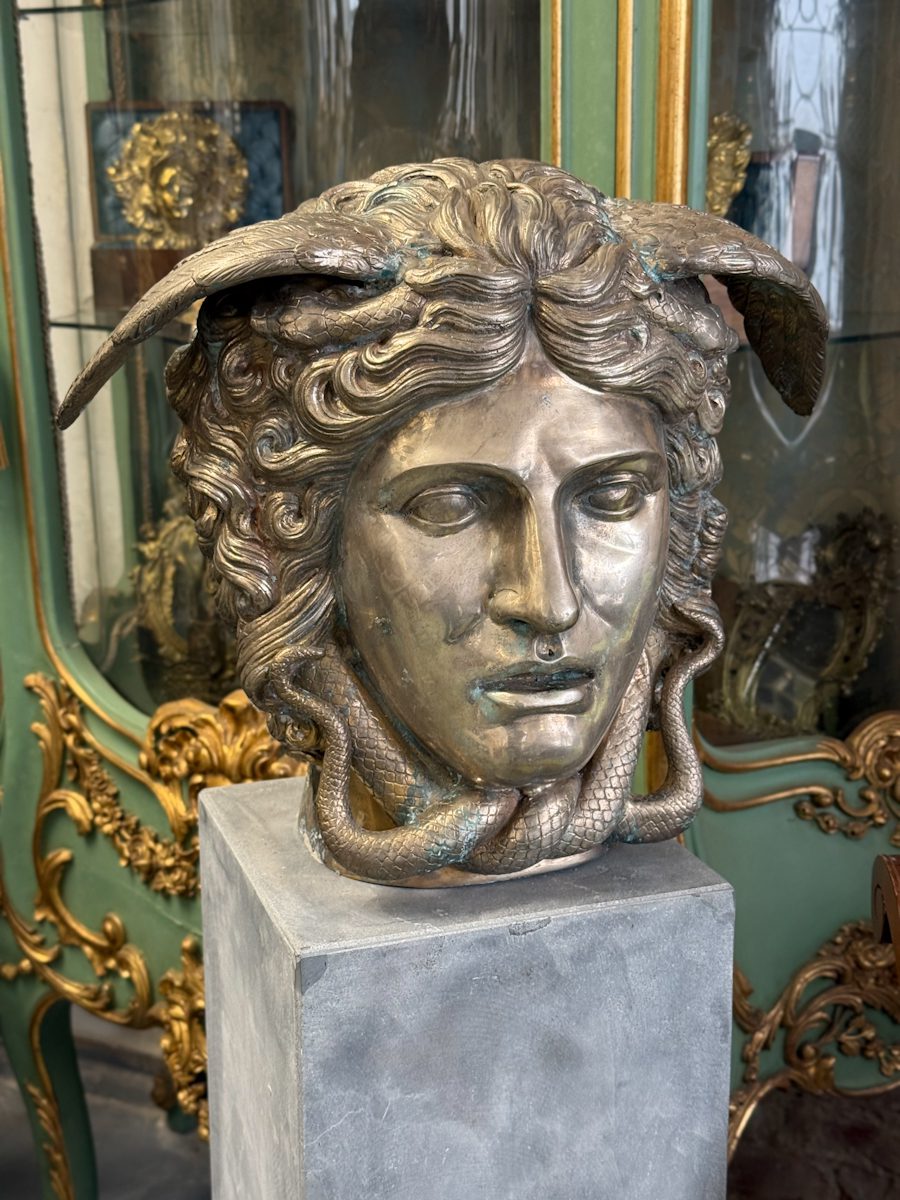
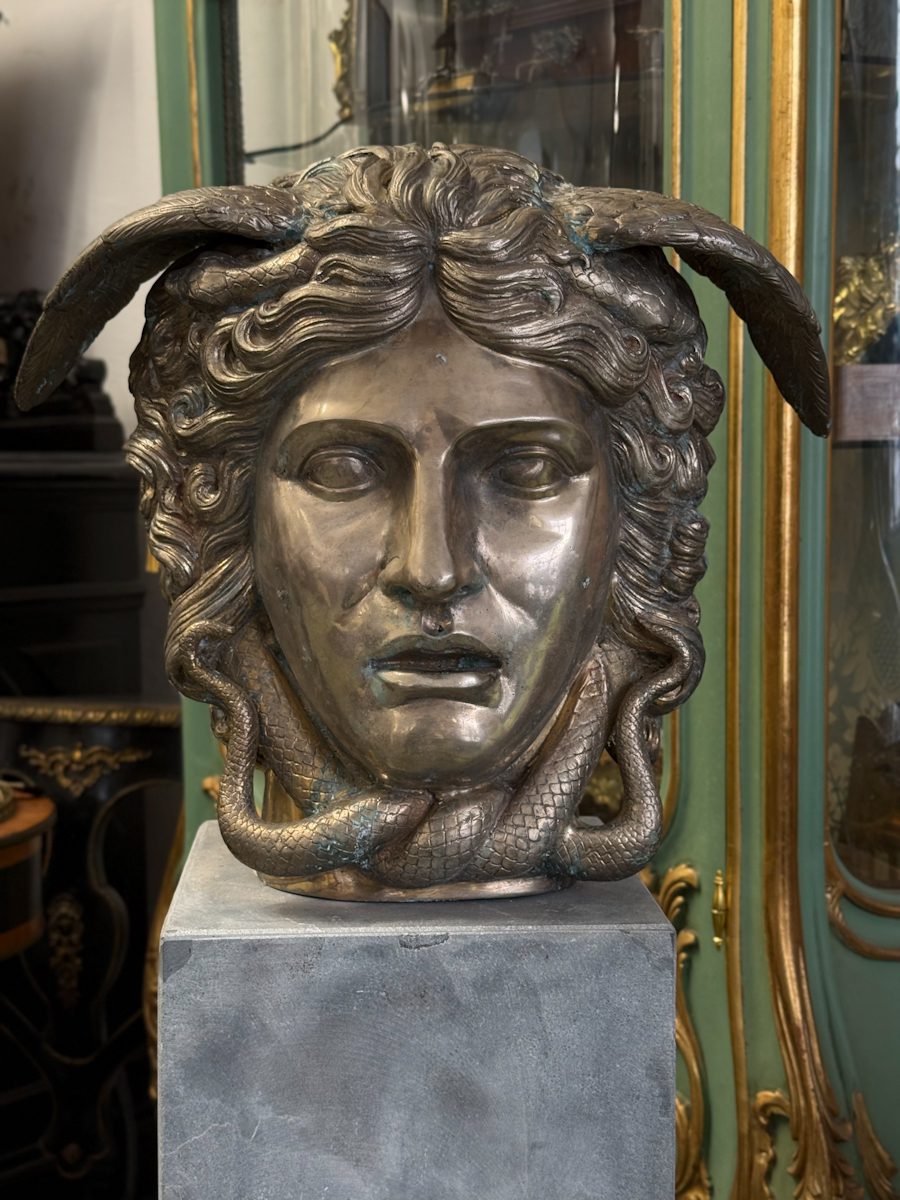
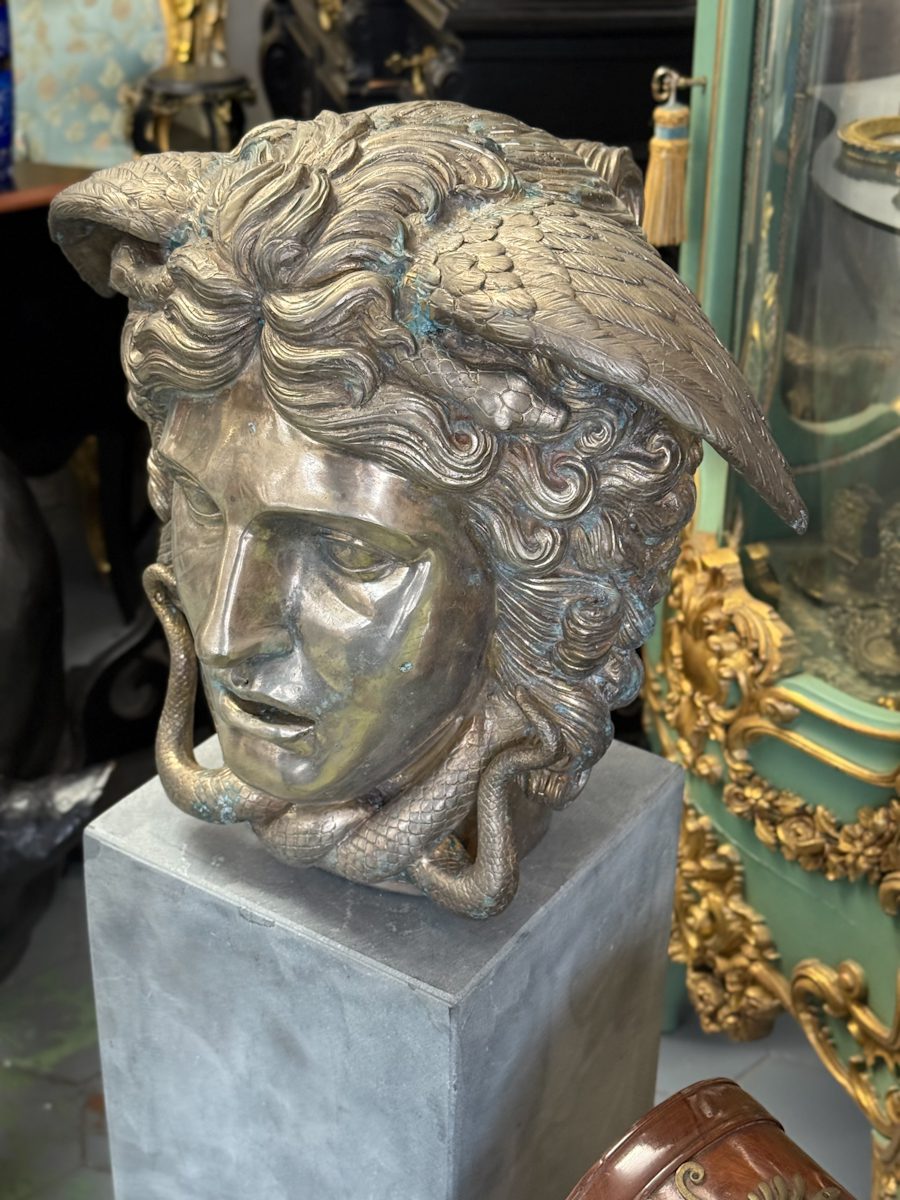
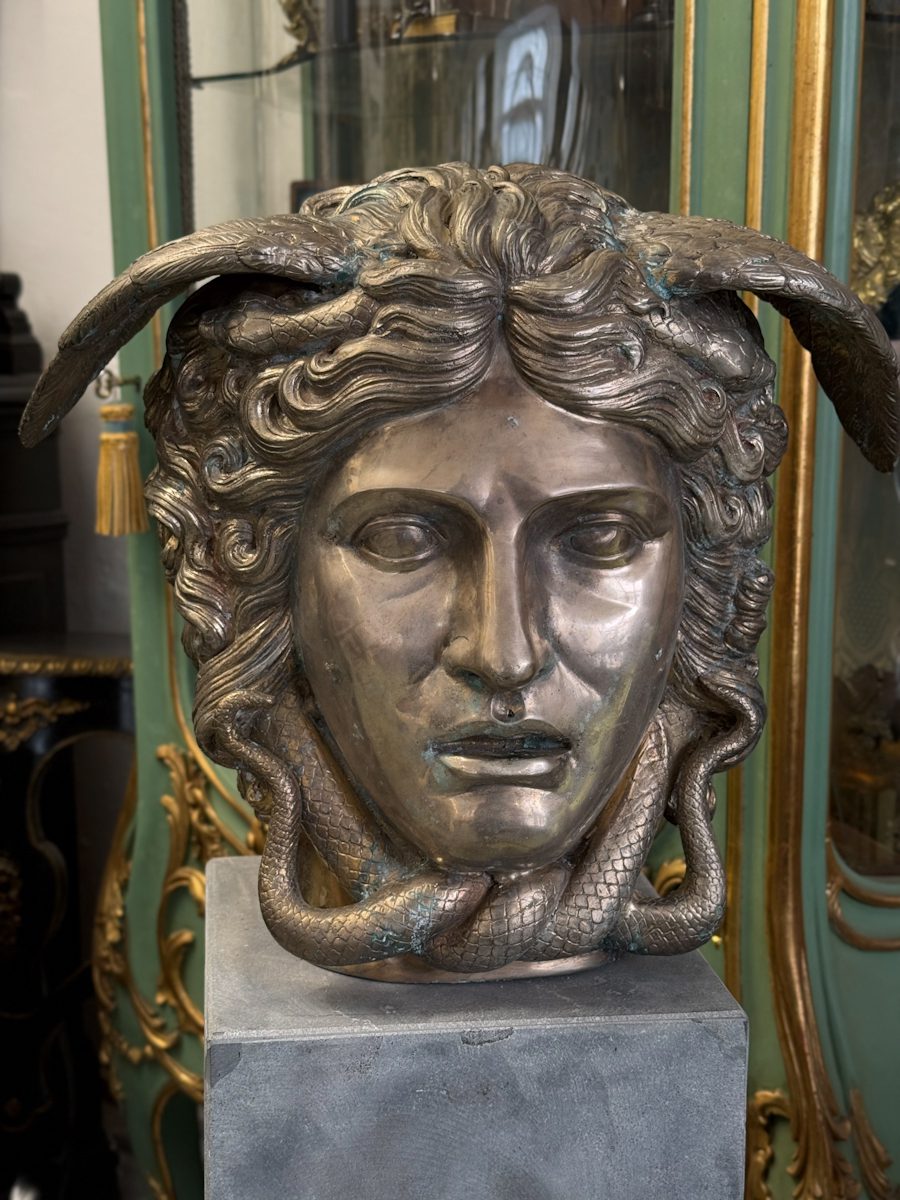
Medūzas Galva — Antīkā Grieķu Mitoloģija / Neoklasicisms, Eiropa, 20. gs. · Baltā bronza (cinka bronza) uz betona kolonnas/podesta
📐 IZMĒRI
Podests: augstums 90 cm × platums 25 cm × dziļums 25 cm. Svars — ļoti ievērojams, masīvs betons. Medūzas galva: augstums 37,5 cm × platums 50 cm × dziļums 32 cm. Svars — ievērojams, masīva baltā bronza. Kopējais ansambļa augstums: aptuveni 127,5 cm.
―――――――――――――――――――――
🏛️ IZGATAVOŠANAS PERIODS, MĀKSLAS STILS, LAIKMETS
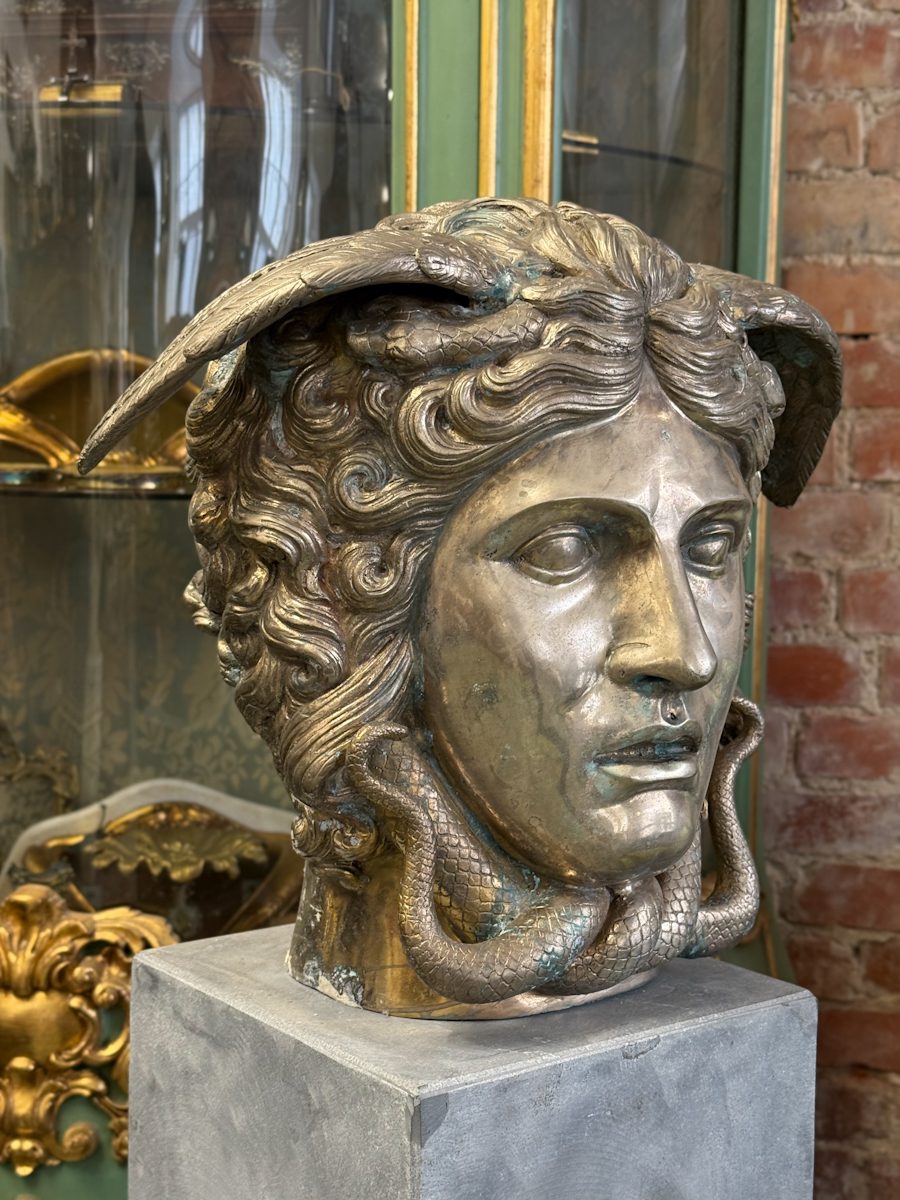
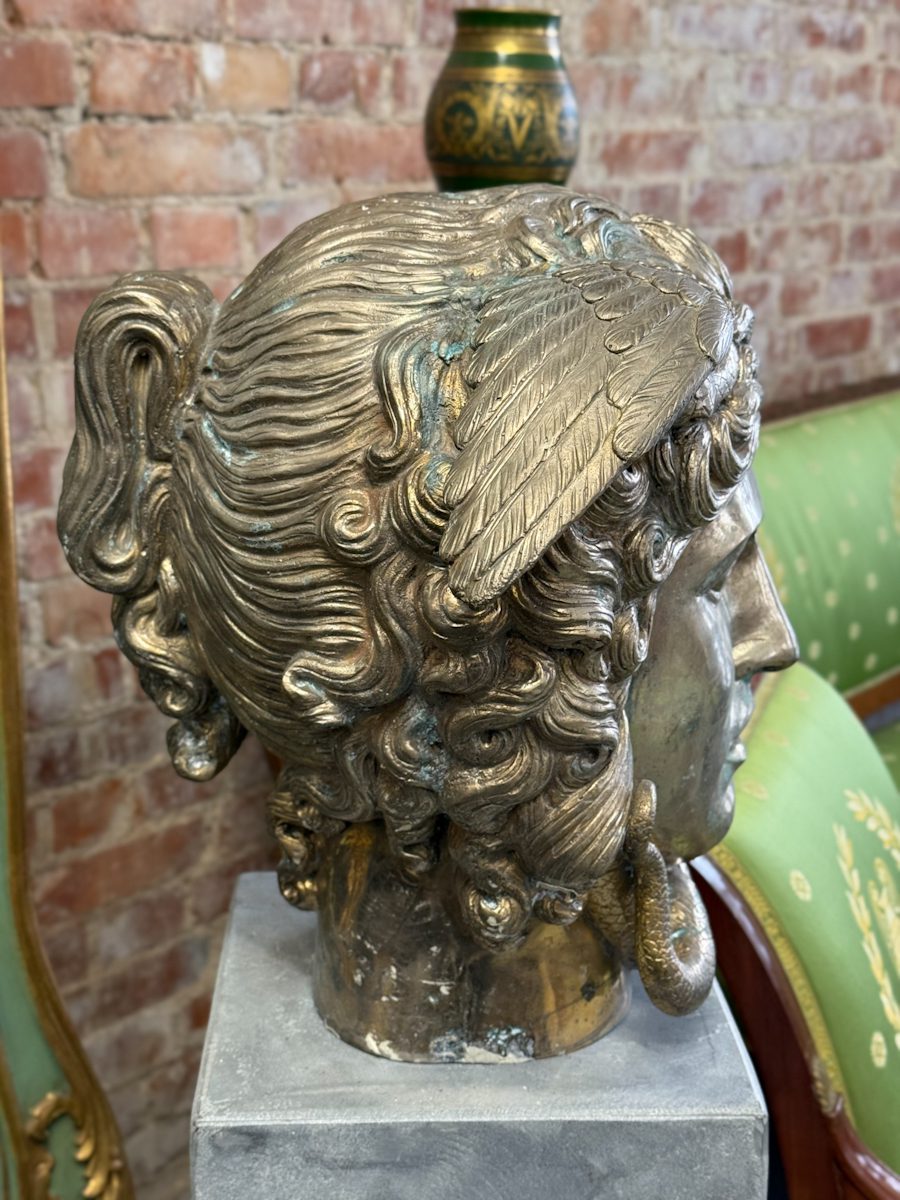
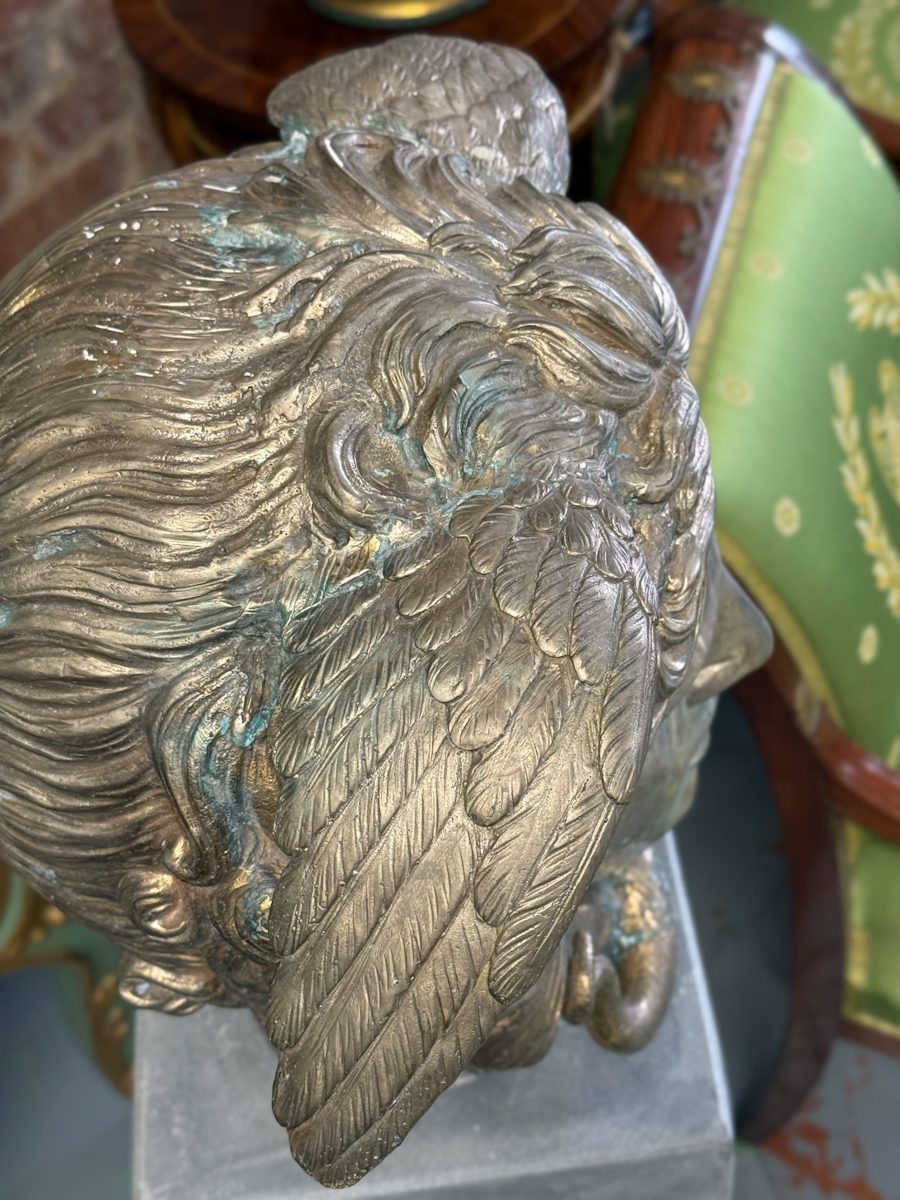
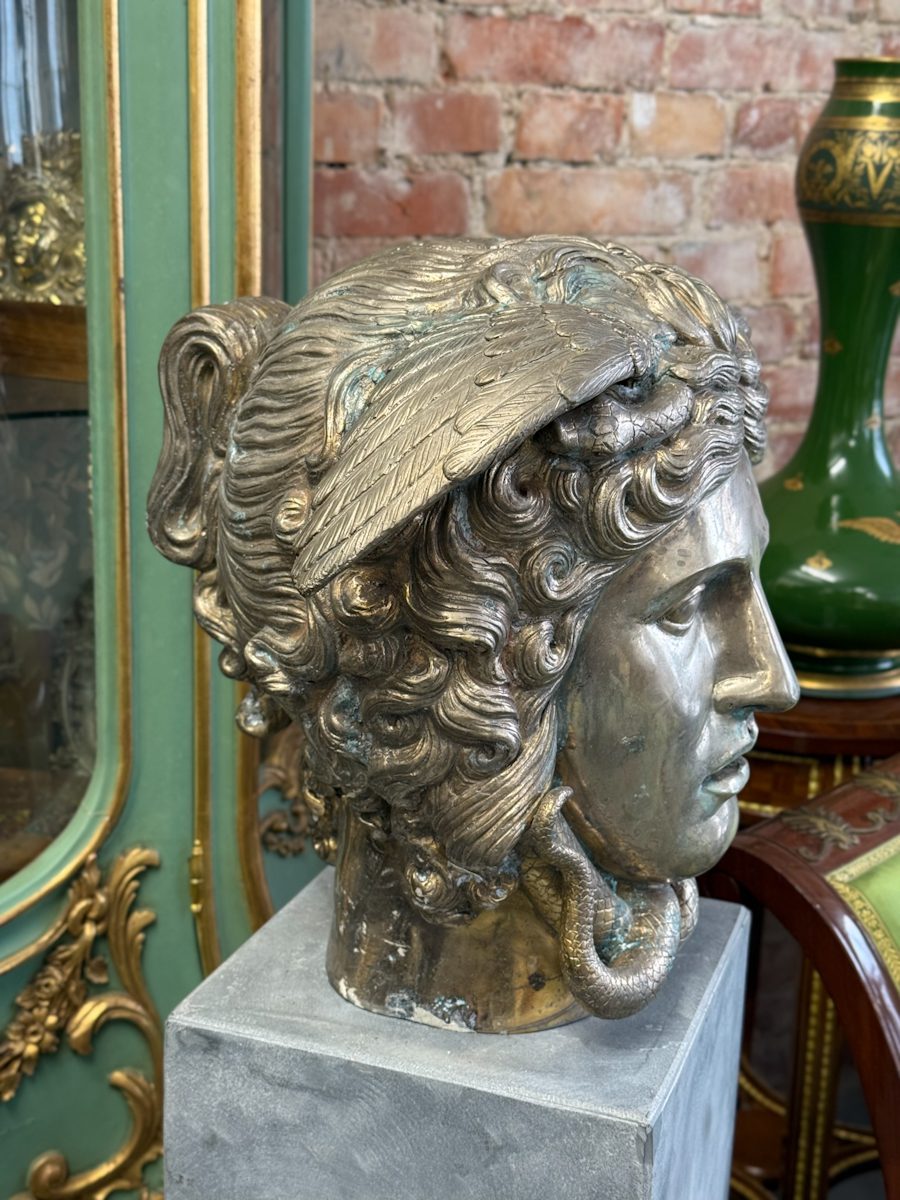
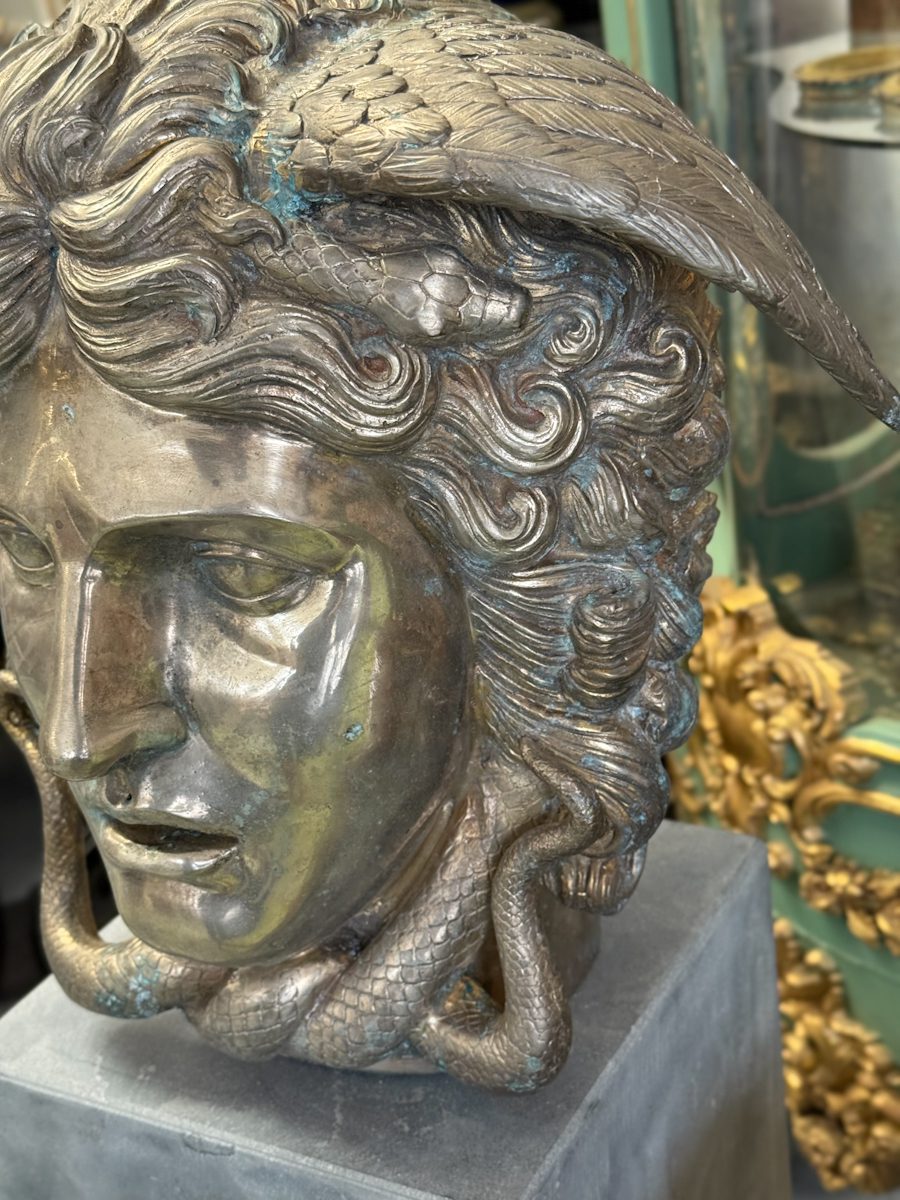
Medūza — vienīgā mirstīgā no trim Gorgonām grieķu mitoloģijā, kuras skatiens pārvērta dzīvos akmenī. Viņas sejas izteiksme šajā skulptūrā ir tā, ko grieķi sauca par pathos — ciešanu un traģisma savienojums ar neizsmeļamu skaistumu. Tas nav briesmonis — tā ir seja, kas zina savu likteni un to pieņem. Tieši šo ambivalenci — skaistumu, kas nogalina, un nogalināšanu, kas ir skaista — Gianni Versace 1978. gadā izvēlējās par savas modes impērijas emblēmu, un tieši tā šī figūra sarunājas ar mūsdienu skatītāju divdesmit pirmo gadsimtu vēlāk. Ikonogrāfiski šī skulptūra ir cieši saistīta ar slavenāko Medūzas attēlojumu Eiropas mākslā — Benvenuto Cellini bronzas šedevru Persejs ar Medūzas galvu (1545–1554, Florences Loggia dei Lanzi) — tomēr šī galva ir radīta kā patstāvīgs skulpturāls tēls, nevis kā Perseja trofeja. Spārni uz galvas — detaļa, kas šajā figūrā ir īpaši izsmalcināta — ir neparasts papildinājums klasiskajam Medūzas tēlam, kas iespējams atsaucas uz sengrieķu Gorgoneion tradīciju, kurā Medūzai dažkārt tika piešķirti spārni kā Atēnas aizsardzīgajam simbolam.
―――――――――――――――――――――
⚜️ MATERIĀLS UN IZGATAVOŠANAS TEHNIKA
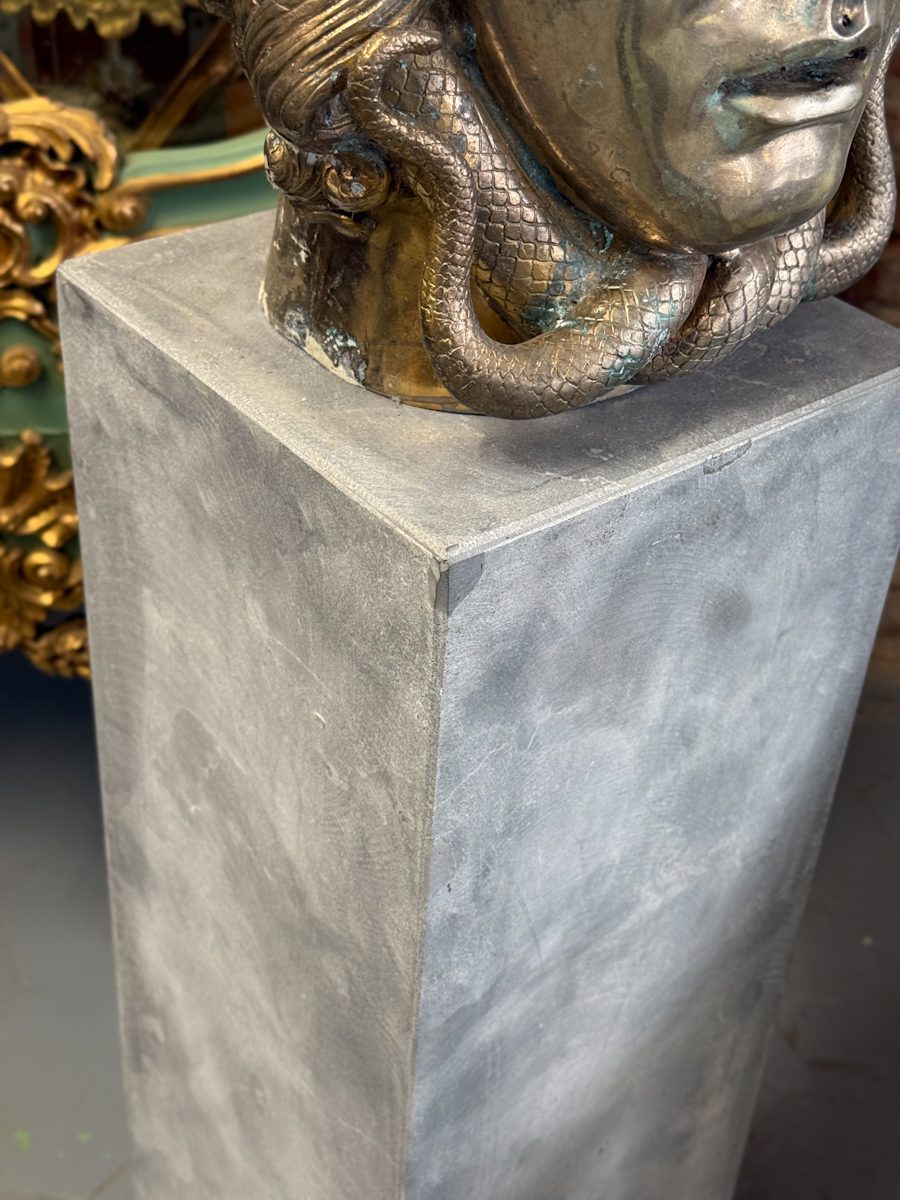
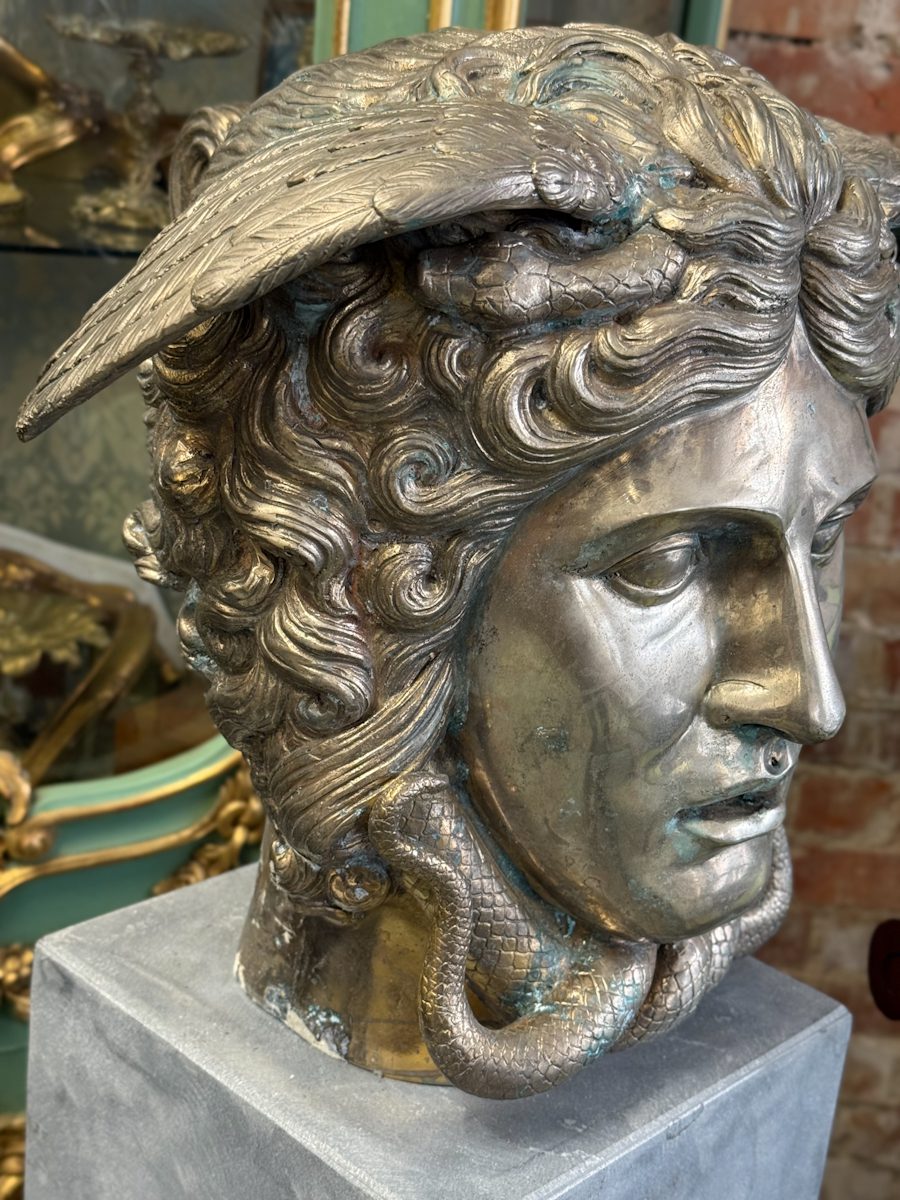
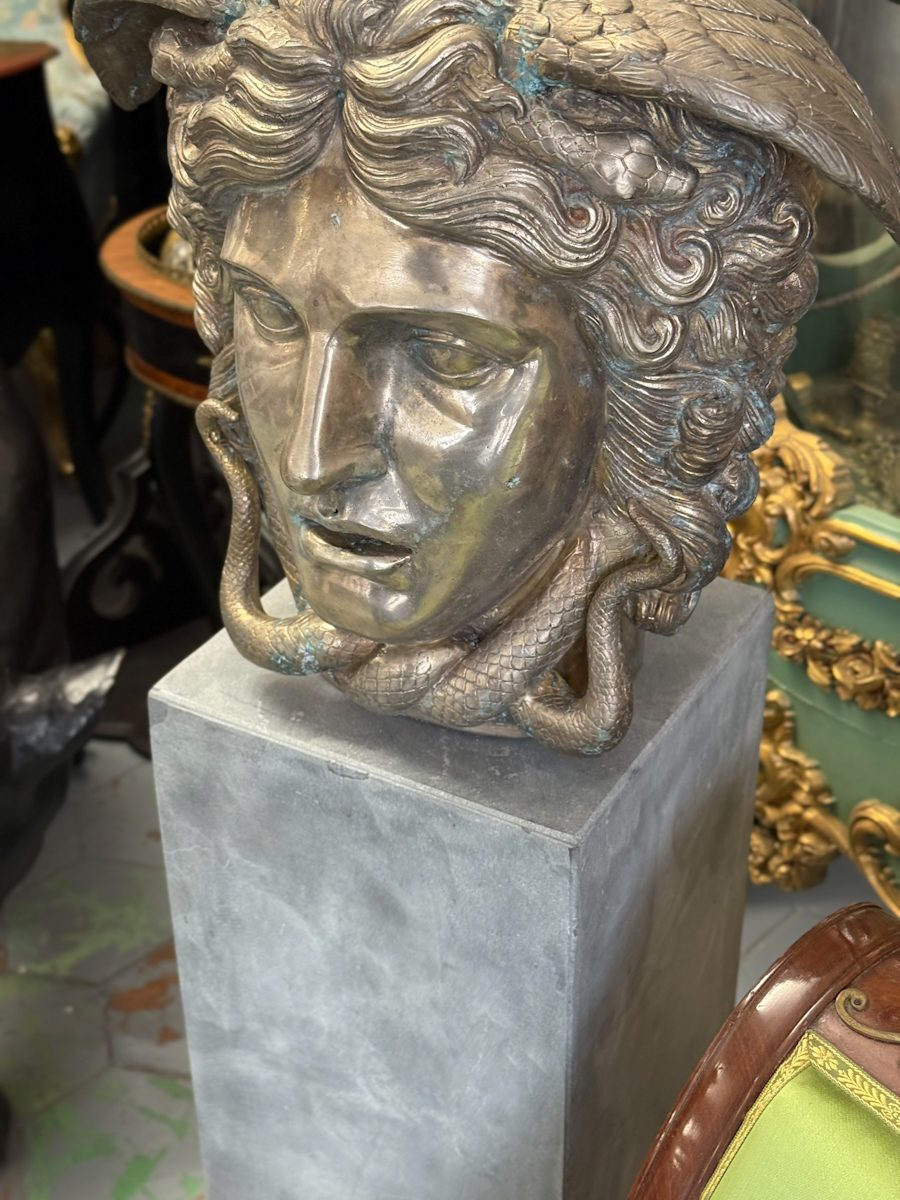
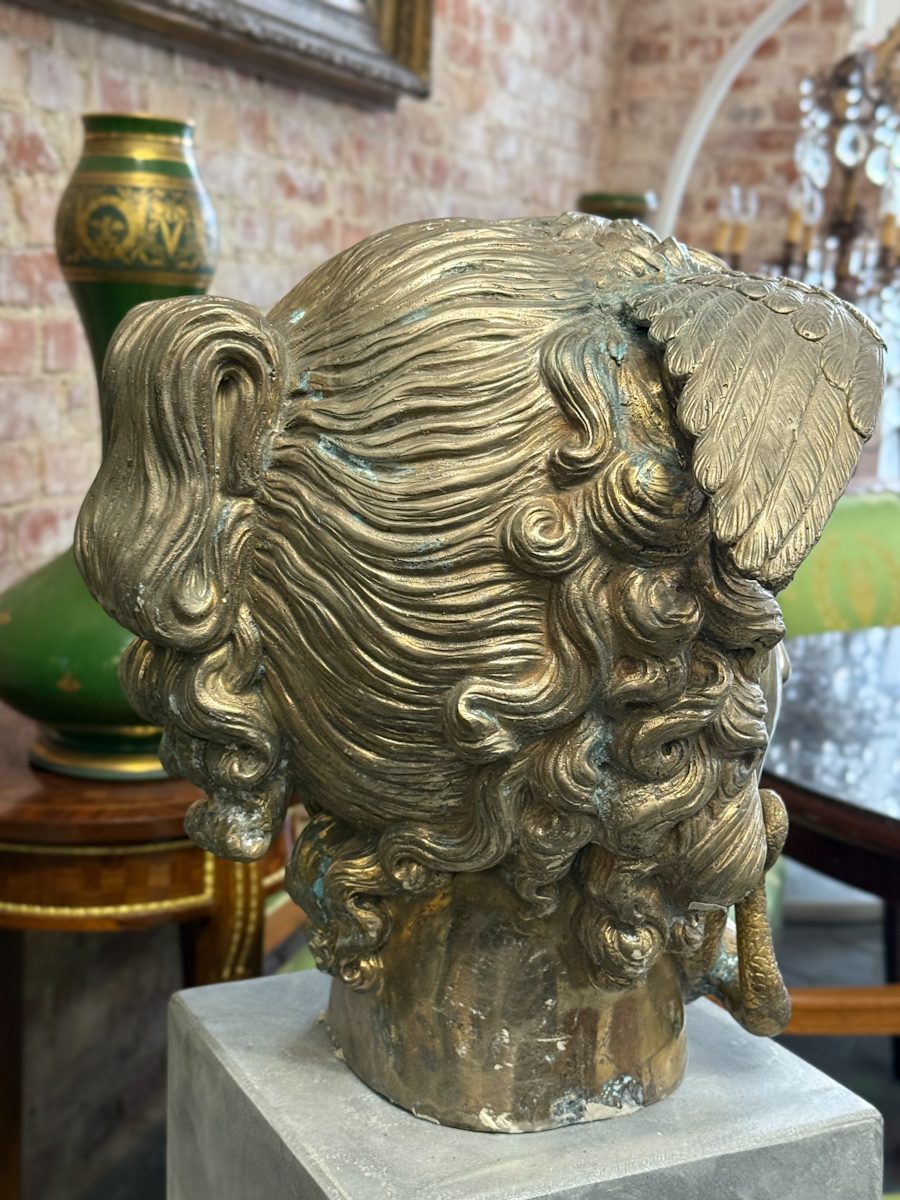
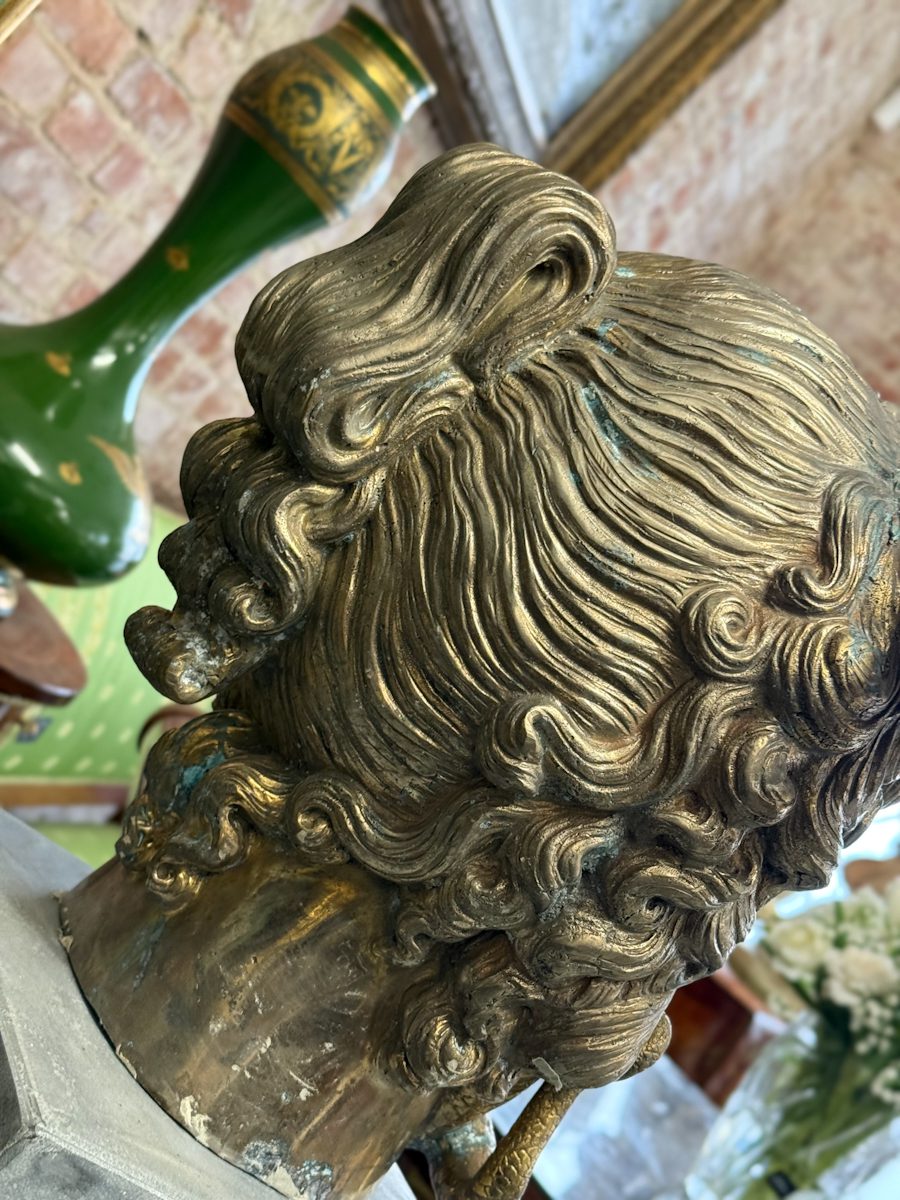
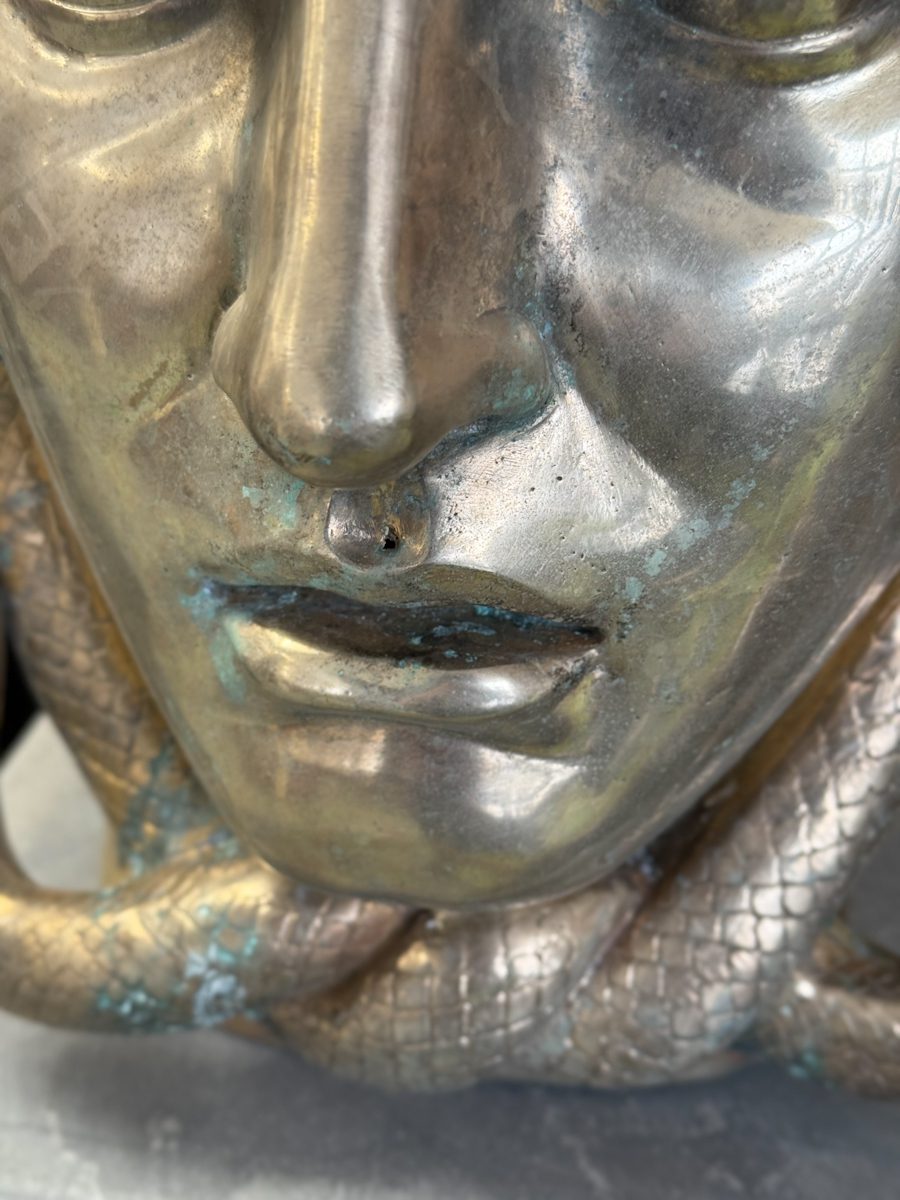
Figūra izgatavota no baltās bronzas — bronzas sakausējuma ar paaugstinātu cinka saturu, kas atšķiras gan no klasiskās alvas bronzas, gan no vienkāršā spelter/zamak (tīra cinka lējuma). Šis ir īsts bronzas sakausējums, kurā cinks aizstāj alvu kā galveno piedevu, radot gaišāku, sudraba toņos spīdošu virsmu ar raksturīgu zaļganās oksidācijas patinu — tieši to, ko redzam šajā figūrā čūsku zvīņās, matu vijumos un sejas plaknēs. Šāds sakausējums 19. gadsimta beigās un 20. gadsimtā tika plaši izmantots augstas klases dekoratīvajā un monumentālajā tēlniecībā — tas nodrošina izsmalcinātu detaļu precizitāti liejot, kā arī unikālu novecošanas raksturu, kas katrai figūrai piešķir individuālu patinas zīmoli. Šī patina nav bojājums — tā ir laika paraksts, kas piešķir figūrai muzejisko autentiskumu. Matu vijumu un čūku zvīņu detaļu precizitāte — katra matu šķipsna, katrs zvīņas lādiņš — liecina par augstvērtīgu lējuma veidni un prasmīgu amatnieka roku. Podests izgatavots no masīva betona ar tīru, ģeometrisku formu — pelēkā betona klusums zem dzīvās, kustīgās Gorgonu karalienei.
―――――――――――――――――――――
💎 RETUMS UN NOZĪME
Medūzas tēls dekoratīvajā mākslā ir meklēts — jo īpaši liela izmēra, brīvi stāvošas skulptūras formā ar spārnu detaļu, ko parasti nesastop standarta Medūzas attēlojumos. Šī ansambļa kopējais augstums (127,5 cm) padara to par telpas dominanti, nevis galda rotājumu. Baltā bronza ar augstinātu cinka saturu un dabīgo zaļgano patinu ir kolekcionāru aprindās augstu vērtēts materiāls — tā novecošanas raksturs ir neparedzams un unikāls katrai figūrai, padarot katru lējumu par individuālu mākslas darbu. Versace estētikas cienītāji, antīkās mitoloģijas entuziasti un mūsdienu interjera dizaineri vienādi atradīs šajā ansamblī to, ko meklē — skaistumu ar zobiem.
―――――――――――――――――――――
🕯️ PIELIETOJUMS INTERJERĀ, DIZAINĀ UN FOTOGRĀFIJĀ
Šis ansamblis ir interjera teātris — tas prasa telpu, gaismu un skatītāju. Ieejot telpā, Medūzas tukšais, absolūtais skatiens sagaida pirmo. Piemērots ieejas hallē kā pirmais un pēdējais iespaids, bibliotēkā vai studijā kā intelektuālās provokcijas centrs, galerijā vai dzīvojamā telpā kā skulpturāls fokusa punkts. Mūsdienīgos interjeros — ar betonu, tēraudu un stiklu — baltās bronzas sudraba-zaļganā gamma uz pelēkā betona podesta rada perfektu dialogu starp seno un mūsdienu. Spārni, kas plešas horizontāli, rada dinamisku telpisko rakursu — figūra izskatās savādāk no katras puses un katrā leņķī atver jaunu dialogu. Fotogrāfiem tā ir neizsmeļama — matu vijumi, čūku zvīņas, patinas krāsu spēle un tas skatiens, kas “nogalina” — viss tas, ko laba portreta fotografija meklē un reti atrod.
―――――――――――――――――――――
🔍 STĀVOKLIS
Ansamblis ir labā stāvoklī. Baltās bronzas figūra ar dabisku oksidācijas patinu — zaļganās niansas čūku zvīņās un matu ieliekumos ir dabīgas laika pēdas, kas piešķir figūrai autentiskas antīkās skulptūras raksturu. Sejas virsma ar maigu polītu efektu — kontrasts starp gludajām sejas plaknēm un teksturētajiem matiem ir apzināts māksliniecisks risinājums. Betona podests ar dabisku novecojumu, bez strukturāliem bojājumiem. Lietas stāvoklis pilnībā atspoguļots fotogrāfijās.
―――――――――――――――――――――
🇬🇧 DESCRIPTION IN ENGLISH
Head of Medusa — Ancient Greek Mythology / Neoclassicism, Europe, 20th century · White Bronze (zinc-based bronze alloy) on concrete column/plinth
―――――――――――――――――――――
📐 DIMENSIONS
Plinth: height 90 cm × width 25 cm × depth 25 cm. Weight — very substantial, solid concrete. Medusa head: height 37.5 cm × width 50 cm × depth 32 cm. Weight — considerable, solid white bronze. Total height of ensemble: approximately 127.5 cm.
―――――――――――――――――――――
🏛️ PERIOD, ART STYLE, HISTORICAL CONTEXT
Medusa — the only mortal of the three Gorgons in Greek mythology, whose gaze turned the living to stone. The expression of her face in this sculpture is what the Greeks called pathos — the union of suffering and tragedy with inexhaustible beauty. This is not a monster — it is a face that knows its fate and accepts it. It is precisely this ambivalence — beauty that kills, and a killing that is beautiful — that Gianni Versace chose in 1978 as the emblem of his fashion empire, and it is precisely this that makes the figure speak to the 21st-century viewer decades later. Iconographically this sculpture is closely related to the most celebrated Medusa in European art — Benvenuto Cellini’s bronze masterpiece Perseus with the Head of Medusa (1545–1554, Loggia dei Lanzi, Florence) — yet this head is conceived as an autonomous sculptural image, not as Perseus’s trophy. The wings on the head — a detail rendered here with exceptional refinement — are an unusual addition to the classical Medusa type, possibly referencing the ancient Greek Gorgoneion tradition in which Medusa was sometimes given wings as a protective symbol associated with Athena.
―――――――――――――――――――――
⚜️ MATERIAL AND TECHNIQUE
The figure is cast in white bronze — a true bronze alloy with an elevated zinc content, distinct both from classical tin bronze and from simple spelter/zamak (pure zinc casting). This is a genuine bronze alloy in which zinc replaces tin as the primary additive, producing a lighter, silver-luminous surface with characteristic greenish oxidation patina — precisely what is visible here in the serpent scales, the coils of hair, and the planes of the face. Such alloys were widely employed in high-quality decorative and monumental sculpture from the late 19th century onward, offering superior casting precision for fine detail work and a uniquely individual ageing character that gives each figure its own patina signature. This patina is not damage — it is the signature of time, lending the figure the authentic gravitas of a museum piece. The precision of the hair coils and serpent scale detail — each individual lock, each scale segment — testifies to a high-quality casting mould and a skilled craftsman’s hand. The plinth is cast in solid concrete with a clean geometric form — the silence of grey concrete beneath the living, restless queen of the Gorgons.
―――――――――――――――――――――
💎 RARITY AND SIGNIFICANCE
The image of Medusa in decorative art is sought — above all in large-format, free-standing sculptural form with the wing detail rarely encountered in standard Medusa representations. The total height of this ensemble (127.5 cm) makes it a spatial dominant, not a table ornament. White bronze with elevated zinc content and natural green patina is highly valued in collector circles — its ageing character is unpredictable and unique to each individual cast, making every piece a singular work. Versace aesthetes, classical mythology enthusiasts, and contemporary interior designers will equally find in this ensemble what they seek — beauty with teeth.
―――――――――――――――――――――
🕯️ USE IN INTERIOR, DESIGN AND PHOTOGRAPHY
This ensemble is interior theatre — it demands space, light, and a viewer. Entering the room, Medusa’s empty, absolute gaze is the first thing to receive you. Suited to an entrance hall as the first and last impression, to a library or studio as the centre of intellectual provocation, to a gallery or living space as a sculptural focal point. In contemporary interiors — with concrete, steel, and glass — the silver-green tonal range of the white bronze on its grey concrete plinth creates a perfect dialogue between the ancient and the now. The wings, extending horizontally, create a dynamic spatial aspect — the figure reads differently from every angle and opens a new conversation from each one. For photographers it is inexhaustible — the coiling hair, the serpent scales, the play of patina colour, and that gaze that “kills” — everything that strong portrait photography seeks and rarely finds.
―――――――――――――――――――――
🔍 CONDITION
The ensemble is in good condition. The white bronze figure bears natural oxidation patina — the greenish tones in the serpent scales and hair recesses are the natural marks of time that lend the figure the character of authentic antique sculpture. The facial surface retains a subtle polished effect — the contrast between the smooth planes of the face and the textured hair is a deliberate artistic resolution. The concrete plinth shows natural age-related wear, without structural damage. The condition of the item is fully reflected in the photographs.