Bronzas Svečturis ar (Enģeļa) Putto Figūru, 4 Sveces — Napoleon III stils, Francija, 19.gs. (6268)
Bronzas Svečturis ar (Enģeļa) Putto Figūru, 4 Sveces — Napoleon III stils, Francija, 19.gs. (6268)
€650.00
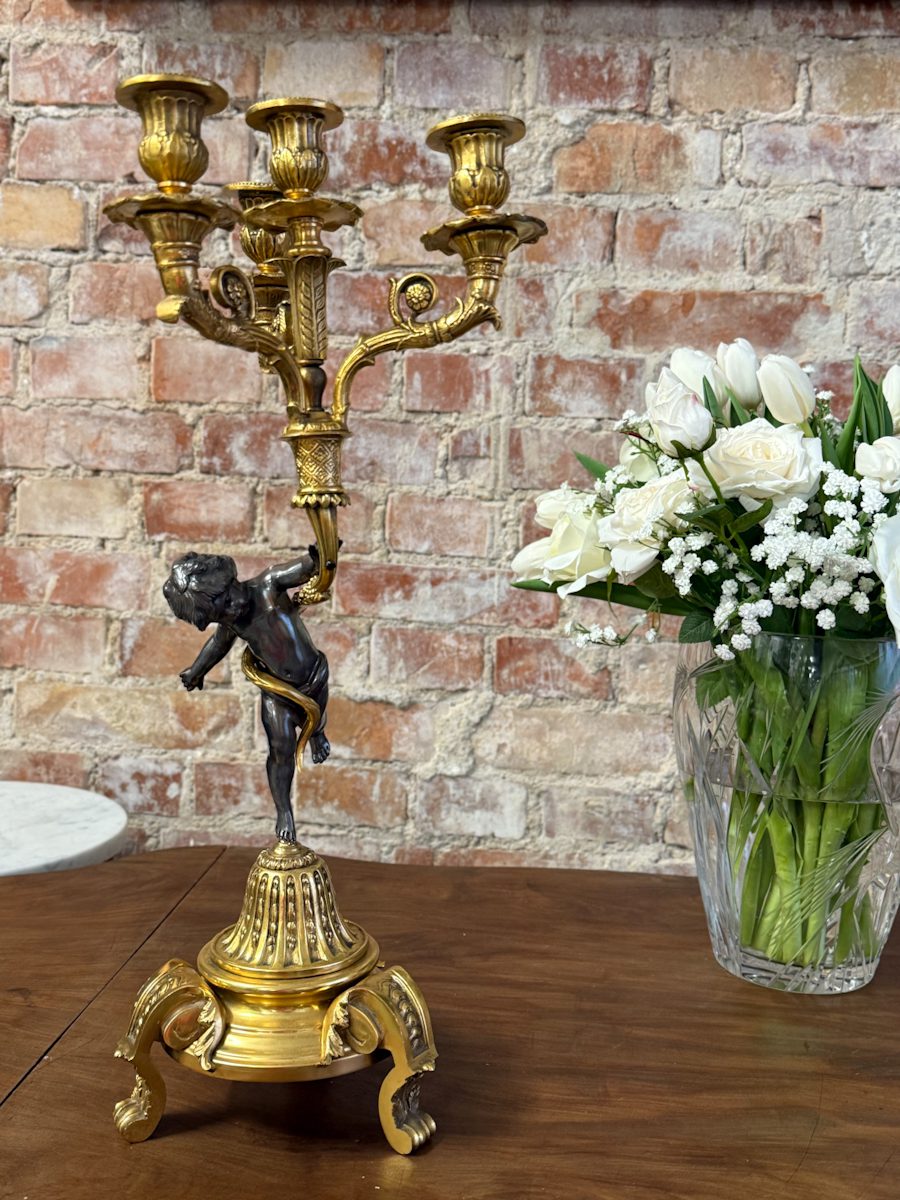
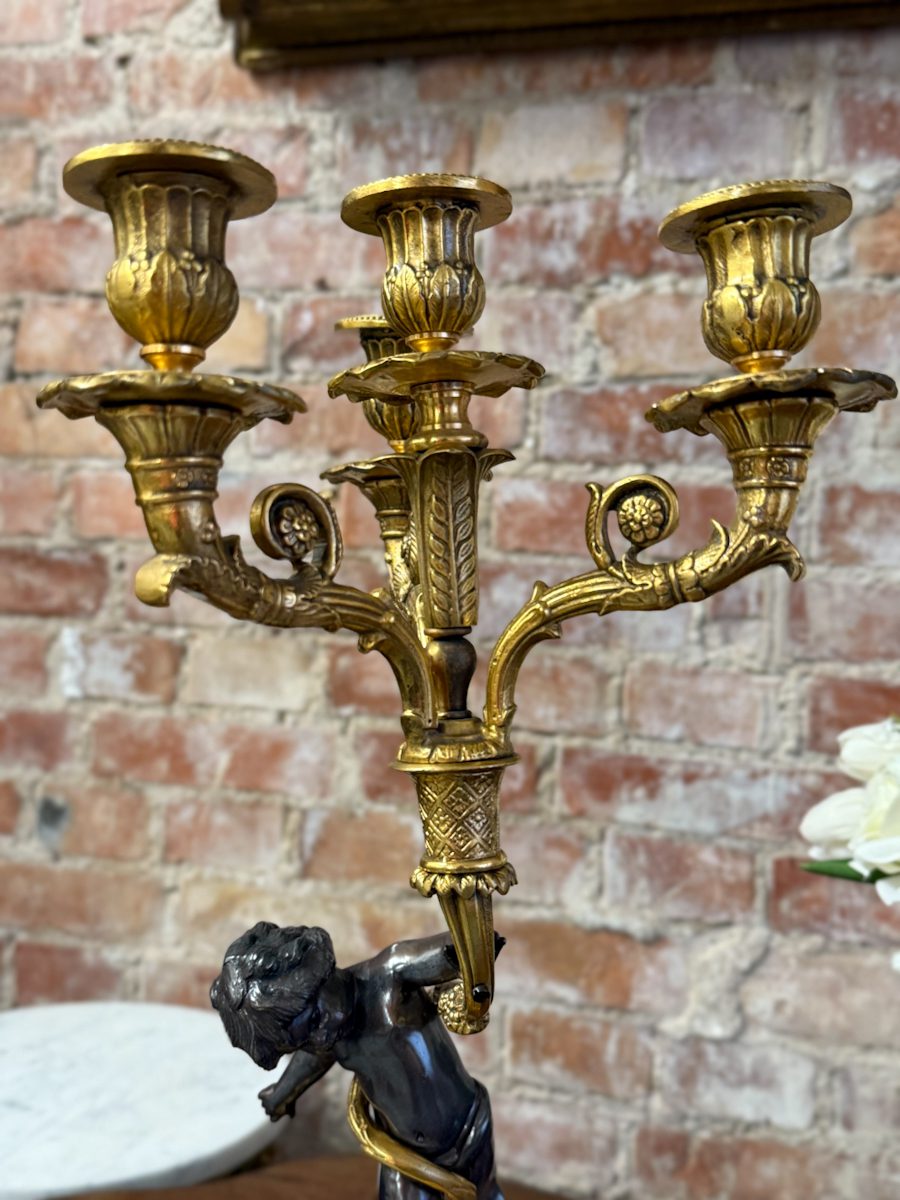
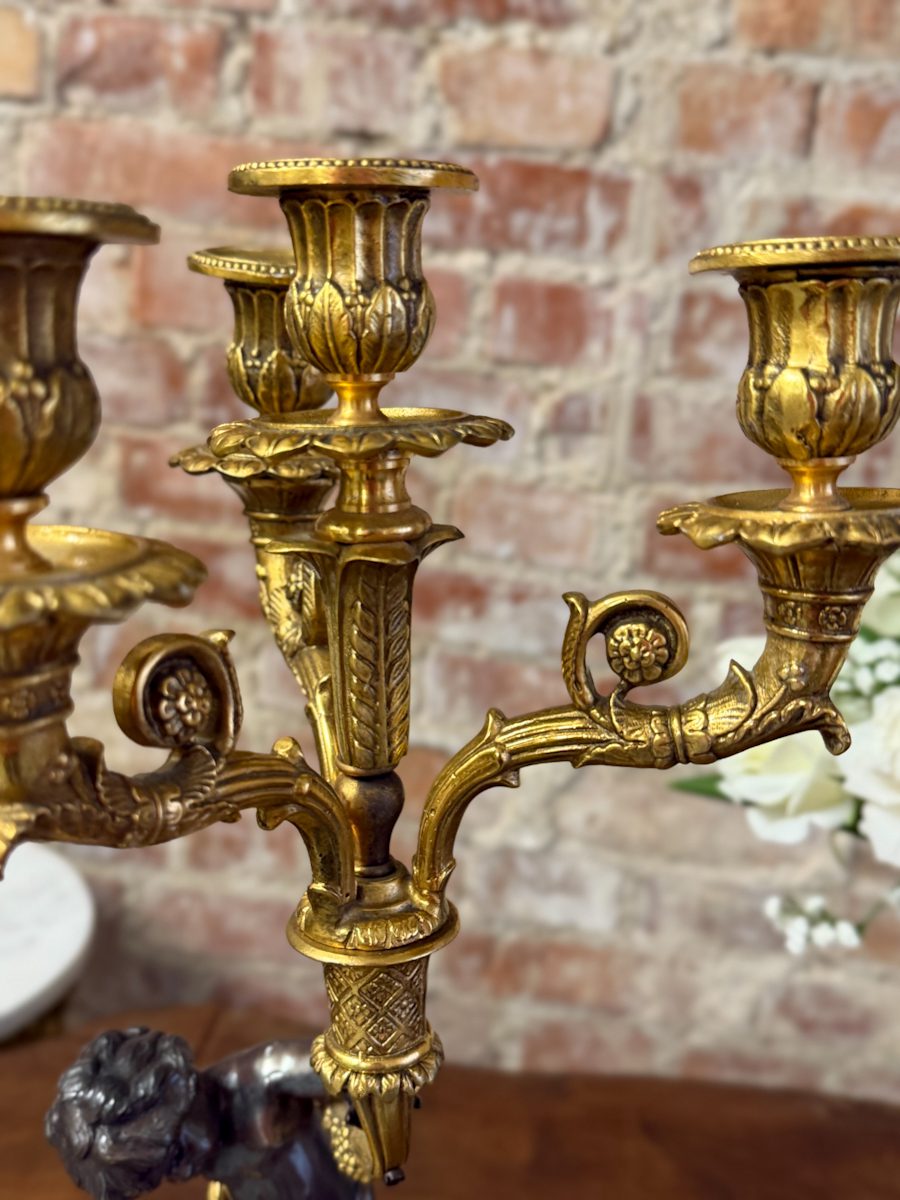
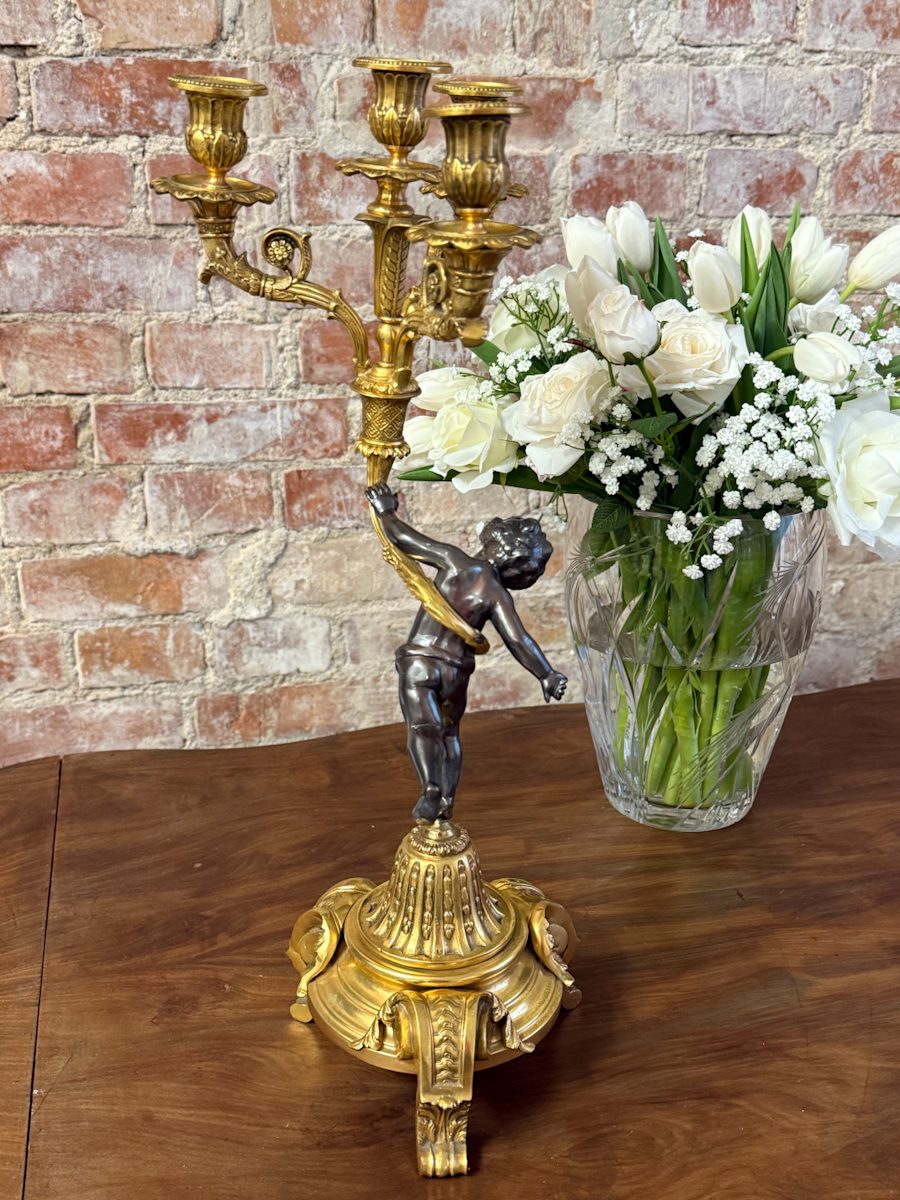
Greznais bronzas kandelābrs ar melnās patinas putto figūru un četriem ormolu zeltītiem sveces zariem. Bronze à deux patines tehnika, losange toretes šķirklis, volūtu trīskāju pamatne. Napoleon III / Second Empire stils, Francija, ap 1850.–1880. Augstums 52,5 cm × platums 21 cm.
📐 Izmēri: Augstums 52,5 cm × platums 21 cm
―――――――――――――――――――――
Bronzas Četru Svaru Svečturis ar Putto Figūru — Napoleon III / Second Empire stils, Francija, ap 1850.–1880.
―――――――――――――――――――――
🏛️ IZGATAVOŠANAS PERIODS, MĀKSLAS STILS, LAIKMETS
Šis monumentālais svečturis (candélabre à quatre bras) pieder Napoleon III jeb Second Empire (Otrā Impērija) stila ziedu laikam — tam 1850.–1880. gadu periodam, kad Francija Napoleona III vadībā pārdzīvoja grandiozāko luksusa amatniecības uzplaukumu kopš Luī XIV laikmeta. Second Empire stils apvienoja Empire klasicisma stingrību ar Luī XV un Luī XVI ornamentālo bagātību, radot virtuozi iestrādātu, teatrālu bronzas mākslu.
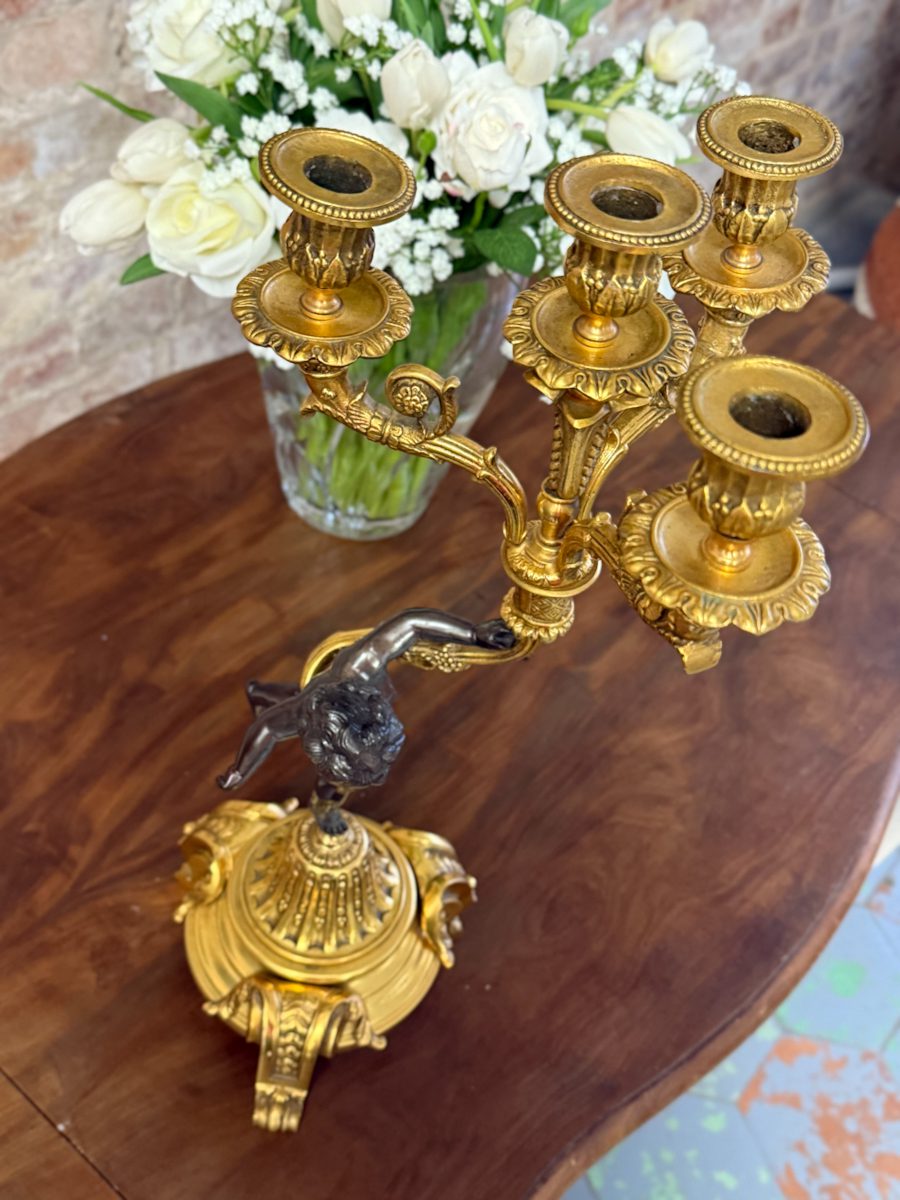
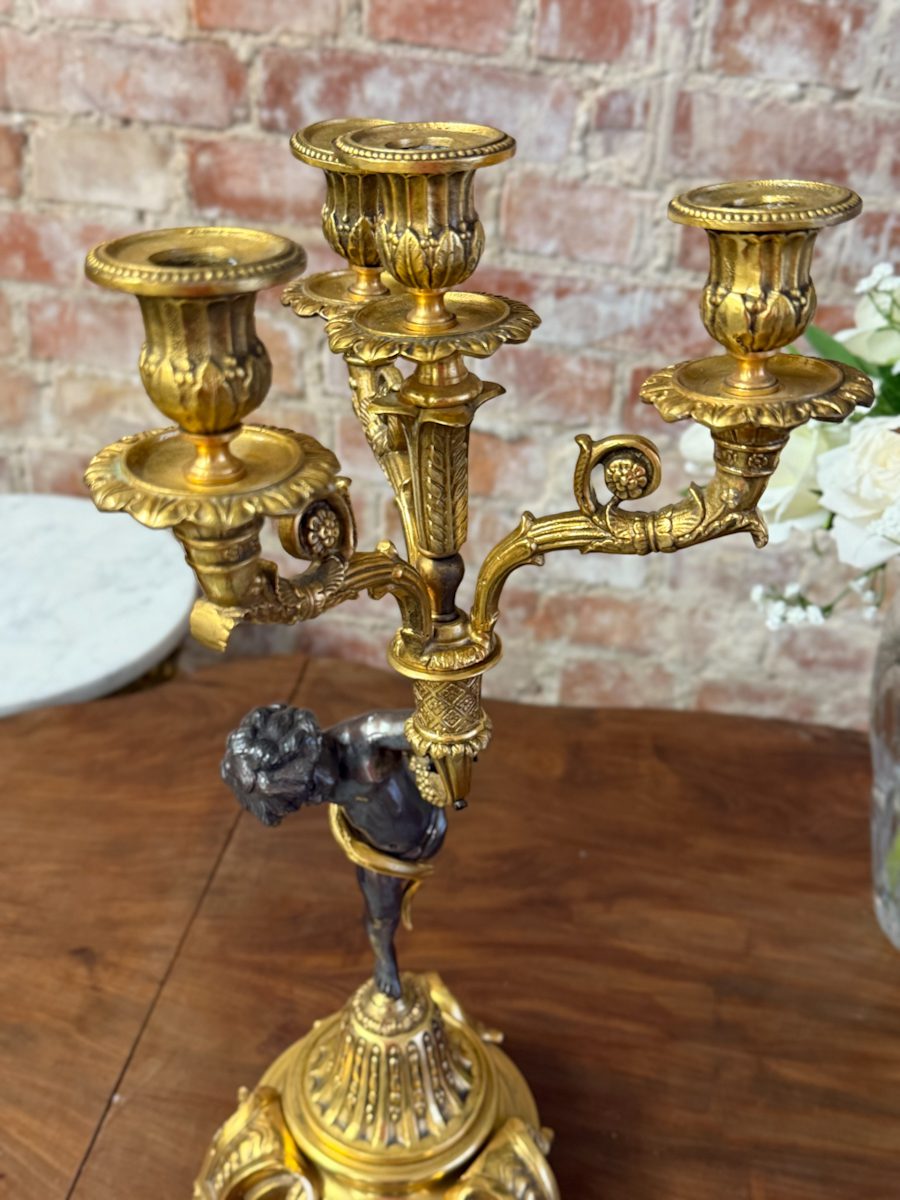
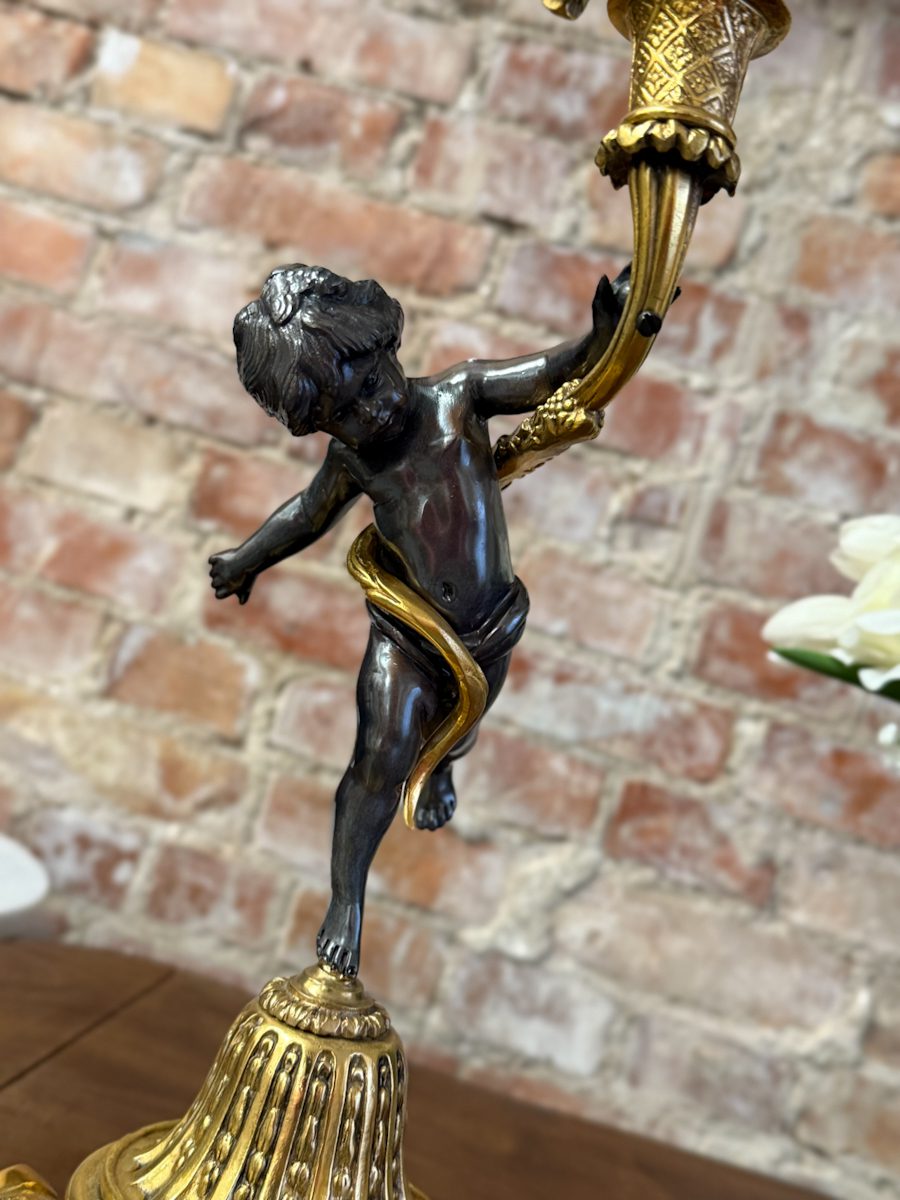
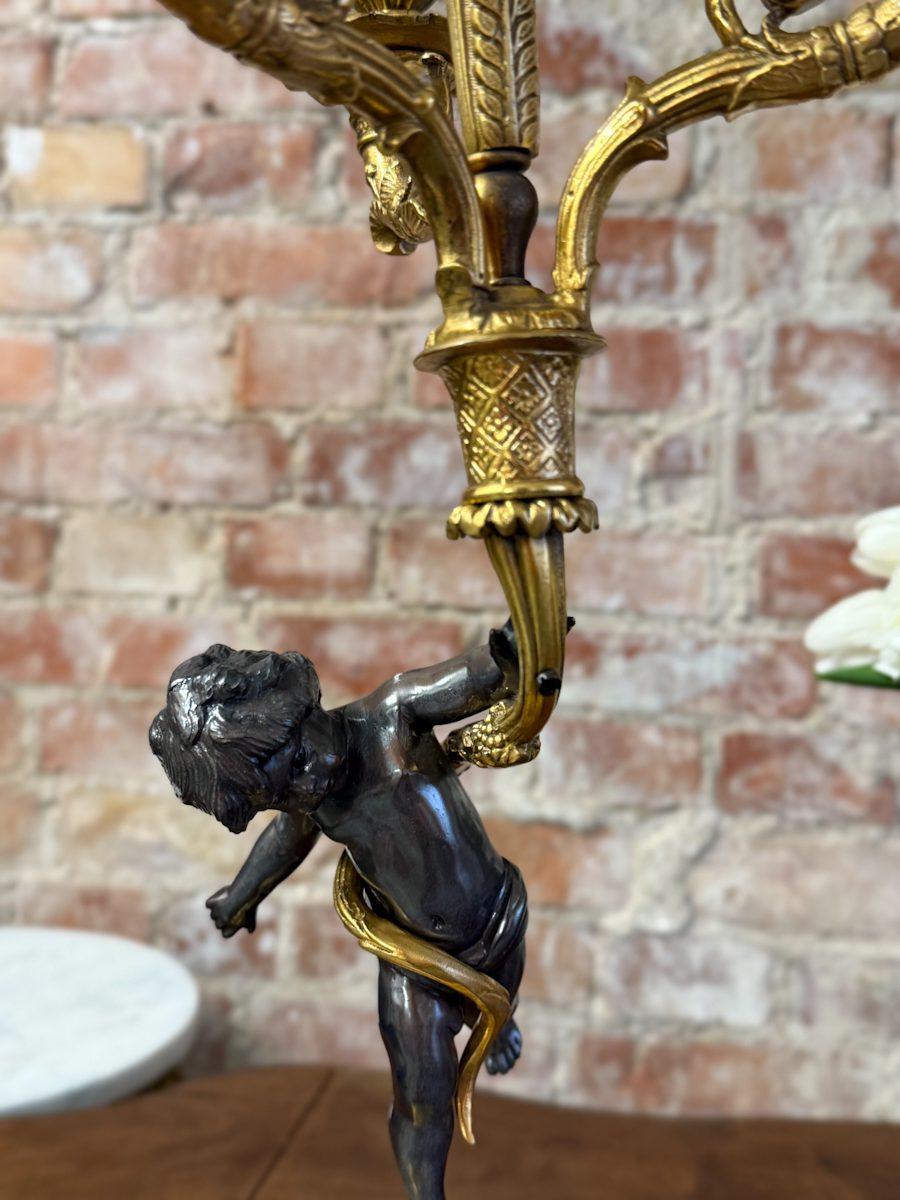
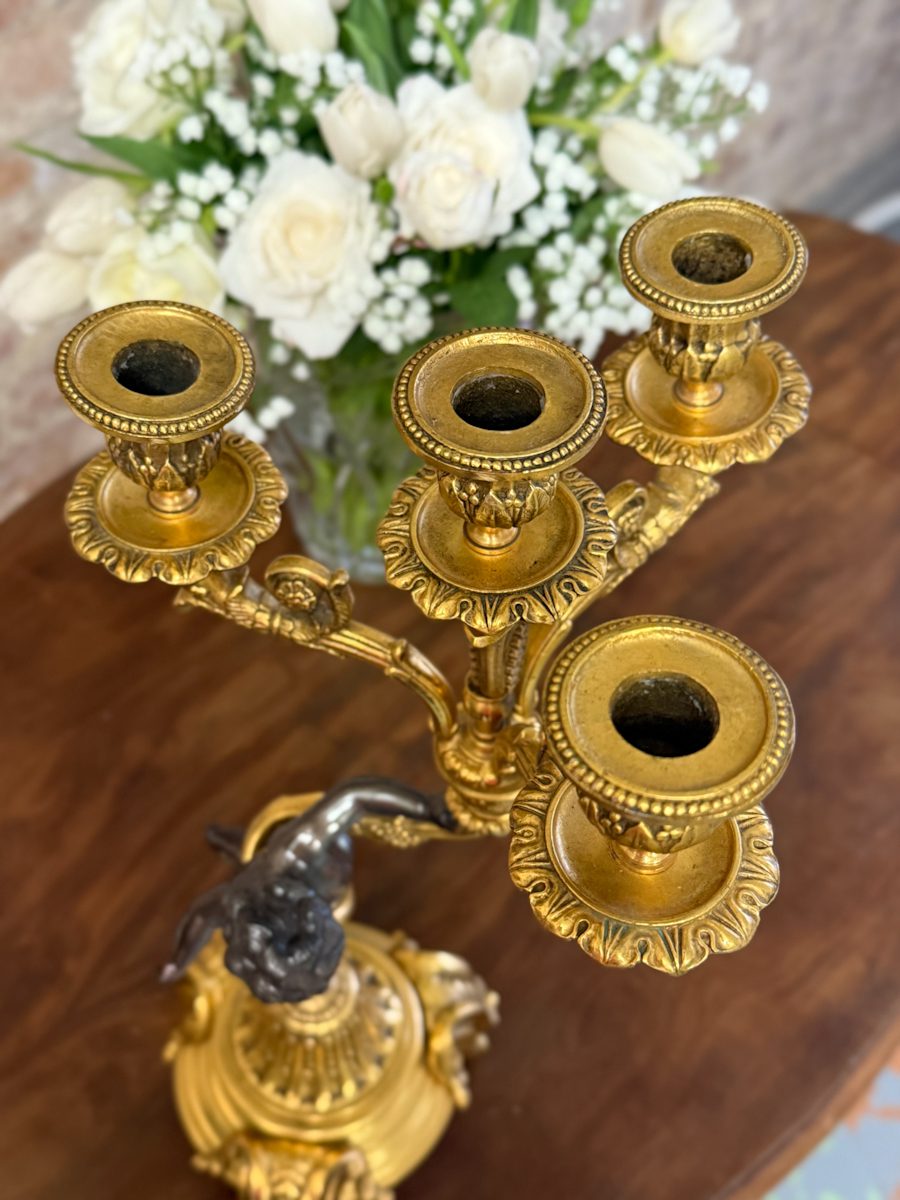
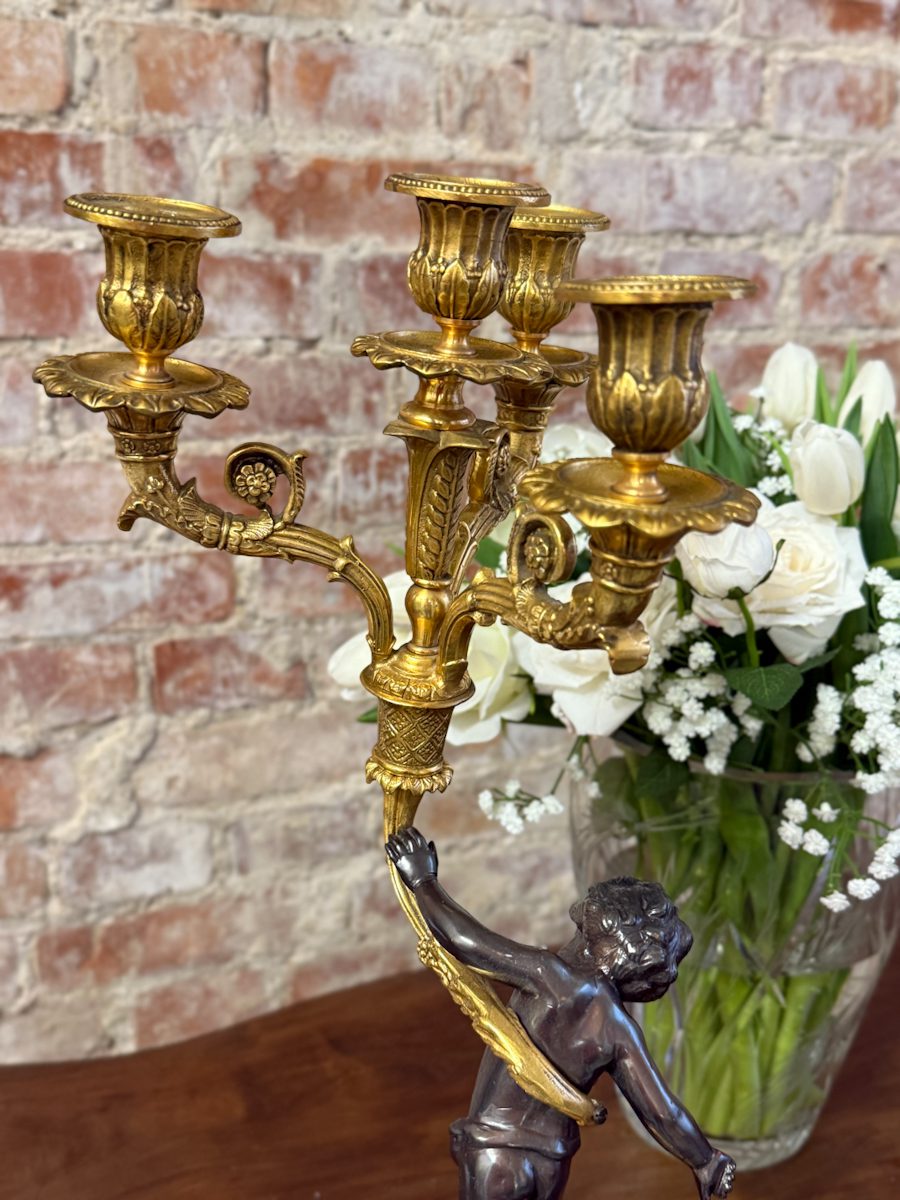
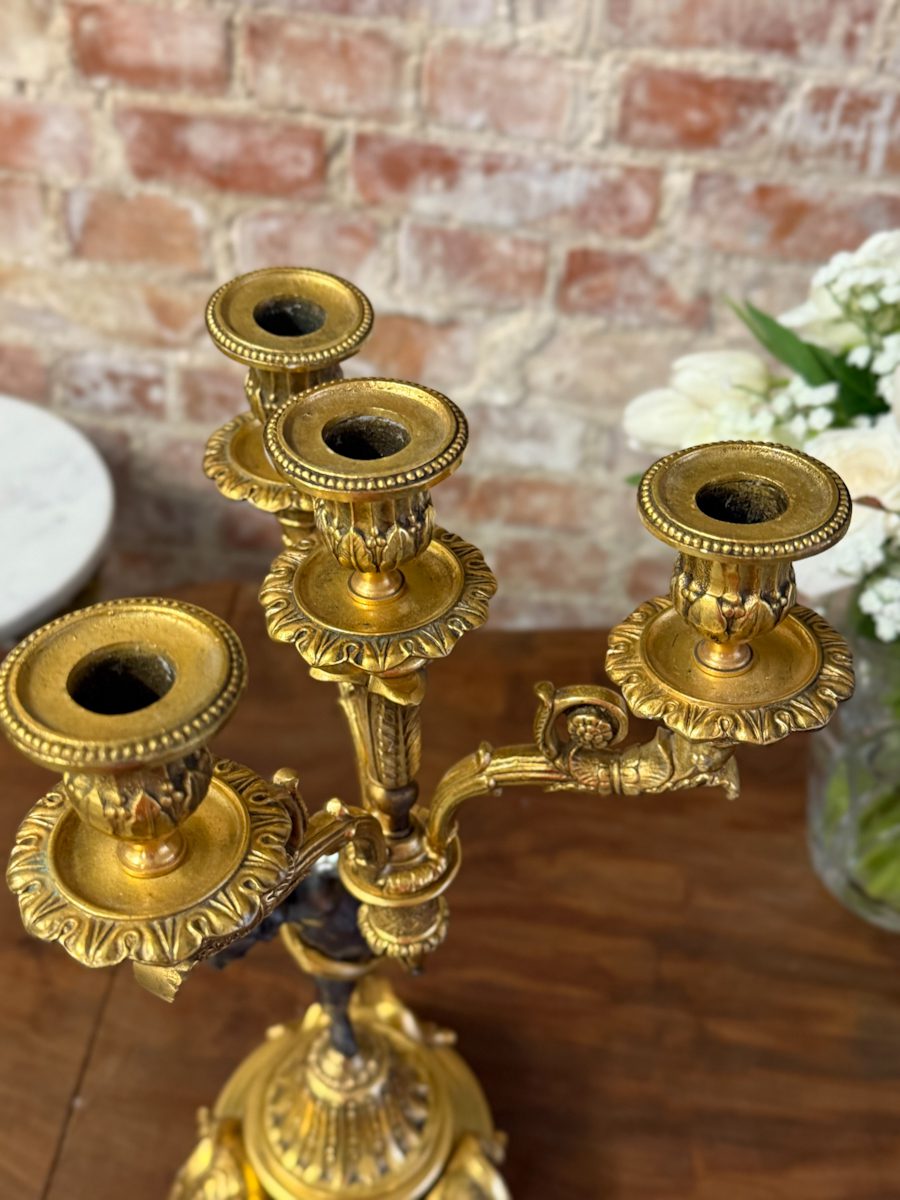
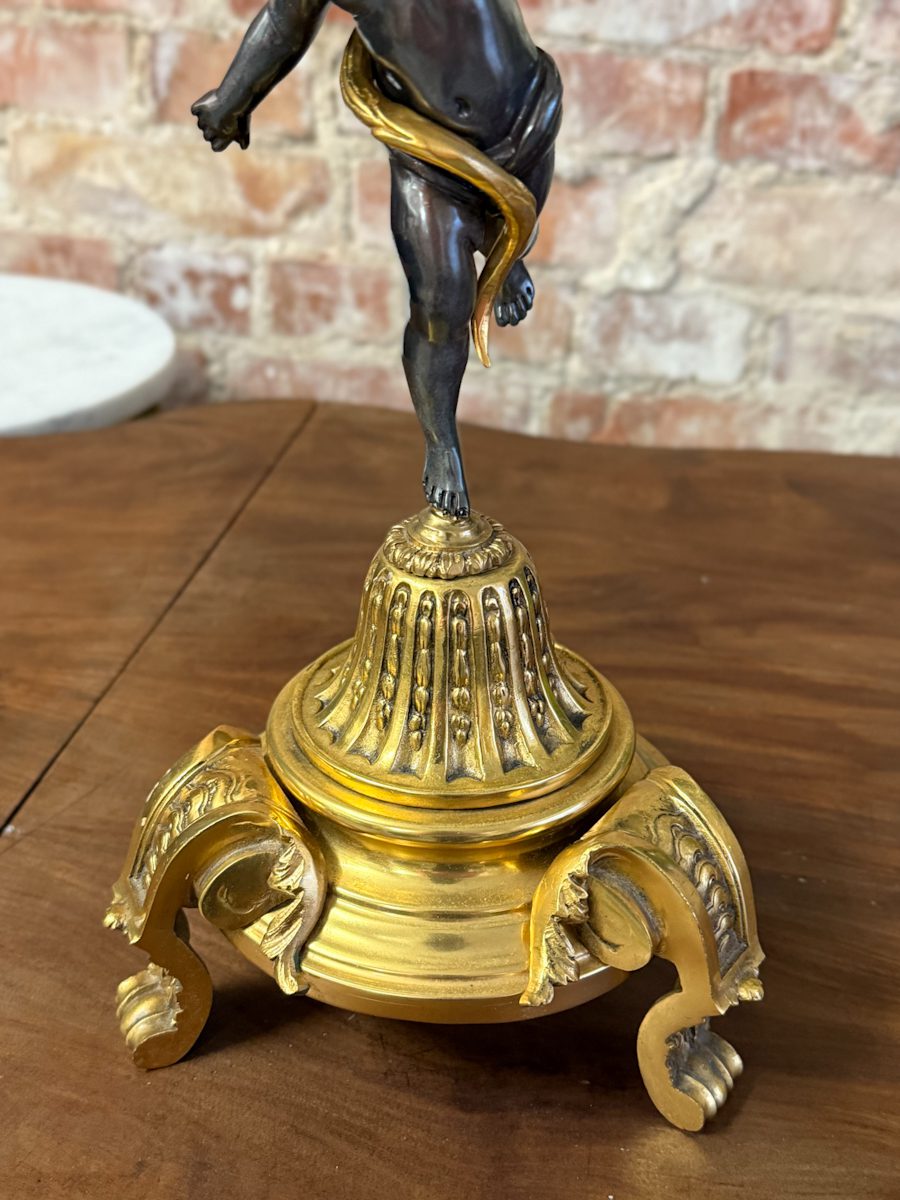
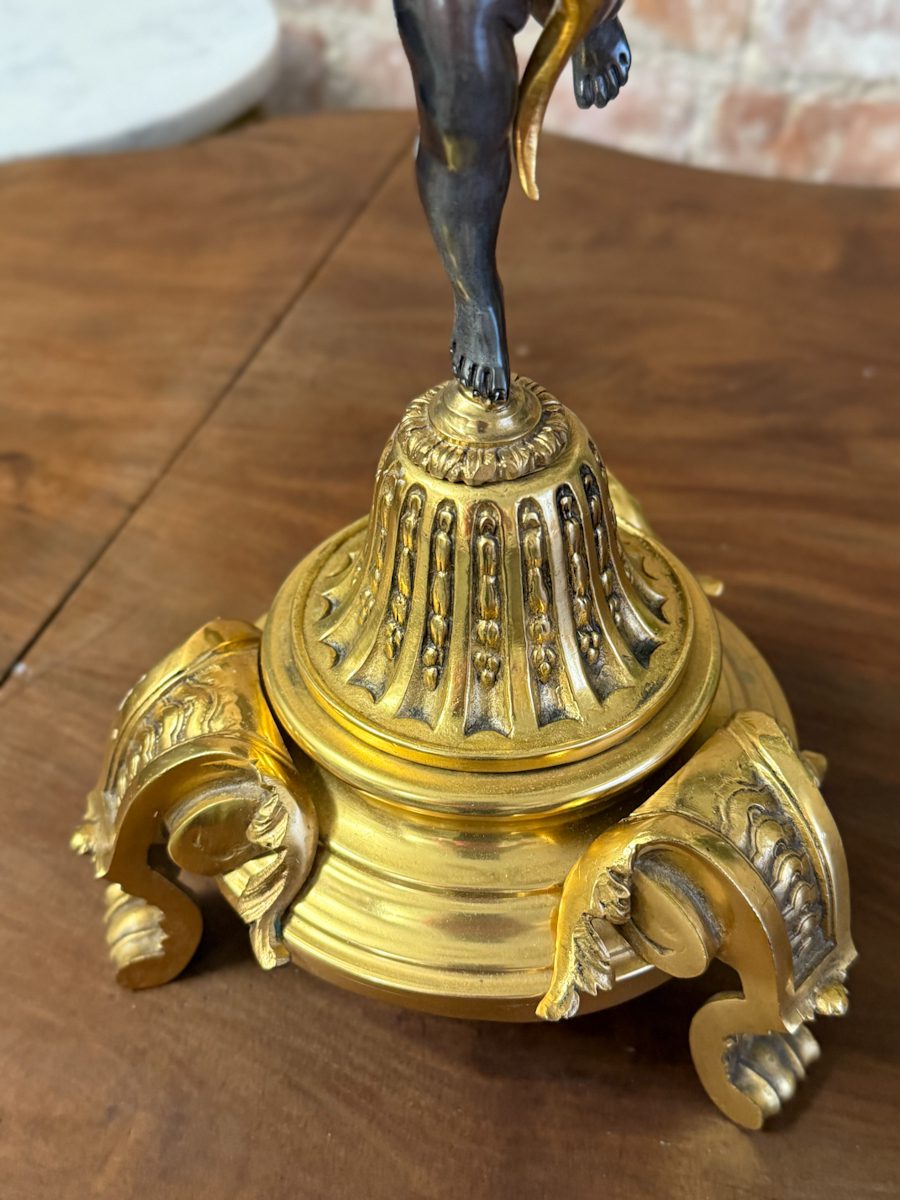
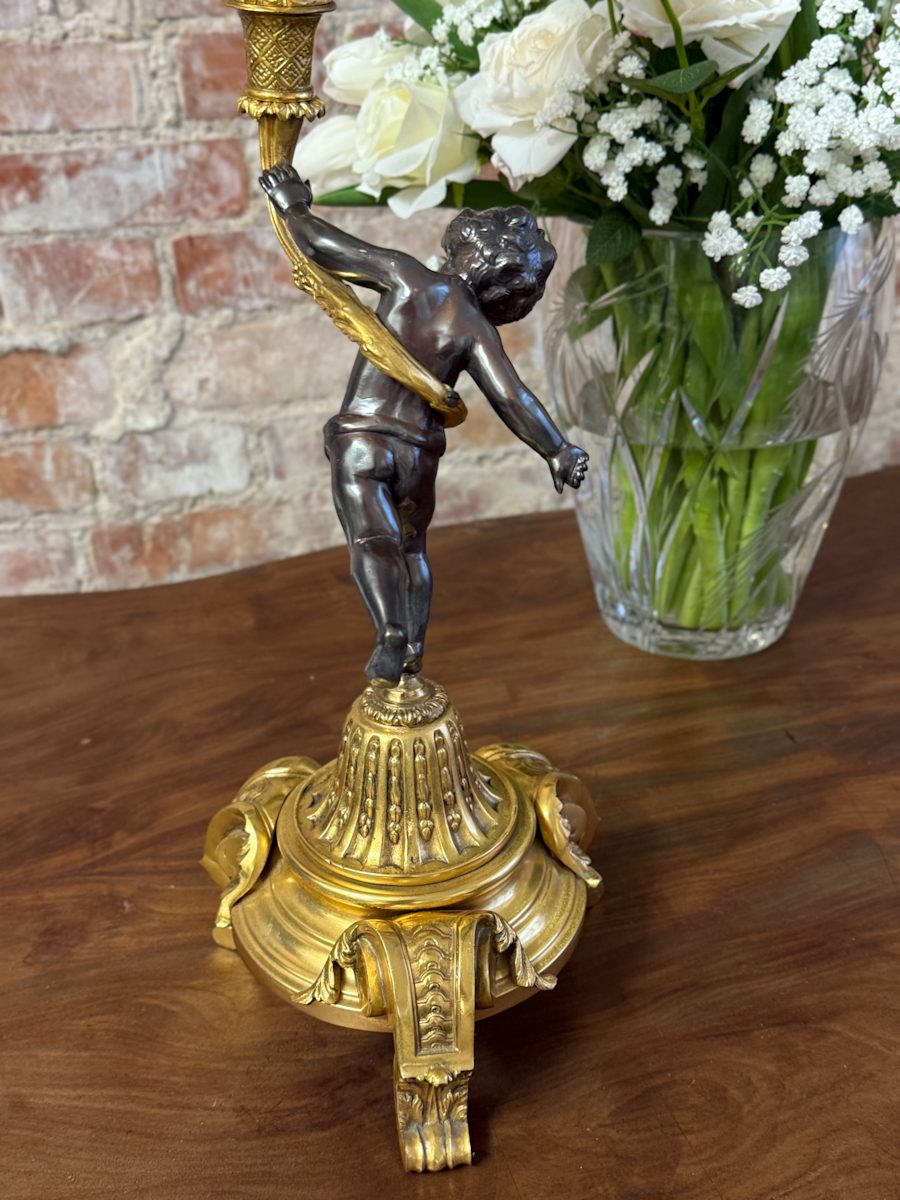
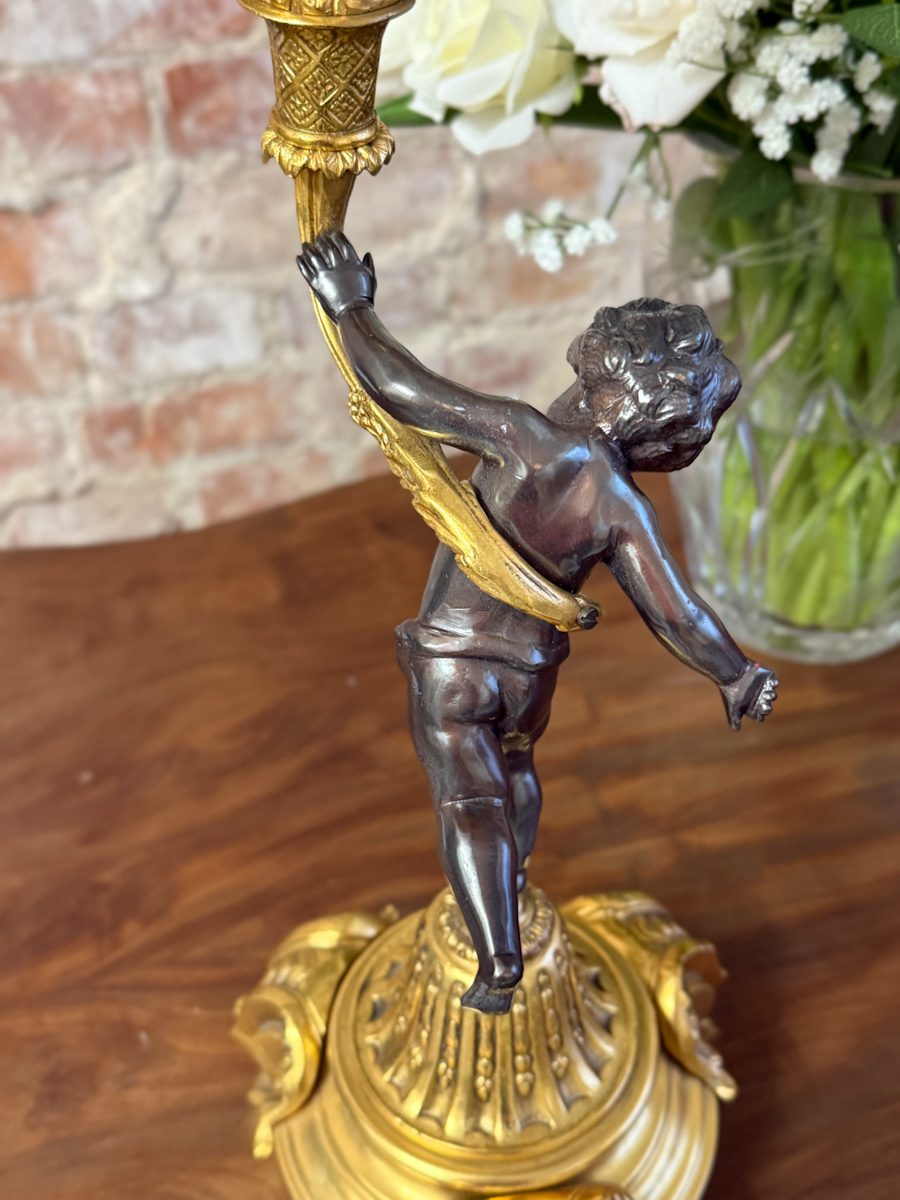
Šis svečturis iemieso šo ideālu ar māksliniecisko precizitāti: melnās patinas (bronze patiné au noir vai bronze noirci) putto — kailā bērna figūra ar vijīgiem matiem un zeltainas ormolu lentes aplocinājumu ap rumpi — stāv uz masīvas ormolu zvaniņveida pamatnes ar gadroon rievām un akantus lapu profilu. No figūras rokām augšup ceļas četrzaru ormolu zeltītais kandelābrs ar losange pinuma toretes šķirkli, no kura izaug četri izliekti zari ar akantus lapu profilu — katrs noslēdzas ar urnu veida bobèche sveces turētāju ar lapu vainagu. Trīskāju pamatne ar volūtu kājām papildina šo kompozīciju ar neoklasicisma stabilitāti.
―――――――――――――――――――――
⚜️ RAŽOTĀJS UN MANUFAKTŪRAS ZĪMOGS
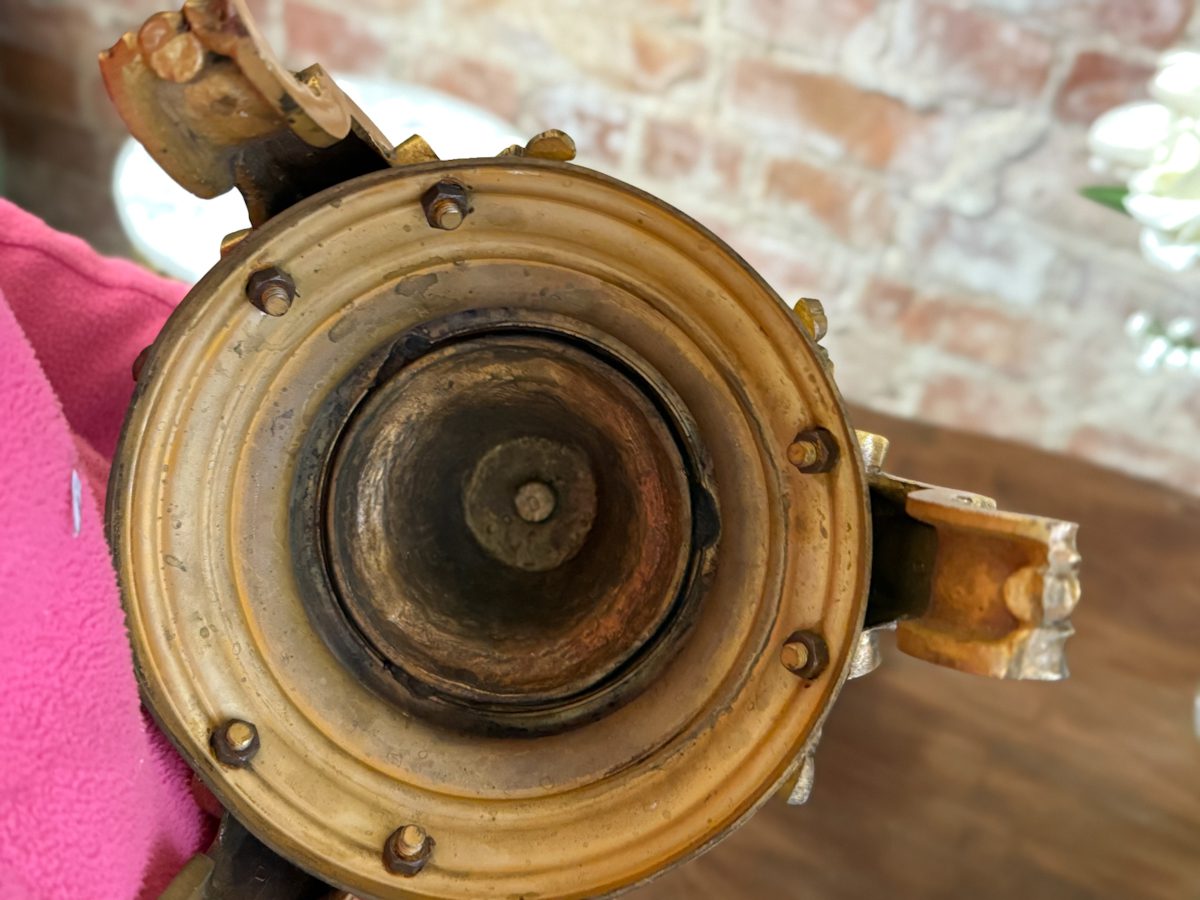
Svečturim nav redzama ražotāja marķējuma, taču bronze à deux patines tehnikas augstā kvalitāte — melno putto figūras plastiskuma precizitāte un ormolu zeltīto elementu spilgtums — norāda uz augstākā segmenta Parīzes bronzas darbnīcu. Napoleon III perioda Parīzē darbojās izcilākie Eiropas bronzas lējēji — Ferdinand Barbedienne, Henri Picard, Victor Paillard — kuri producēja šāda tipa figūru kandelābrus impēriskajam galmam un augstākajai aristokrātijai. Putto figūras modelēšanas kvalitāte — izteiksmīgā poza, matu detalizācija, proporciju elegance — liecina par augstākās klases meistaru roku. Apakšā redzama bronzas pamatne ar skrūvju montāžas sistēmu, kas apliecina profesionālu darbnīcas izstrādājumu.
―――――――――――――――――――――
💎 RETUMS UN NOZĪME
Šāda augstuma (52,5 cm) Second Empire svečturi ar putto figūras kātu, četriem zariem un pilnu bronze à deux patines programmu ir ievērojams retums pat specializētajos Parīzes, Londonas un Briseles antikvāru tirgos. Tieši putto kā svečtura kāta figūra ir ikonisks Second Empire un Napoleon III periods bronzas motīvs — tā atrodams Luvras un Kompjēnas pils inventāros un Parīzes augstākās buržuāzijas salonu aprakstos. Figūras amatnieciskā kvalitāte, izmērs un ormolu elementu saglabāšanās pakāpe padara šo priekšmetu par izcilu kolekcionāra atradumu.
―――――――――――――――――――――
🕯️ PIELIETOJUMS INTERJERĀ, DIZAINĀ UN FOTOGRĀFIJĀ
Ar saviem 52,5 cm šis svečturis ir izteikts interjera dominants — kamīnmala, sidebordu virsma, konsoles galdiņš vai ēdamistabas galda centrs. Četri sveces zari nodrošina bagātīgu apgaismojumu, un putto figūra piešķir priekšmetam poētisko dimensiju — tas ir gan funkcionāls, gan skulpturāls. Iekļaujas gan klasiskā franču salona rekonstrukcijā, gan mūsdienu maximalist, dark academia vai eclectic luxury interjerā. Fotogrāfi un stilisti to izmanto kā centrālo rekvizītu editorial uzņēmumos — putto figūras dinamiskā poza un ormolu zeltīto elementu spīdums veido teatrālu vizuālo lauku. Dizaineri to novērtē kā “telpas monologu” — priekšmetu, kas runā pat klusumā.
―――――――――――――――――――――
🎁 DĀVANA UN PERSONALIZĀCIJA
Šis svečturis ir no tiem priekšmetiem, kas nekad neaizmirst savu saņēmēju — reprezentatīva, kultūrvēsturiski nozīmīga dāvana augstākā līmeņa saņēmējam. Piemērots kā izcila korporatīvā dāvana — vēstnieka, galerijas direktora vai kolekciju īpašnieka līmenī. Putto — prieka un mākslas simbols — padara to par piemērotu dāvanu jebkuram mākslas pasaules pārstāvim.
―――――――――――――――――――――
🔍 STĀVOKLIS
Svečturis ir labā vispārējā stāvoklī atbilstoši vecumam. Melnās patinas putto figūra ir labi saglabājusies ar vienmērīgu dabisku patinu un bez mehāniskiem bojājumiem. Ormolu zeltītie elementi — pamatne, toretes šķirklis, zari, bobèche plates — saglabājuši dabisku vecuma patinu ar nelielu toņu izmaiņu, kas apliecina autentiskumu. Četri sveces zari ir stabili. Apakšā redzama bronzas pamatne ar skrūvju montāžas sistēmu — raksturīgas vecuma pēdas. Lietas stāvoklis pilnībā atspoguļots fotogrāfijās.
―――――――――――――――――――――
🇬🇧 DESCRIPTION IN ENGLISH
📐 Dimensions: Height 52.5 cm × width 21 cm
―――――――――――――――――――――
Four-Light Bronze Candelabrum with Putto Figure — Napoleon III / Second Empire Style, France, approximately 1850–1880
―――――――――――――――――――――
🏛️ PERIOD, ARTISTIC STYLE, ERA
This monumental candelabrum (candélabre à quatre bras) belongs to the height of the Napoleon III or Second Empire style — that 1850s–1880s period when France under Napoleon III experienced the most grandiose flourishing of luxury craftsmanship since the era of Louis XIV. The Second Empire style united the rigour of Empire classicism with the ornamental richness of Louis XV and Louis XVI, creating a virtuosically wrought, theatrical bronze art.
This candelabrum embodies that ideal with artistic precision: a black patina (bronze patiné au noir) putto — a nude child figure with flowing hair and a gilded ormolu ribbon wrapping around the torso — stands on a substantial ormolu bell-form base with gadroon fluting and acanthus leaf profile. From the figure’s hands rises a four-branch ormolu gilded candelabrum with a losange lattice torchère knop, from which spring four curved branches with acanthus leaf profile — each terminating in an urn-form bobèche candle holder with a leaf crown. The tripod base with volute feet completes the composition with Neo-Classicist stability.
―――――――――――――――――――――
⚜️ MAKER AND MARKS
The candelabrum bears no visible maker’s mark, but the high quality of the bronze à deux patines technique — the plastic precision of the black putto figure and the brilliance of the ormolu gilded elements — points to a top-tier Parisian bronze foundry. In Napoleon III‘s Paris, the finest European bronze casters were at work — Ferdinand Barbedienne, Henri Picard, Victor Paillard — who produced candelabra of this type for the imperial court and the highest aristocracy. The modelling quality of the putto figure — the expressive pose, the hair detailing, the elegance of proportions — attests to the hand of a top-tier master. The underside shows a bronze base with a screw-mount assembly system, confirming a professional workshop origin.
―――――――――――――――――――――
💎 RARITY AND SIGNIFICANCE
Candelabra of this scale (52.5 cm) with a putto figure shaft, four branches, and a complete bronze à deux patines programme are a notable rarity even in specialist antique markets in Paris, London, and Brussels. The putto as a candelabrum shaft figure is an iconic Second Empire and Napoleon III period bronze motif — found in the inventories of the Louvre and the Château de Compiègne and in descriptions of the finest Parisian bourgeois salons. The craftsmanship quality of the figure, the scale, and the degree of preservation of the ormolu elements make this piece an outstanding collector’s find.
―――――――――――――――――――――
🕯️ USE IN INTERIOR, DESIGN AND PHOTOGRAPHY
At 52.5 cm, this candelabrum is a pronounced interior dominant — on a mantelpiece, sideboard surface, console table, or dining table centrepiece. Four candle branches provide generous illumination, and the putto figure gives the piece a poetic dimension — it is simultaneously functional and sculptural. It integrates into a classical French salon reconstruction as naturally as into a contemporary maximalist, dark academia, or eclectic luxury interior. Photographers and stylists use it as the central prop in editorial shoots — the dynamic pose of the putto and the gleam of the ormolu elements create a theatrical visual field. Designers regard it as the “room’s monologue” — a piece that speaks even in silence.
―――――――――――――――――――――
🎁 GIFT AND PERSONALISATION
This candelabrum is one of those pieces that is never forgotten by its recipient — a representative, culturally significant gift for a highest-level recipient. Suitable as an outstanding corporate gift — at the level of an ambassador, gallery director, or collection owner. The putto — a symbol of joy and the arts — makes it an appropriate gift for any representative of the art world.
―――――――――――――――――――――
🔍 CONDITION
The candelabrum is in good general condition for its age. The black patina putto figure is well preserved with even natural patina and no mechanical damage. The ormolu gilded elements — base, torchère knop, branches, bobèche plates — retain natural age patina with minor tonal variation confirming authenticity. The four candle branches are stable. The underside shows a bronze base with screw-mount assembly — characteristic age traces. The condition of the item is fully reflected in the photographs.
―――――――――――――――――――――