
Fajansa siera trauks ar vāku un paplāti, zilbalts ziedu dekors, Staffordšīra, Anglija, ap 1870.–1900. gads (6004)
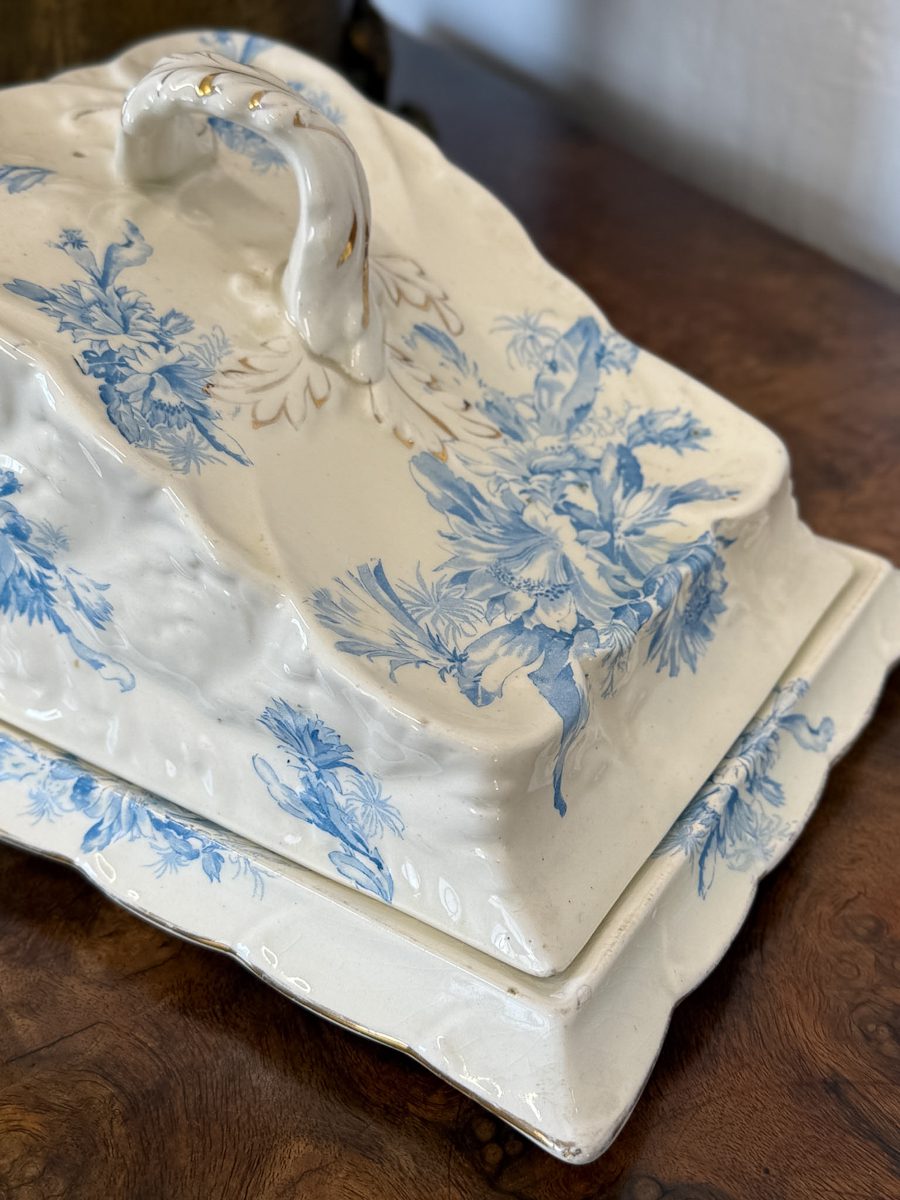
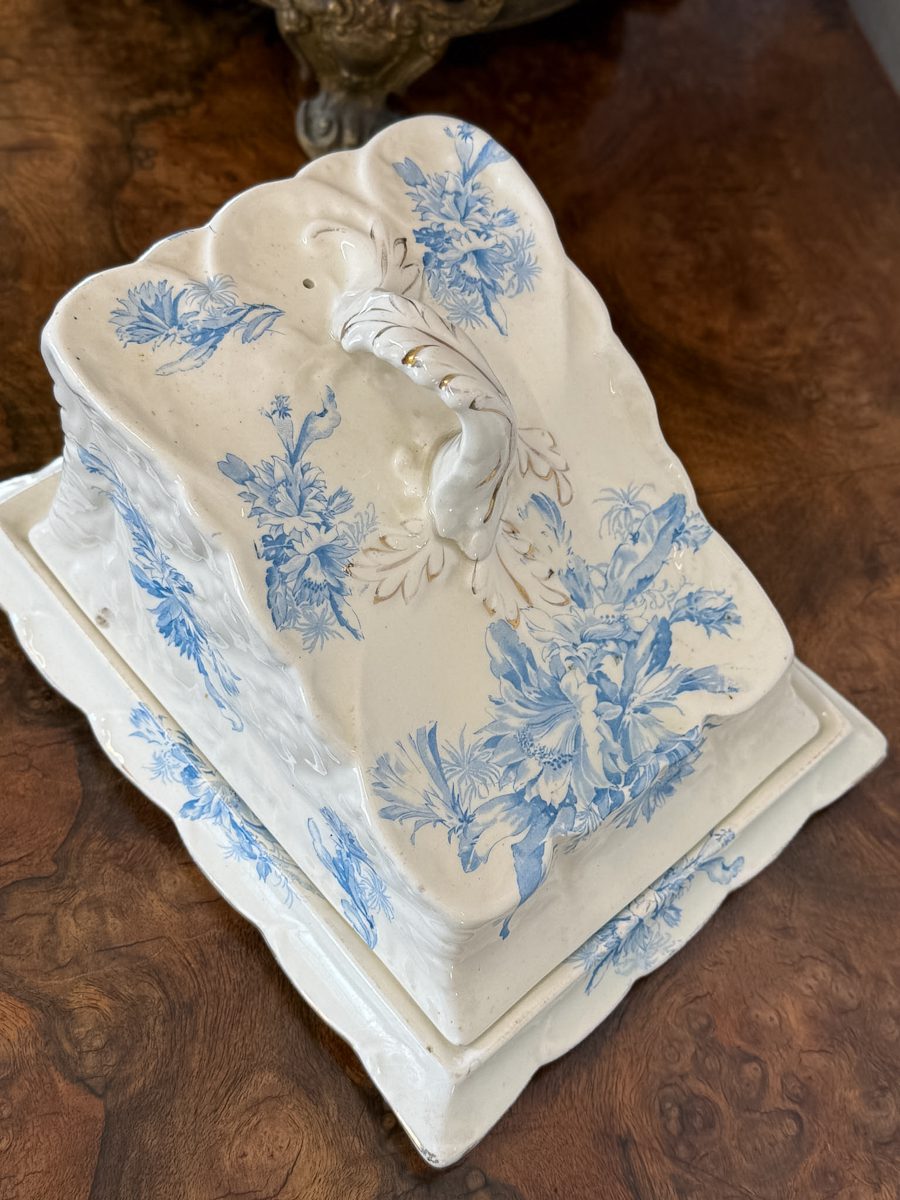
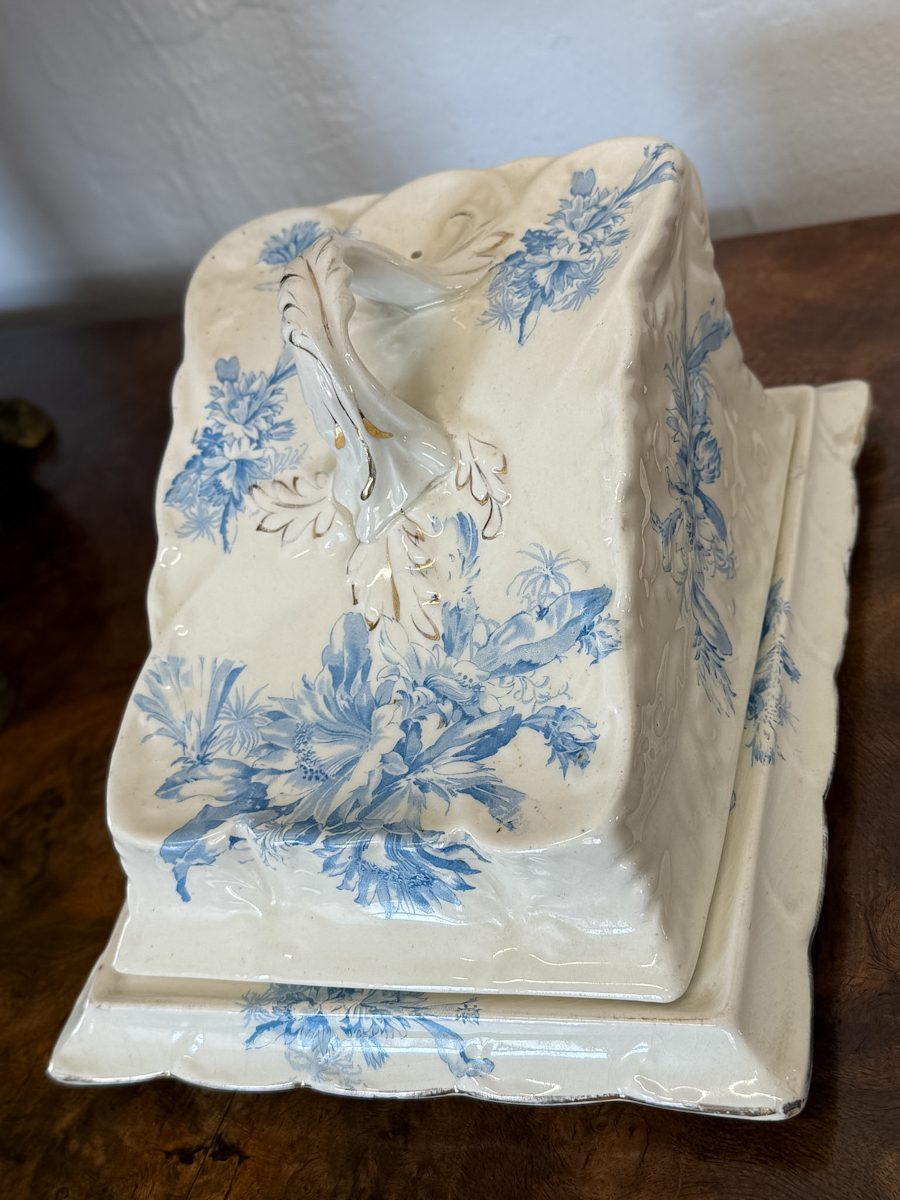
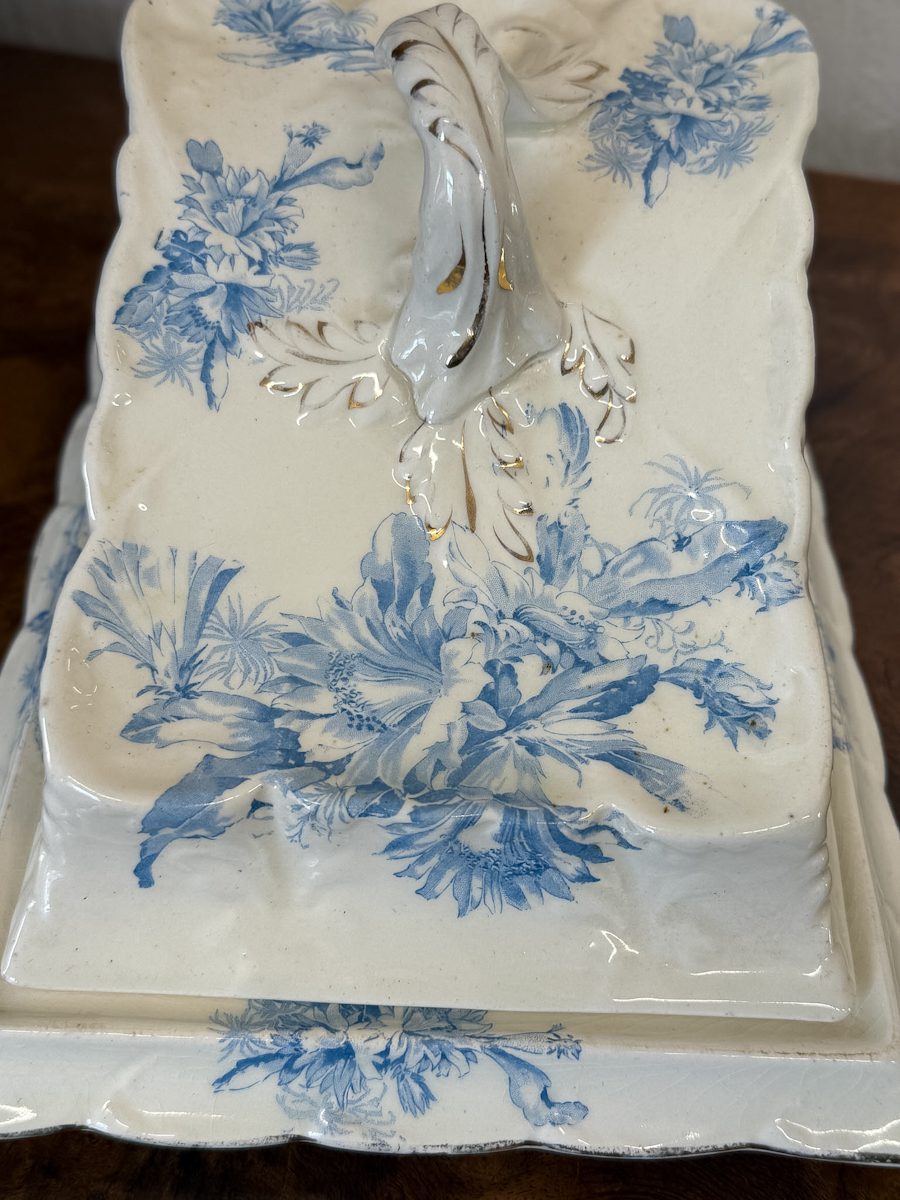
Fajansa siera trauks ar vāku un paplāti, zilbalts ziedu dekors, Staffordšīra, Anglija, ap 1870.–1900. gads (6004)
€165.00
📐 IZMĒRI — Augstums 14 cm × Platums 20 cm × Garums 24 cm. Vidēji smags.
Fajansa siera trauks ar vāku un paplāti, zilbalts ziedu dekors — angļu Transfer Print stils, Staffordšīra, Anglija, ap 1870.–1900. gads
―――――――――――――――――――――
🏛️ IZGATAVOŠANAS PERIODS, MĀKSLAS STILS, LAIKMETS
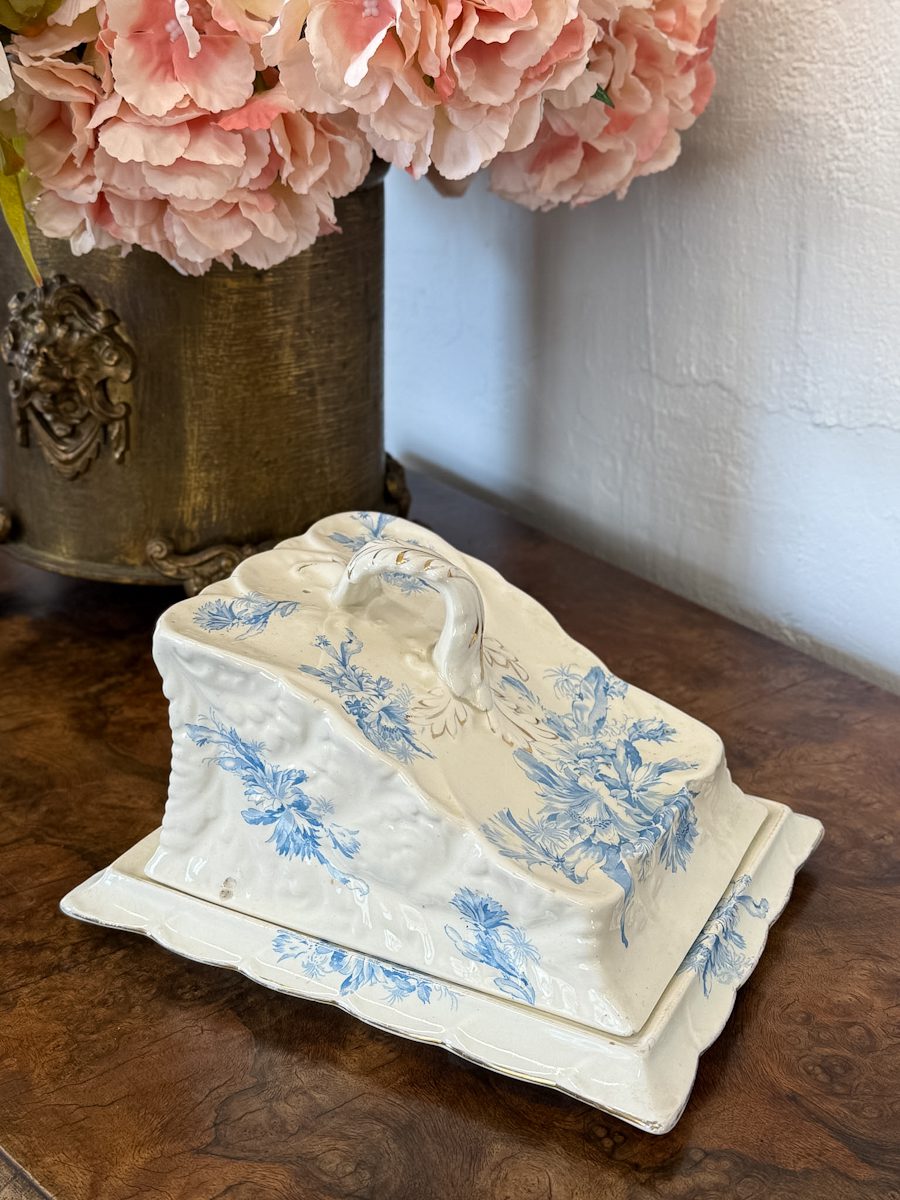
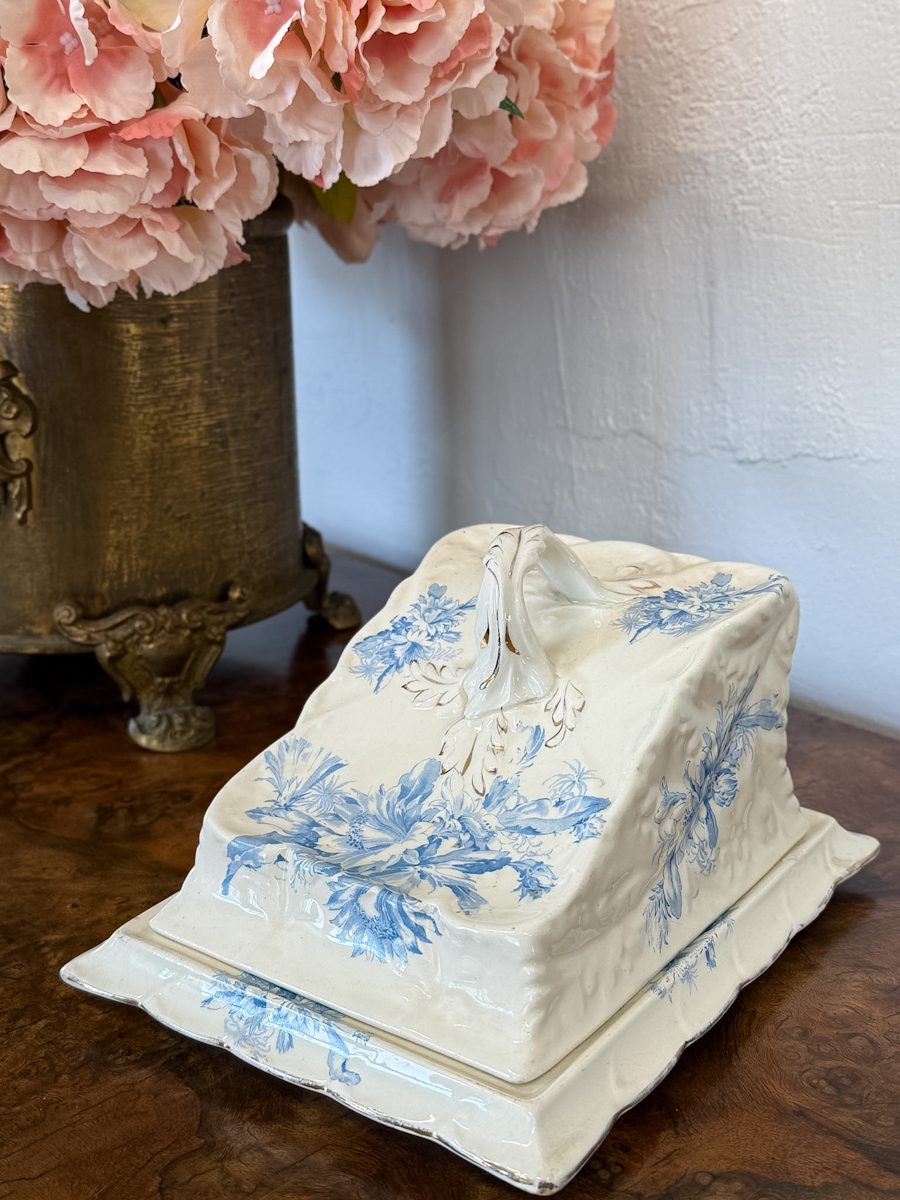
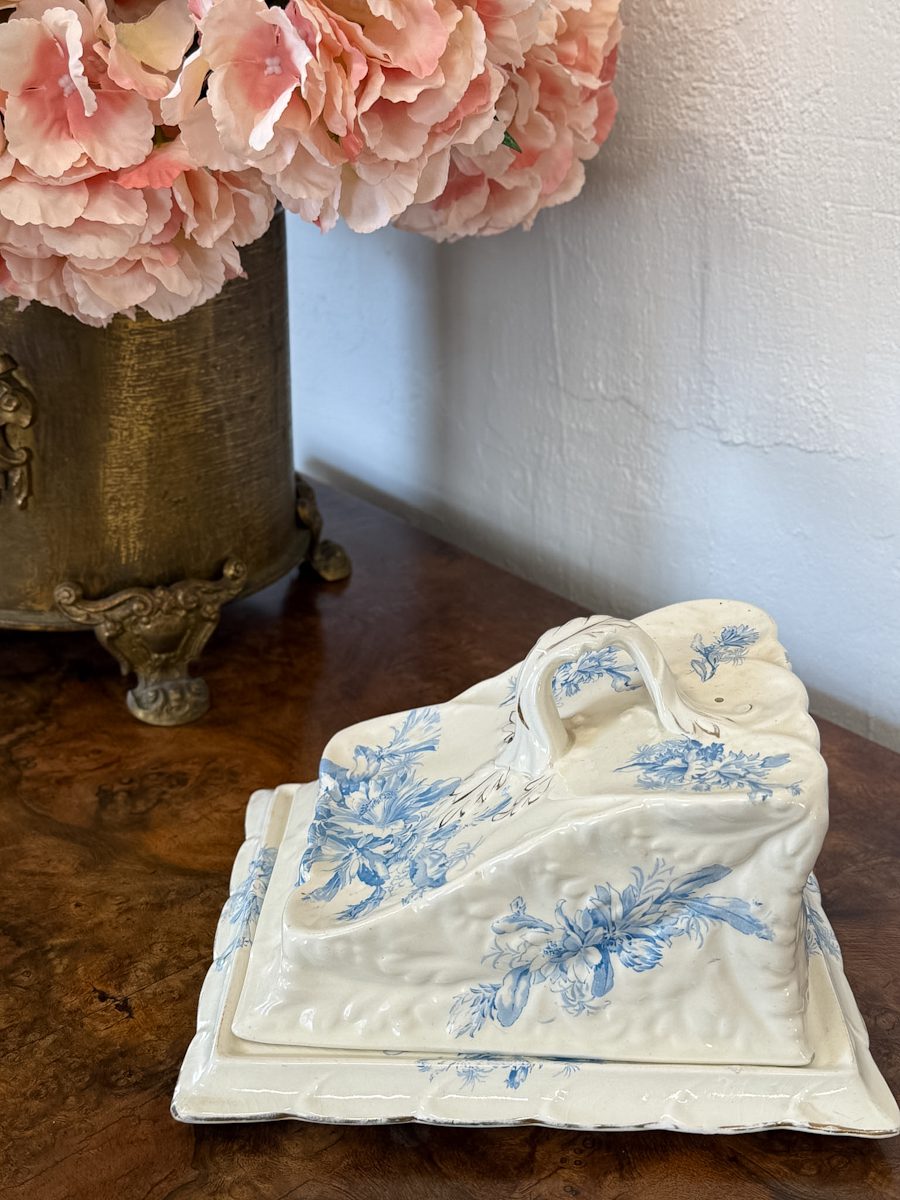
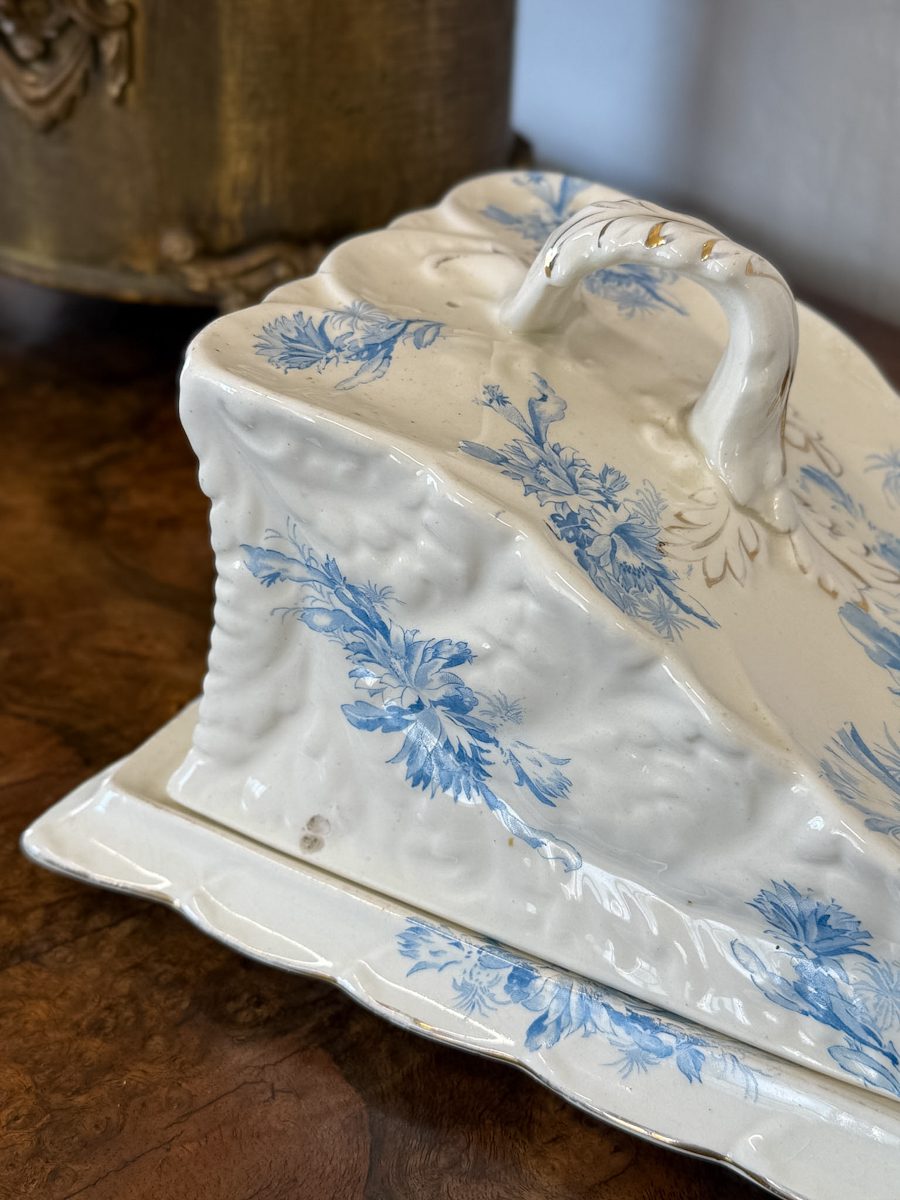
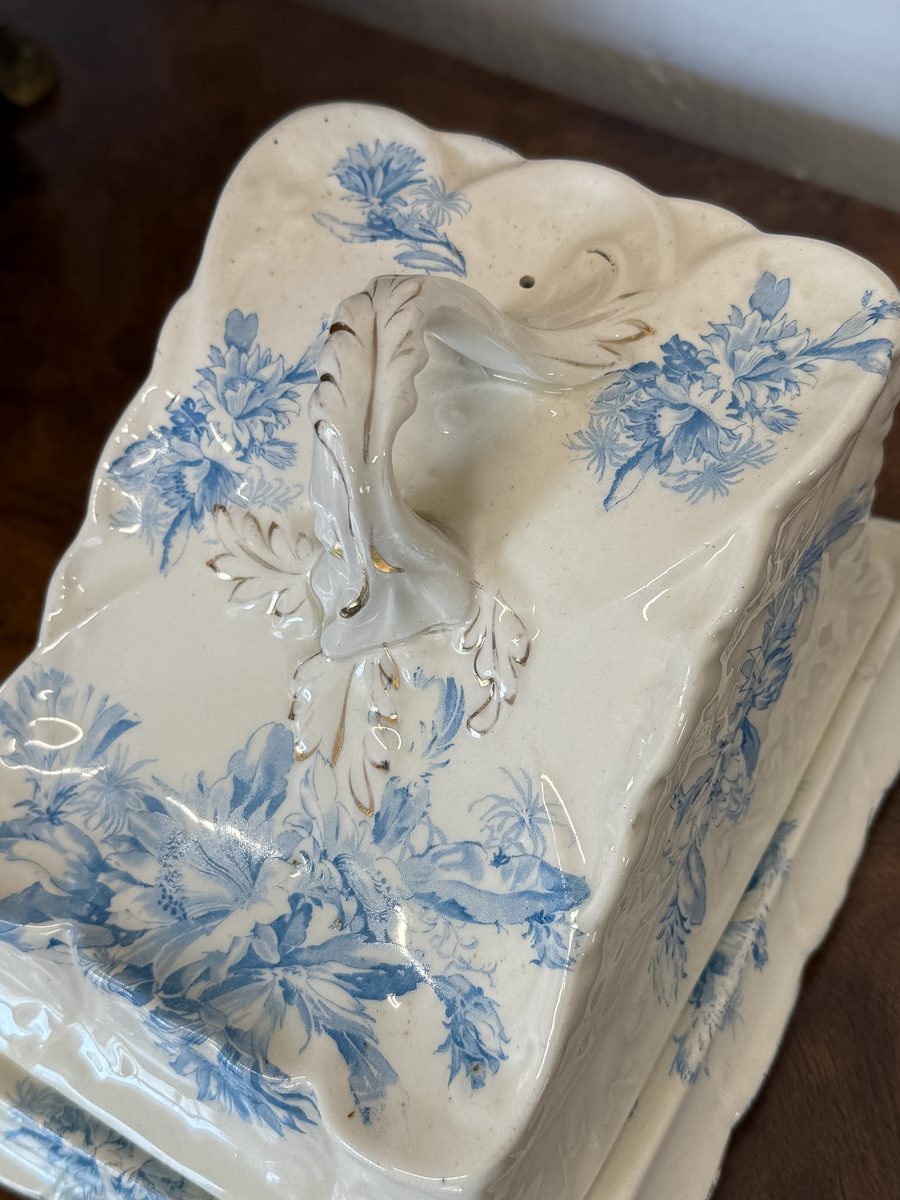
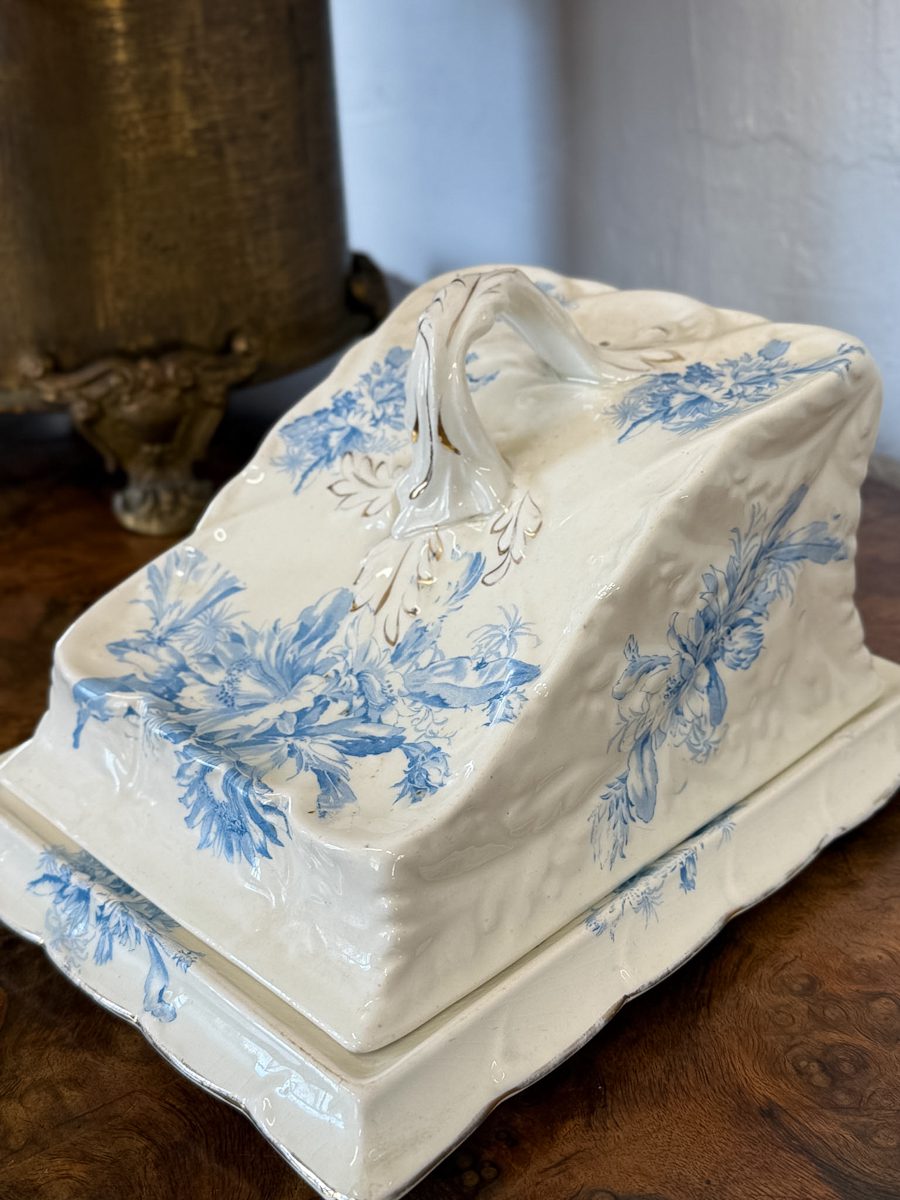
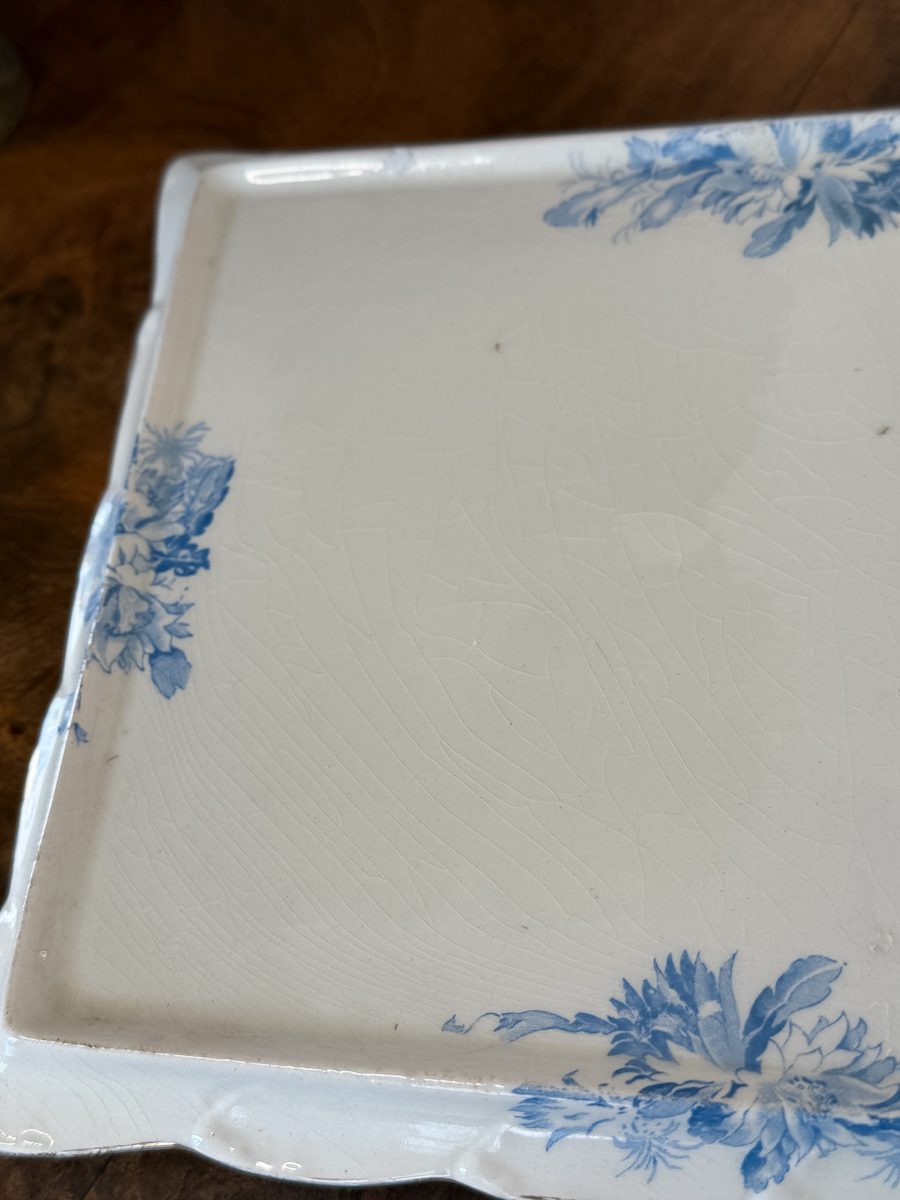
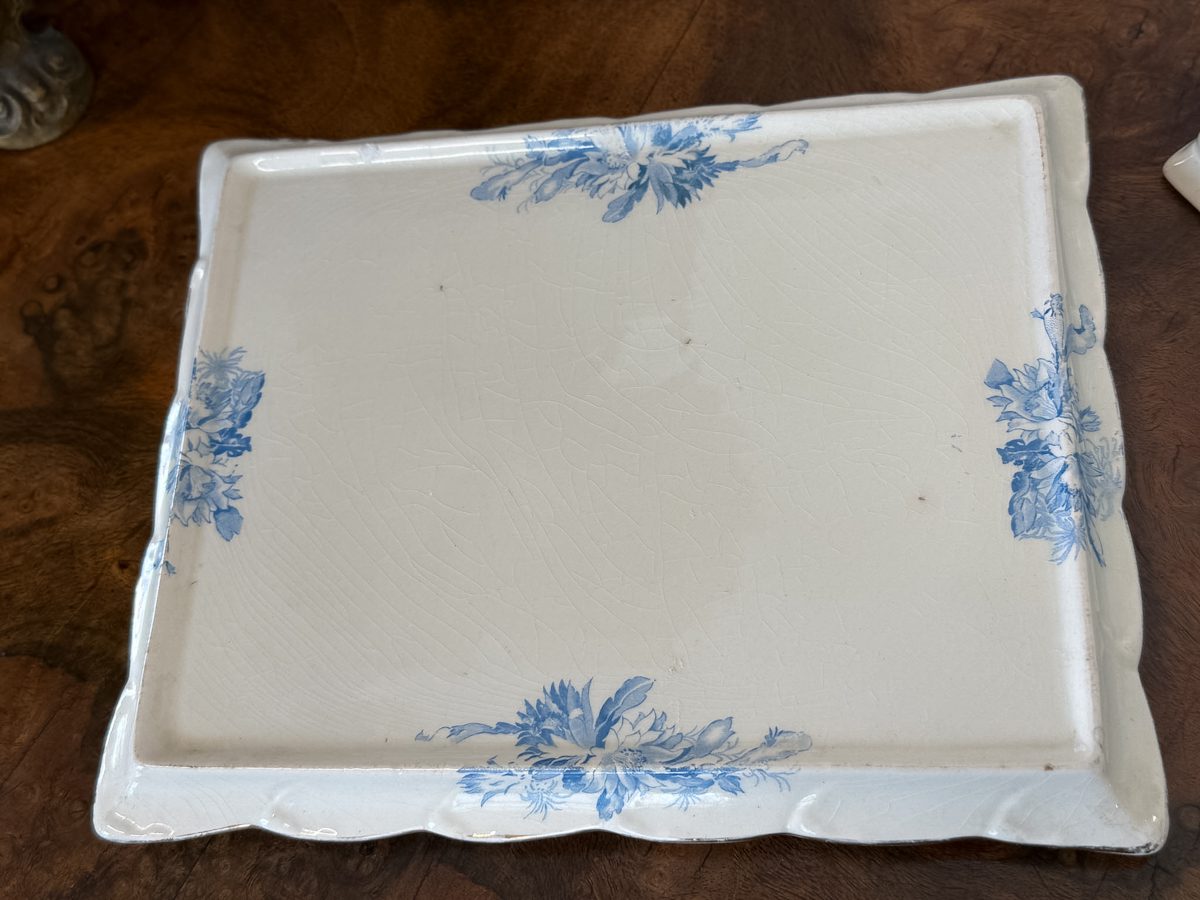
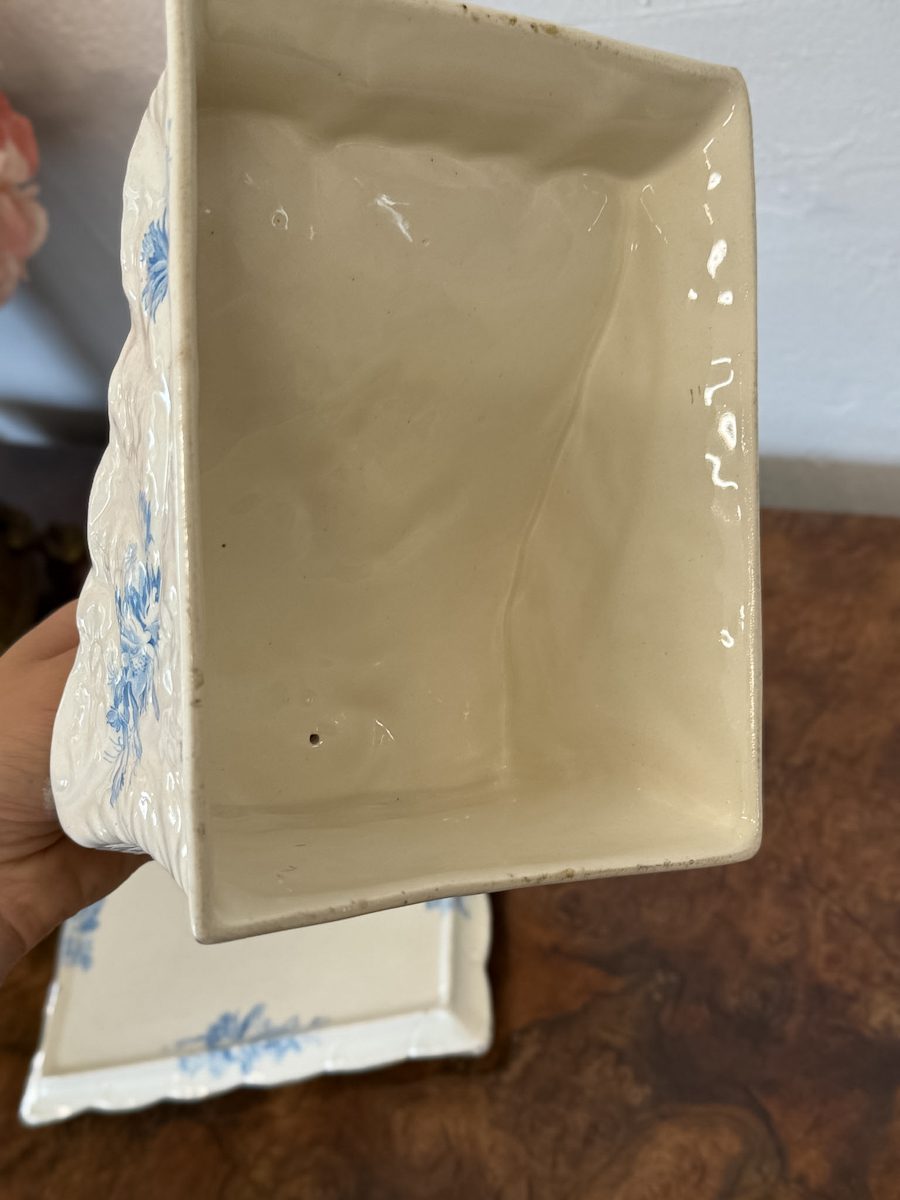
Izgatavots aptuveni 19. gadsimta otrajā pusē — 20. gadsimta sākumā, laikposmā no 1870. līdz 1900. gadam. Stils — klasiskais angļu zilbaltais transfer print (Blue and White Transferware), kas bija viena no populārākajām un plaši ražotajām keramikas dekorācijas tehnikām Viktorijas laikmeta Anglijā. Dekorā attēloti lieli, brīvi zīmēti ziedi — dahļijas, neļķes un lapu ķekari — izkliedēti pa vāka virsmām un paplātes malu. Vāka forma trapecveida, ar izliektu reljefu virsmu un eleganti modelētu akantuslapu rokturīti, kas daļēji apzeltīts. Paplāte taisnstūrveida ar viļņotas malas profilējumu un vāja reljefu tekstūru visā virsmā. Iekšpuse nedekorēta, gaiši krēmkrāsas glazūra. Šādi siera trauki bija neatņemama viktorianiskās angļu maltītes sastāvdaļa — tie tika izmantoti siera glabāšanai un pasniegšanai pie pusdienu vai vakariņu galda turīgās mājsaimniecībās.
―――――――――――――――――――――
⚜️ RAŽOTĀJS UN MANUFAKTŪRAS ZĪMOGS
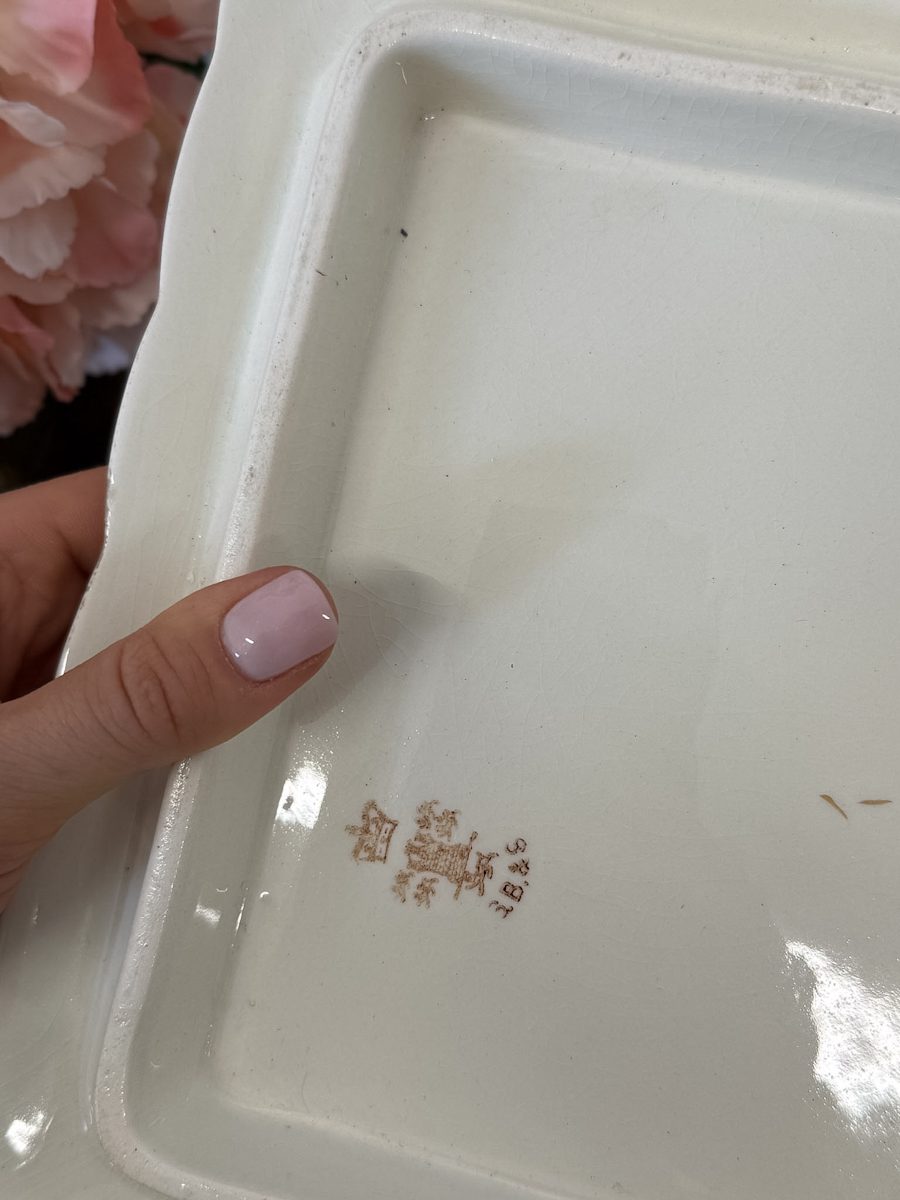
Apakšā redzams iespieduma zīmogs ar kroņa simbolu un burtiem “BB”, kas liecina par kādu no Staffordšīras keramikas manufaktūrām — visticamāk Brownfield & Son (darbojās Cobridge, Staffordšīrā, 1850.–1891.) vai līdzīga apgabala darbnīcu. Staffordšīra bija Anglijas keramikas ražošanas centrs, kas 19. gs. otrajā pusē apgādāja gan vietējo, gan eksporta tirgu — tostarp Baltijas reģionu un Krievijas impēriju — ar augstas kvalitātes transfer print izstrādājumiem. Ziedu raksts un trapecveidīgā siera vāka forma ir tipiski šī perioda Staffordšīras produkcijas elementi.
―――――――――――――――――――――
💎 RETUMS UN NOZĪME
Pilnīgi saglabāti viktorianiskās Anglijas siera trauki ar vāku un paplāti — bez lūzumiem un šķēlumiem — ir salīdzinoši reti, jo keramikas vāki laika gaitā bieži tiek sabojāti vai pazaudēti. Zilbaltie Staffordšīras transfer print trauki pēdējos gados baudī stabilu kolekcionāru interesi gan Lielbritānijā, gan Francijā, Vācijā un Skandināvijā, kur tos vērtē kā autentiskus viktorianiskās galda kultūras pieminekļus. Siera trauks kā funkcionāla galda forma ir īpaši pieprasīts cottagecore un Provansas stila interjeru cienītāju vidū.
―――――――――――――――――――――
🕯️ PIELIETOJUMS INTERJERĀ, DIZAINĀ UN FOTOGRĀFIJĀ
Šis trauks organiski iekļaujas angļu country house, Provansas, viktorianiskā un romantiskā stila interjeros — uz virtuves vai ēdamistabas galda kā dekoratīvs un funkcionāls elements, uz bufetes vai konsolē kā stāsts par smalko 19. gs. galda kultūru. Zilbaltā krāsu kombinācija harmoniski sader ar linu audumiem, koka virsmām un citu keramikas akcentiem. Fotogrāfijā — ļoti piemērots food styling un lifestyla uzņēmumiem ar lauku vai vintāžas estetiku, kur ziedu dekors un krēmkrāsas fajansa rada maigu, gaišu noskaņu.
―――――――――――――――――――――
🔍 STĀVOKLIS
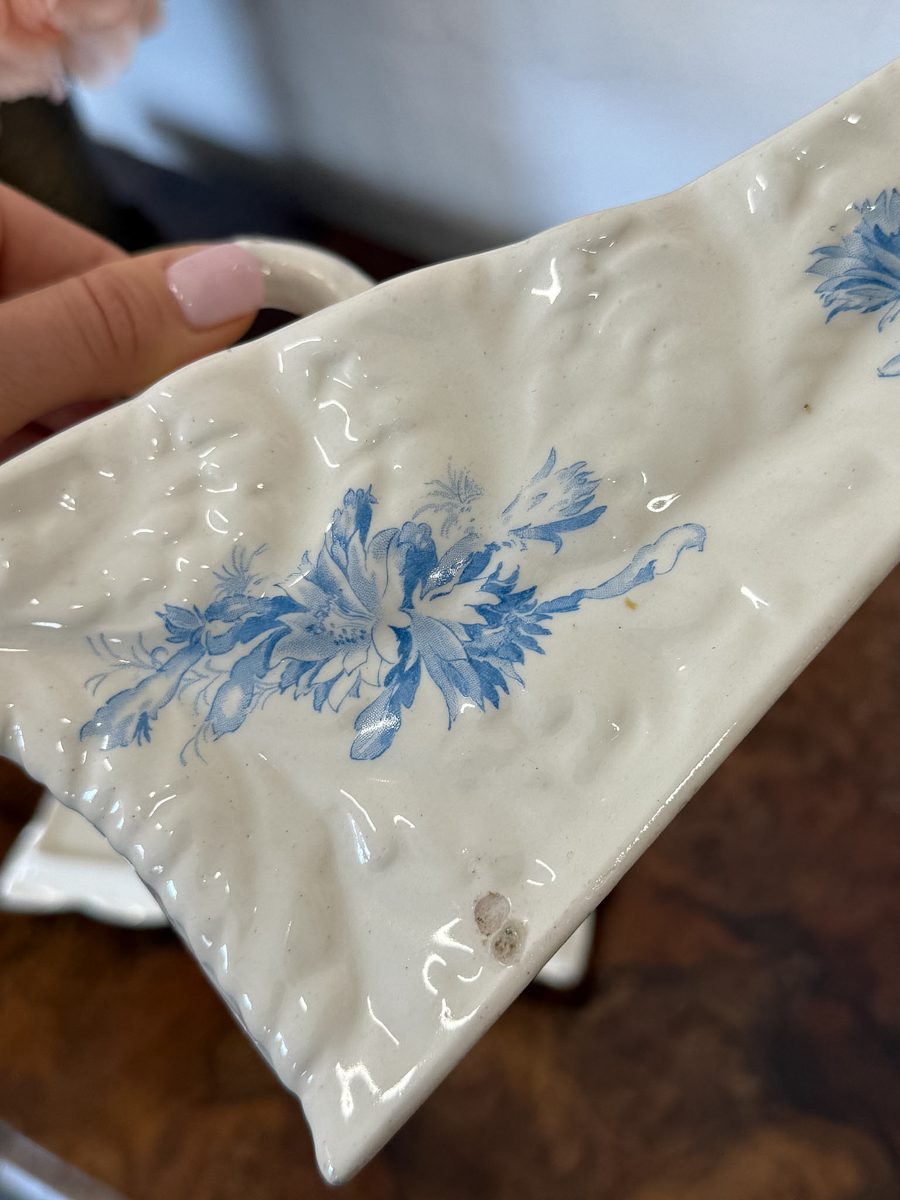
Vispārējais stāvoklis — labs, atbilstošs vecumam. Glazūrā redzams smalks krakelejas (craquelure) tīkls — raksturīga un gaidāma fajansa novecošanas pazīme, kas nemazina lietas vērtību. Ziedu transfer print dekors — labi saglabājies, ar raksturīgu zelta nodilumu uz rokturīša. Paplātes malā vienā vietā redzams neliels emaljas nolupums. Lūzumu vai šķēlumu nav. Iekšpuse tīra. Lietas stāvoklis pilnībā atspoguļots fotogrāfijās.
―――――――――――――――――――――
🇬🇧 DESCRIPTION IN ENGLISH
📐 DIMENSIONS — Height 14 cm × Width 20 cm × Length 24 cm. Medium weight.
Faience Cheese Keeper with Lid and Tray, Blue and White Floral Décor — English Transfer Print Style, Staffordshire, England, circa 1870–1900
―――――――――――――――――――――
🏛️ PERIOD, ART STYLE, HISTORICAL CONTEXT
Made approximately in the second half of the 19th century, circa 1870–1900. The style is the classic English Blue and White Transferware, one of the most popular and widely produced ceramic decoration techniques of the Victorian era. The decoration features large, freely drawn flowers — dahlias, carnations, and leaf sprays — scattered across the lid surfaces and tray border. The lid is trapezoidal in form with a gently curved relief surface and an elegantly modelled acanthus leaf handle, partially gilded. The tray is rectangular with a scalloped edge profile and a subtle overall relief texture. The interior is undecorated, in a pale cream glaze. Cheese keepers of this type were an integral part of the Victorian English table — used for storing and presenting cheese at luncheon or dinner in prosperous households.
―――――――――――――――――――――
⚜️ MAKER AND MANUFACTURER’S MARK
The underside bears a stamped mark with a crown symbol and the letters “BB”, indicating one of the Staffordshire ceramic manufactories — most likely Brownfield & Son (active in Cobridge, Staffordshire, 1850–1891) or a similar workshop from the region. Staffordshire was the centre of English ceramic production, supplying both domestic and export markets in the second half of the 19th century — including the Baltic region and the Russian Empire — with high-quality transfer print wares. The floral pattern and trapezoidal cheese keeper form are typical of Staffordshire production of this period.
―――――――――――――――――――――
💎 RARITY AND SIGNIFICANCE
Fully intact Victorian English cheese keepers — complete with lid and tray, free of cracks and chips — are comparatively rare, as ceramic lids are frequently damaged or separated over time. Blue and white Staffordshire transfer print wares have enjoyed steady collector interest in recent years in the United Kingdom, France, Germany, and Scandinavia, where they are prized as authentic relics of Victorian table culture. The cheese keeper as a functional table form is particularly sought after by enthusiasts of cottagecore and Provençal interior styles.
―――――――――――――――――――――
🕯️ USE IN INTERIOR DESIGN AND PHOTOGRAPHY
This piece integrates naturally into English country house, Provençal, Victorian, and romantic style interiors — on a kitchen or dining table as both a decorative and functional element, or on a sideboard or console as a testament to refined 19th-century table culture. The blue and white colour combination harmonises beautifully with linen textiles, wooden surfaces, and other ceramic accents. In photography — well suited to food styling and lifestyle shoots with a rural or vintage aesthetic, where the floral decoration and cream-coloured faience create a soft, luminous atmosphere.
―――――――――――――――――――――
🔍 CONDITION
Overall condition — good, consistent with age. The glaze shows a fine network of craquelure — a characteristic and expected sign of faience ageing that does not diminish the value of the piece. The blue and white transfer print decoration is well preserved, with characteristic gold wear on the handle. A small area of enamel loss is visible on the tray border in one location. No cracks or chips. Interior is clean. The condition of the item is fully reflected in the photographs.