
svečturis 5 svecēm, ar ziedu detalizāciju, vidēja izmēra (5674)
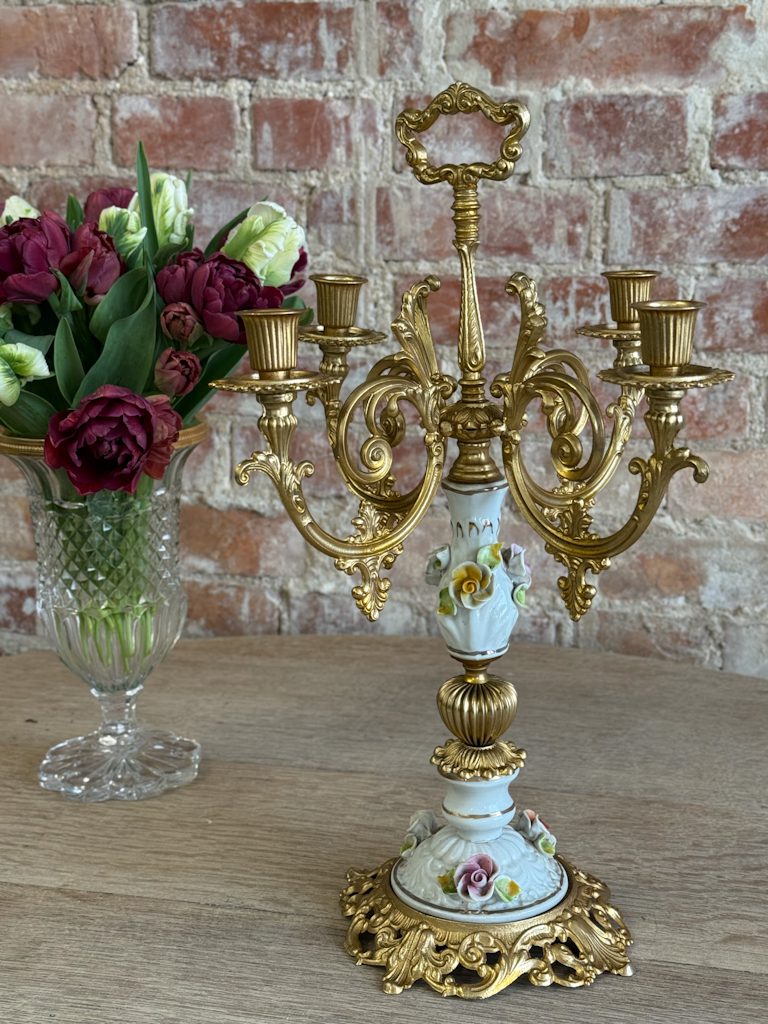
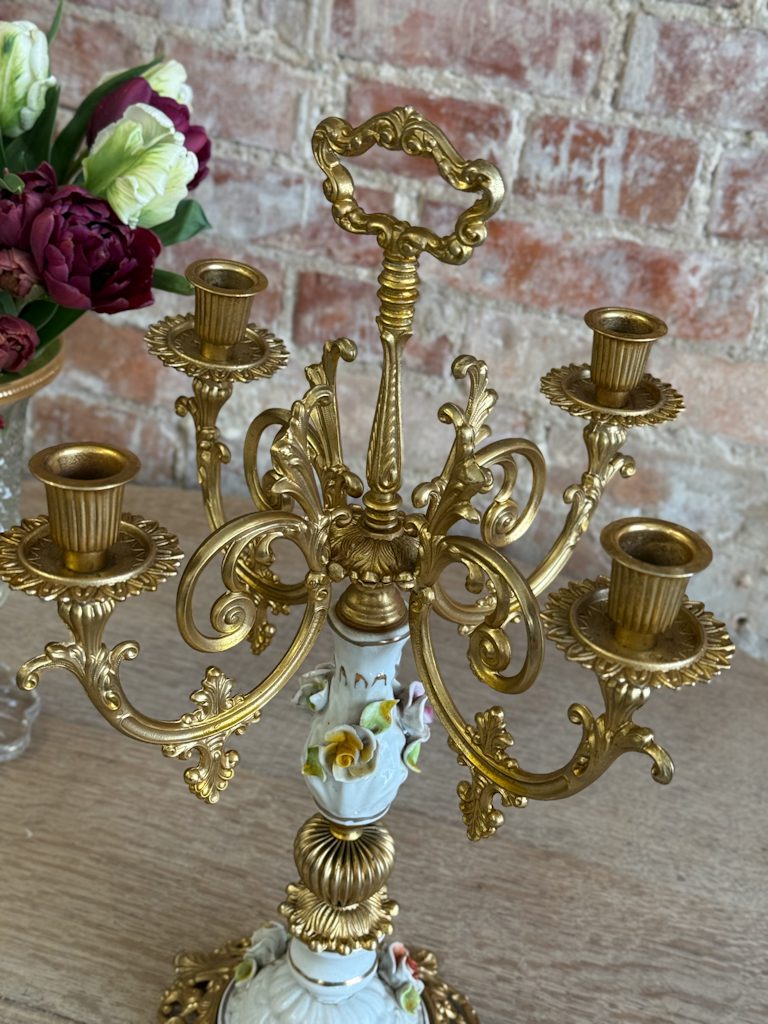
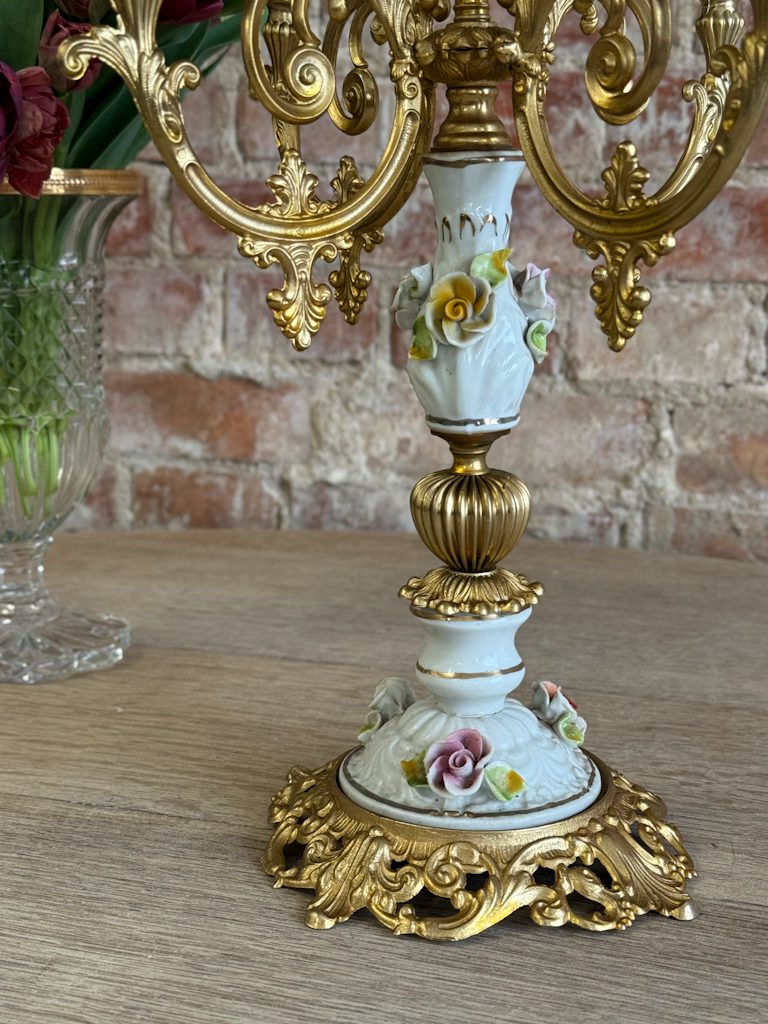
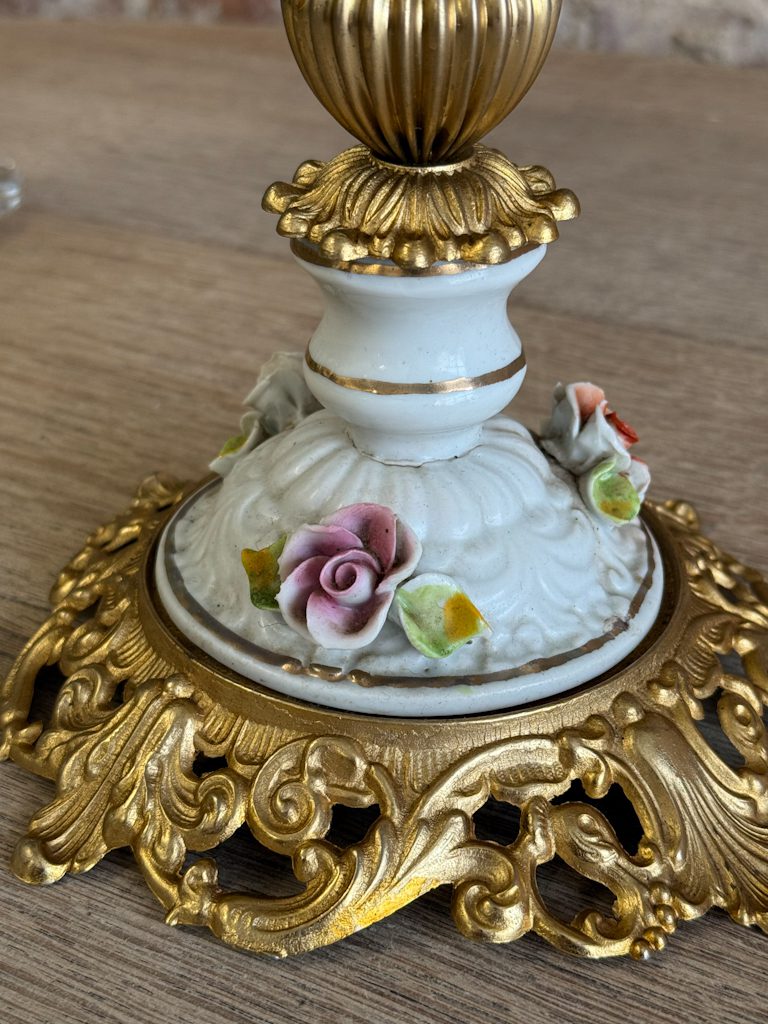
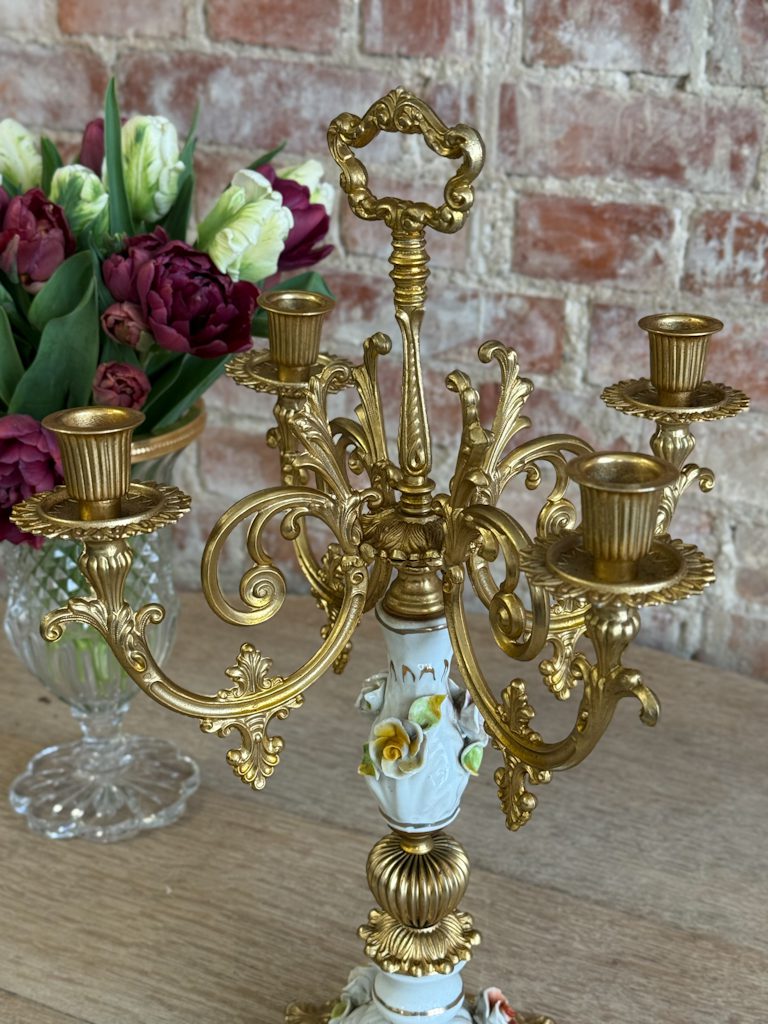
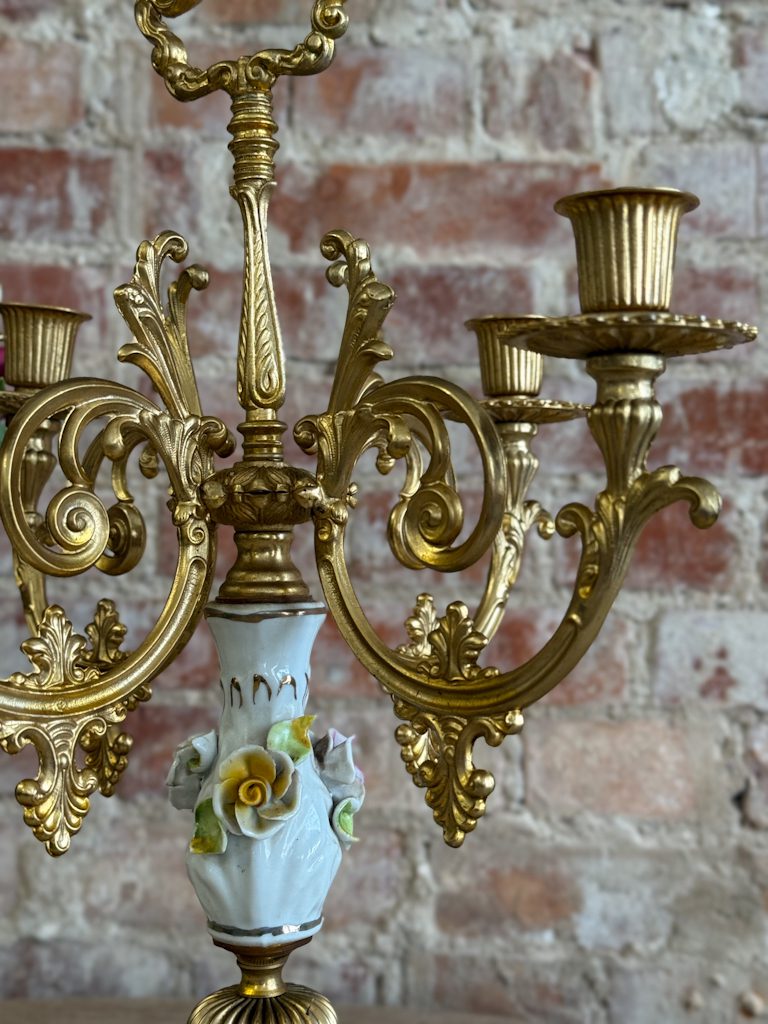
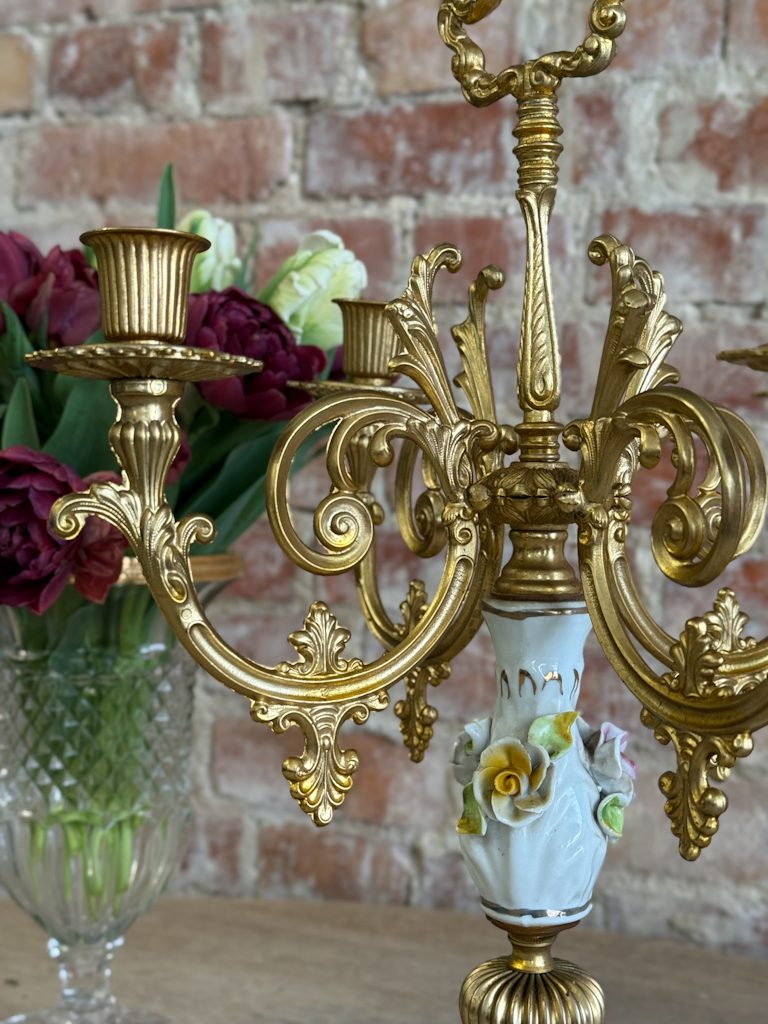
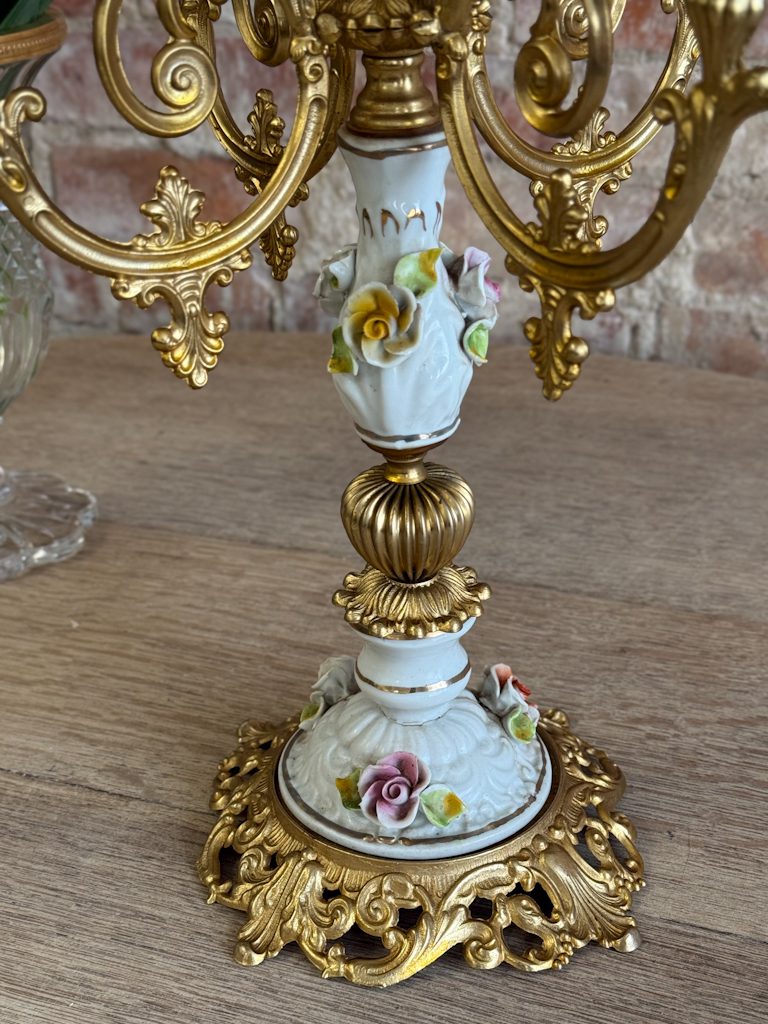
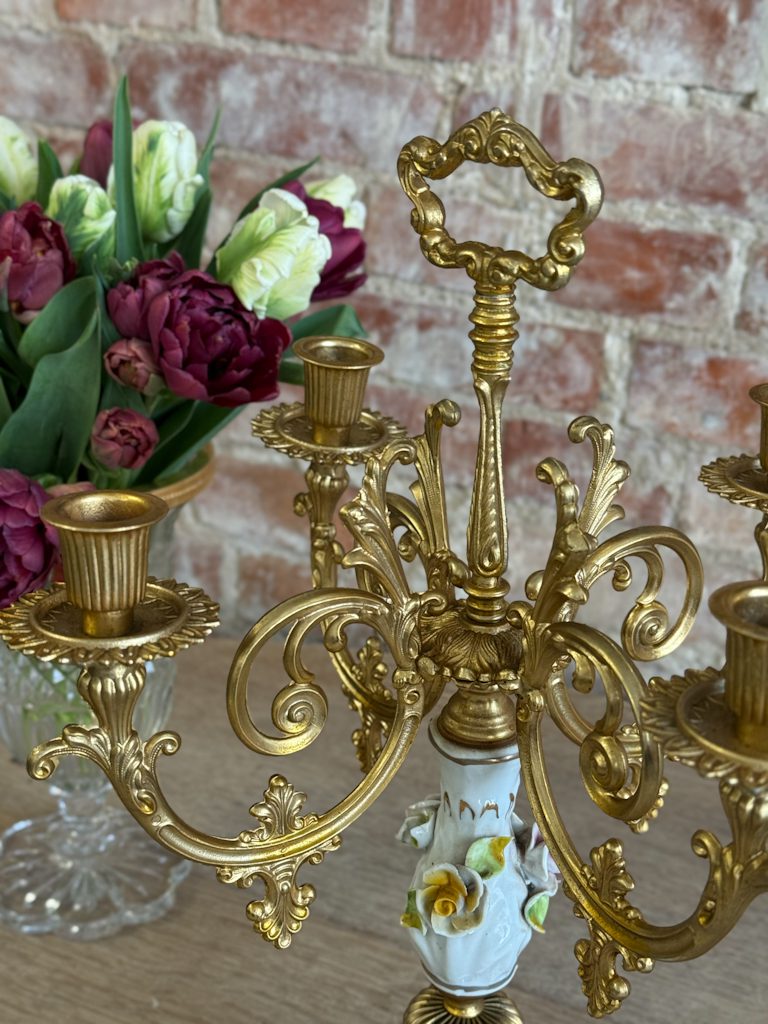
svečturis 5 svecēm, ar ziedu detalizāciju, vidēja izmēra (5674)
€270.00
Augstums 47cm, platums 23.5cm
LATVIEŠU VALODĀ
🌸 Piecsvečturis ar porcelāna kātu un bronzas rokām. Liets bronzas sakausējums (misiņš) kombinācijā ar baltu porcelānu un trīsdimensionāliem porcelāna ziedu dekoru.
🌸 Svečturis pieder Rokoko un Luija XV stila tradīcijai ar spēcīgu 19. gadsimta eklektisma ietekmi — stils, kas Eiropā uzplauka Napoleona III laikmeta Otrās Impērijas periodā (1852–1870), kad Francijā atdzima interese par 18. gadsimta greznumu un dzīvīgo ornamentiku. Šis stils izpaudās caur sulīgiem akantusa lapu volutiem, asimetriskiem S un C formas locījumiem, ziedu motīviem un cēlu materiālu — bronzas un porcelāna — kombinācijām. Konkrētais svečturis ir tipisks šādas sintēzes piemērs, visticamāk ražots 20. gadsimta vidū — aptuveni 1950.–1970. gados — kā kvalitatīva vintāžas kopija pēc 19. gadsimta oriģināliem.
🌸 Svečtura kāts ir veidots no baltā porcelāna ar trīsdimensionāliem porcelāna rozēšu un lapiņu dekoriem — dzeltenas, rozā un krēmkrāsas puķes, kas plastiski atraujas no kāta virsmas. Šāds porcelāna ziedu dekors ir raksturīgs Drēzdenes un Meisenes tradīcijai — kāda attīstījās 18. gadsimtā Saksijā un kļuva par Eiropas porcelāna mākslas etalonu. Meisene bija pirmā porcelāna manufaktūra Eiropā, kas 18. gadsimta sākumā apguva smalkā cietā porcelāna tehnoloģiju, un tās trīsdimensionālie puķu dekori kļuva par visvairāk atdarinātajiem Eiropas keramikas vēsturē. Šis svečturis, lai arī nav Meisenes oriģināls, skaidri atsaucas uz šo tradīciju gan porcelāna baltumā, gan ziedu plastikā, gan zelta apmalītes detaļās.
🌸 Bronzas daļas ir ārkārtīgi bagātīgas un detalizētas. Pamatne ir izgreznota ar caurspīdīgu Rokokō akantusa lapu tīklu, kas veido greznu rozetes formas gredzenu zem porcelāna kāta. Rokas izveidotas kā graciozi S-formas zari ar volutiem, akantusa lapiņām un nelieliem paliktņiem katram svečtu turētājam. Svečtu turētāji paši ir veidoti kā rievoti tvertuves tipa kausi. Augšpusē svečturu vainago elegants bronzas ornaments — atvērts ovāls lodveida elements, kas kalpo kā rokturis vai vizuāls kronēšanas motīvs — tipisks Rokokō dekoratīvās bronzas mākslas elements.
🌸 Svečtura apakšpusē nav redzams skaidrs ražotāja zīmogs. Porcelāna daļu zīmogojums nav aplūkojams fotogrāfijās. Porcelāna kvalitāte un bronzas lējuma detalizācija liecina par vidēja-augsta līmeņa Eiropas ražotāju, visticamāk Itālijā vai Vācijā. Itālijas kapodimonte tradīcija — kas attīstījās Neapolē no 18. gadsimta un ir pazīstama tieši ar trīsdimensionāliem ziedu dekoriem uz baltas keramikas ar bronzas apkalumiem — ir vistuvākā analogija tam, ko redzam šajā svečturī. Kapodimonte stila izstrādājumi 20. gadsimta vidū tika plaši ražoti Itālijā un eksportēti visā Eiropā, un tie joprojām tiek augstu vērtēti kolekcionāru aprindās.
🌸 Retuma un pieprasījuma ziņā šādi bronzas un porcelāna kombinētie svečturi ar trīsdimensionāliem ziedu dekoriem pieder pie vizuāli spilgtākajiem un viegli atpazīstamākajiem vintāžas dekoratīvās mākslas priekšmetiem. Tie ir pastāvīgi pieprasīti gan tradicionālo interjeru, gan tā sauktā maximalist vai grandmillennial stila cienītāju vidū. Antikvāru tirgū šādi izstrādājumi regulāri parādās ar ievērojamu cenu diapazonu atkarībā no porcelāna ziedu saglabātības, bronzas stāvokļa un kopējās simetrijas.
🌸 Interjerā svečturis darbojas kā acis piesaistoša akcentu lieta salonos, guļamistabās, friziertelpu vai SPA stilizētos interjerus, kā arī ēdamistabās ar romantisku vai Rokokō iedvesmotu gaisotni. Tas ir ideāli piemērots arī kā vienīgais dekoratīvais elements uz tukša kamīna vai zem kronšteina ar spoguli. Fotogrāfiem un stilistiem šis svečturis ir ārkārtīgi izteiksmīgs rekvizīts — porcelāna balto ziedu un zeltainās bronzas kombinācija rada vizuālu kontrastu, kas izskatās izcili uz tumšiem vai faktūrainiem foniem, tostarp ķieģeļu sienu priekšā, kā redzams pievienotajās fotogrāfijās.
🌸 Svečturis ir labā vintāžas stāvoklī. Bronzas daļas ir gaiši zeltainas ar nelielu nevienmērīgu novecošanos, kas piešķir tām autentiskumu. Porcelāna kāts un pamatne ir saglabājušies bez lūzumiem. Trīsdimensionālie porcelāna ziedi ir lielākoties veseli, tomēr vienam vai diviem ziedlapiņu galiem ir nelielas skropstu formas skaldīšanas pēdas, kas raksturīgas šāda veida delikātam porcelāna dekorum pēc ilgstošas lietošanas. Zelta apmalītes uz porcelāna ir saglabājušās, vietām nedaudz izbalējušas. Bronzas pamatne ar caurspīdīgo akantusa tīklu ir vesela un stabila.
Lietas stāvoklis pilnībā ir atspoguļots fotogrāfijās.
ENGLISH
🌸 Dimensions: height 47 cm, width 32 cm. Five-light candelabra with porcelain shaft and bronze arms. Cast bronze alloy (brass) in combination with white porcelain and three-dimensional porcelain floral decoration.
🌸 The candelabra belongs to the Rococo and Louis XV stylistic tradition with strong 19th-century eclectic influence — a style that flourished across Europe during the Second Empire period of Napoleon III (1852–1870), when France witnessed a revival of 18th-century opulence and exuberant ornamentation. This style expressed itself through lush acanthus scroll volutes, asymmetric S and C-shaped curves, floral motifs, and the combination of noble materials — bronze and porcelain. This candelabra is a characteristic example of such a synthesis, most likely produced in the mid-20th century — approximately the 1950s–1970s — as a quality vintage reproduction after 19th-century originals.
🌸 The shaft of the candelabra is formed from white porcelain with three-dimensional porcelain rose and leaf decorations — yellow, pink, and cream flowers that project plastically from the surface of the shaft. This type of porcelain floral decoration is characteristic of the Dresden and Meissen tradition, which developed in Saxony in the 18th century and became the benchmark of European porcelain art. Meissen was the first porcelain manufactory in Europe to master the technology of hard-paste fine porcelain in the early 18th century, and its three-dimensional floral decorations became the most widely imitated in the history of European ceramics. This candelabra, while not a Meissen original, clearly references this tradition in the whiteness of the porcelain, the plasticity of the flowers, and the gold border details.
🌸 The bronze components are exceptionally rich and detailed. The base is adorned with a pierced Rococo acanthus leaf lattice forming an elaborate rosette-like ring beneath the porcelain shaft. The arms are formed as graceful S-shaped branches with volutes, acanthus leaves, and small drip pans beneath each candle cup. The candle cups themselves are formed as fluted vessel-type holders. At the top, the candelabra is crowned by an elegant bronze ornament — an open oval loop element serving as a handle or visual finial — a typical Rococo decorative bronze motif.
🌸 No clear maker’s stamp is visible on the underside. The porcelain section’s marks are not visible in the photographs. The quality of the porcelain and the detail of the bronze casting point to a mid-to-high-level European producer, most likely in Italy or Germany. The Italian Capodimonte tradition — which developed in Naples from the 18th century and is known precisely for its three-dimensional floral decorations on white ceramic with bronze mounts — is the closest analogy to what is seen in this candelabra. Capodimonte-style pieces were widely produced in Italy during the mid-20th century and exported throughout Europe, and they continue to be well regarded in collector circles.
🌸 In terms of rarity and demand, combined bronze-and-porcelain candelabras with three-dimensional floral decoration belong among the most visually striking and immediately recognisable vintage decorative objects. They are consistently sought after by admirers of traditional interiors as well as by devotees of maximalist and grandmillennial design. In the antiques market, such objects regularly appear at a considerable price range depending on the preservation of the porcelain flowers, the condition of the bronze, and the overall visual completeness of the piece.
🌸 In an interior context, the candelabra functions as an eye-catching accent piece in salons, bedrooms, romantically or Rococo-inflected dining rooms, and spa-style settings. It is also ideally suited as the sole decorative element on an empty mantelpiece or beneath a bracketed mirror. For photographers and stylists, this candelabra is an exceptionally expressive prop — the combination of white porcelain flowers and golden bronze creates a visual contrast that reads beautifully against dark or textured backgrounds, including exposed brick walls as seen in the accompanying photographs.
🌸 The candelabra is in good vintage condition. The bronze components are lightly golden with some uneven ageing that lends them authenticity. The porcelain shaft and base are intact with no fractures. The three-dimensional porcelain flowers are largely intact, though one or two petal tips show minor chipping consistent with the delicate nature of this type of porcelain decoration after extended use. The gold border lines on the porcelain are preserved, with some fading in places. The bronze base with its pierced acanthus lattice is whole and stable.
The condition of the item is fully reflected in the photographs.