
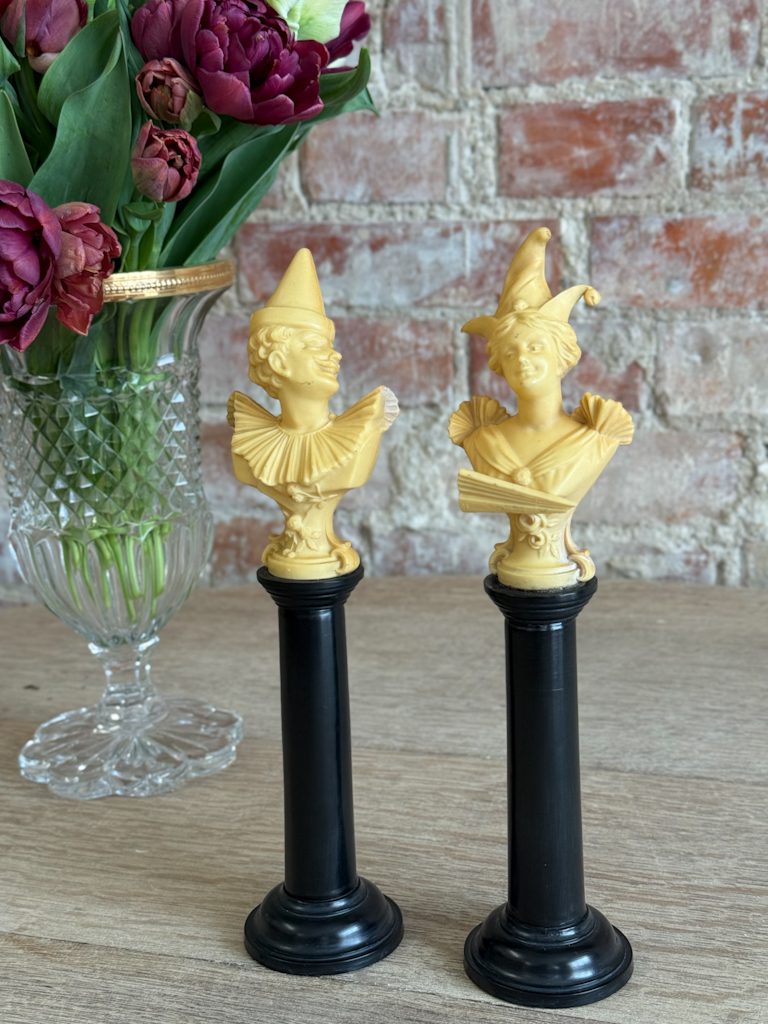
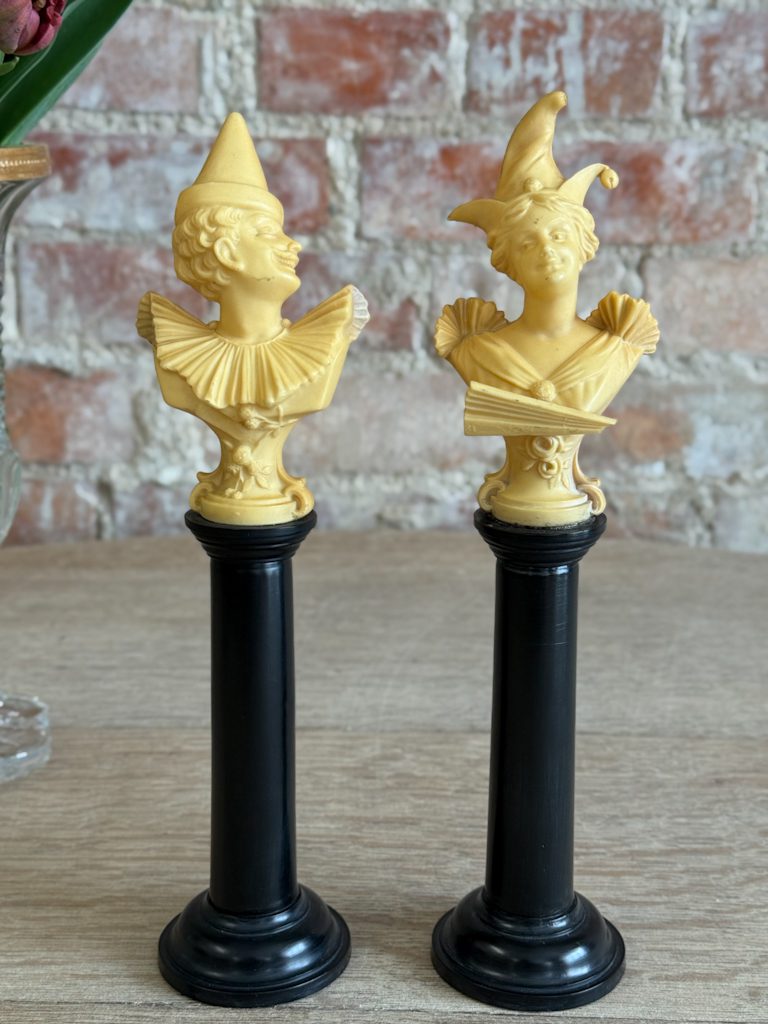
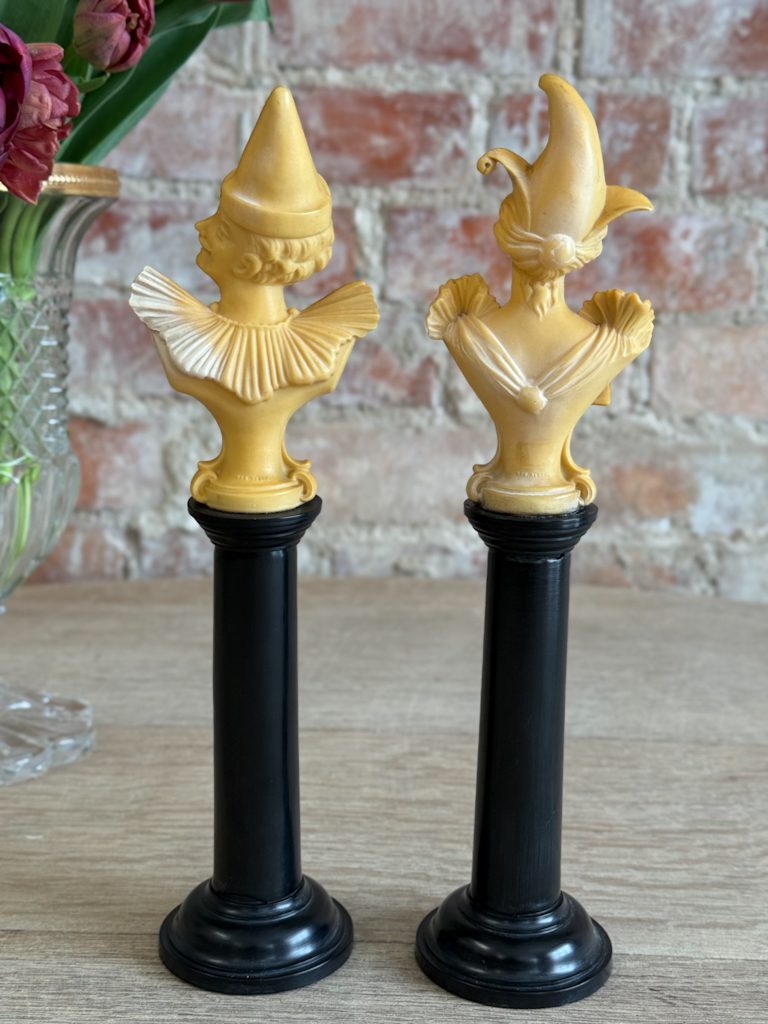
Pjero un Kolombīnas bistiņu pāris uz kolonnām — Commedia dell’Arte motīvs, Historicisms / Belle Époque, Francija vai Centrāleiropa, ap 1880.–1910. (Figūriņu Pāris ar Klaunu Motīviem, Neliela Izmēra, Vieglas Pēc Svara)(5584)
Pjero un Kolombīnas bistiņu pāris uz kolonnām — Commedia dell’Arte motīvs, Historicisms / Belle Époque, Francija vai Centrāleiropa, ap 1880.–1910. (Figūriņu Pāris ar Klaunu Motīviem, Neliela Izmēra, Vieglas Pēc Svara)(5584)
€200.00
📐 IZMĒRI
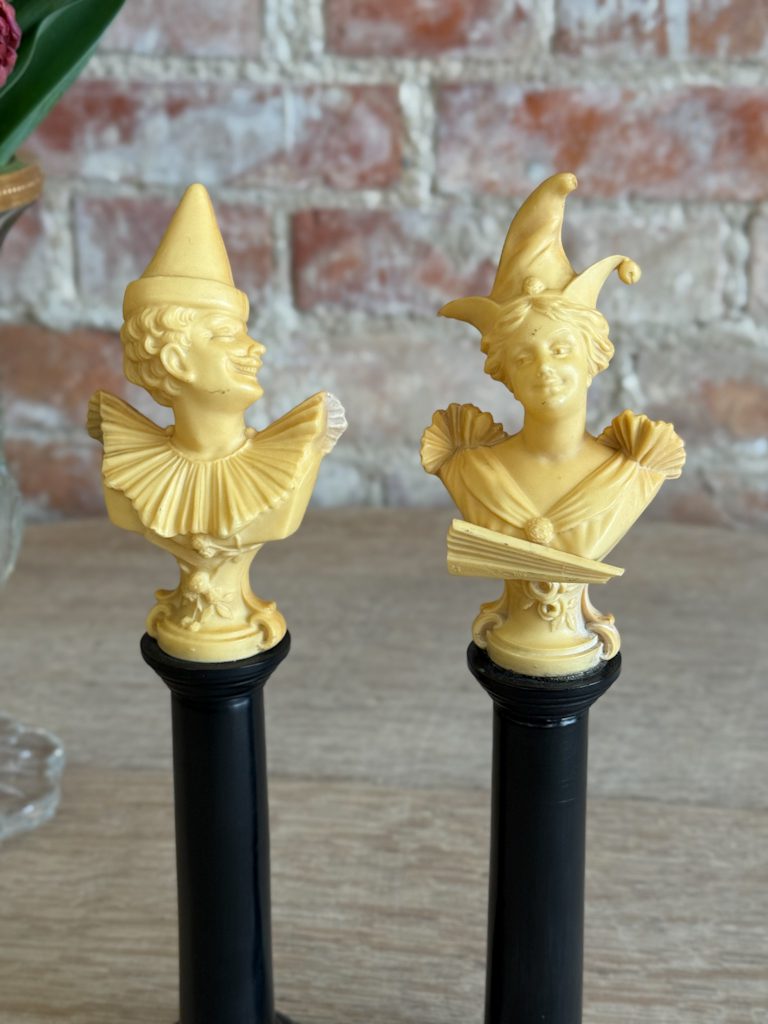
Kopējais augstums 28 cm (bistiņa uz kolonnas). Materiāls: bistiņas — presēts biskvīts / kaula masa ar dzeltenkrēmīgu toni; kolonnas — ebonizēts koks, ebonits vai krāsots metāls. Svars: viegls. Pārdod kā pāri — 2 gabali.
Pjero un Kolombīnas bistiņu pāris uz kolonnām — Commedia dell’Arte motīvs, Historicisms / Belle Époque, Francija vai Centrāleiropa, ap 1880.–1910.
―――――――――――――――――――――
🏛️ IZGATAVOŠANAS PERIODS, MĀKSLAS STILS, LAIKMETS
Šis priekšmets pieder tam gaišajam laikam, ko franči sauc par Belle Époque — “skaistajam laikmetam” — kas aptver aptuveni 1880.–1914. gadu Eiropas kultūrā, kad teātris, cirks, maskarāde un itāļu Commedia dell’Arte tradīcija piedzīvoja savu lielo renesansi salonu, kabareju un kultivēto izklaides telpu pasaulē.
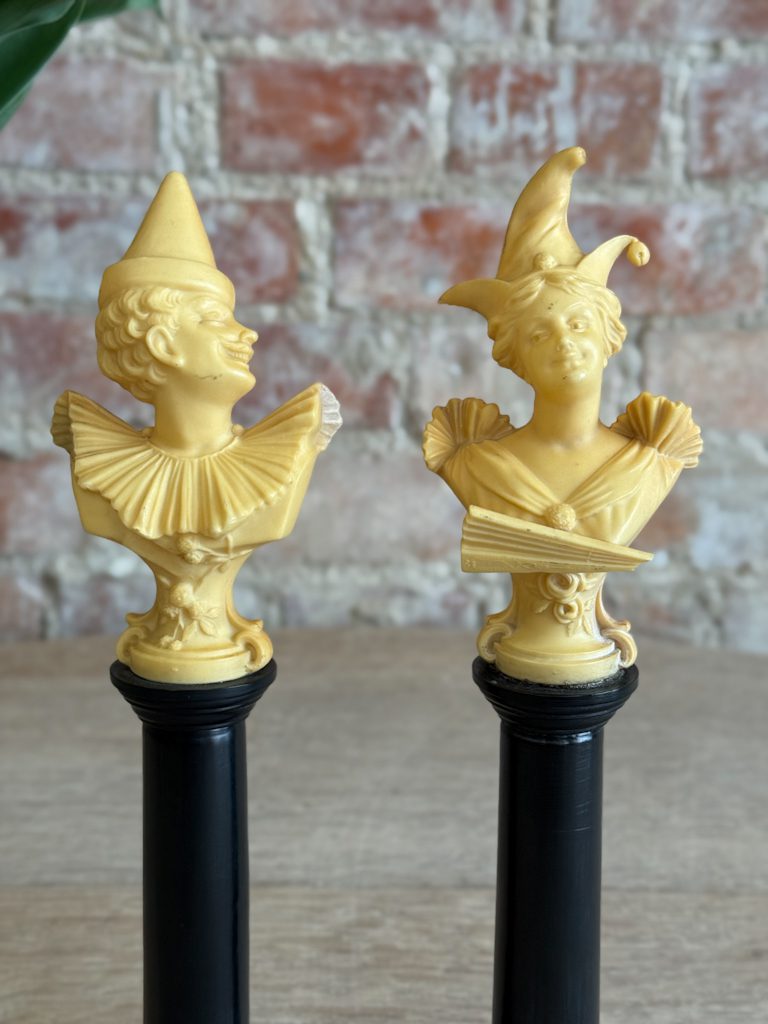
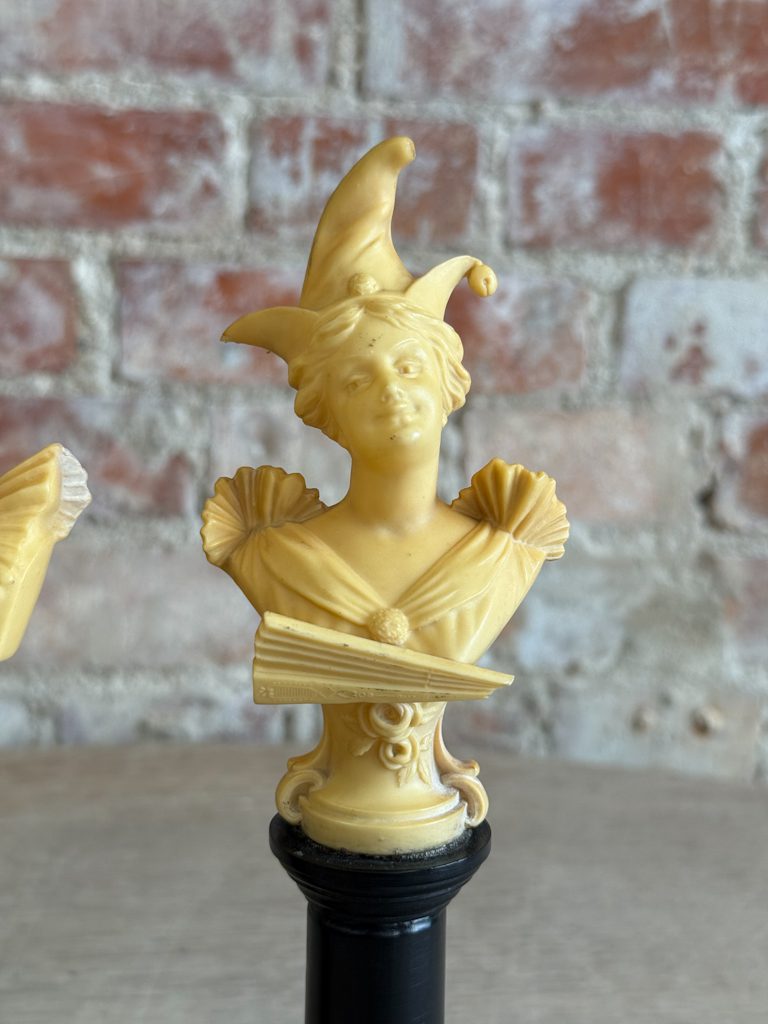
Pjero — melanholiskais, baltais klauns ar konusveida cepuri un kroku apkakli — un Kolombīna — viņa veiklā, rotaļīgā partneriene ar laktu un vēdekli — bija 19. gadsimta beigu un 20. gadsimta sākuma mākslas, teātra un dekoratīvās kultūras iemīļotākie personāži. Parīzē šie tēli rotāja kabareju plakātus, porcelāna galda rotājumus, grāmatu ilustrācijas un salonpulksteņu figūriņas. Tie simbolizēja dzīves vieglumu, ironisku mīlestību un ārkārtēju eleganci — apvienojumu, ko Belle Époque buržuāzija dievināja.
Bistiņu novietojums uz krinolīna tipa kolonnām ir tipisks šim laikmetam — tā bija populāra prezentācijas forma mazajām dekoratīvajām skulptūriņām, kas rotāja dāmu rakstāmgaldus, konsolkonsoles un plauktus.
―――――――――――――――――――――
⚜️ RAŽOTĀJS UN MANUFAKTŪRAS TRADĪCIJA
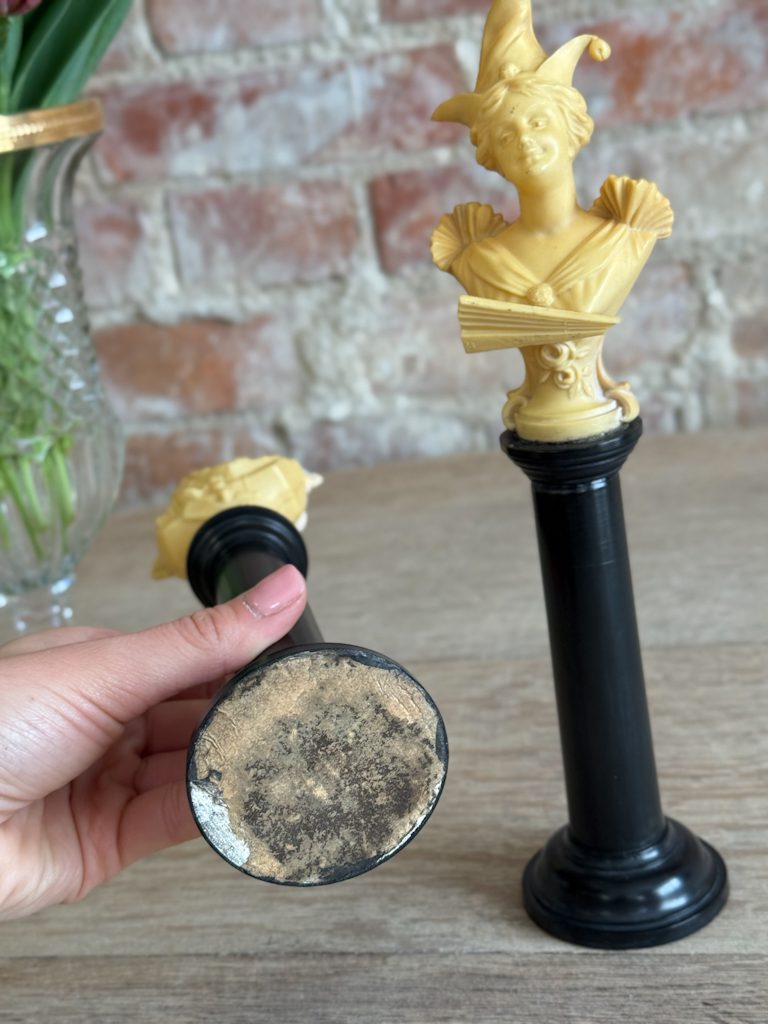
Uz bistiņām un kolonnām nav redzams konkrēts ražotāja zīmogs. Kolonnu apakšas materiāls — ar vecuma tumšumu un nolietojumu — liecina par autentisku, nevis jaunu objektu. Šāda tipa smalkas kaulu masas vai biskvīta bistiņas uz ebonizētām koka kolonnām bija raksturīgas franču sīkplastikas tradīcijai, kā arī Bohēmijas un Vācijas rotaļlietu un dekorāciju ražotājiem.
Šāda materiāla kompozīcija — gaiša, kaulos-dzeltena bistiņa uz tumšas kolonnas — tieši atgādina biscuit de Sèvres un līdzīgu franču manufaktūru mazās skulptūriņas, kas bija populāras kā eleganti galda rotājumi un dāvanas augstākās sabiedrības aprindās. Sèvres un Parianas biskvīta manufaktūras tradīcijā tieši šāds matēts, krēmkrāsas tonis tika izmantots, lai atdarinātu marmora vai ziloņkaula cildinošo balto skaistumu. Pjero un Commedia dell’Arte tematika porcelāna un biskvīta skulptūrā bija ļoti izplatīta Eiropas manufaktūrās no 18. gadsimta beigām līdz 20. gadsimta sākumam.
―――――――――――――――――――――
💎 RETUMS UN NOZĪME
Komplekts — abi tēli kopā ar oriģinālajām kolonnām — ir tas, kas šo pāri padara īpaši vērtīgu. Laika gaitā šādi pārīši bieži tiek atdalīti vai zaudē savas pamatnes. Šis pārītis saglabājies pilnā, sākotnējā kompozīcijā, kas ir retums pat pieredzējušu antikvāru acīm.
Commedia dell’Arte motīvi — it īpaši Pjero tēls — pēdējās desmitgadēs piedzīvo ievērojamu kolekcionāru renesansi, veicinot pieprasījumu pēc 19. gadsimta beigu dekoratīvās skulptūras ar šo tematiku. Īpaši pieprasīti ir pāri ar vīriešu un sieviešu figūriņām, kas veido simetrisku dialogu.
―――――――――――――――――――――
🕯️ PIELIETOJUMS INTERJERĀ, DIZAINĀ UN FOTOGRĀFIJĀ
Šis pārītis ir ideāls galda vai plaukta dekorācijas elements jebkurā interjerā, kas atver durvis uz rotaļīgumu, kultūrvēsturisko dziļumu vai teātrālo eleganci. Klasiskos un eklektiskos interjeros tie iederas uz rakstāmgalda, grima galda vai stikla vitrīnas plaukta. Modernā Parīzes apartamentu stilā — uz marmora galdvirsmas vai melna lakotā plaukta — tie rada izsmalcinātu vintage aksentu.
Modes un interjera fotogrāfiem un stilistiem Pjero un Kolombīnas motīvs ir viens no ikoniskākajiem vintage un teātrālo foto sesiju rekvizītiem — dzeltenkrēmīgais tonis, konusveida cepures silueti un vēdekļu detaļas rada izcilu vizuālo kontrastu gan pret tumšiem, gan gaišiem foniem.
―――――――――――――――――――――
🔍 STĀVOKLIS
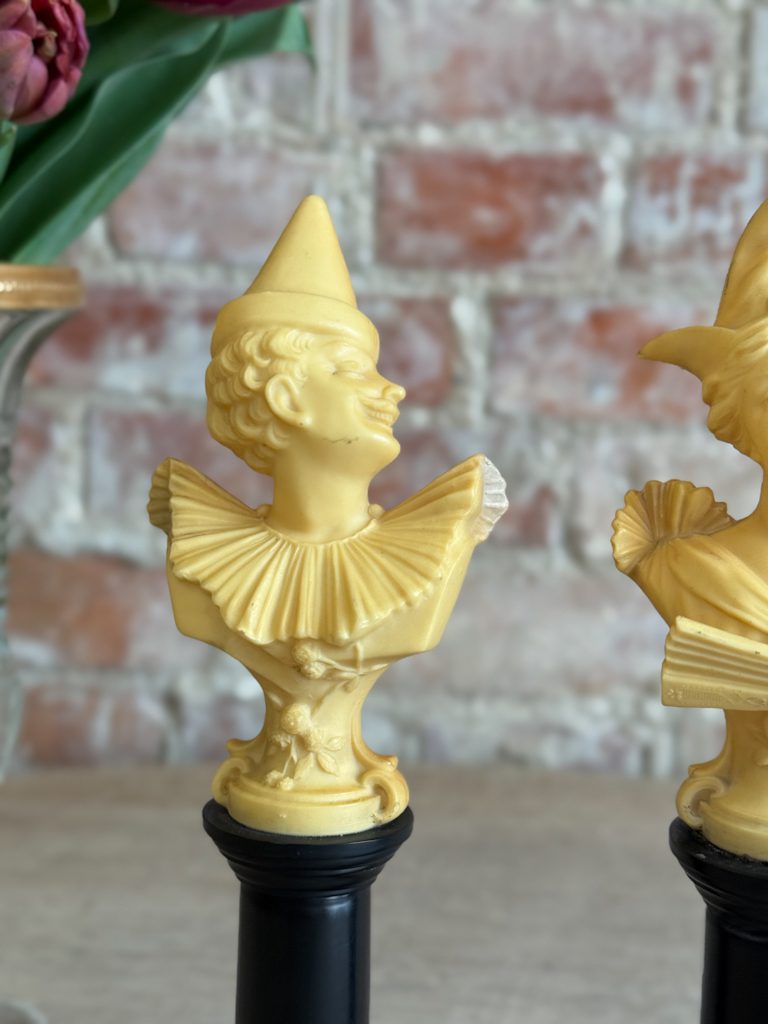
Bistiņas labā stāvoklī ar vecumam atbilstošu zeltaini-krēmīgu toni un smalkām virsmietriešanas pēdām. Uz Pjero bistiņas apkakles redzams neliels balts plankums — iespējams, neliels krāsas vai materiāla defekts vai nolietojuma vieta. Kolonnu apakšas uzrāda autentiskas vecuma pēdas — tumšojums, nedaudz izbalēts lakojums — kas apliecina lietas vecumu un autentiskumu. Abas kolonnas stāv stabili. Nav lūzumu vai restaurācijas pazīmju galvenajos elementos.
Lietas stāvoklis pilnībā atspoguļots fotogrāfijās.
―――――――――――――――――――――
🇬🇧 DESCRIPTION IN ENGLISH
Pierrot and Columbine Bust Pair on Columns — Commedia dell’Arte Motif, Historicism / Belle Époque, France or Central Europe, circa 1880–1910.
―――――――――――――――――――――
📐 DIMENSIONS
Total height 28 cm (bust on column). Material: busts in pressed bisque / bone paste with a warm cream-yellow tone; columns in ebonised wood, ebonit or painted metal. Weight: light. Sold as a pair — 2 pieces.
―――――――――――――――――――――
🏛️ PERIOD, ARTISTIC STYLE, AND HISTORICAL CONTEXT
This piece belongs to the luminous era the French call Belle Époque — the “beautiful age” — spanning approximately 1880 to 1914 in European culture, when theatre, circus, masquerade, and the Italian Commedia dell’Arte tradition experienced a great renaissance in the world of salons, cabarets, and cultivated entertainment.
Pierrot — the melancholic white clown with his conical hat and ruffled collar — and Columbine — his nimble, playful counterpart with fan and graceful draping — were the most beloved figures of late 19th- and early 20th-century art, theatre, and decorative culture. In Paris, these characters adorned cabaret posters, porcelain table ornaments, book illustrations, and salon clock figures. They symbolised the lightness of life, ironic romance, and extraordinary elegance — a combination the Belle Époque bourgeoisie adored.
The placement of the busts on columnar socles is typical of the period — a popular presentation form for small decorative sculptures that adorned ladies’ writing desks, console tables, and display shelves.
―――――――――――――――――――――
⚜️ MAKER’S MARK AND TRADITION
No specific maker’s mark is visible on the busts or columns. The material of the column bases — showing age darkening and genuine wear — attests to authenticity rather than recent manufacture. Small bisque or bone-paste busts of this kind mounted on ebonised wooden columns were characteristic of the French small sculpture tradition, as well as of Bohemian and German decorative and ornamental producers.
This material combination — pale cream-yellow bust on a dark column — closely recalls the small figurines of the biscuit de Sèvres and related French manufactory traditions, which were fashionable as elegant table ornaments and gifts in the highest social circles. The Sèvres and Parian bisque traditions used exactly this matte cream tone to evoke the noble whiteness of marble or ivory. Pierrot and Commedia dell’Arte themes in porcelain and bisque sculpture were widely produced by European manufactories from the late 18th century through to the early 20th century.
―――――――――――――――――――――
💎 RARITY AND SIGNIFICANCE
It is the completeness of the set — both figures together with their original columns — that makes this pair particularly valuable. Over time, such pairs are frequently separated or lose their bases. This pair survives in its full, original composition, which is a rarity even to experienced antique dealers.
Commedia dell’Arte motifs — and above all the figure of Pierrot — have experienced a notable collector renaissance in recent decades, driving demand for late 19th-century decorative sculpture on this theme. Pairs combining male and female figures in symmetrical dialogue are especially sought after.
―――――――――――――――――――――
🕯️ USE IN INTERIOR DESIGN AND PHOTOGRAPHY
This pair is ideal as a table or shelf decoration in any interior that opens toward playfulness, cultural-historical depth, or theatrical elegance. In classical and eclectic settings they are at home on a writing desk, dressing table, or glass display cabinet shelf. In the modern Parisian apartment style — on a marble surface or a black lacquered shelf — they create a refined vintage accent.
For fashion and interior photographers and stylists, the Pierrot and Columbine motif is one of the most iconic props for vintage and theatrical photo sessions — the cream-yellow tone, the silhouettes of the conical hats, and the fan details create outstanding visual contrast against both dark and light backgrounds.
―――――――――――――――――――――
🔍 CONDITION
The busts are in good condition with an age-appropriate golden-cream tone and fine surface wear consistent with their age. A small white mark is visible on Pierrot’s collar — likely a minor surface defect or wear spot. The column bases display authentic age characteristics — darkening, slightly faded lacquer — which confirm the age and authenticity of the piece. Both columns stand firmly. No breaks or evidence of restoration are present on the principal elements.
The condition of the piece is fully represented in the photographs.