
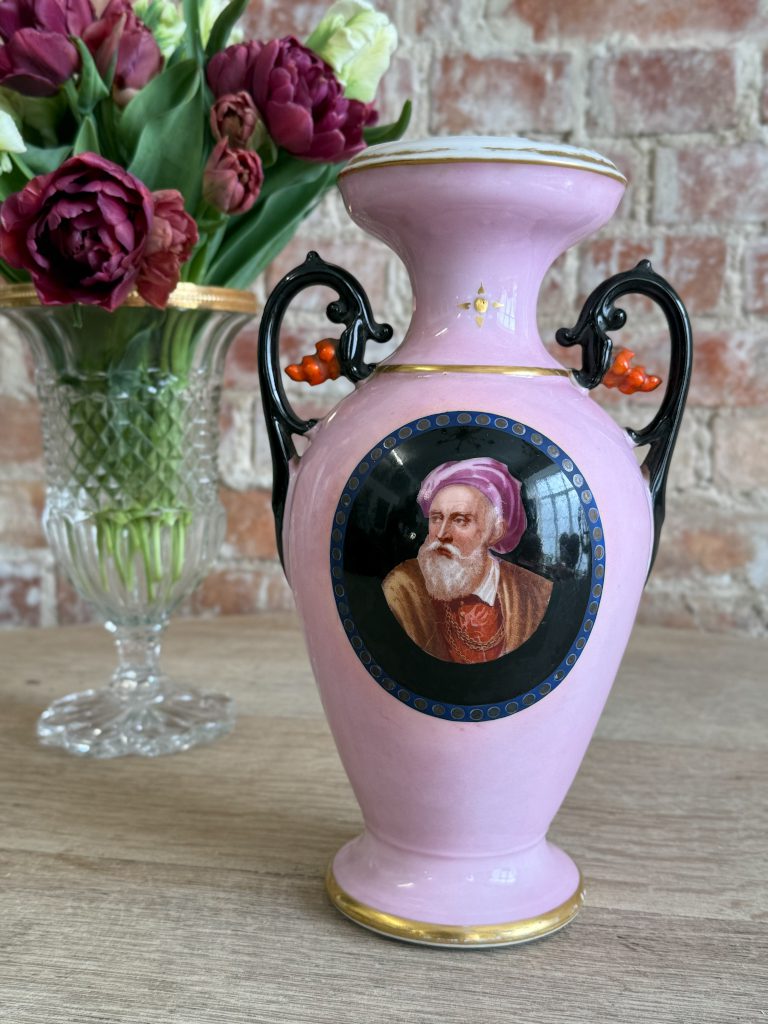
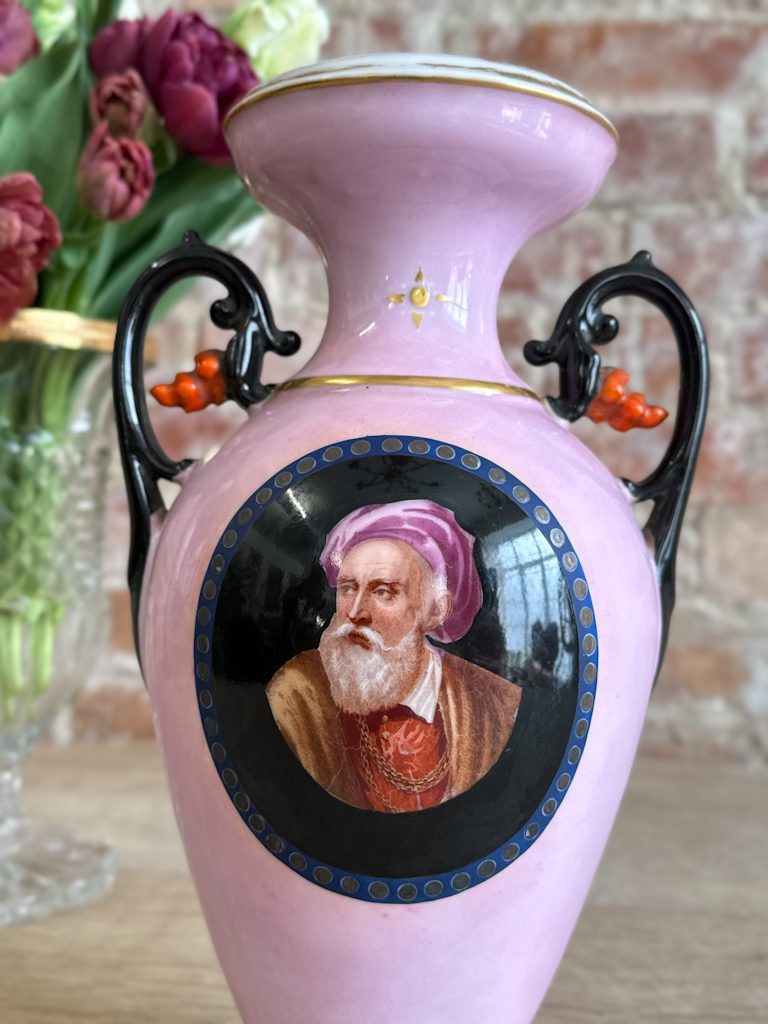
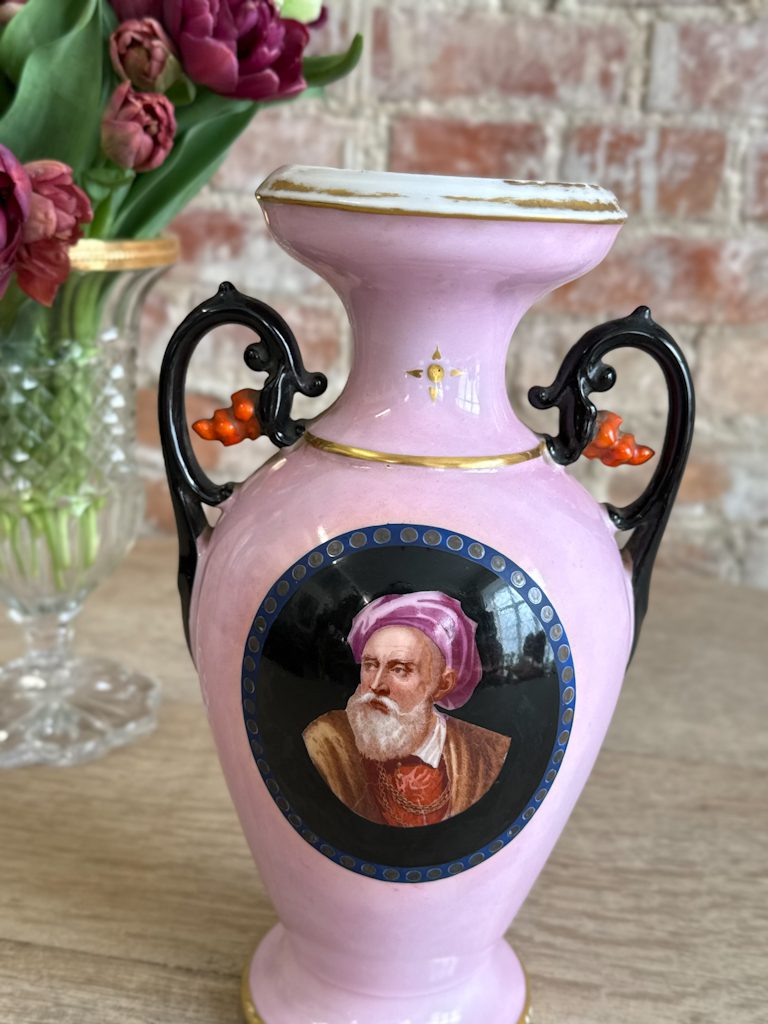
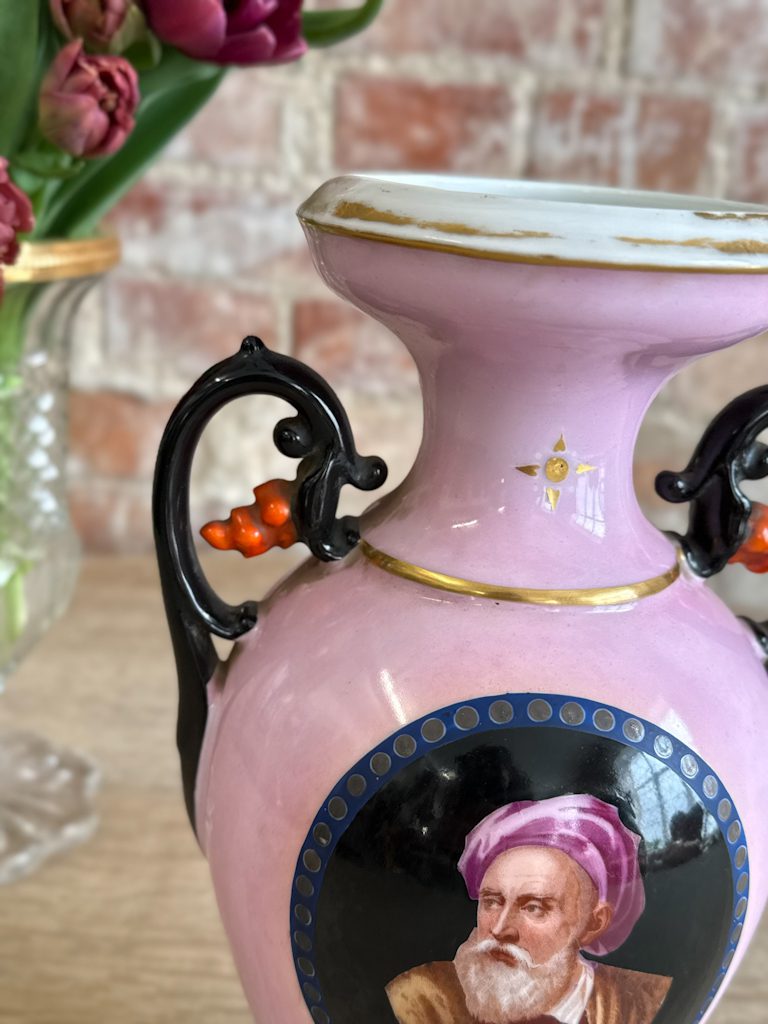
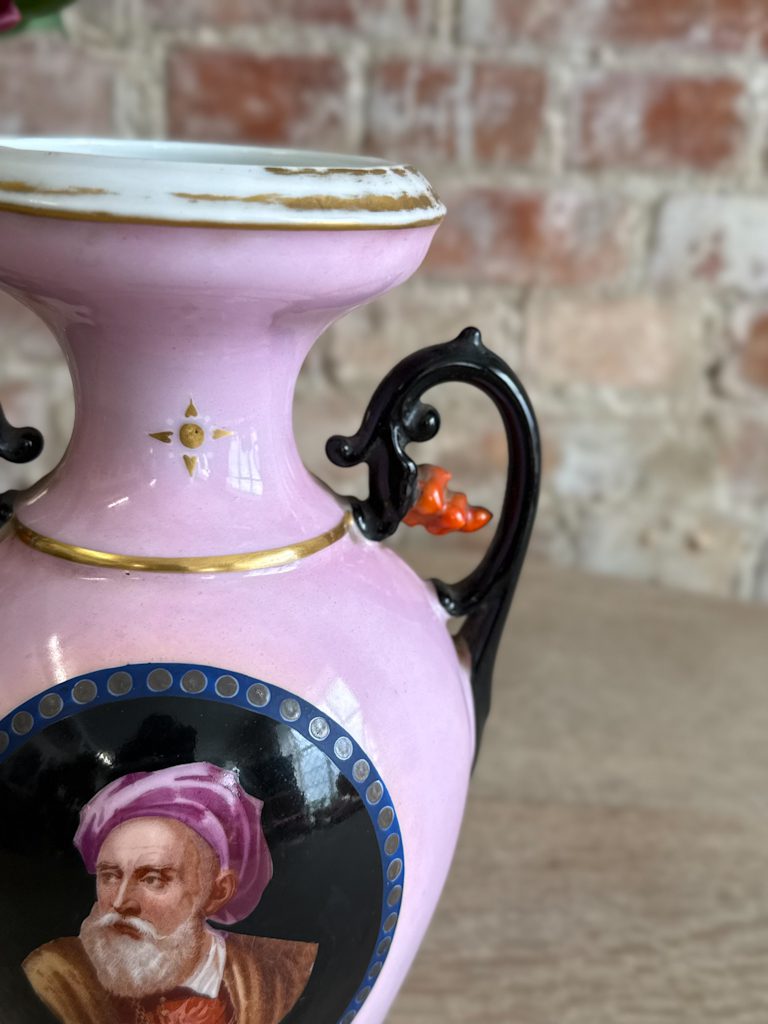
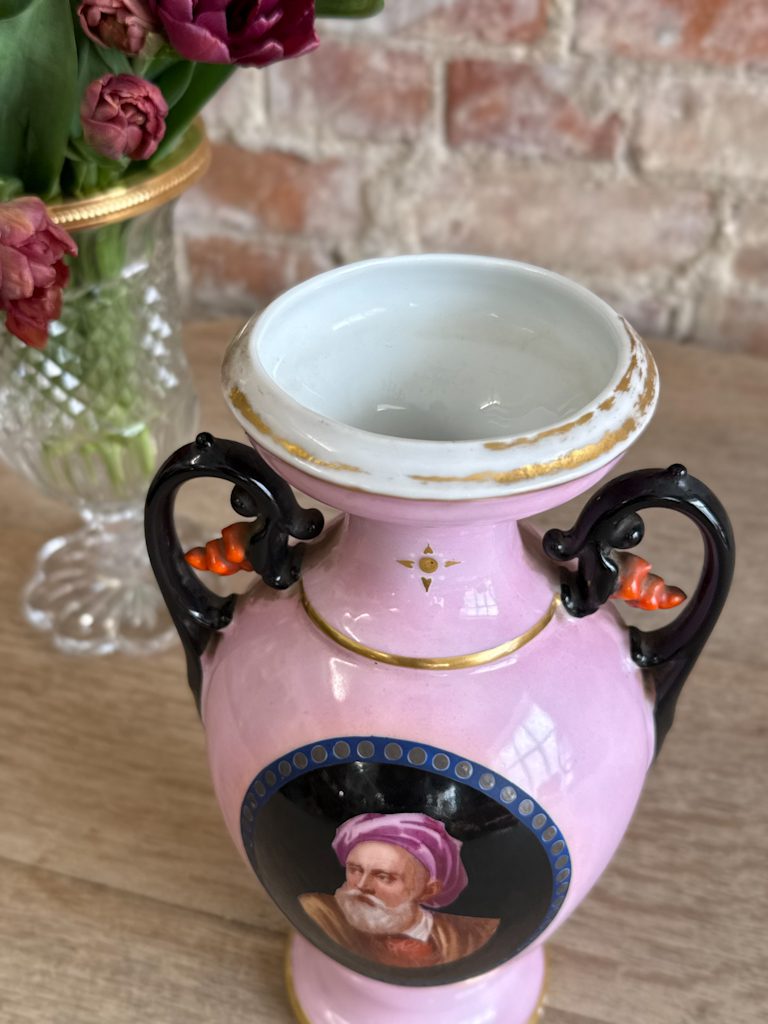
Rozā porcelāna dekoratīvā vāze ar orientālistisku portretu medaljonu, melniem arabesku rokturiem un koraļļu akcentiem — Historicisms / Neorenesanse, Vieux Paris tradīcija, Francija, ap 1850.–1880. gadu (5580)
Rozā porcelāna dekoratīvā vāze ar orientālistisku portretu medaljonu, melniem arabesku rokturiem un koraļļu akcentiem — Historicisms / Neorenesanse, Vieux Paris tradīcija, Francija, ap 1850.–1880. gadu (5580)
€220.00
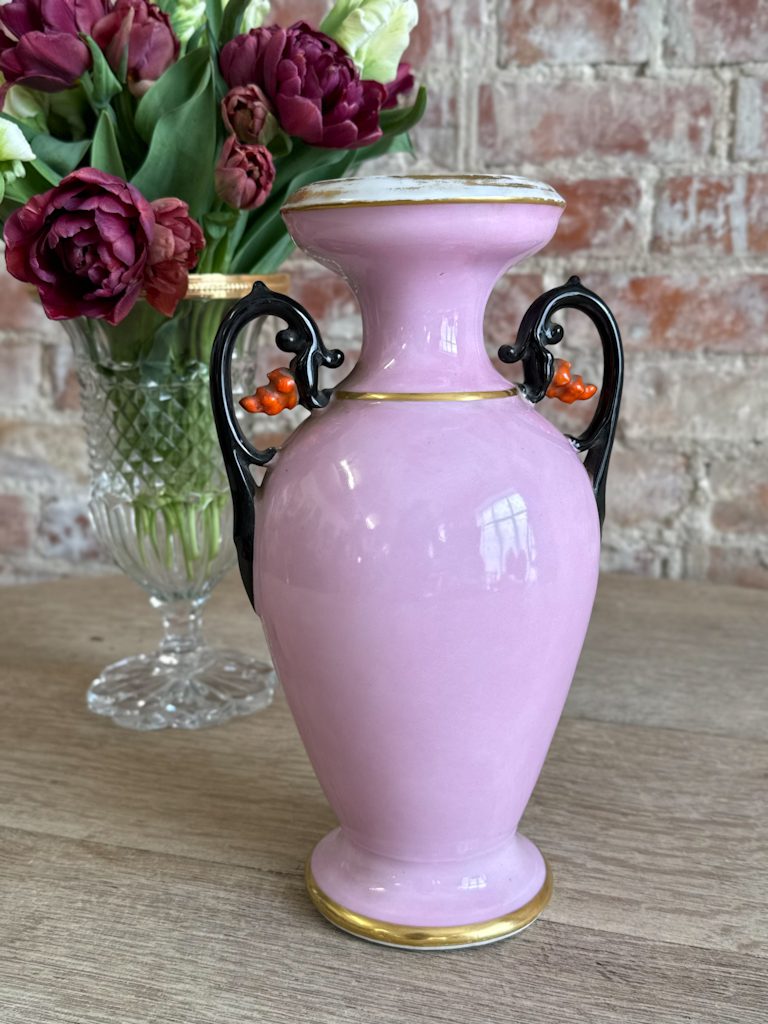
Augstums 29cm, platums 17cm.
Rozā porcelāna dekoratīvā vāze ar orientālistisku portretu medaljonu, melniem arabesku rokturiem un koraļļu akcentiem — Historicisms / Neorenesanse, Vieux Paris tradīcija, Francija, ap 1850.–1880. gadu
―――――――――――――――――――――
🏛️ IZGATAVOŠANAS PERIODS, MĀKSLAS STILS, LAIKMETS
Ir priekšmeti, kas nēsā laika zīmi ne uzrakstā, bet ķermenī — krāsā, proporcijā, roktura izliekumā. Šī vāze pieder tam auglīgajam pārejas brīdim, kad Biedermeier klusais elegantais minimālisms vēl turēja formas tīrību un proporciju mieru, bet Historicisma dekoratīvā drosme jau atnesa melno arabesku, koraļļa dzirksti un orientālistisko portretu — abas estētikas šeit sadzīvo vienā objektā ar pilnīgu harmoniju.
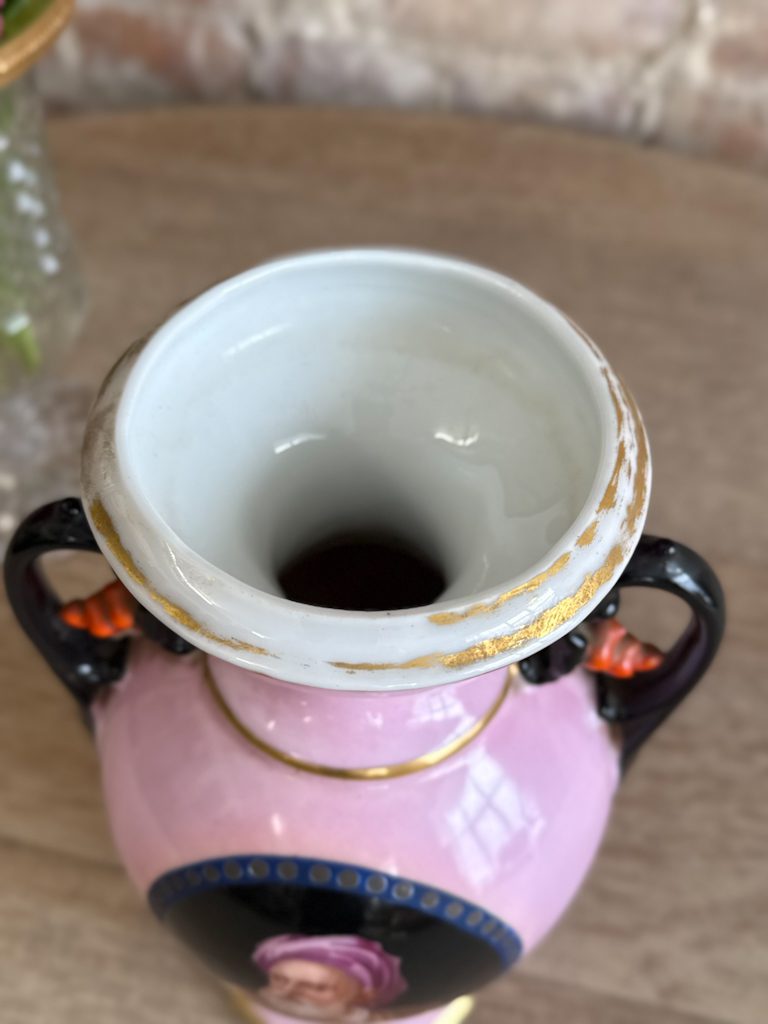
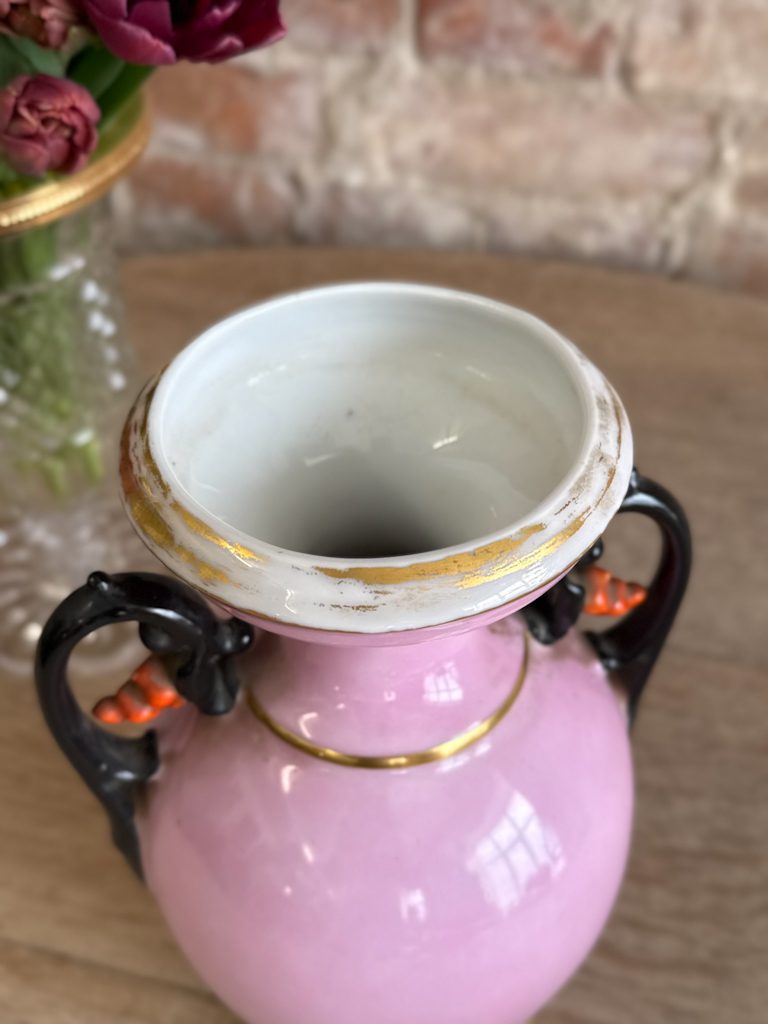
Vāzes rozā porcelāna korpuss — maigs, nedaudz puderaini rozā, ko franči sauca par rose poudré — ir kamīnplaukta krāsa, salona krāsa, krāsa, kas paredzēta gaismā, ko met svece vai zemais ziemas saules stars pa logu. Amforas siluets ar izteiktu vēderu, sašaurinātu kaklu un platenu malu ir klasicisma vēlīnā atbalss, ko 1850.–1880. gadu manufaktūras interpretēja ar pieaugošu dekoratīvo brīvību. Melni glazētie rokturi ar to arabesku izliekumu un oranži sarkanajiem koraļļu akcentiem ir šī perioda raksturīgākā dekoratīvā balss — kontrasts starp rozā ķermeni un melno grafiku ir apzināts, teatrāls un ar pilnīgu estētisku pārliecību izpildīts.
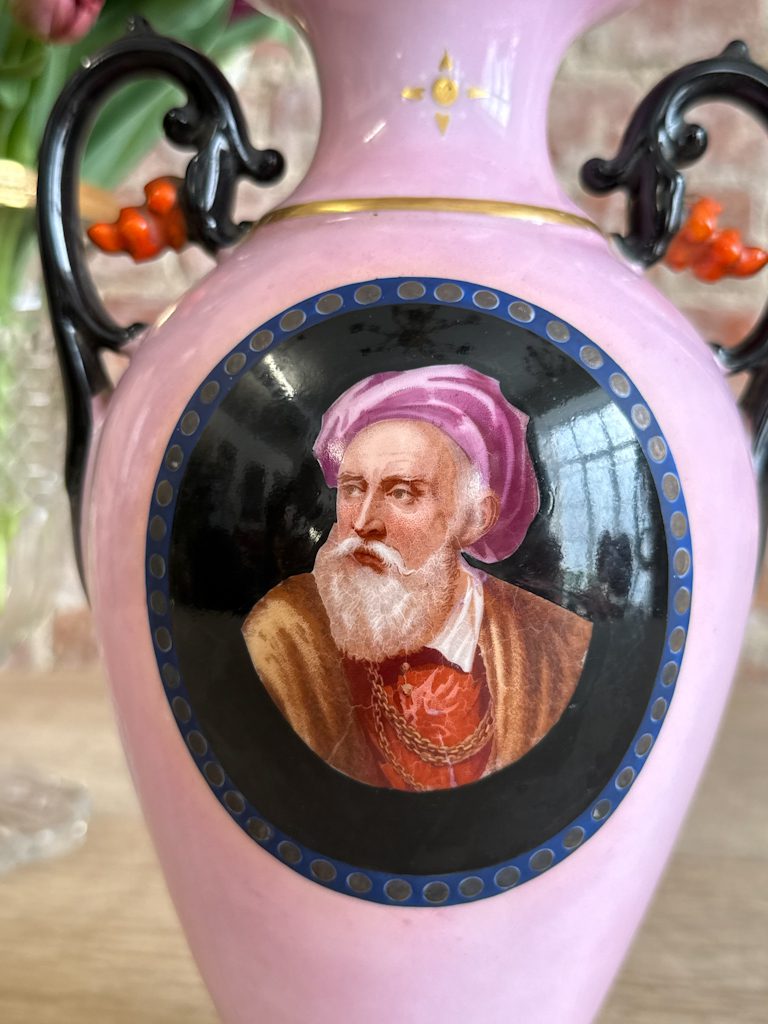
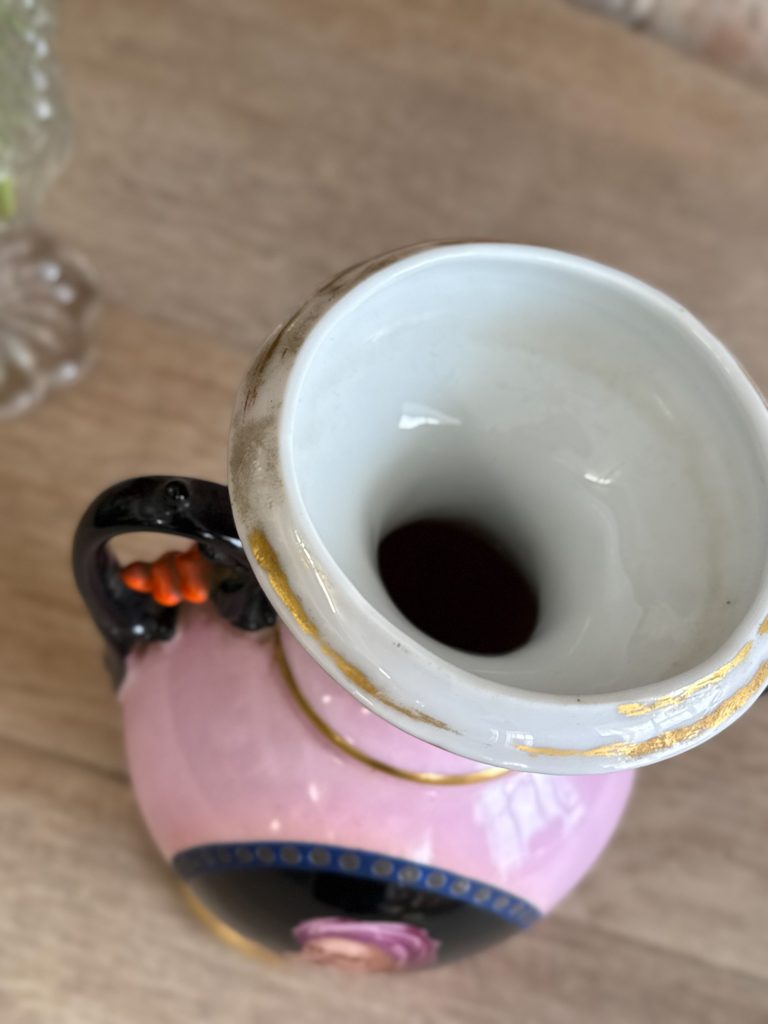
Medaljona portrets — baltbārdains vīrs rozā turbānā, zelta ķēdē, tumši oranžā apmetni, uz melna fona — nav iedomāta figūra. Tas ir 19. gs. Francijas orientālisma iemīļotākais tēls: Austrumu gudrais vai tirgotājs, kura skatiens satur to, ko Eiropa tajā laikā projektēja uz Austrumiem — dziļumu, noslēpumu, laiku, kas rit citādāk. Pēc Delakruā ceļojuma uz Magrebu un Francijas iekarošanas Alžīrijā 1830. gadā orientālisms kļuva par nacionālu kaislību, un porcelāna manufaktūras ātri saprata, ka Parīzes salons vēlas šo tēlu uz kamīnplaukta — ne tikai uz audekla. Šis portrets, visticamāk, ir brīvs atdarinājums pēc kāda slavena Ticiāna vai Džordžones alla turca portreta, ko 19. gs. gravieru izdevumi bija padarījuši plaši pazīstamus. Tas tika gleznots ar roku, kurā bija ota un laiks — un tas paliek redzams.
―――――――――――――――――――――
⚜️ RAŽOTĀJS UN TRADĪCIJA
Vāze nāk no tā saucamās Vieux Paris porcelāna tradīcijas — Parīzes un tās apkārtnes manufaktūru plašā ģimene, kas darbojās no 18. gs. beigām līdz 19. gs. otrajai pusei. Šīs manufaktūras nebija Sèvres — tās nebija karaliskās un nekad netiecās uz kroņa zīmogu. Tās bija elegantā buržuāzija porcelāna pasaulē: izsmalcinātas, ar skaidru roku, ar Parīzes modes sajūtu, bet bez lielās slavas smaguma. Parīzes labākie maisons de curiosités un magasins de nouveautés uz Grands Boulevards pārdeva tieši šāda veida vāzes kā galda un interjera aksesuārus, kas rotāja Ne tikai pilsētas salonus, bet arī provinces pilsoņu dzīvojamās istabas no Bordo līdz Strasbūrai.
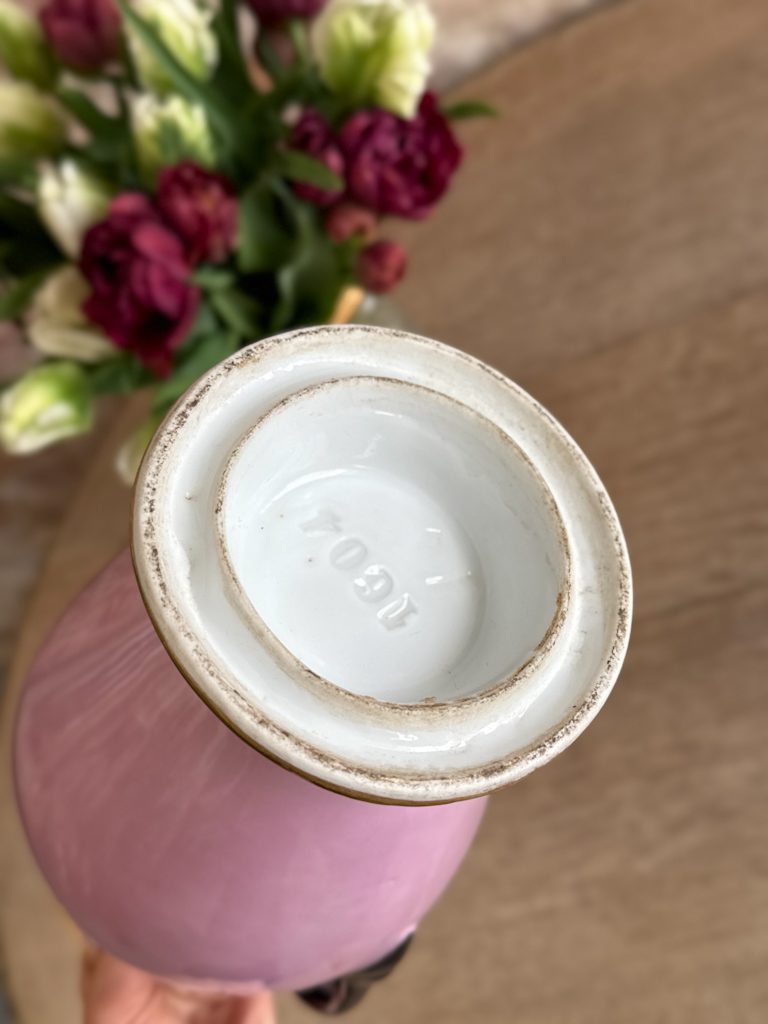
Vieux Paris manufaktūras bieži vien strādāja bez pastāvīga marķējuma vai ar minimālu iespiesto formas numuru — šajā gadījumā pamatnē iekalts numurs 1604 ir formas kataloga numurs, kas apliecina, ka vāze ražota no noteiktas veidnes sērijā, taču nenorāda uz konkrētu māju. Tas ir raksturīgi tā perioda Francijas vidējai un augstākai dekoratīvā porcelāna produkcijai, kur izstrādājuma kvalitāte runāja pati par sevi.
―――――――――――――――――――――
💎 RETUMS UN NOZĪME
Bezmarķēta Vieux Paris vāze ar saglabātu orientālistisku portretu medaljonu, veseliem koraļļu akcentiem uz melno rokturiem un šajā kvalitātē saglabātu rozā glazūru ir ievērojami retāks atradums nekā standarta dekoratīvās vāzes bez portreta. Tieši orientālistiskā tematika — ar tās kultūrvēsturisko saikni ar Delakruā, Ģeromo un visu 19. gs. Francijas Austrumu fascināciju — piešķir šim priekšmetam papildu kolekcijas dimensiju. Kolekcionāri Francijā, Beļģijā un Lielbritānijā pēdējos gados aktīvi pārvērtē tieši šo “bez pases” Vieux Paris kategoriju uz augšu, atpazīstot tajā autentisku 19. gs. Francijas porcelāna māksliniecisko balsi, kas ilgu laiku atradusies slavenāku manufaktūru ēnā.
―――――――――――――――――――――
🕯️ PIELIETOJUMS INTERJERĀ, DIZAINĀ UN FOTOGRĀFIJĀ
Šī vāze ir radīta kamīnplauktam — un tieši tur tā atklāj savu pilno skaistumu. Uguns gaismā rozā glazūra iegūst siltumu, ko dienas gaisma tikai iesaka, bet svece pilnīgi atklāj. Konsoļgalda centrs ar spoguļa atspulgu, kur melnais arabesks un koraļļa oranžs veido krāsu dialogu ar visu, ko novietots blakus. Stikla vitrīnā kolekcijā ar citiem 19. gs. franču porcelāna priekšmetiem — Vieux Paris krūzītēm, Empire stila šķīvjiem vai Limoges vāzēm. Romantisma, Second Empire, eklektiskā un neobaroka stila interjeros šī vāze nav tikai dekors — tā ir kultūrvēsturiska pozīcija. Fotogrāfijā — rozā un melns ar koraļļa punktiem ir vizuāli pateicīga kombinācija, kas still-life uzņēmumos darbojas gan ar tumšu dramatisku fonu, gan gaišā Parīzes stila kompozīcijā ar lina audumu un svaigiem ziediem.
―――――――――――――――――――――
🔍 STĀVOKLIS
Vispārējais stāvoklis — labs, atbilstošs vecumam. Rozā glazūra saglabājusi savu dziļumu un maigumu bez plaisām vai skaldījumiem. Melnie arabesku rokturi ar koraļļu akcentiem veseli. Zelta apmaļu dabisks nodilums uz mutes malas — raksturīgs šī perioda porcelānam, vēsturiski autentisks un gaidāms. Portreta medaljonas gleznojums saglabājies skaidri, ar visu krāsu intensitāti. Pamatnē iespiests formas numurs 1604. Lietas stāvoklis pilnībā atspoguļots fotogrāfijās.
―――――――――――――――――――――
🇬🇧 DESCRIPTION IN ENGLISH
Pink Porcelain Decorative Vase with Orientalist Portrait Medallion, Black Arabesque Handles and Coral Accents — Historicism / Neo-Renaissance, Vieux Paris Tradition, France, circa 1850–1880
―――――――――――――――――――――
📐 DIMENSIONS — Height 29 cm. Width across handles 17 cm.
―――――――――――――――――――――
🏛️ PERIOD, ART STYLE, HISTORICAL CONTEXT
There are objects that carry the mark of their time not in an inscription, but in the body itself — in colour, proportion, in the curve of a handle. This vase belongs to that fertile transitional moment when the quiet elegant minimalism of Biedermeier still held its formal purity and compositional calm, while the decorative boldness of Historicism had already introduced the black arabesque, the coral accent, and the Orientalist portrait — both aesthetics coexisting here in a single object with complete harmony.
The vase’s pink porcelain body — a soft, faintly powdery rose that the French called rose poudré — is the colour of the mantelpiece, the colour of the salon, a colour intended for the light cast by a candle or the low winter sun through tall windows. The amphora silhouette, with its pronounced belly, narrowed neck, and wide-flanged mouth, is a late echo of Classicism, interpreted by the manufacturers of 1850–1880 with growing decorative freedom. The black-glazed handles with their arabesque curves and orange-red coral accents are the most characteristic decorative voice of this period — the contrast between the pink body and the black graphic line is deliberate, theatrical, and executed with complete aesthetic conviction.
The medallion portrait — a white-bearded man in a pink turban, with a gold chain, in a dark amber cloak, set against a black ground — is not an invented figure. It is the most beloved image of 19th-century French Orientalism: the Eastern sage or merchant, whose gaze holds what Europe was then projecting onto the East — depth, mystery, time moving differently. After Delacroix’s journey to the Maghreb and France’s conquest of Algeria in 1830, Orientalism became a national passion, and porcelain manufacturers quickly understood that the Parisian salon wanted this image on the mantelpiece — not only on the canvas. This portrait is most likely a free interpretation after a celebrated Titian or Giorgione alla turca portrait, made widely known through 19th-century engraving publications. It was painted by a hand that held a brush and time — and that remains visible.
―――――――――――――――――――――
⚜️ MAKER AND TRADITION
The vase comes from the so-called Vieux Paris porcelain tradition — the broad family of Paris and its surrounding manufacturers active from the late 18th century through the second half of the 19th century. These were not Sèvres — they were not royal manufactories and never aspired to the royal mark. They were the elegant bourgeoisie of the porcelain world: refined, with a confident hand, attuned to Parisian fashion, but without the weight of grand celebrity. The finest Parisian maisons de curiosités and magasins de nouveautés on the Grands Boulevards sold exactly this type of vase as table and interior accessories, adorning not only city salons but provincial drawing rooms from Bordeaux to Strasbourg.
Vieux Paris manufacturers frequently worked without a permanent mark, or with only a minimal impressed form number — in this case, the number 1604 impressed into the base is a catalogue form number, confirming that the vase was produced from a specific mould within a series, without identifying the individual house. This is characteristic of the period’s French middle and upper decorative porcelain production, where the quality of the object spoke for itself.
―――――――――――――――――――――
💎 RARITY AND SIGNIFICANCE
An unmarked Vieux Paris vase with an intact Orientalist portrait medallion, complete coral accents on the black handles, and a pink glaze preserved in this quality is a considerably rarer find than standard decorative vases without portraiture. It is precisely the Orientalist subject matter — with its cultural connection to Delacroix, Gérôme, and the entirety of 19th-century France’s Eastern fascination — that gives this piece an additional collecting dimension. Collectors in France, Belgium, and the United Kingdom have in recent years been actively reassessing this unmarked Vieux Paris category, recognising in it an authentic 19th-century French porcelain artistic voice that has long stood in the shadow of more celebrated manufactories.
―――――――――――――――――――――
🕯️ USE IN INTERIOR DESIGN AND PHOTOGRAPHY
This vase was made for the mantelpiece — and it is there that it reveals its full beauty. In firelight, the pink glaze acquires a warmth that daylight only suggests but candlelight fully discloses. As the centrepiece of a console table with a mirror behind it, where the black arabesque and the coral orange create a colour dialogue with everything placed beside them. In a glass cabinet as part of a collection of 19th-century French porcelain — Vieux Paris cups, Empire-style plates, or Limoges vases. In Romantic, Second Empire, eclectic, and neo-Baroque interiors, this vase is not merely decoration — it is a cultural-historical statement. In photography — pink and black with coral accents is a visually generous combination, working equally in dramatic dark-background still-life compositions and in bright Parisian-style arrangements with linen and fresh flowers.
―――――――――――――――――――――
🔍 CONDITION
Overall condition — good, consistent with age. The pink glaze has retained its depth and softness, with no cracks or chips. The black arabesque handles with coral accents are intact. Natural gilding wear on the mouth rim is characteristic of porcelain of this period — historically authentic and entirely expected. The portrait medallion painting is well preserved, with full colour intensity. Form number 1604 impressed into the base. The condition of the item is fully reflected in the photographs.