
Jūgendstila bronzas kašpo / jardinière ar femme-fleur figūru un magoņu dekoru — Jūgendstils, Francija vai Beļģija, ap 1895.–1910. Jūgendstila/Art Nuoveau Trauks Ziediem, Vidēja Izmēra (5395)
Jūgendstila bronzas kašpo / jardinière ar femme-fleur figūru un magoņu dekoru — Jūgendstils, Francija vai Beļģija, ap 1895.–1910. Jūgendstila/Art Nuoveau Trauks Ziediem, Vidēja Izmēra (5395)
€250.00
📐 IZMĒRI
Garums 49,5 cm × augstums 18,5 cm × platums 16,5 cm. Iespaidīgs, horizontāli izstiepts formāts — klasiska jardinière centrepiece proporcijās.
―――――――――――――――――――――
Jūgendstila bronzas kašpo / jardinière ar femme-fleur figūru un magoņu dekoru — Jūgendstils, Francija vai Beļģija, ap 1895.–1910.
―――――――――――――――――――――
🏛️ IZGATAVOŠANAS PERIODS, MĀKSLAS STILS, LAIKMETS
Šis trauks ir tīrs, kompromisus nepieļaujošs Jūgendstils tā pilnbrieda posmā — periodā, kad Parīze, Brisele un Nensija bija kļuvušas par Eiropas mākslas avangarda centriem, un kad metāllietuve bija tikpat svarīgs māksliniecisks instruments kā gleznotāja birste vai tēlnieka kalts.
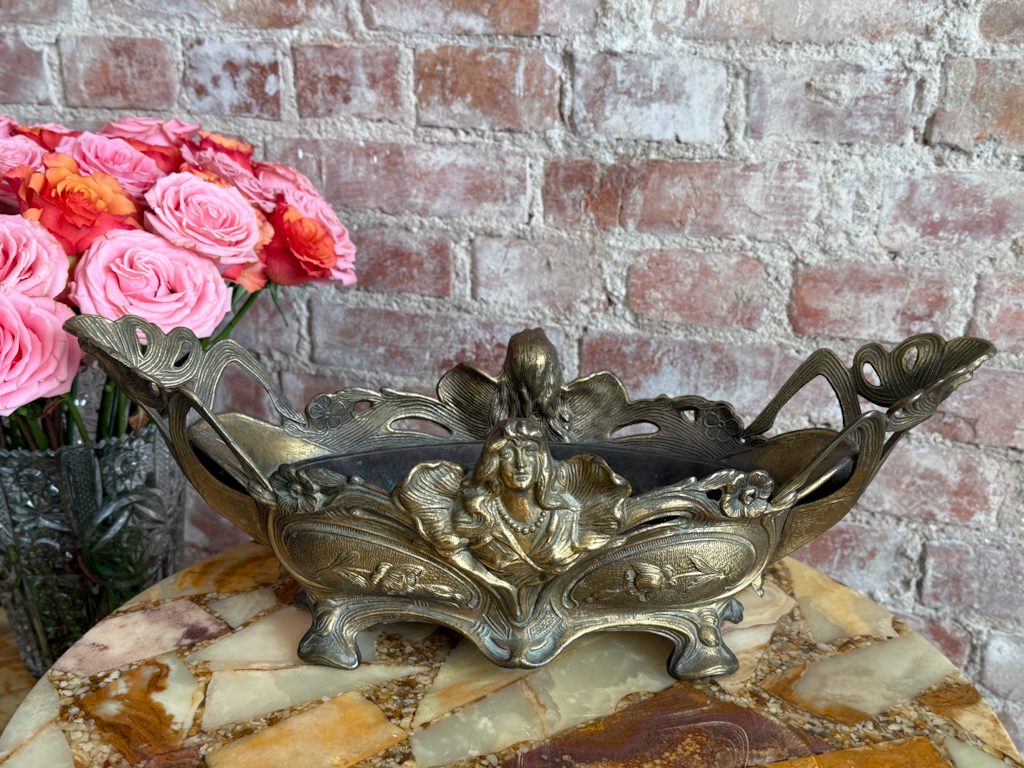
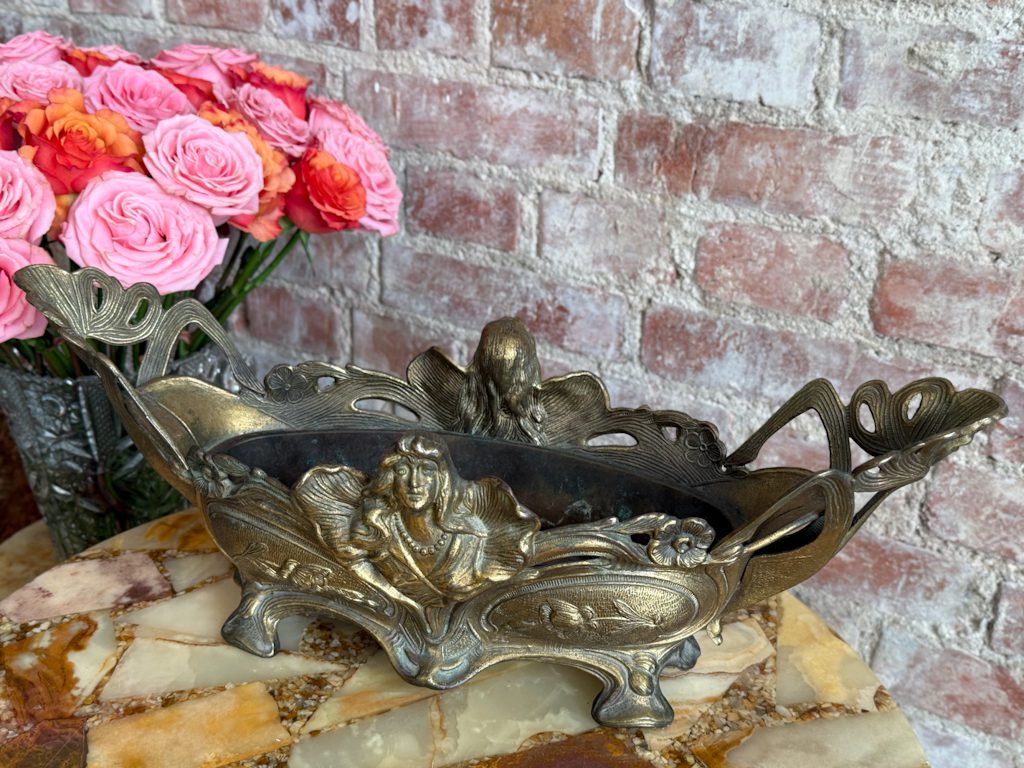
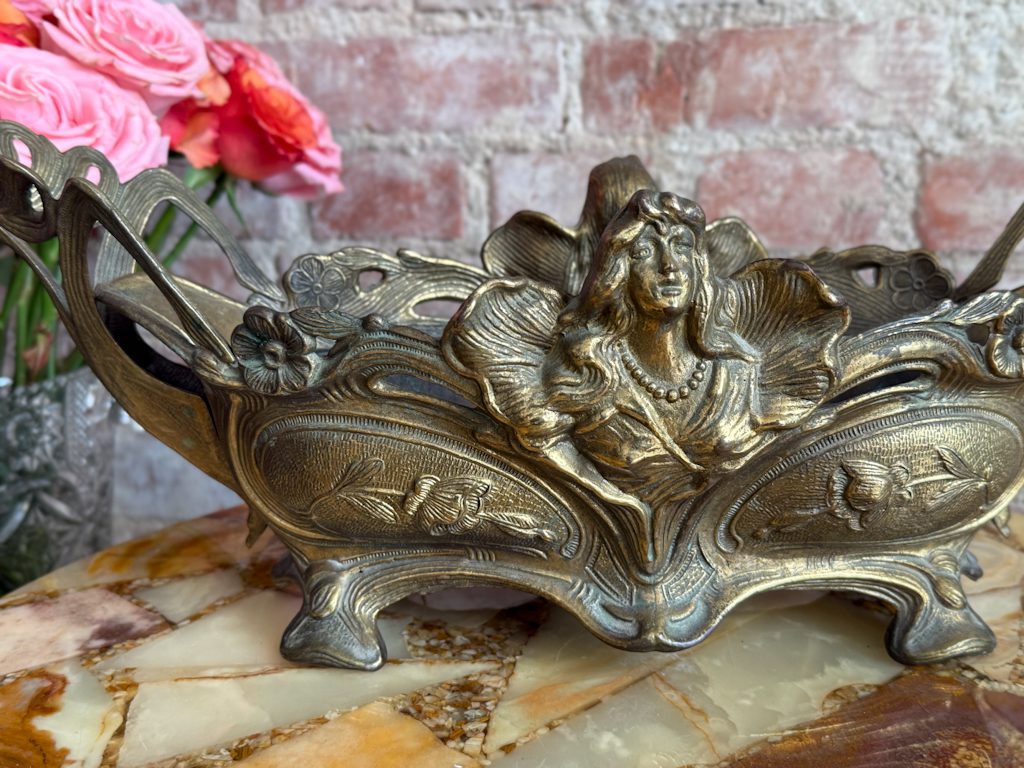
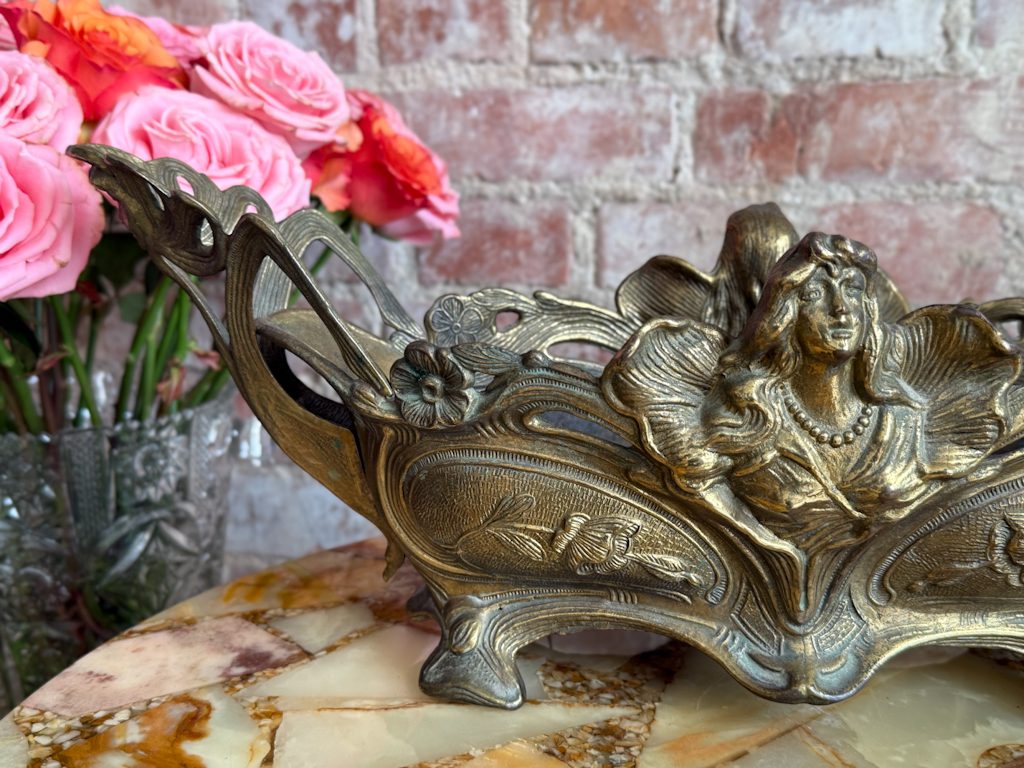
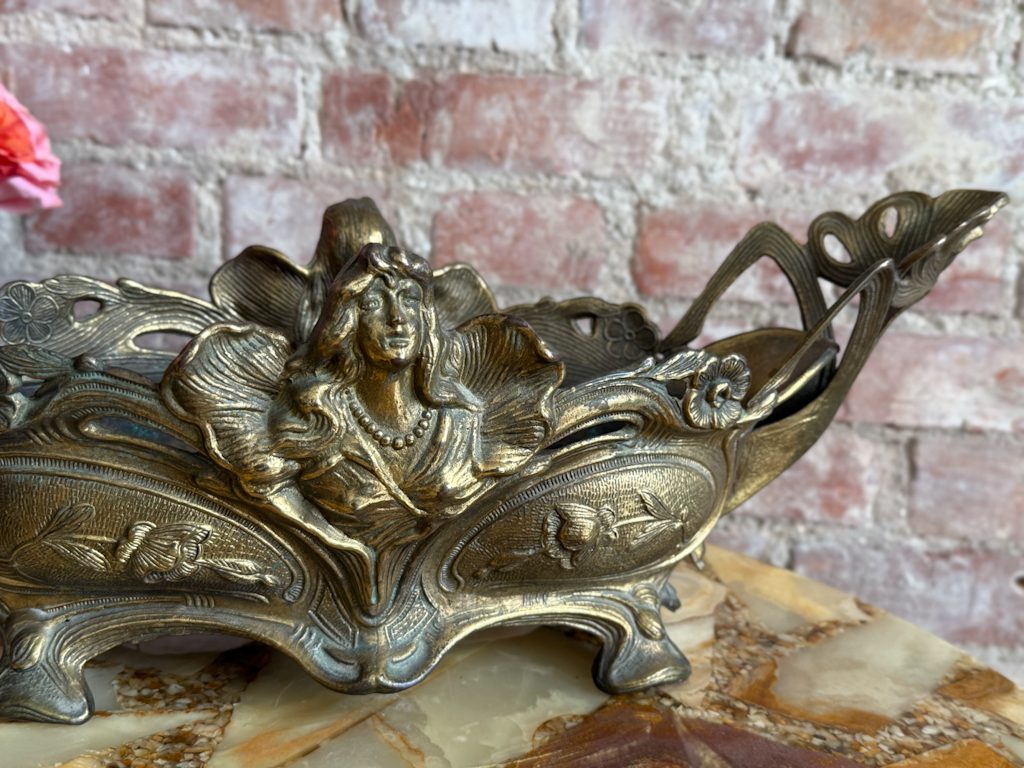
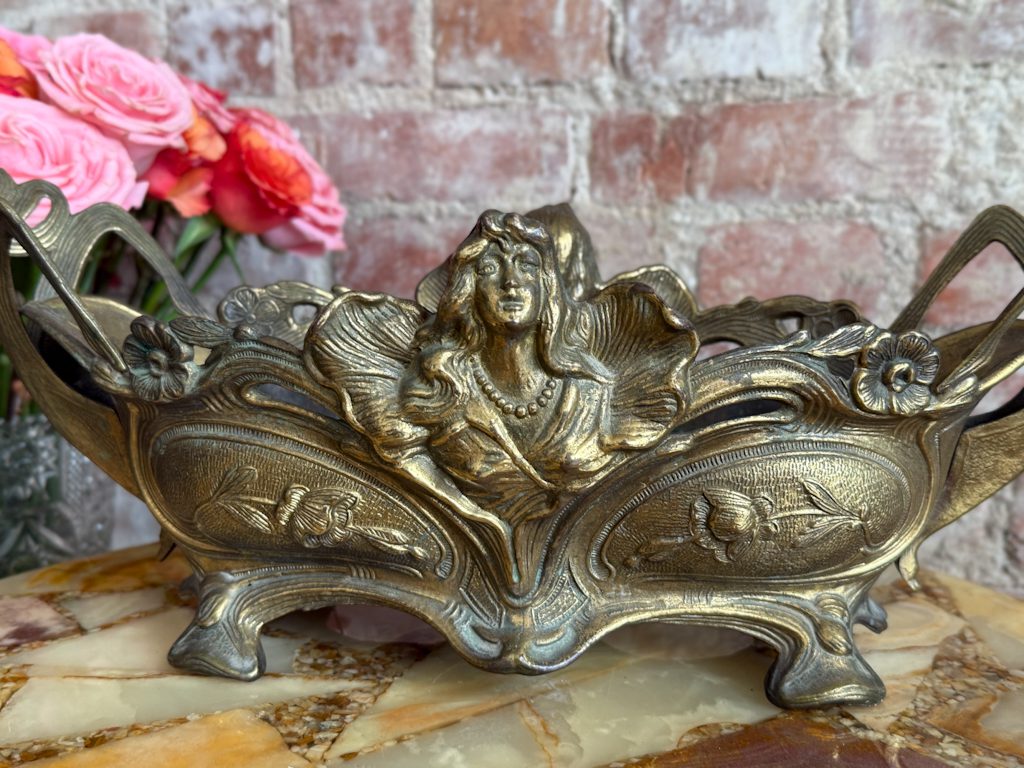
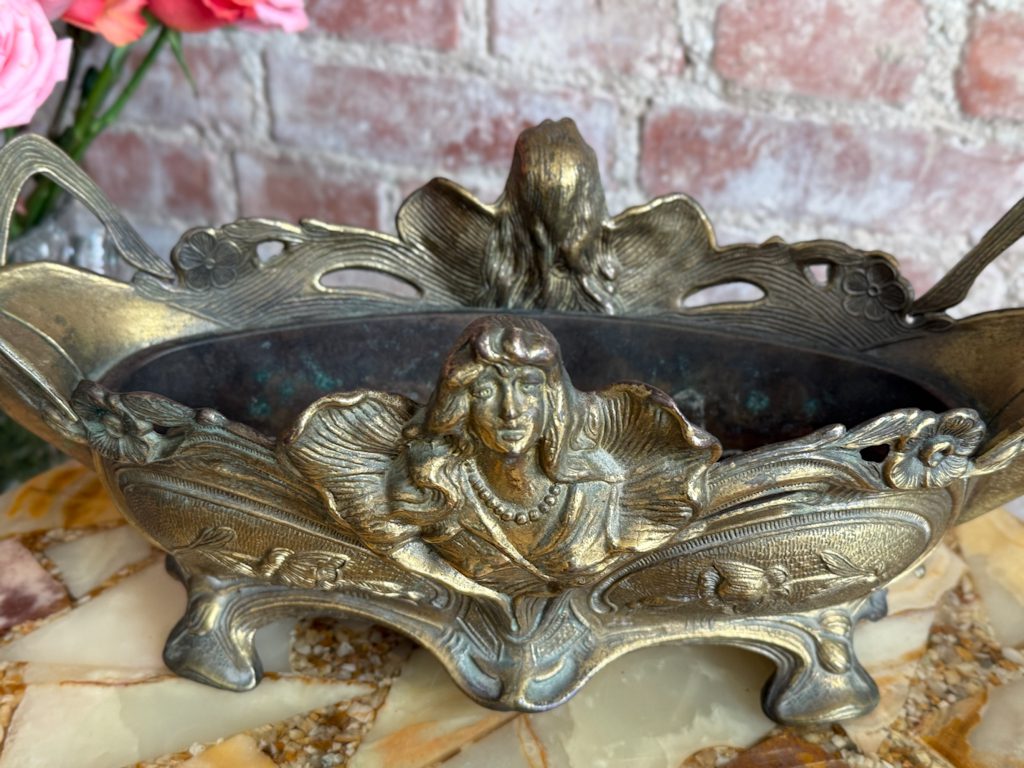
Visas formas elements šeit pakārtots vienam principam — dzīves plūsmai. Ovālā bļoda ar izliektu dibenu un augstajiem galotnēm nav tvertne mākslas nozīmē — tā ir kuģis, kas peld cauri lapotnes un viļņu pasaulei. Abas galas uz augšu tiecas kā niedrāji vai ūdens liliju lapas, ažūri caurstrādātas ar Japānisma iedvesmotu ornamentiku. Centrā — augstu reljefu femme-fleur biste: sieviete ar brīviem matiem, pērļu kaklarotu un magoņu ziediem matos, kas organiski izaug no auga formas — ne kā figūra uz priekšmeta, bet kā viena un tā paša dzīvā organisma daļa. Tieši šis femme-fleur jeb sieviete-zieds tēls bija Jūgendstila centrālā ikona — to izmantoja Alfons Muha savos plakātos, Emīls Gallē savos stikla darbos, Hektors Gimārs savā arhitektūrā. Reljefie magoņu un augu motīvi korruptos ovaļos medaljona formos abās figūras pusēs papildina kompozīciju ar smalku, teksturētu virsmu, kas pilnā gaismā atdzīvojas kā zeltainais bronzas plūdums.
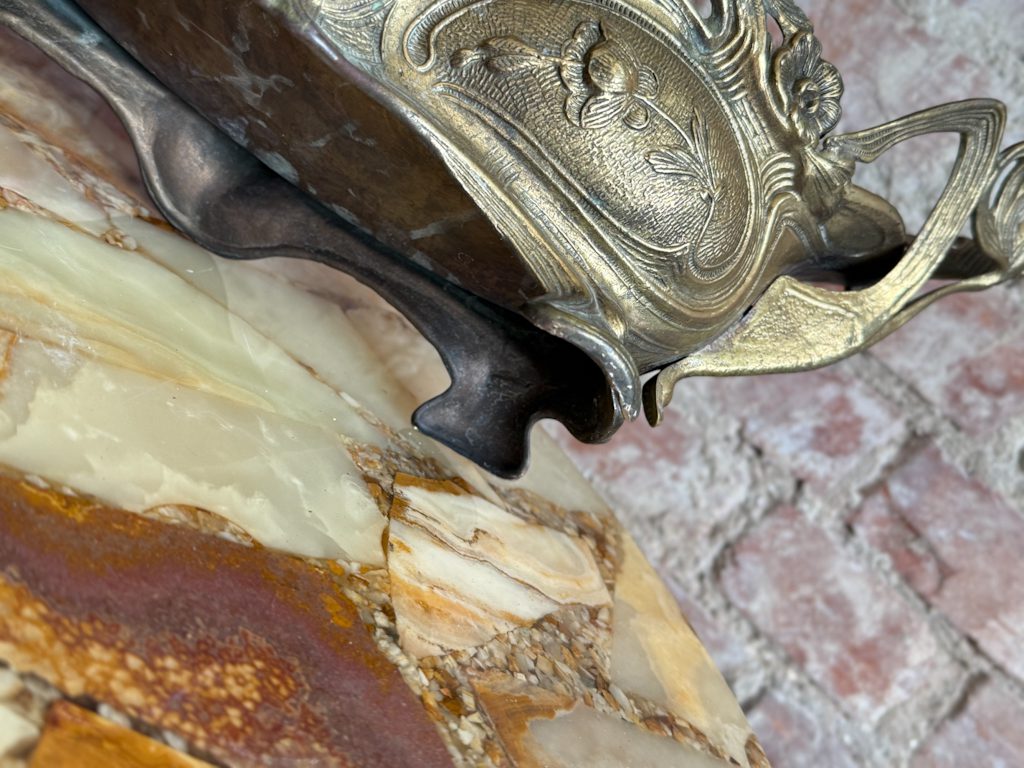
Kājiņas — plakanas, izliektā S-profilā, organiski ieplūstošas ķermenī — ir tīrs Jūgendstila arhitektūras paraksts, identisks kājiņu tipam, kādu Gimārs izmantoja Parīzes metro stacijas un Parīzes Jūgendstila namu interjeros.
―――――――――――――――――――――
⚜️ RAŽOTĀJS UN MANUFAKTŪRAS ZĪMOGS
Uz apakšas nav redzams ražotāja zīmogs. Metāls — visticamāk bronzas lējums ar zeltīšanas pārklājumu (régule doré), kas bija standarta materiāls dekoratīvajiem Jūgendstila priekšmetiem masveida un augstākās klases sērijās Francijā un Beļģijā. Aukstās virsmas tekstūra un patinas raksturs atbilst autentiskam laikmeta lējumam.
Pēc femme-fleur figūras plastiskuma, kompozīcijas struktūras, kājiņu profila un ornamentālās valodas šis trauks vistuvāk atbilst Francijas vai Beļģijas Jūgendstila dekoratīvo mākslu lietuves produkcijai — tādiem uzņēmumiem kā Parīzes vai Lionas lējnīcas, kas šajā periodā ražoja tieši šāda tipa jardinières un kašpo sērijas prestižiem Eiropas tirgotājiem. Francijā darbojās specializētas lējnīcas, kas sadarbojās ar Jūgendstila māksliniekiem — tostarp ar Alfona Muha tipa kompozīcijām inspirētu femme figūru sērijām dekoratīvo priekšmetu ražošanā.
Beļģijā šāda tipa prece tika ražota Lježas un Briseles metāllietuvēs un parādījās Briseles 1897. gada un Parīzes 1900. gada Pasaules izstādēs — vienās no svarīgākajām Jūgendstila prezentācijas platformām vēsturē.
―――――――――――――――――――――
💎 RETUMS UN NOZĪME
Jūgendstila metāla jardinière ar femme-fleur figūru pilnā reljefā un saglabātu oriģinālo patinu ir ievērojami retāks priekšmets nekā tipiskais Jūgendstila keramikas vai stikla izstrādājums — metāla lējumi bija tehniski sarežģītāki, smagāki transportēšanā un biežāk gāja bojā vai tika pārkausēti. Šāda izmēra jardinière ar abpusēji simetrisku kompozīciju un centrālo figūru ir viens no reprezentatīvākajiem Jūgendstila dekoratīvo mākslu formātiem — tas nav ikdienas priekšmets, bet salona centrepiece, kas paredzēts skatīšanai no vairākiem leņķiem.
Jūgendstila metāla prece ar femme tematiku ir stabils un augsti novērtēts kolekcionāru segments Francijā, Beļģijā, Anglijā un Ziemeļamerikā.
―――――――――――――――――――――
🕯️ PIELIETOJUMS INTERJERĀ, DIZAINĀ UN FOTOGRĀFIJĀ
Šis trauks ir viena no tām retajām lietām, kas bez papildu kompozīcijas darba pati par sevi ir pilnīga skulptūra. Tas darbojas uz marmora, akmens vai koka virsmas — kamīnplaukts, ēdamistabas galda centrs, konsole — un piešķir jebkurai telpai nekļūdīgu 19./20. gs. mijas Eiropas mākslas gaisotni. Modernā minimālismā tas darbojas kā dāsns kontrasts.
Fotogrāfiem un stilistiem tas ir ideāls priekšmets — sievietes sejas biste bronzas reljefu masā ir no jebkura leņķa fotogēniska, īpaši sānu gaismā, kas atdzīvina tekstūras dziļumu.
―――――――――――――――――――――
🎁 DĀVANA UN PERSONALIZĀCIJA
Šis jardinière ar femme-fleur figūru ir reprezentatīva dāvana augstākajā līmenī — piemērota korporatīvai vai diplomātiskai dāvanai, izsmalcināta interjera entuziastam, mākslas kolekcionāram vai arhitektam. Sievietes tēls ar magoņu ziediem matos nes sevī poētisku un māksliniecisku vēstījumu — tas ir priekšmets, ko dāvina cilvēkam, kuram tiek izrādīta augstākā cieņa un novērtēšana.
―――――――――――――――――――――
🔍 STĀVOKLIS
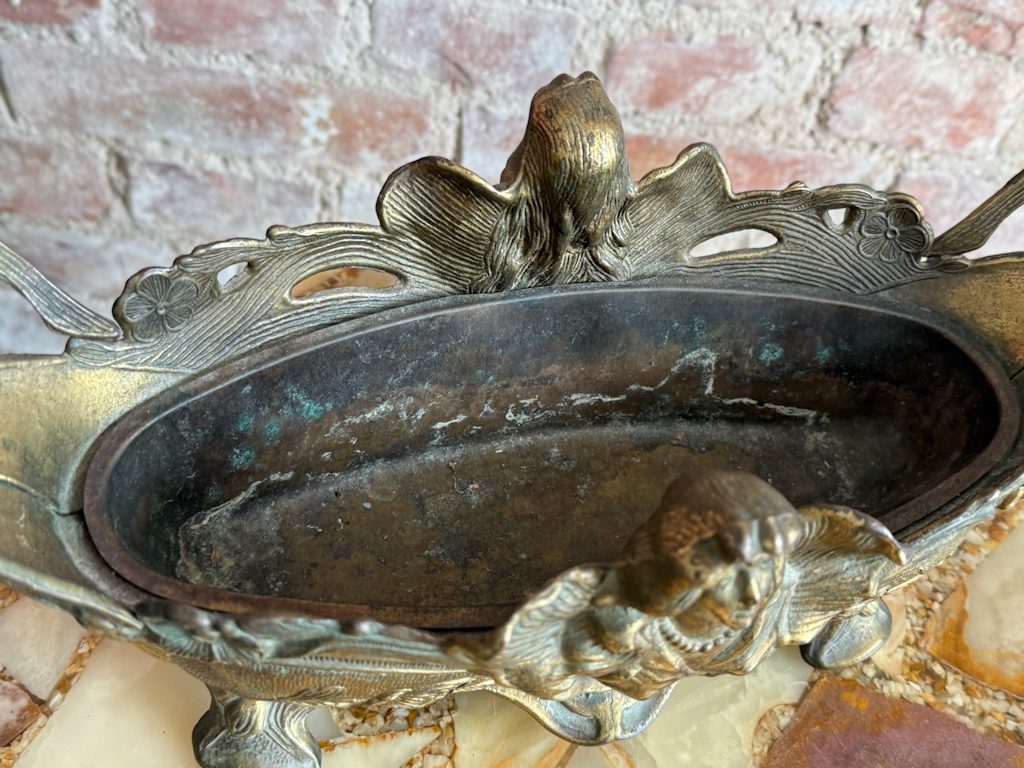
Metāla lējums labā stāvoklī ar bagātu, daudzslāņainu patinu, kas veidojusies laika gaitā un piešķir priekšmetam dziļumu un autentiskumu. Iekšpusē redzama zaļgana vara oksīda patina, kas ir dabisks un gaidāms rādītājs metāla priekšmetam šādā vecumā. Reljefie ornamenti un femme-fleur figūra saglabājušies skaidri bez mehāniskiem bojājumiem. Kājiņas pilnā komplektā. Nav redzamas restaurācijas vai lāpījumu pēdas.
Lietas stāvoklis pilnībā atspoguļots fotogrāfijās.
―――――――――――――――――――――
🇬🇧 DESCRIPTION IN ENGLISH
Art Nouveau bronze-finish jardinière with femme-fleur figure and poppy decoration — Art Nouveau style, France or Belgium, circa 1895–1910.
―――――――――――――――――――――
📐 DIMENSIONS
Length 49.5 cm × height 18.5 cm × width 16.5 cm. An impressive, horizontally elongated form in classic jardinière centrepiece proportions.
―――――――――――――――――――――
🏛️ PERIOD, ARTISTIC STYLE, HISTORICAL CONTEXT
This piece is pure, uncompromising Art Nouveau at its height — the period when Paris, Brussels, and Nancy had become the centres of the European artistic avant-garde, and when the metal foundry was as important an artistic instrument as the painter’s brush or the sculptor’s chisel.
Every element of the form here is subordinated to a single principle — the flow of life. The oval bowl with its curved base and high terminals is not a container in the conventional sense — it is a vessel sailing through a world of foliage and waves. Both ends reach upward like reeds or water lily leaves, pierced with Japonisme-inspired ornamentation. At the centre — a high-relief femme-fleur bust: a woman with free-flowing hair, a pearl necklace, and poppy flowers woven into her hair, growing organically from the plant form — not as a figure placed upon an object, but as part of the same living organism. This femme-fleur, or woman-flower figure, was the central icon of Art Nouveau — employed by Alphonse Mucha in his posters, Émile Gallé in his glasswork, and Hector Guimard in his architecture. The relief poppy and plant motifs within oval medallion forms on either side of the figure complete the composition with a subtly textured surface that comes alive in raking light as a golden bronze flow.
The feet — flat, in curved S-profile, organically flowing into the body — are a pure Art Nouveau architectural signature, identical to the foot type used by Guimard in the Paris Métro stations and the interiors of Parisian Art Nouveau buildings.
―――――――――――――――――――――
⚜️ MAKER AND MARKS
No maker’s mark is visible on the base. The metal is most likely cast bronze alloy with a gilded finish (régule doré), the standard material for decorative Art Nouveau objects in both mass-market and higher-grade series in France and Belgium. The surface texture and patina character are consistent with an authentic period casting.
Based on the plasticity of the femme-fleur figure, the compositional structure, the foot profile, and the ornamental language, this piece most closely corresponds to French or Belgian Art Nouveau decorative arts foundry production — enterprises such as Parisian or Lyonnais foundries that manufactured precisely this type of jardinière and cachepot series for prestigious European dealers during this period. Specialised French foundries collaborated with Art Nouveau artists — including female figure series inspired by Mucha-type compositions — for the decorative object market.
In Belgium, this type of production was manufactured in the Liège and Brussels metal foundries and appeared at the Brussels World Exposition of 1897 and the Paris World Exposition of 1900 — among the most important presentation platforms for Art Nouveau in history.
―――――――――――――――――――――
💎 RARITY AND SIGNIFICANCE
An Art Nouveau metal jardinière with a full-relief femme-fleur figure and preserved original patina is considerably rarer than the typical Art Nouveau ceramic or glass object — metal castings were technically more complex, heavier to transport, and more frequently damaged or melted down. A jardinière of this scale with a symmetrical composition and central figure is one of the most representative formats of Art Nouveau decorative art — not an everyday object, but a salon centrepiece designed to be viewed from multiple angles.
Art Nouveau metal work with femme themes is a stable and highly valued collector’s category in France, Belgium, England, and North America.
―――――――――――――――――――――
🕯️ USE IN INTERIORS, DESIGN AND PHOTOGRAPHY
This piece is one of those rare objects that is itself a complete sculpture without any additional compositional work. It functions on marble, stone, or wood surfaces — a mantelpiece, the centre of a dining table, a console — and lends any space the unmistakable atmosphere of turn-of-the-century European art. In a modern minimalist setting it operates as a generous counterpoint.
For photographers and stylists, it is an ideal subject — the female face bust within the bronze relief mass is photogenic from any angle, particularly in raking side light that brings out the full depth of the texture.
―――――――――――――――――――――
🎁 AS A GIFT
This jardinière with its femme-fleur figure is a representative gift at the highest level — suited to a corporate or diplomatic presentation, to an enthusiast of refined interiors, an art collector, or an architect. The female figure with poppy flowers woven into her hair carries a poetic and artistic message — it is a piece one gives to someone to whom the highest esteem and appreciation is being expressed.
―――――――――――――――――――――
🔍 CONDITION
The metal casting is in good condition with a rich, multi-layered patina that has developed over time and gives the piece depth and authenticity. The interior shows a green copper oxide patina, a natural and expected characteristic of a metal object of this age. The relief ornaments and the femme-fleur figure are well preserved with no mechanical damage. The feet are complete. No visible restoration or repairs.
The condition of the item is fully reflected in the photographs.