
Sudraba Pārklātu Svečturu Pāris — Empire Stils, Francija/Beļģija, 19.gs. (5303)
Sudraba Pārklātu Svečturu Pāris — Empire Stils, Francija/Beļģija, 19.gs. (5303)
€380.00
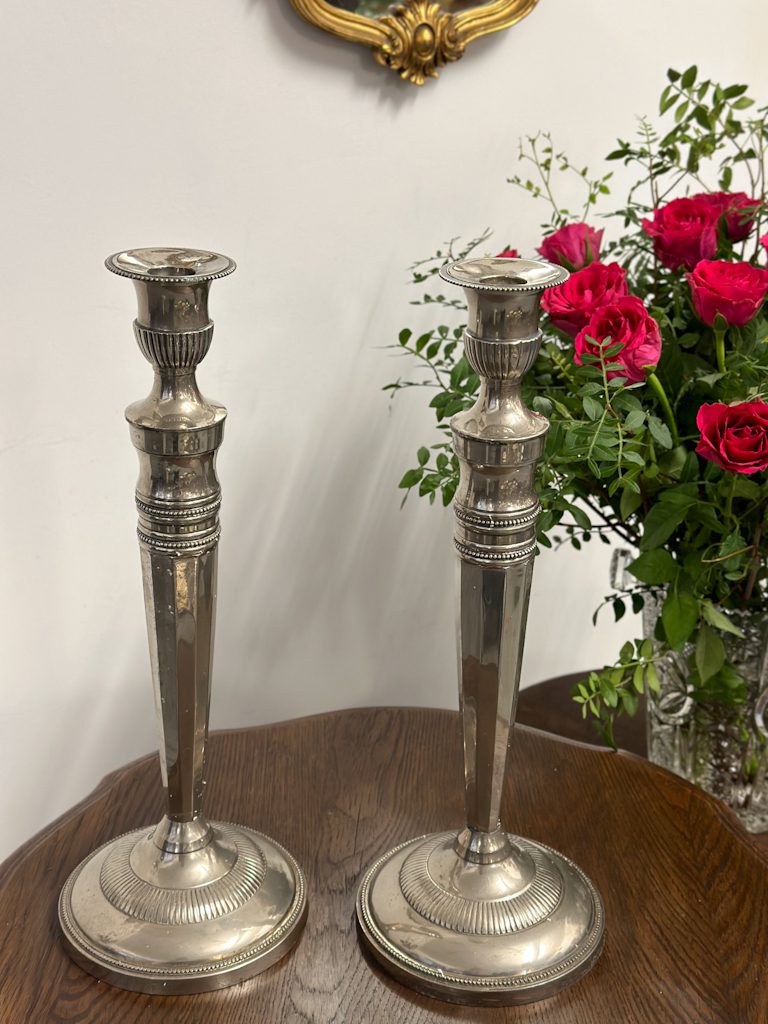
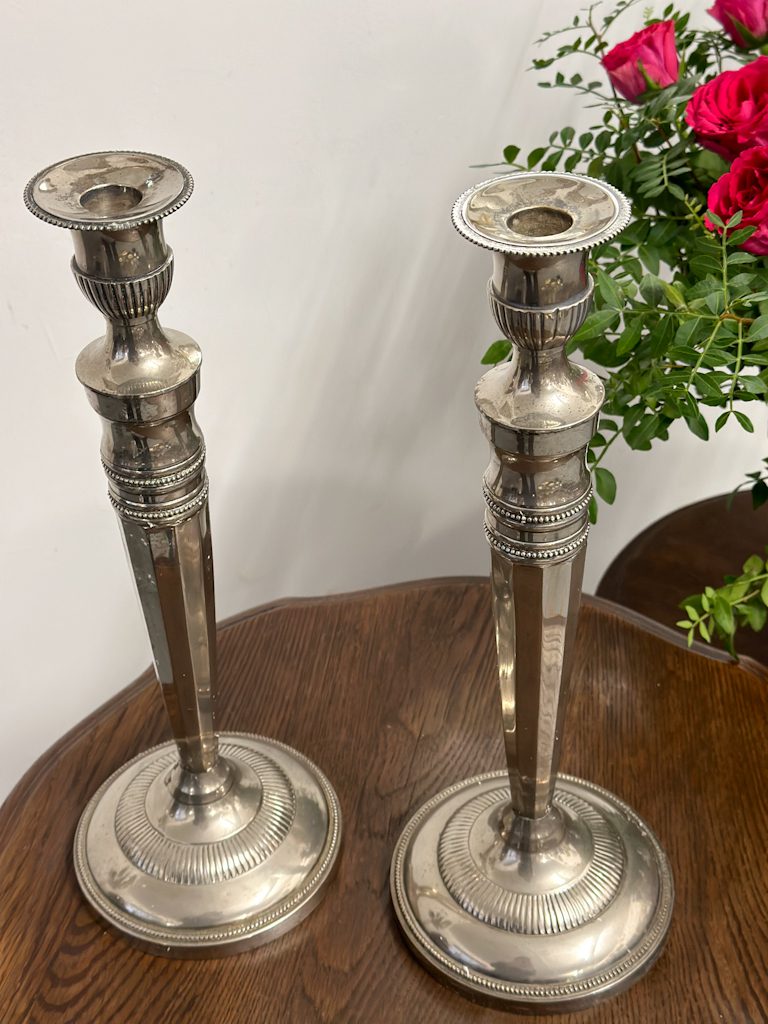
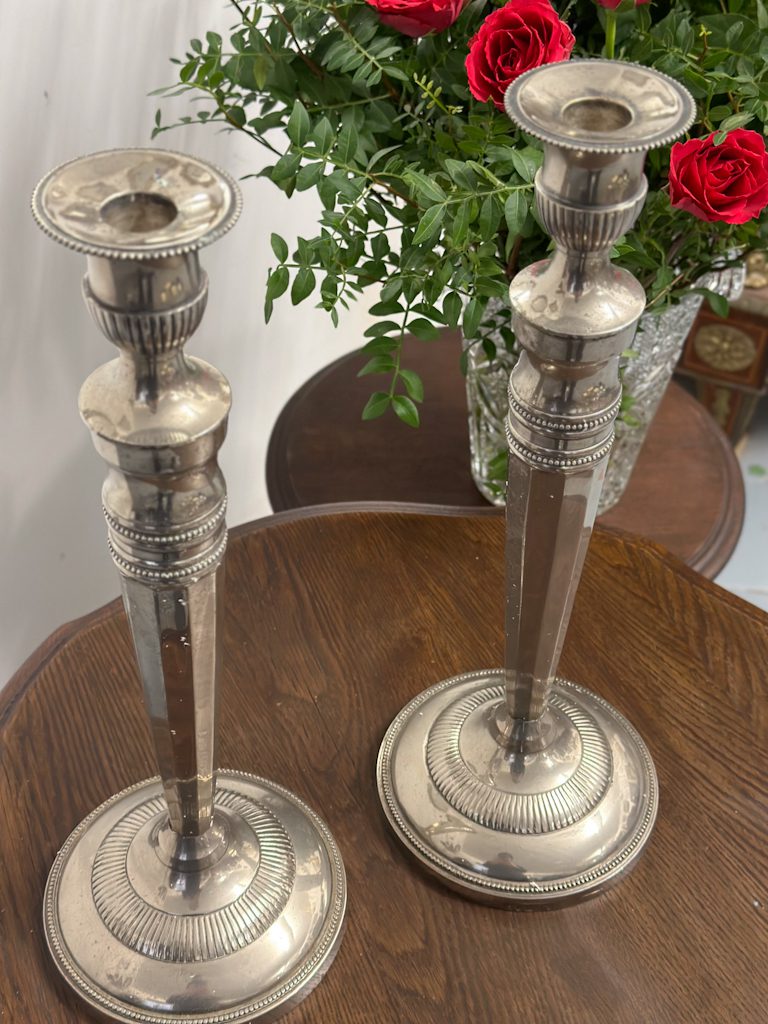
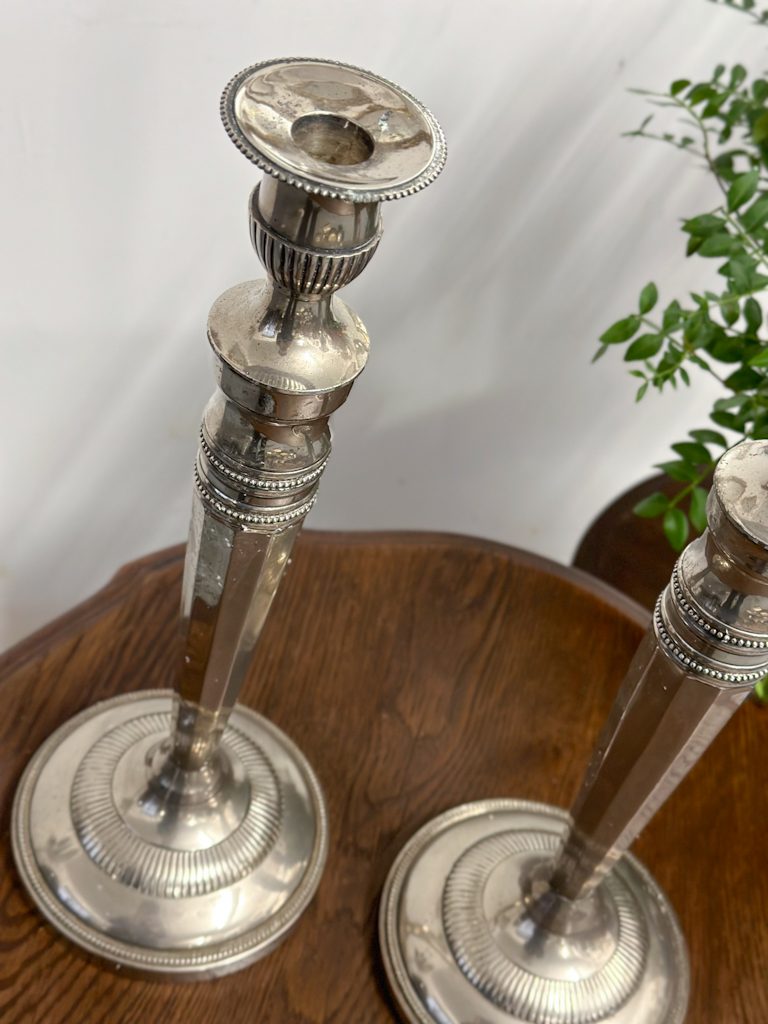
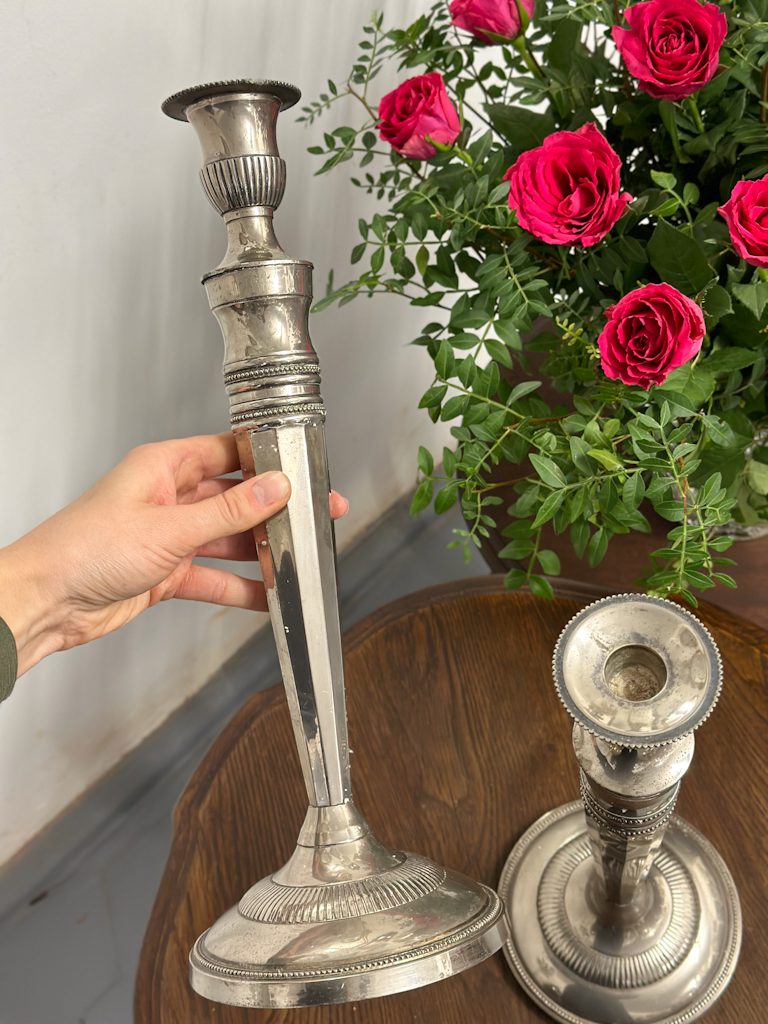
Liela izmēra sudrabotu svečturu pāris ar faceted stumbru, gadroon pamatni un pērļu apmali. Empire stils, Francija vai Beļģija, ap 1870.–1900. Augstums 40,5 cm × platums 15 cm. Vidēji viegli.
📐 Augstums 40,5 cm × platums 15 cm.
―――――――――――――――――――――
Sudraba Pārklātu Svečturu Pāris — Empire Stils, Francija vai Beļģija, ap 1870.–1900.
―――――――――――――――――――――
🏛️ IZGATAVOŠANAS PERIODS, MĀKSLAS STILS, LAIKMETS
Šis skaistais svečturu pāris pieder Belle Époque laikmeta dekoratīvajai metāla mākslai — tam gaišajam un radošajam posmam no 1871. līdz 1914. gadam, kad Francijas un Beļģijas darbnīcas ar jaunām galvanoplastikas un sudraba plāksnēšanas tehnoloģijām atdzīvināja 18.–19. gadsimta mijā valdošā Empire stila skaidrību un disciplīnu. Mākslinieciskais stils — Empire ar Direktorijas (Directoire) izsmalcinātību — izpaužas katras detaļas precizitātē: šaurais daudzšķautņainais (faceted) stumbrs, kas augšup sašaurinās ar matemātisku eleganci; apaļā pamatne ar gadroona rievājumu un pērļu apmali (perles); sveču kauss ar identisku gadroona un pērļu apmalu — viss pakārtots viena struktūras principa loģikai. Šādi svečturi bija Empire stila galda klāšanas kulminācija — tie stāvēja uz balto galdautu klātiem galdiņiem pie spoguliem, uz konsolēm un kaminiem augstākās buržuāzijas un aristokrātijas dzīvokļos.
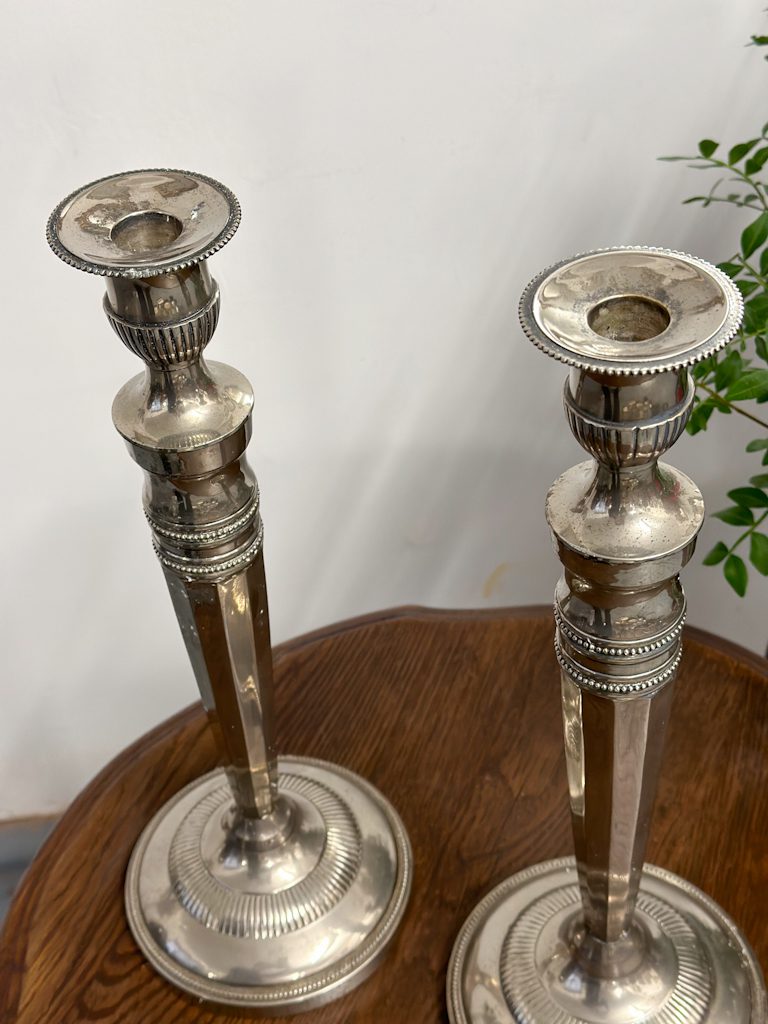
Interesanti, ka šajā pārī abi eksemplāri nav absolūti vienāda augstuma — tas redzams 4. fotogrāfijā, kur viens svečturis ir drusku zemāks. Šāda neliela atšķirība bija pieļaujama roku darba sērijās un nenozīmē dažādu izcelsmi — abi pieder tam pašam setam.
Napoleons III bija jau miris, Trešā republika tikko atguvusi elpu pēc Parīzes Komūnas — un tieši šajos gados Parīzes mēbelniecības un galda piederumu darbnīcas sāka ražot Empire stila priekšmetus jaunajai republikāniskajai buržuāzijai, kas vēlējās dzīvot kā aristokrāti, bet par pieejamākām cenām. Sudraba plāksnēšana vai apsudrabošana bija šī sapņa tehnoloģija.
―――――――――――――――――――――
⚜️ RAŽOTĀJS UN MANUFAKTŪRAS ZĪMOGS
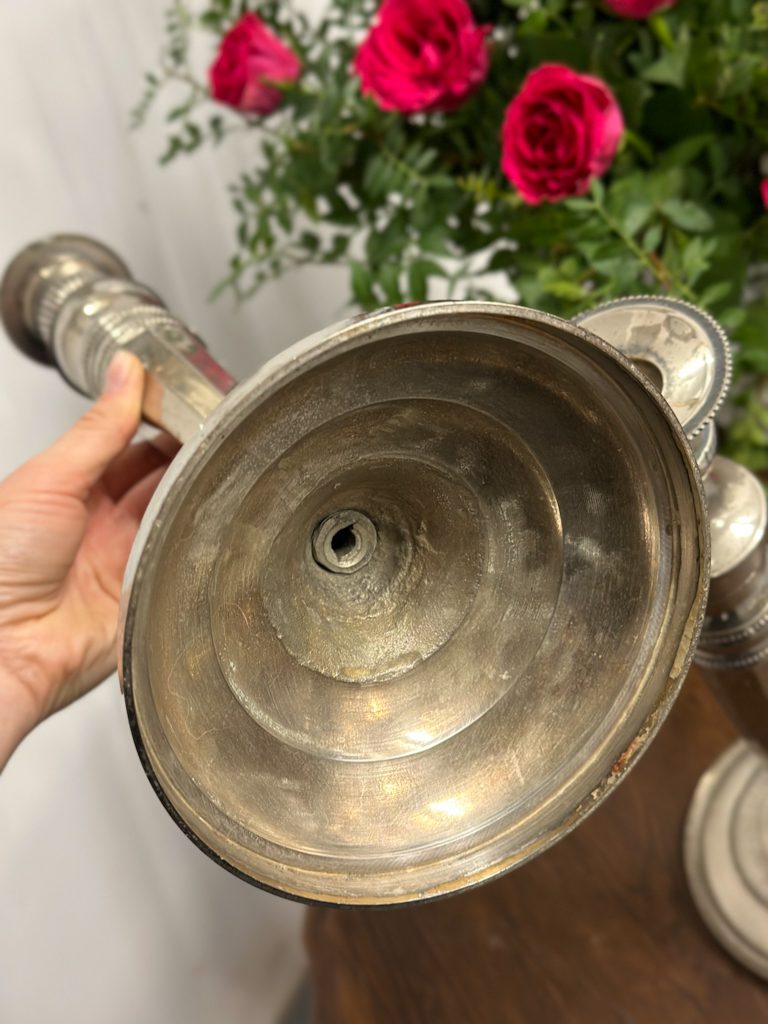
Pamatnes apakšpusē nav skaidri redzams ražotāja zīmogs — redzama neapstrādāta metāla iekšpuse, kas apliecina sudraba plāksnēšanas (métal argenté, silver plate) izgatavošanas metodi: metāla pamatkorpuss apklāts ar sudraba kārtu. Šī tehnoloģija kļuva plaši pieejama 19. gadsimta otrajā pusē un ļāva ražot vizuāli izsmalcinātus priekšmetus plašākam patērētāju lokam. Pēc gadroona rievājuma precizitātes, pērļu apmales (perles) kvalitātes un stumbra šķautņu tīrības — šis pāris nāk no pieredzējušas Francijas vai Beļģijas métal argenté manufaktūras, kas specializējās Empire stila galda piederumu ražošanā eksportam un vietējam tirgum.
―――――――――――――――――――――
💎 RETUMS UN NOZĪME
Saglabājušies lieli (40+ cm) Empire stila sudraba plāksnētu svečturu pāri no Belle Époque perioda ir salīdzinoši reta parādība antikvāru tirgū — lielākā daļa tika pārkausēta vai nolietota līdz atpazīstamības zudumam. Šis pāris saglabājis skaidras formas un spilgtu sudraba nokrāsu. Pieprasījums pēc Empire stila sudraba svečturiem aug pastāvīgi — īpaši Skandināvijā, Lielbritānijā un Francijā, kur neoclassical un Nordic interior tendences šādus priekšmetus novērtē augstu.
―――――――――――――――――――――
🕯️ PIELIETOJUMS INTERJERĀ, DIZAINĀ UN FOTOGRĀFIJĀ
Šo svečturu elegantos, tīros siluetus var izmantot ļoti dažādos kontekstos. Empire un neoklasicisma interjeris — dabiskais mājas. Bet tie izskatās tikpat lieliski modernā, minimālistiskā telpā, kur sudraba aukstums un šķautņainā forma darbojas kā skulpturāls akcents. Fotogrāfi tos izmanto editorial un kāzu uzņēmumos — augstais, šaurais siluets ar sarkaniem vai baltiem ziediem blakus ir bezgala fotografējams. Stilisti tos izmanto gan modernos, gan vēsturiskos flatlay uzņēmumos.
―――――――――――――――――――――
🎁 DĀVANA UN PERSONALIZĀCIJA
Sudraba Empire stila svečturu pāris ir izcila reprezentatīva dāvana — mājas iesvētīšanai, kāzām vai jubilejai cilvēkam ar klasisko interjeru vai neoklasicisma estētiku. Sudraba nokrāsa padara tos arī par piemērotu dāvanu Ziemassvētku vai Jaunā gada reizē — aukstā sudraba gaisma pie degošām svecēm ir nesalīdzināma.
―――――――――――――――――――――
🔍 STĀVOKLIS
Abi svečturi saglabājuši skaidras formas ar vienmērīgu sudraba patinu. Fotogrāfijās redzamas dabīgas nolietojuma pazīmes un nelieli plankumi, kas atbilst priekšmetu vecumam. Viens eksemplārs ir nedaudz zemāks par otru — šī neliela atšķirība raksturīga roku darba sērijām un neietekmē vienota komplekta uztveri. Pamatnes iekšpuse uzrāda plāksnētā metāla raksturīgo oksidāciju. Lietas stāvoklis pilnībā atspoguļots fotogrāfijās.
―――――――――――――――――――――
🇬🇧 DESCRIPTION IN ENGLISH
📐 Height 40.5 cm × Width 15 cm.
―――――――――――――――――――――
Pair of Silver-Plated Candlesticks — Empire Style, France or Belgium, c. 1870–1900.
―――――――――――――――――――――
🏛️ PERIOD, ARTISTIC STYLE, ERA
This elegant pair of candlesticks belongs to the decorative metalwork of the Belle Époque — that luminous period from 1871 to 1914, when French and Belgian workshops, armed with new galvanoplasty and silver-plating technologies, revived the clarity and discipline of the Empire style that had reigned at the turn of the 18th and 19th centuries. The artistic style — Empire with Directoire refinement — is expressed in the precision of every detail: the narrow faceted stem tapering upward with mathematical elegance; the circular base with gadroon ribbing and pearl border (perles); the candle cup with an identical gadroon and pearl rim — everything subordinated to the logic of a single structural principle. Candlesticks of this type were the culmination of Empire table-setting — they stood on white-clothed side tables beside mirrors, on consoles and mantlepieces in the apartments of the upper bourgeoisie and aristocracy.
Notably, the two examples in this pair are not of absolutely identical height — visible in photograph 4, where one candlestick stands slightly shorter. Such minor variation was acceptable in hand-finished production series and does not indicate different origins — both belong to the same set.
Napoleon III was already gone, and the Third Republic had barely caught its breath after the Paris Commune — and it was precisely in these years that Parisian furniture and table-goods workshops began producing Empire-style pieces for the new republican bourgeoisie, who wished to live as aristocrats at more accessible prices. Silver plating was the technology that made this dream possible.
―――――――――――――――――――――
⚜️ MAKER AND HALLMARK
No maker’s mark is clearly visible on the underside of the base — what is visible is the unfinished metal interior, confirming the silver-plating (métal argenté) method of manufacture: a metal base body coated with a layer of silver. This technology became widely available in the second half of the 19th century, enabling the production of visually refined objects for a broader market. Based on the precision of the gadroon ribbing, the quality of the pearl border (perles), and the cleanness of the stem’s facets, this pair originates from an experienced French or Belgian métal argenté manufacturer specialising in Empire-style table accessories for export and the domestic market.
―――――――――――――――――――――
💎 RARITY AND SIGNIFICANCE
Surviving large (40+ cm) Empire-style silver-plated candlestick pairs from the Belle Époque period are a comparatively rare find on the antiques market — the majority were melted down or worn to the point of losing their form. This pair retains clear lines and a bright silver tone. Demand for Empire-style silver candlesticks continues to grow — particularly in Scandinavia, Great Britain, and France, where neoclassical and Nordic interior trends place high value on such objects.
―――――――――――――――――――――
🕯️ USE IN INTERIORS, DESIGN AND PHOTOGRAPHY
The elegant, clean silhouettes of these candlesticks suit a wide range of contexts. An Empire or neoclassical interior is their natural home. But they look equally striking in a modern, minimalist space, where the cool silver tone and faceted form function as a sculptural accent. Photographers use them in editorial and wedding shoots — the tall, narrow silhouette paired with red or white flowers is endlessly photogenic. Stylists employ them in both modern and historical flatlay compositions.
―――――――――――――――――――――
🎁 AS A GIFT
A pair of silver Empire-style candlesticks makes an outstanding representative gift — for a housewarming, wedding, or anniversary for someone with a classical interior or neoclassical aesthetic. The silver tone also makes them a fitting gift for Christmas or New Year — the cool silver light cast by burning candles is incomparable.
―――――――――――――――――――――
🔍 CONDITION
Both candlesticks retain clear forms with an even silver patina. The photographs show natural signs of wear and minor spots consistent with the age of the pieces. One example stands slightly shorter than the other — a minor variation characteristic of hand-finished production series and not affecting the impression of a unified set. The interior of the base shows the characteristic oxidation of plated metal. The condition of the item is fully reflected in the photographs.
―――――――――――――――――――――