
Riekstukoka Etažērs ar Gobeleņa Paneļa un Dadzis Kokgriezumu — Viktoriānisms / Belle Époque, 19.gs. (4918)








Riekstukoka Etažērs ar Gobeleņa Paneļa un Dadzis Kokgriezumu — Viktoriānisms / Belle Époque, 19.gs. (4918)
€390.00
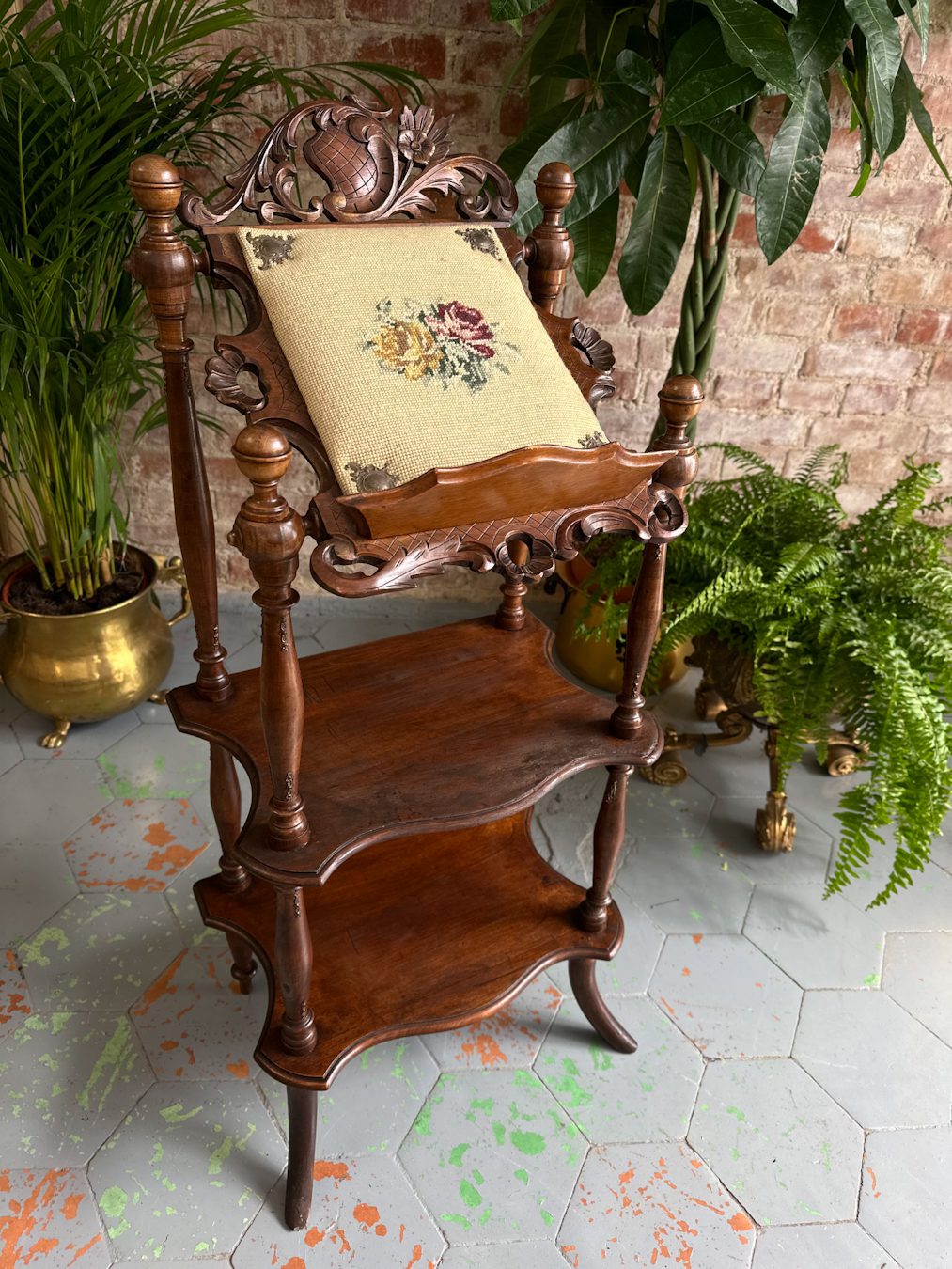
Riekstkoka trīs plauktu etažērs ar izšūta gobeleņa paneļa (punto in croce rozes) un misiņa naglojumu augšējā sēdekļa rāmī. Vainagā — Skotijas dadzis ar akantus lapām. Viktoriānisms / Belle Époque, Anglija vai Skotija, ap 1870.–1900. Augstums 106,5 cm × platums 43 cm × dziļums 33 cm.
📐 IZMĒRI
Augstums 106,5 cm × platums 43 cm × dziļums 33 cm.
―――――――――――――――――――――
Riekstukoka Etažērs ar Gobeleņa Paneļa, Misiņa Detaļām un Dadzis Kokgriezumu — Viktoriānisms / Belle Époque, Anglija vai Skotija, ap 1870.–1900.
―――――――――――――――――――――
🏛️ IZGATAVOŠANAS PERIODS, MĀKSLAS STILS, LAIKMETS
Šis neparastais un daudzfunkcionālais etažērs pieder Viktoriānisma laikmeta izsmalcinātākajam interjera priekšmetu lokam — tas ir table à ouvrage (šūšanas / rokdarbu galds) un étagère apvienojums vienā objektā. Augšējā plaukts ar noliektu rāmi un misiņa stūra naglojumu kalpo kā statīvs rokdarbu paneļa atbalstam — tas ir sieviešu salona priekšmets, kurā gobeleņa izšuvums ar rozēm bija gan estētisks, gan sociāls paziņojums: saimniece prot strādāt ar adatu, viņas māja ir kulturāla.
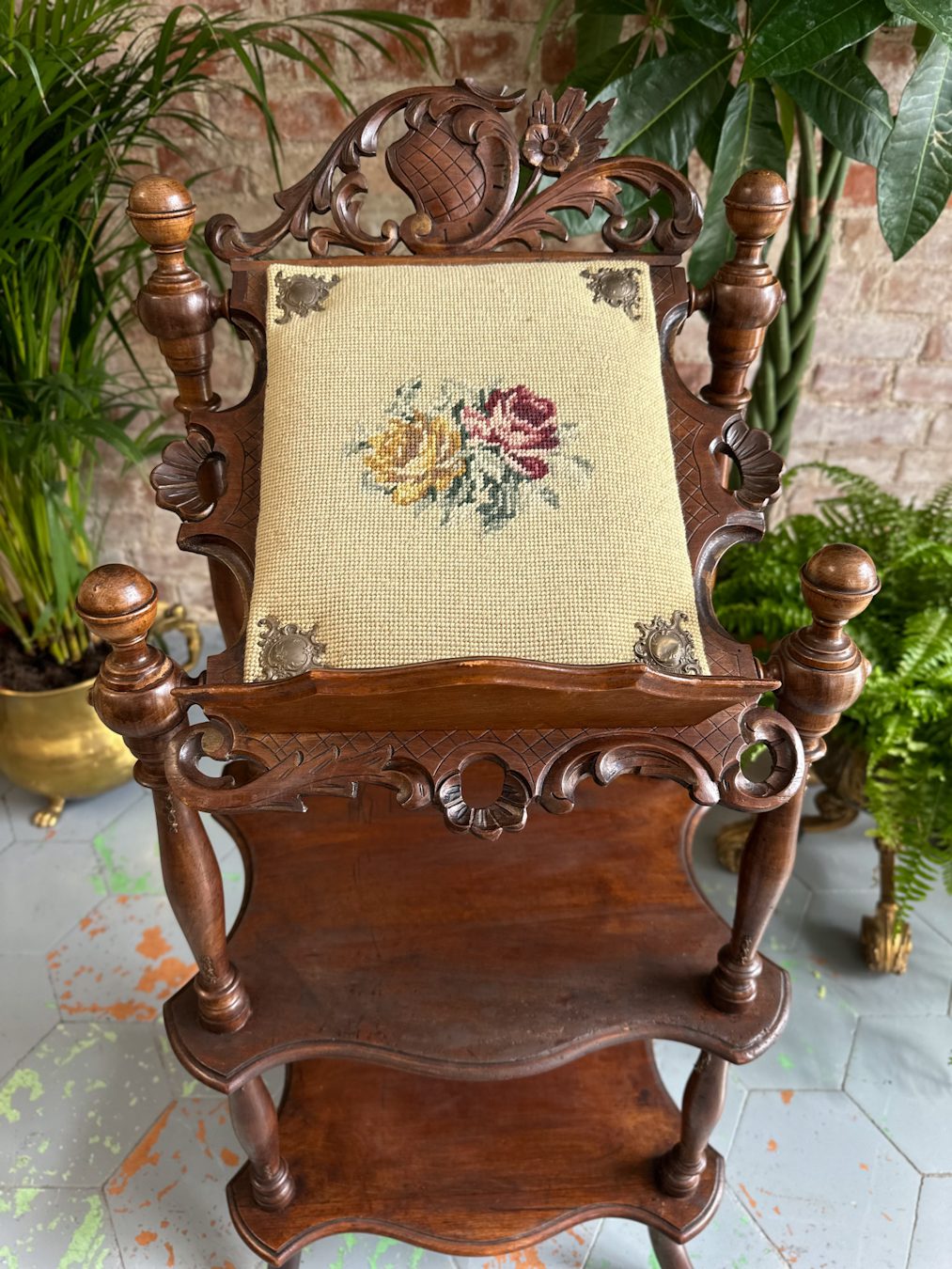
Vainagā cirsts Skotijas dadzis (thistle) ar akantus lapām un stilizētu ananāsa motīvu — simbolu trijotne, kas 19. gadsimtā bija Lielbritānijas nacionālās identitātes un aristokrātiskās kultūras paraksts. Dadzis Skotijā ir nacionālais simbols kopš 13. gadsimta, un tas bija īpaši populārs Viktoriānas laikmeta mēbelēs pēc karalienes Viktorijas mīlestības pret Balmoral pili kļūšanas publiski zināmas 1848. gadā — no tā brīža viss “skotiskais” kļuva modē visā Eiropā.
Diviem apakšējiem plauktiem ar izliektajām serpentine malām un cabriole kājām ir Luija XV ietekme — tipiska Viktoriānisma eklektika, kas brīvi apvienoja dažādus vēsturiskos stilus.
Belle Époque momentuzņēmums: 1887. gadā Karaliene Viktorija svinēja savu Zelta jubileju — 50 gadus tronī. Visā Lielbritānijā salonos stāvēja tieši šādi etažēri ar gobeleņa izšuvumiem, un sievietes pie tiem strādāja, lasot The Lady žurnālu. Dadzis vainagā bija ne tikai ornaments — tas bija lojalitātes paziņojums.
―――――――――――――――――――――
⚜️ RAŽOTĀJS UN MANUFAKTŪRAS ZĪMOGS
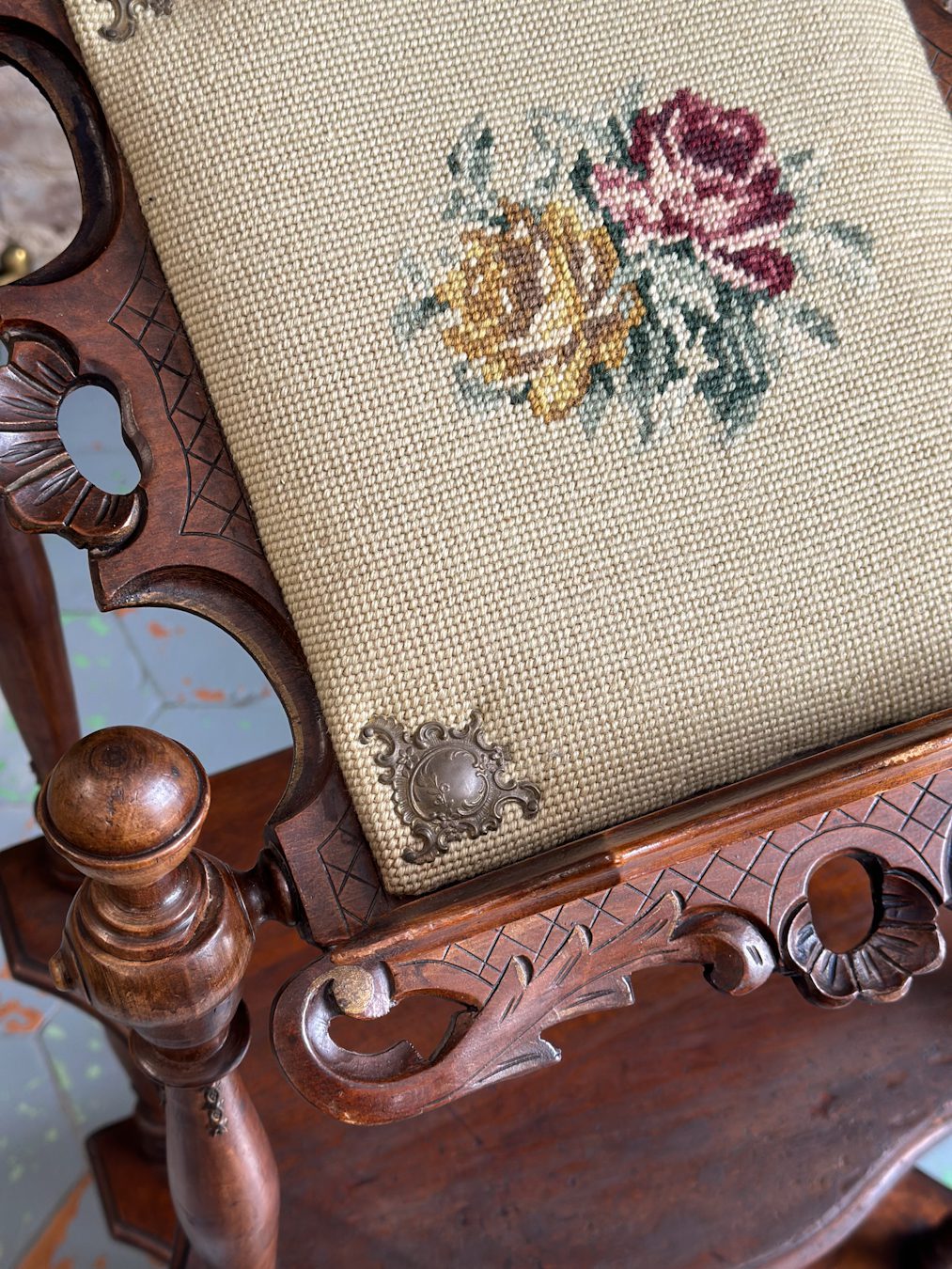
Redzama ražotāja marķējuma nav. Kokgriezuma stilistika — īpaši dadzis vainagā un rombveida (treillis) raksts rāmja sānos — norāda uz Skotijas vai Anglijas ziemeļu galdniecības tradīciju. Riekstukoks (walnut) bija Viktoriānisma perioda prestižākais mēbeļu koks Lielbritānijā — tas piešķīra tumšo, bagātīgo toni, ko asociē ar viktorianismam raksturīgo dramatisko saloninterjeru. Misiņa stūra naglojums gobeleņa rāmī ir rūpīgi izstrādāta detaļa, kas liecina par augsta līmeņa izpildījumu, nevis masveida ražošanu.
Gobeleņa punto in croce (krustdūrienu) izšuvums ar dzelteno un bordo rozēm acīmredzot ir oriģināls un ražots vienlaikus ar etažēru — tas ir vērtīgs papildinājums, jo lielākā daļa šāda tipa priekšmetu pārdodas bez oriģinālā gobeleņa.
―――――――――――――――――――――
💎 RETUMS UN NOZĪME
Etažēri ar saglabātu oriģinālo gobeleņa paneļi un dadzis kokgriezumu ir ievērojami retāki nekā tukšie analogi. Šo trīs elementu — augšējā rokdarbu statīva, gobeleņa un diviem serpentine plauktiem — kombinācija vienā, vizuāli saistītā priekšmetā ir neparasta. Viktoriānisma mēbeles ar skotu simboliku (thistle, šķiet*) piedzīvo stabilu pieprasījuma pieaugumu gan Lielbritānijā, gan ASV, Kanādā un Austrālijā, kur skotu izcelsmes iedzīvotāji aktīvi kolekcionē ar kultūridentitāti saistītus priekšmetus.
―――――――――――――――――――――
🕯️ PIELIETOJUMS INTERJERĀ, DIZAINĀ UN FOTOGRĀFIJĀ
Dzīvojamā istabā vai bibliotēkā šis etažērs ir sarežģīts, stāstu bagāts priekšmets — augšā var novietot grāmatu, žurnālu vai dekoratīvu priekšmetu; divi apakšējie plaukti kalpo antīkiem priekšmetiem, augu podiem vai grāmatām. Guļamistabā tas atgādina “sieviešu kambarī” (boudoir) — šūšanas priekšmetiem, žurnāliem, maziem dekoratīviem priekšmetiem. Angļu, skotu vai eklektiskā interjerā tas ir tūlītējs kultūrvēsturiskais akcents. Interjera fotogrāfi šo priekšmetu izmanto kā “stāstošu” elementu — gobeleņa rozes, misiņš un dadzis kopā rada ainavu, kas nekavējoties atsauc 19. gadsimtu.
―――――――――――――――――――――
🎁 DĀVANA UN PERSONALIZĀCIJA
Šis etažērs ir izsmalcināta dāvana ikvienam ar skotu saknēm vai interesi par britu kultūru — tam ir gan nacionālā simbolika, gan praktiski izmantojams. Kā dāvana sievietei ar interesi par rokdarbiem vai antīkām mēbelēm — ideāls. Tas derētu arī angļu vai skotu tematikā veidota interjera kafejnīcai vai viesnīcai.
―――――――――――――――――――――
🔍 STĀVOKLIS
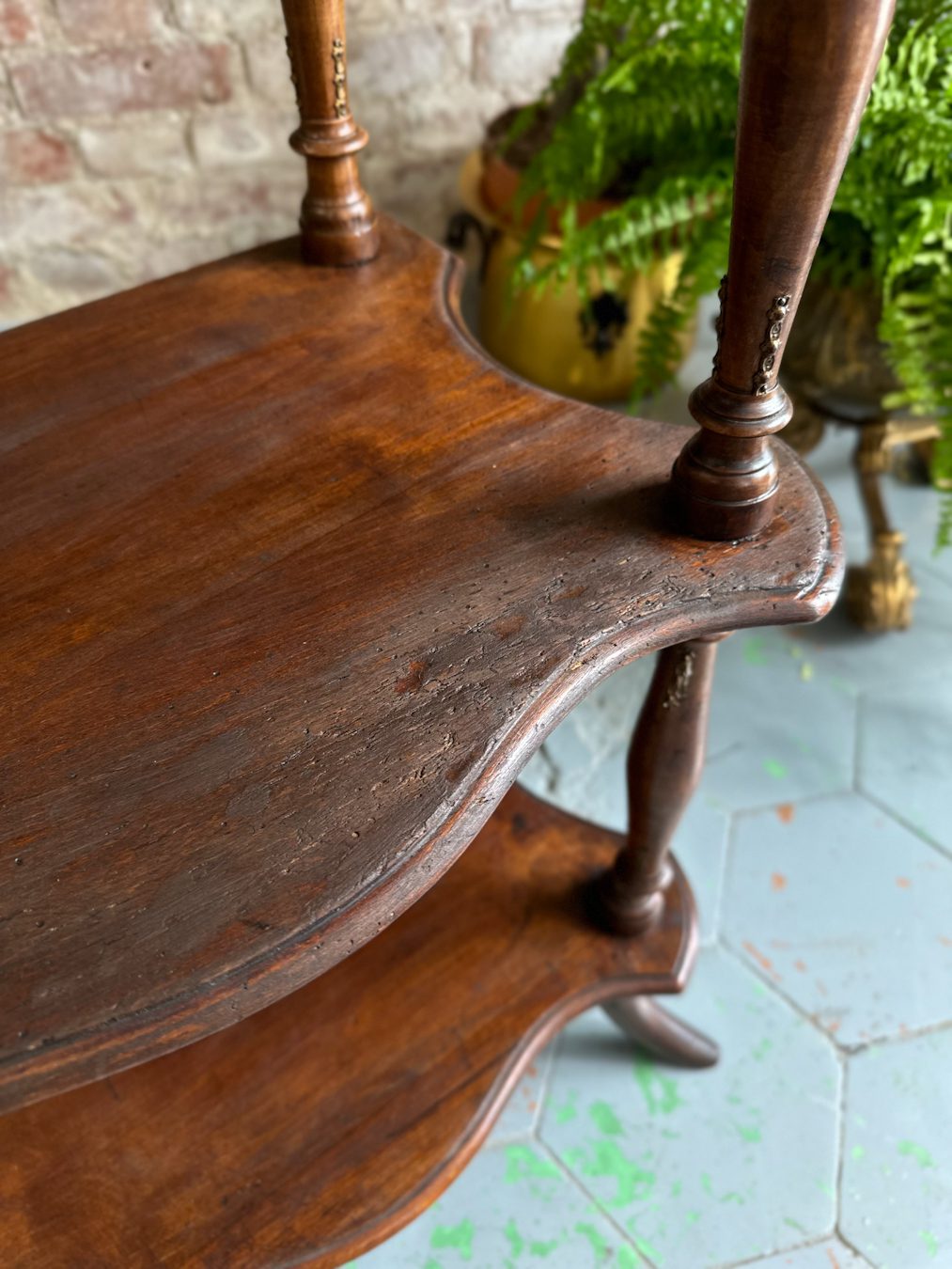
Riekstukoka rāmis un plaukti vispārēji labā stāvoklī ar laika nolietojuma patinu. Kokgriezums saglabājies. Misiņa stūra naglojums gobeleņa rāmī saglabājies ar dabīgu oksidācijas patinu. Gobeleņa izšuvums saglabājies, ar nelielu nolietojumu un laika gaitā radušos toni. Kājās redzami nolietojuma skrāpējumi. Lietas stāvoklis pilnībā atspoguļots fotogrāfijās.
――――――――――――――――――――― ―――――――――――――――――――――
🇬🇧 DESCRIPTION IN ENGLISH
―――――――――――――――――――――
📐 DIMENSIONS
Height 106.5 cm × width 43 cm × depth 33 cm.
―――――――――――――――――――――
Walnut Étagère with Needlepoint Panel, Brass Details and Thistle Crest — Victorian / Belle Époque, England or Scotland, circa 1870–1900.
―――――――――――――――――――――
🏛️ PERIOD, ARTISTIC STYLE, ERA
This unusual and multi-functional étagère belongs to the most refined category of Victorian salon objects — it is a combination of table à ouvrage (sewing or needlework stand) and étagère in a single object. The upper shelf, with its angled frame and brass corner mounts, serves as a support for a needlework panel — this is a ladies’ salon piece in which embroidery with roses was both an aesthetic and a social statement: the mistress of the house commands the needle; her home is cultivated.
The crest is carved with the Scottish thistle (chardon) flanked by acanthus leaves and a stylised pineapple motif — a triad of symbols that in the 19th century was a signature of British national identity and aristocratic culture. The thistle has been Scotland’s national emblem since the 13th century, and it surged in popularity across Victorian furniture after Queen Victoria’s love of Balmoral Castle became publicly known in 1848 — from that moment, all things “Scottish” became fashionable across Europe.
The two lower shelves with serpentine edges and cabriole legs carry a Louis XV influence — typical Victorian eclecticism that freely combined historical styles.
Belle Époque snapshot: In 1887 Queen Victoria celebrated her Golden Jubilee — fifty years on the throne. Across Britain, drawing rooms held étagères exactly like this one with needlepoint panels, and women worked at them reading The Lady. The thistle in the crest was not merely ornament — it was a declaration of loyalty.
―――――――――――――――――――――
⚜️ MAKER AND MAKER’S MARK
No visible maker’s mark is present. The carving style — particularly the thistle crest and the diamond treillis pattern on the frame sides — points to a Scottish or northern English joinery tradition. Walnut was the prestige furniture timber of the Victorian period in Britain, lending the deep, rich tone associated with the dramatically furnished Victorian salon interior. The brass corner mounts on the needlework frame are a carefully worked detail, pointing to high-level craftsmanship rather than mass production.
The punto in croce (cross-stitch) needlepoint with yellow and burgundy roses appears to be original and contemporary with the étagère — a valuable addition, since the great majority of comparable pieces are sold without their original panel.
―――――――――――――――――――――
💎 RARITY AND SIGNIFICANCE
Étagères with a preserved original needlepoint panel and thistle carving are considerably rarer than empty counterparts. The combination of three elements — the upper needlework stand, the embroidery, and two serpentine shelves — in one visually cohesive object is unusual. Victorian furniture with Scottish symbolism is experiencing steady growing demand in Britain, the United States, Canada, and Australia, where people of Scottish heritage actively collect objects connected with cultural identity.
―――――――――――――――――――――
🕯️ USE IN INTERIOR, DESIGN AND PHOTOGRAPHY
In a living room or library this étagère is a narratively rich object — the upper tier holds a book, a magazine rack, or a decorative piece; the two lower shelves serve antiques, potted plants, or books. In a bedroom it evokes the boudoir — sewing materials, journals, small decorative objects. In an English, Scottish, or eclectic interior it is an immediate cultural-historical accent. Interior photographers use it as a “storytelling” element — the embroidered roses, brass, and thistle together conjure an atmosphere that instantly recalls the 19th century.
―――――――――――――――――――――
🎁 GIFT AND PERSONALISATION
This étagère is a refined gift for anyone with Scottish roots or an interest in British culture — it carries both national symbolism and practical utility. As a gift for a woman with an interest in needlework or antique furniture — ideal. It would equally suit an English or Scottish-themed café or hotel interior.
―――――――――――――――――――――
🔍 CONDITION
The walnut frame and shelves are in generally good condition with age-appropriate patina. The carving is preserved. The brass corner mounts on the needlework frame are preserved with natural oxidation patina. The needlepoint embroidery is preserved with minor wear and toning consistent with age. The legs show wear scratches. The condition of the item is fully reflected in the photographs.