
Riekstkoka Vitrīna-Kumode ar Kokgriezumiem — Luija XV stils, Francija/Beļģija, ap 1860.–1890. (4537)
Riekstkoka Vitrīna-Kumode ar Kokgriezumiem — Luija XV stils, Francija/Beļģija, ap 1860.–1890. (4537)
€1,490.00
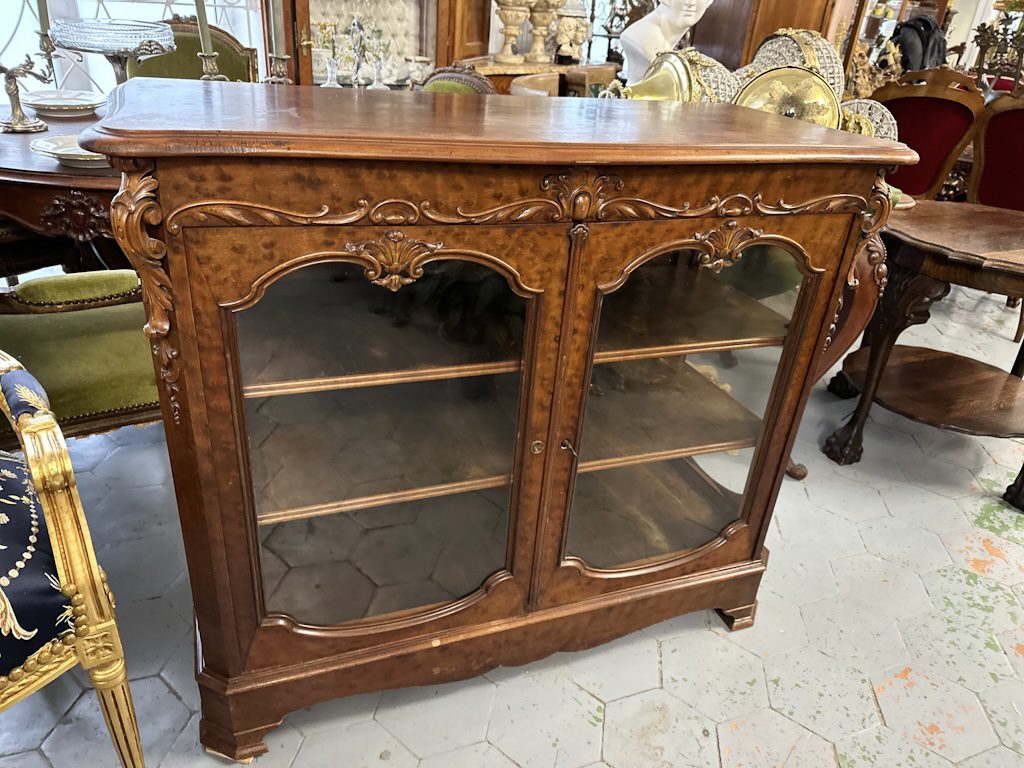
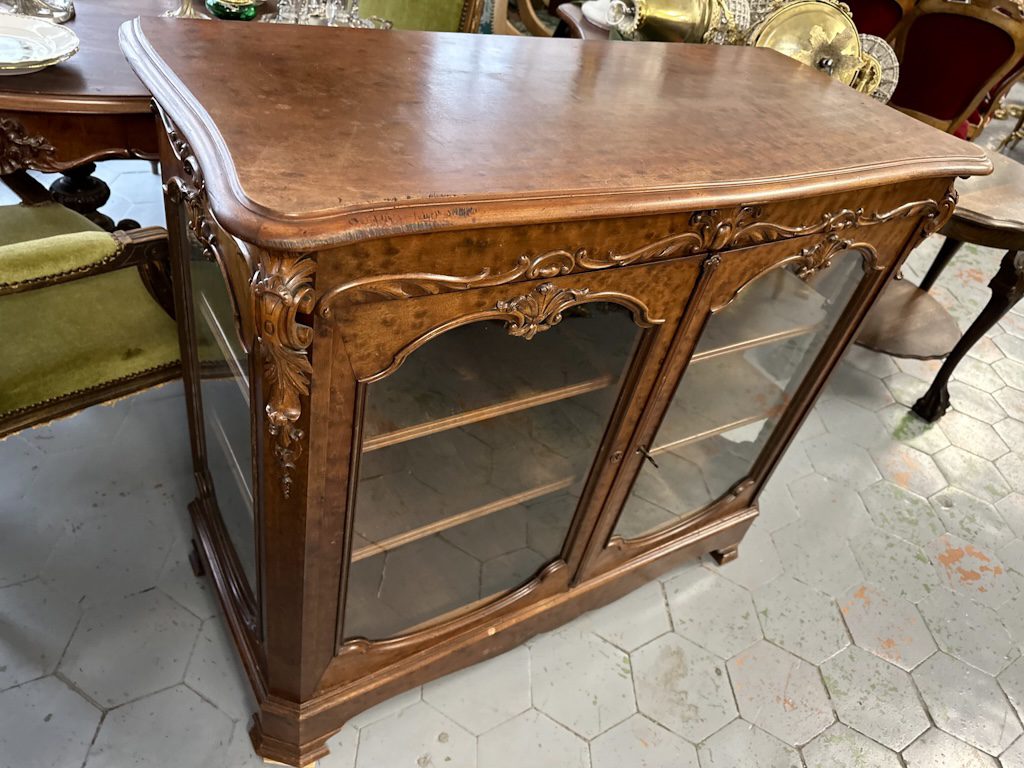
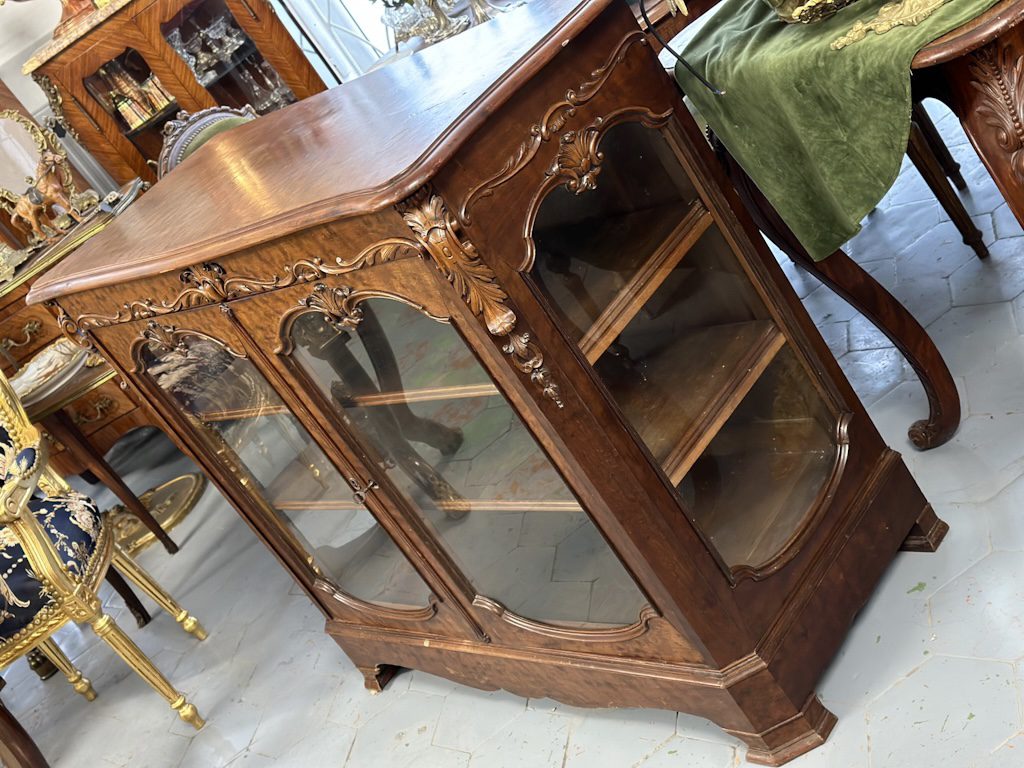
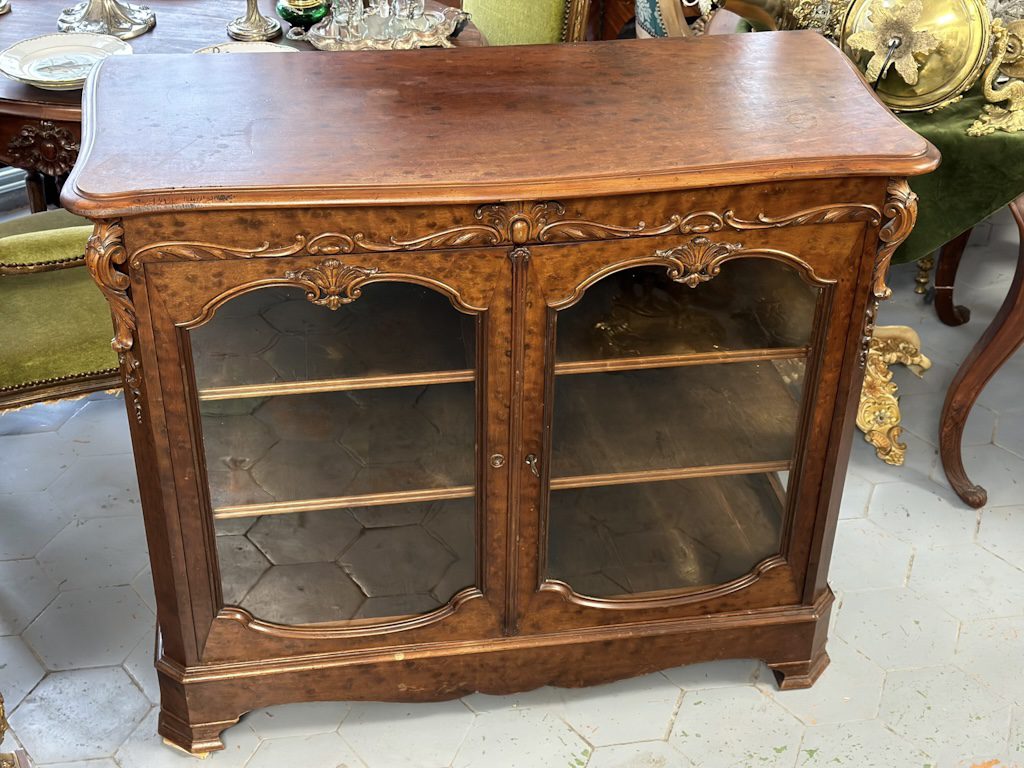
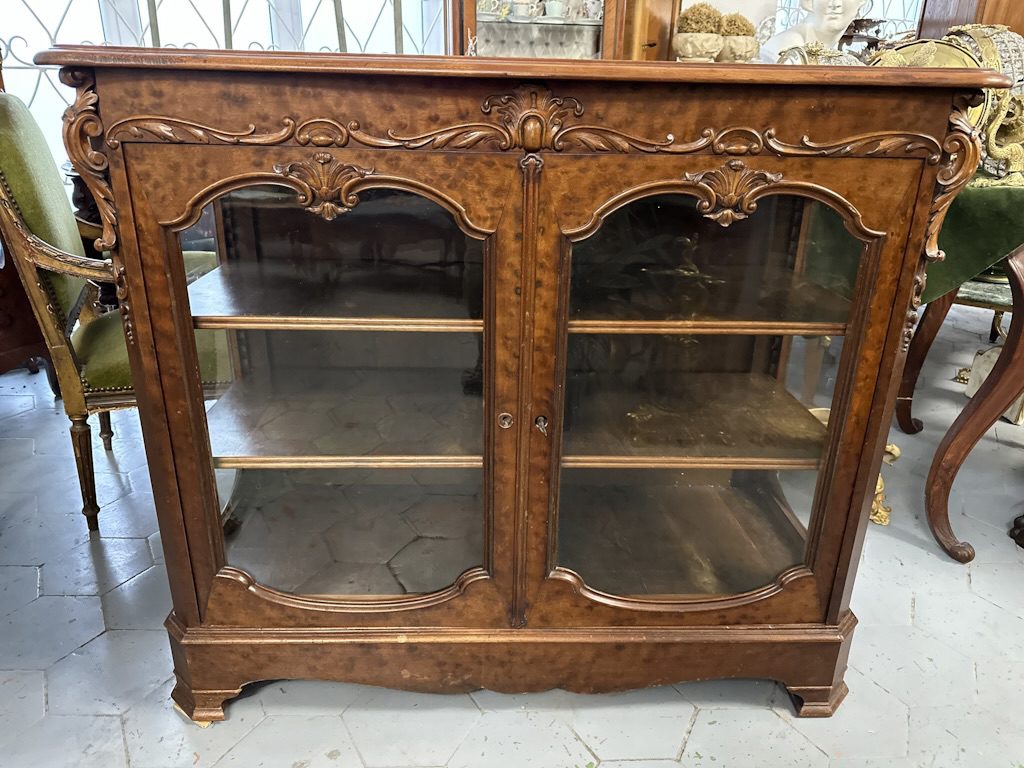
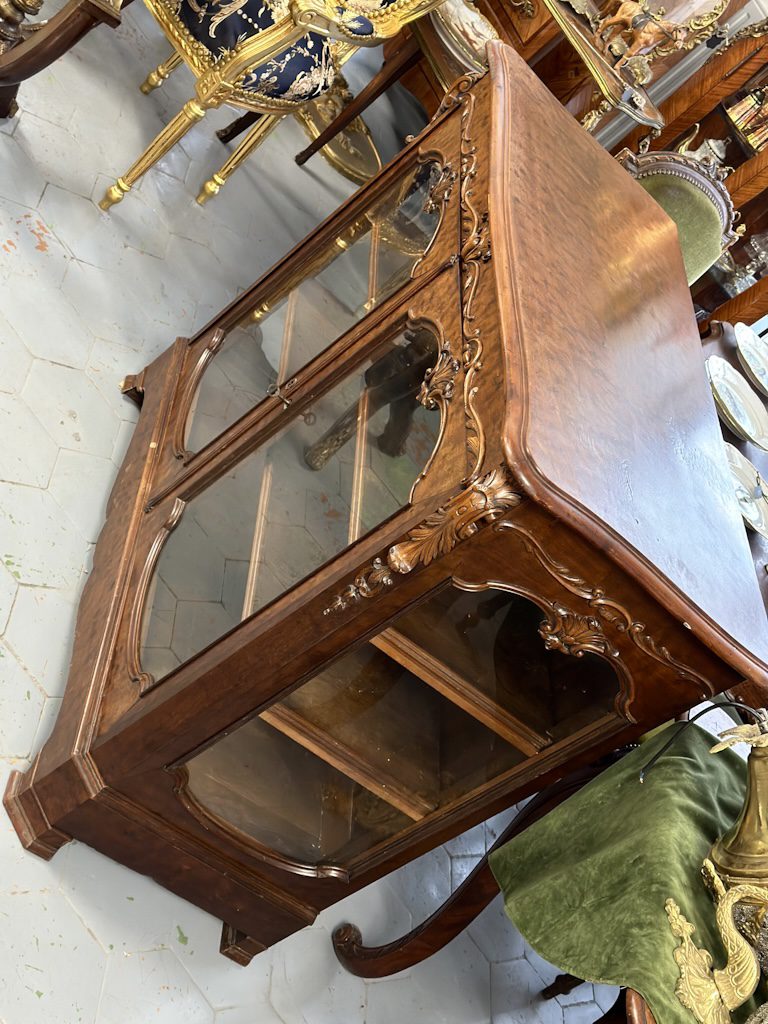
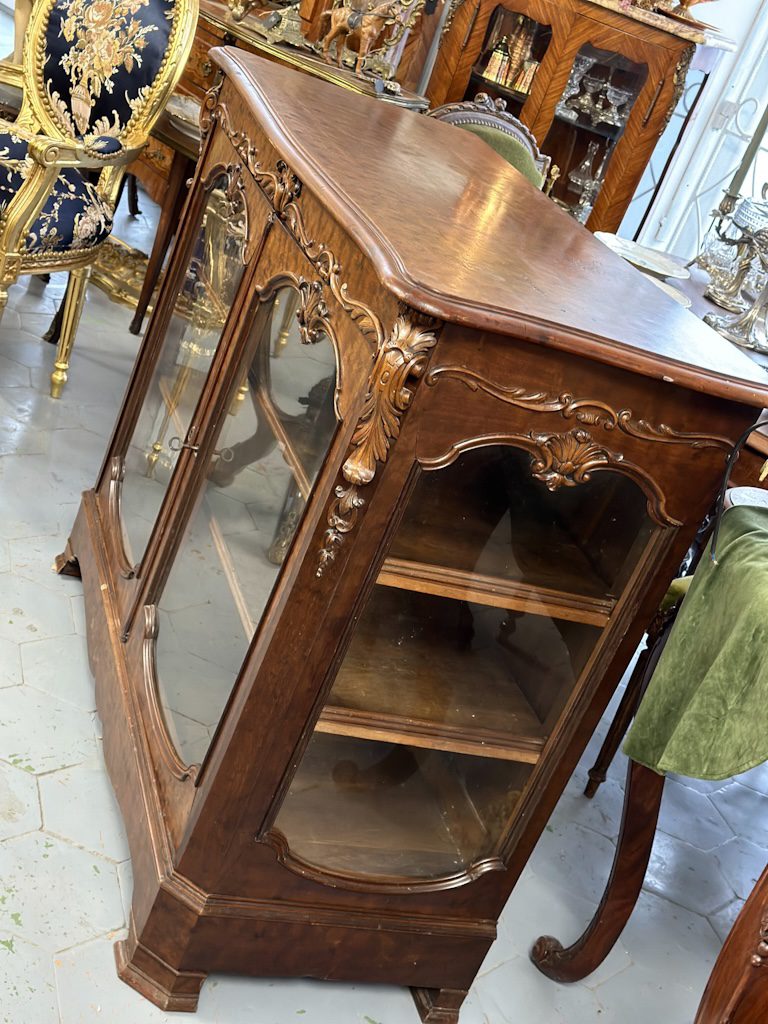
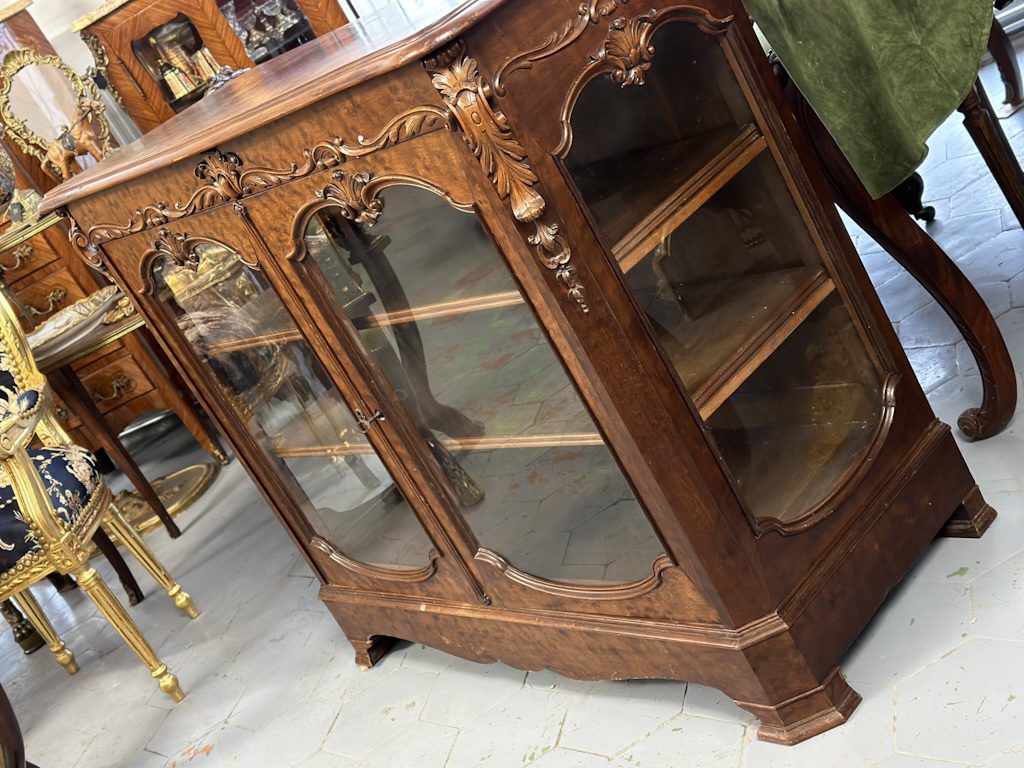
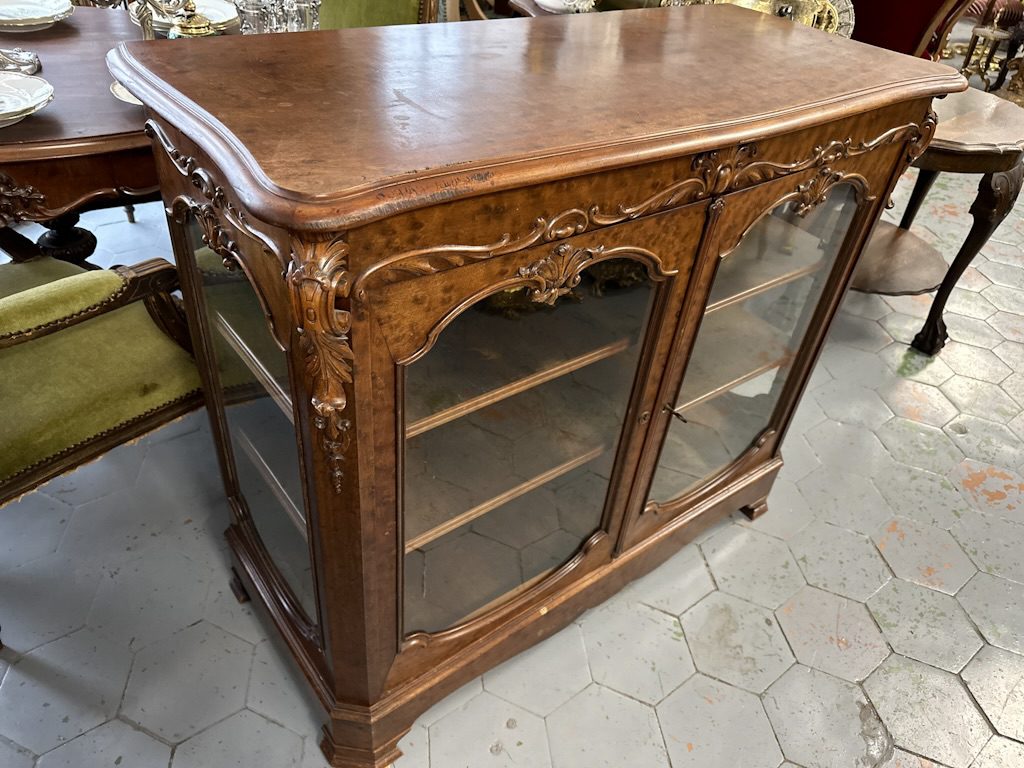
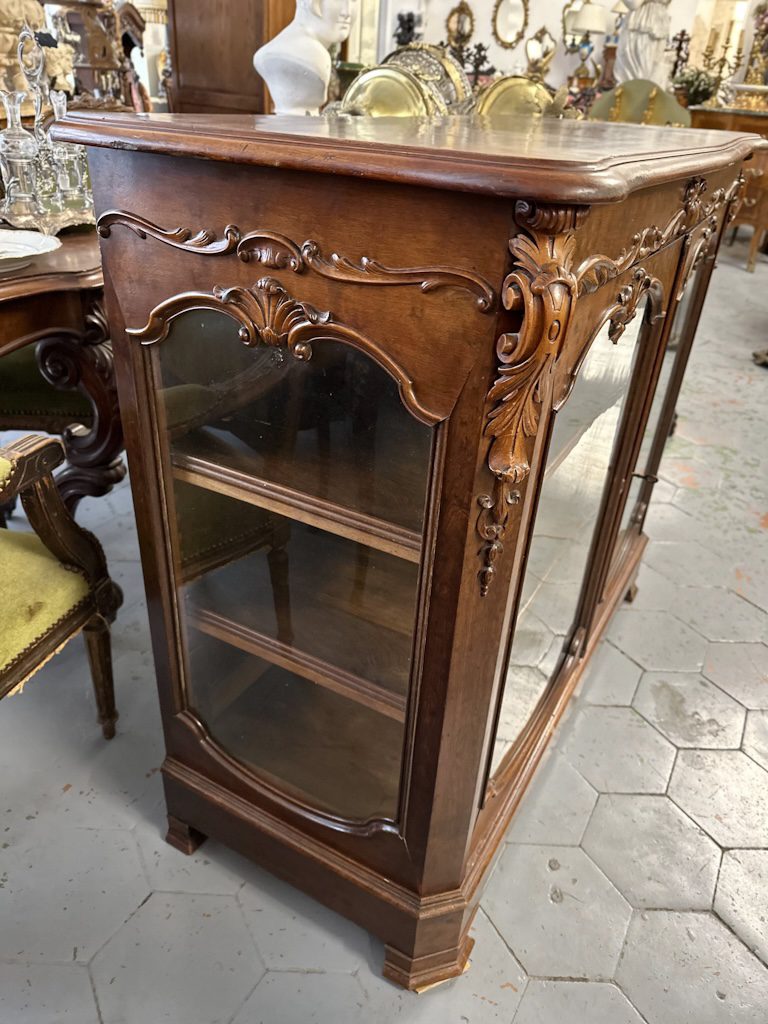
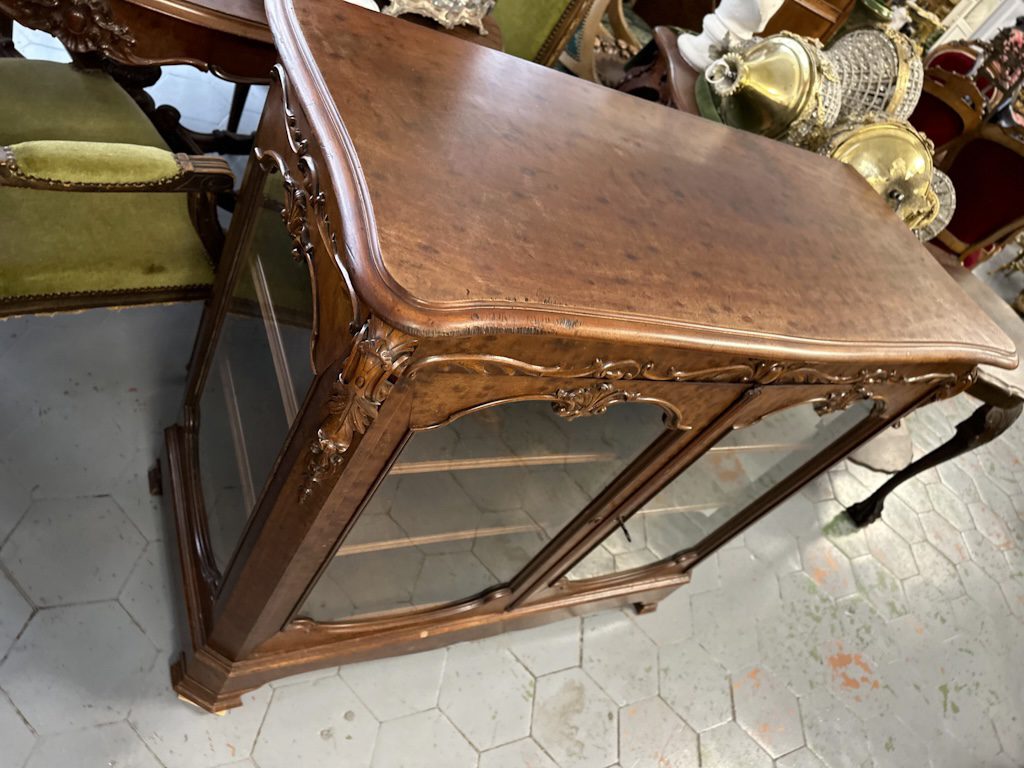
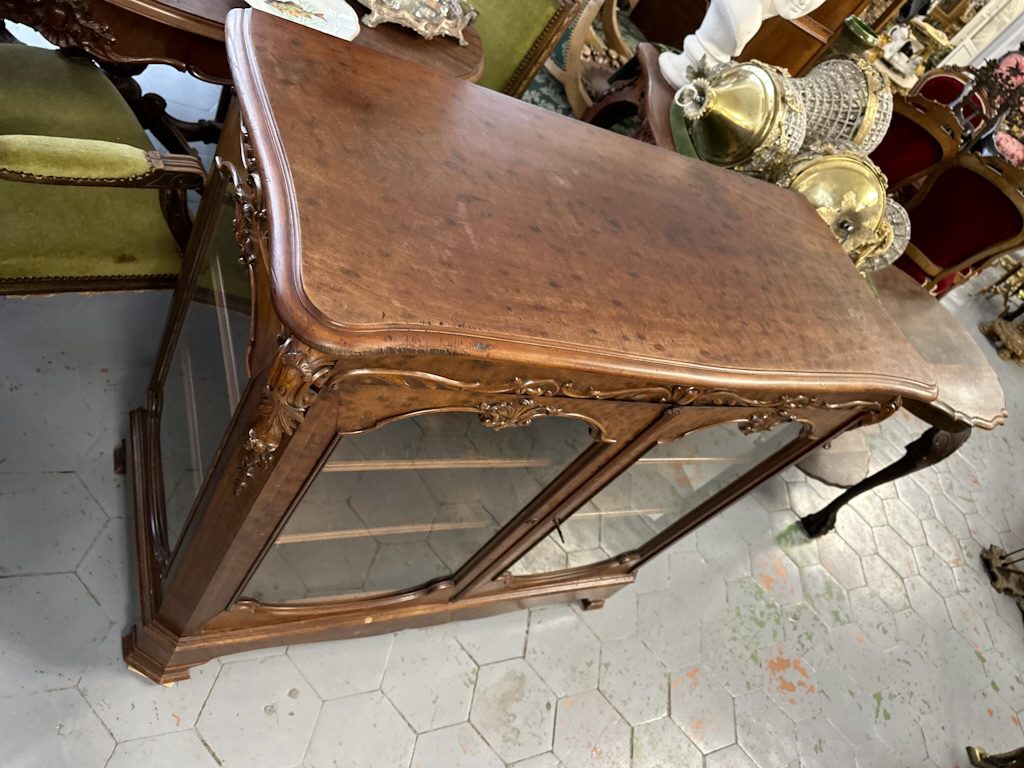
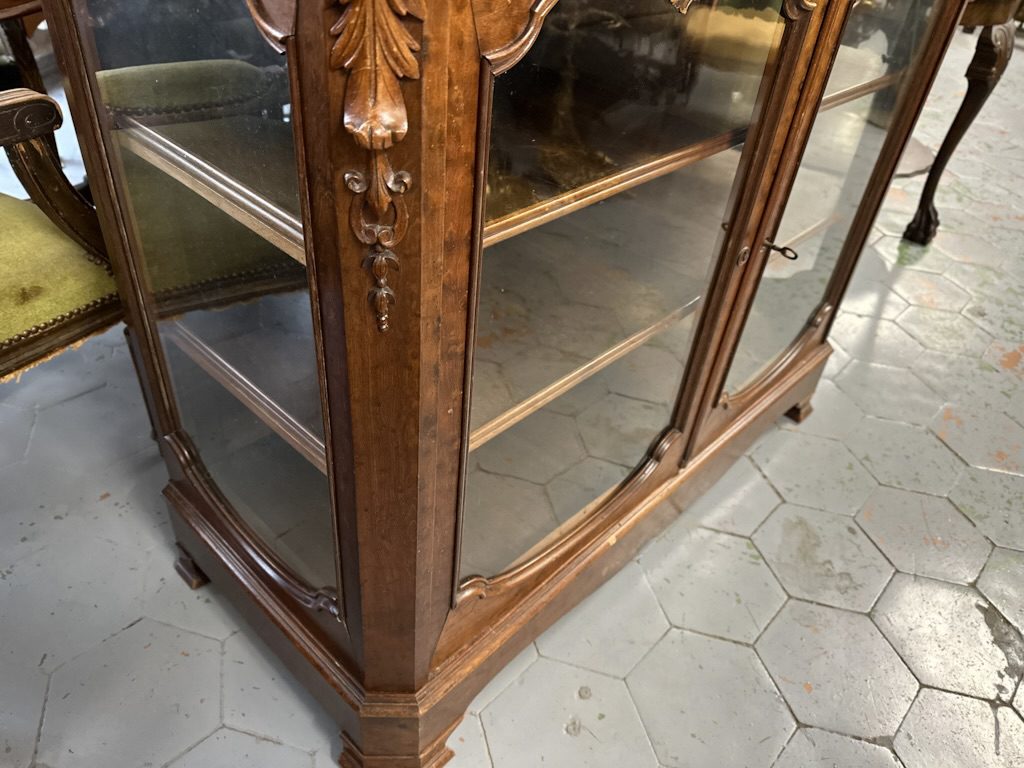
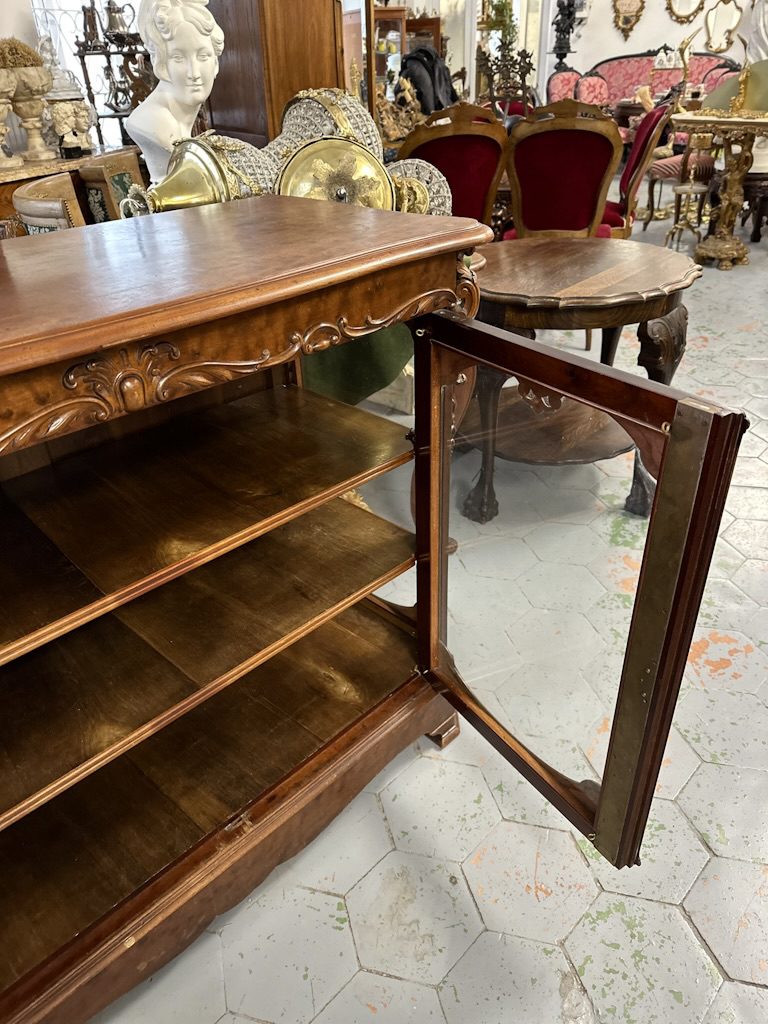
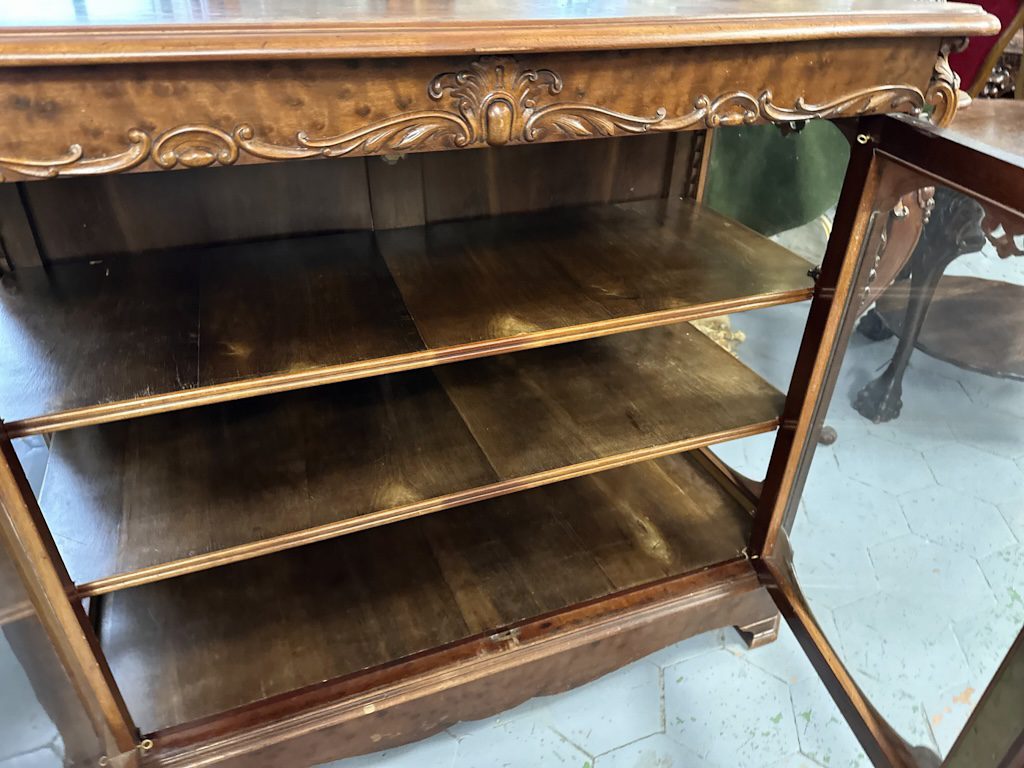
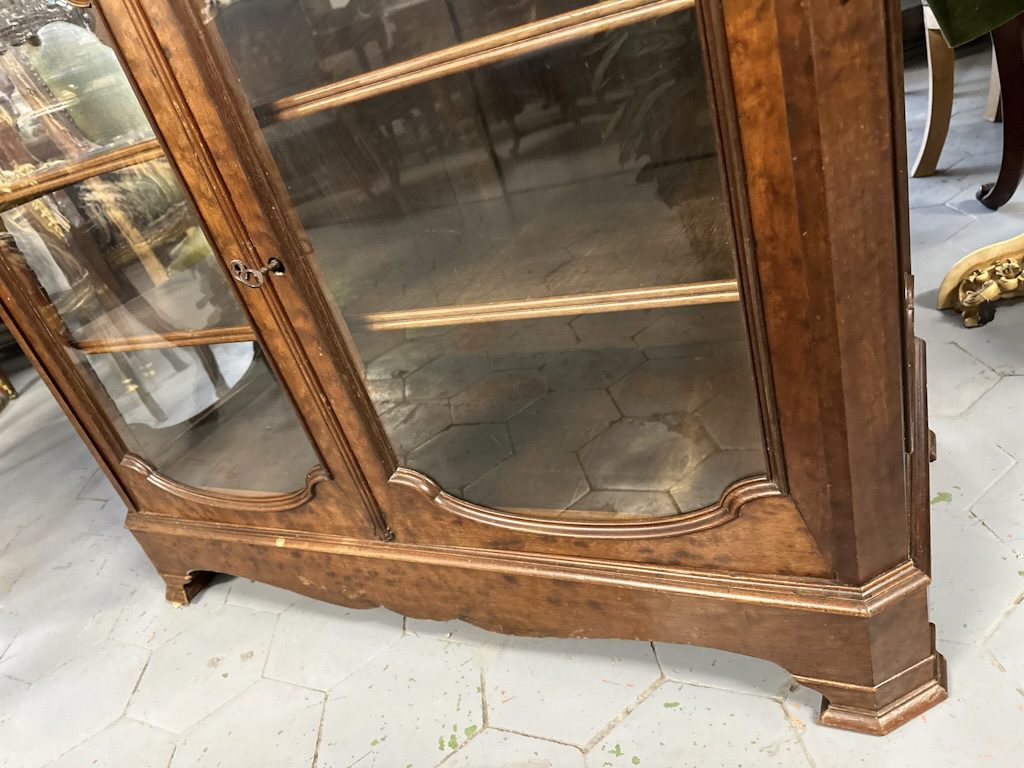
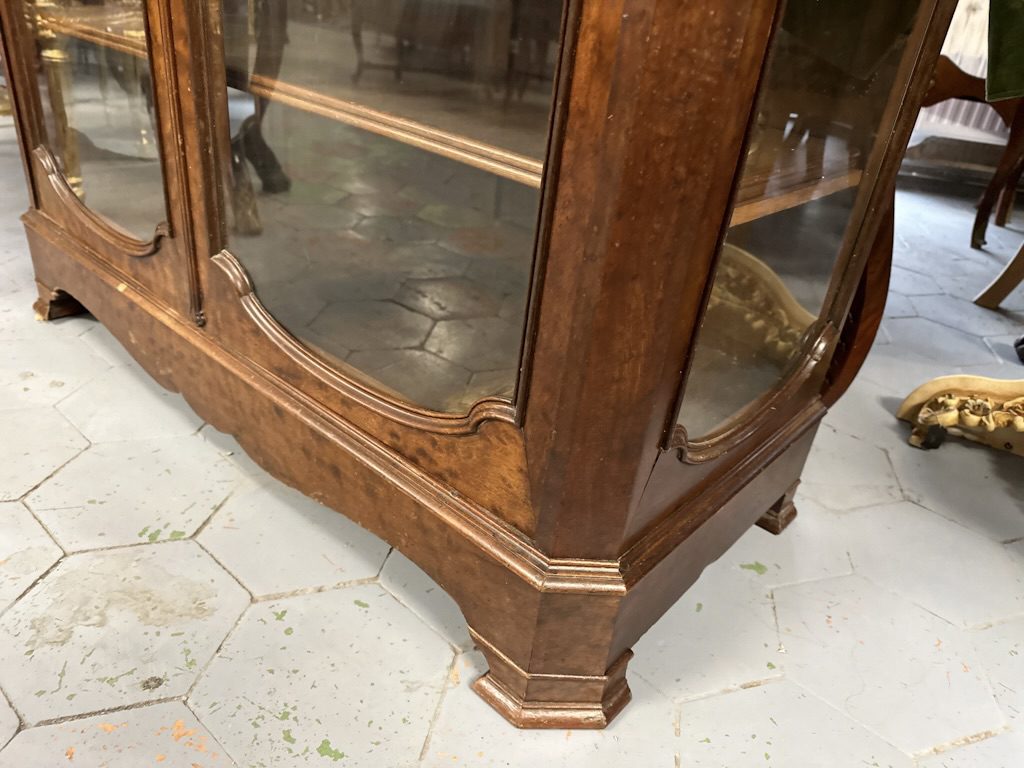
Masīva vitrīna-kumode no kārpainā riekstakoka ar izliektu serpentine korpusu, bagātīgiem rocaille kokgriezumiem un divām stikla durvīm. Luija XV stils, Francija/Beļģija, ap 1860.–1890. Trīs koka plaukti iekšpusē. Augstums 98 cm × garums 116 cm × dziļums 50 cm.
📐 IZMĒRI Augstums 98 cm × garums 116 cm × dziļums 50 cm.
―――――――――――――――――――――
Riekstkoka Vitrīna-Kumode ar Kokgriezumiem — Luija XV stils, Francija/Beļģija, ap 1860.–1890.
―――――――――――――――――――――
🏛️ IZGATAVOŠANAS PERIODS, MĀKSLAS STILS, LAIKMETS
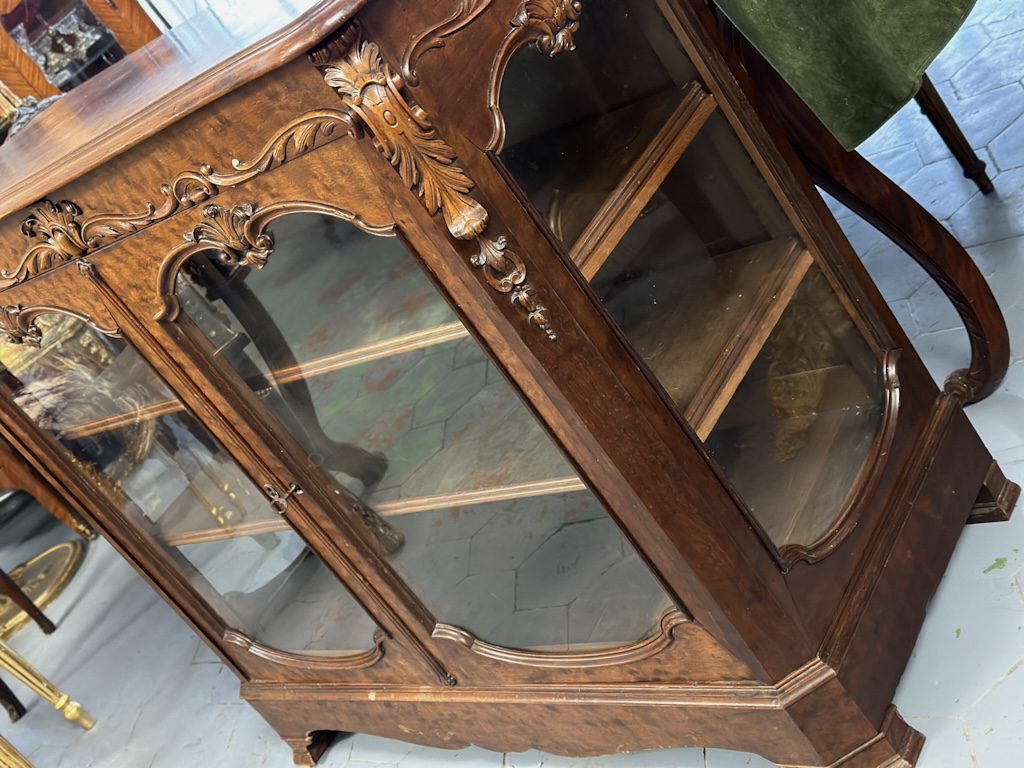
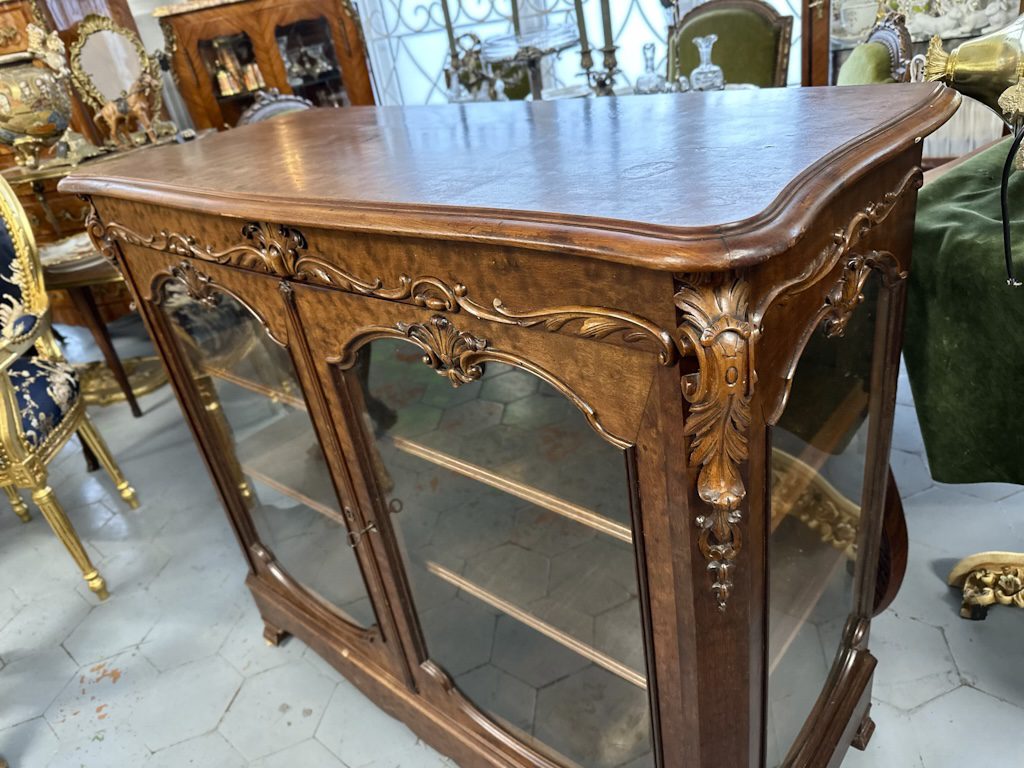
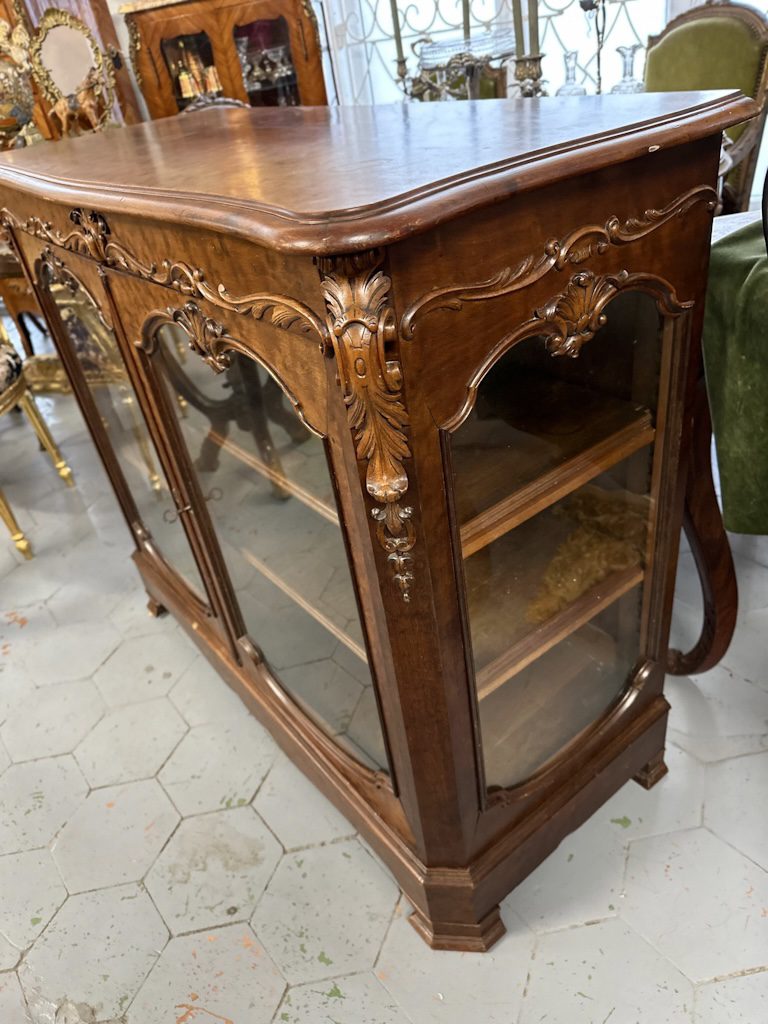
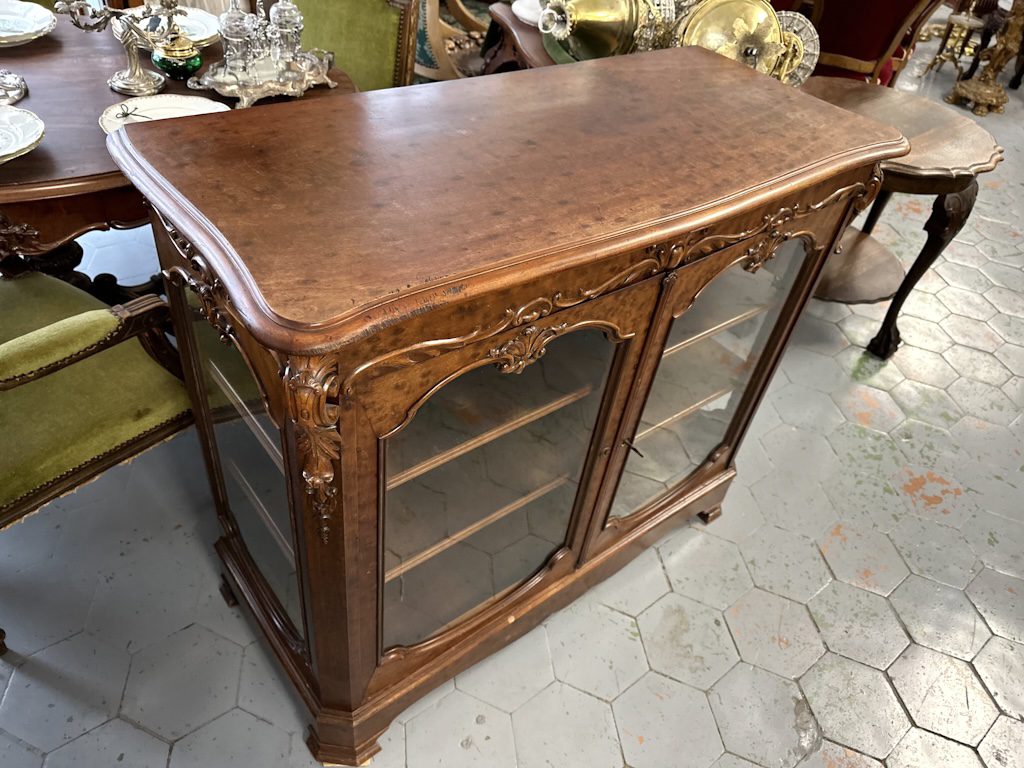
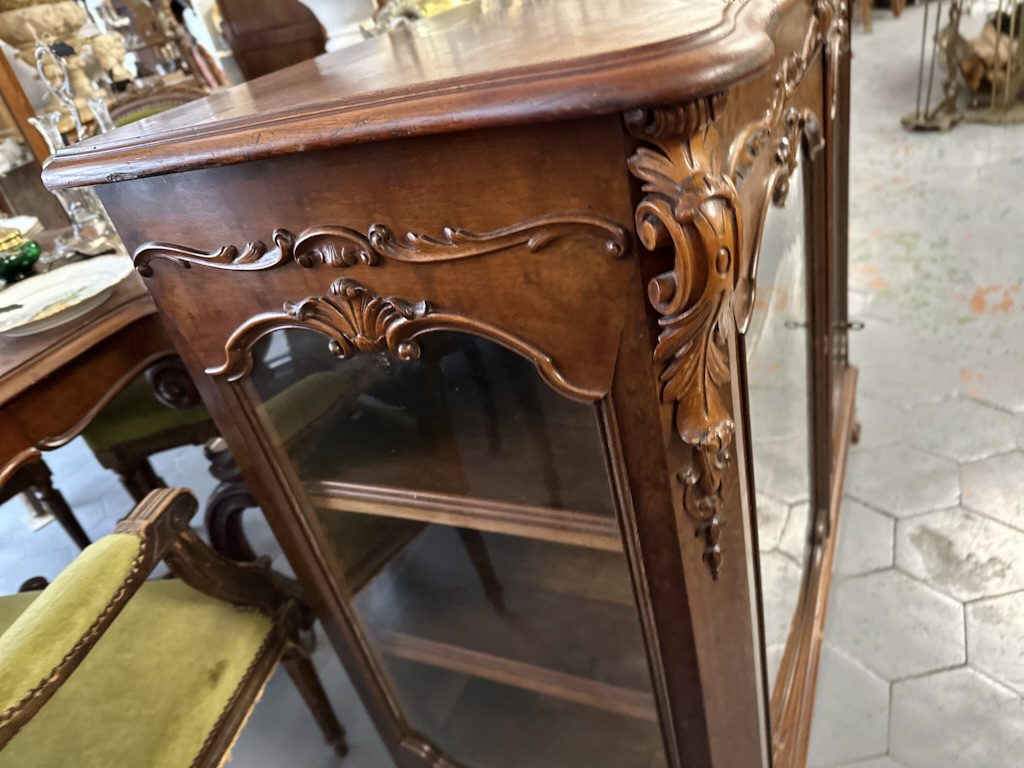
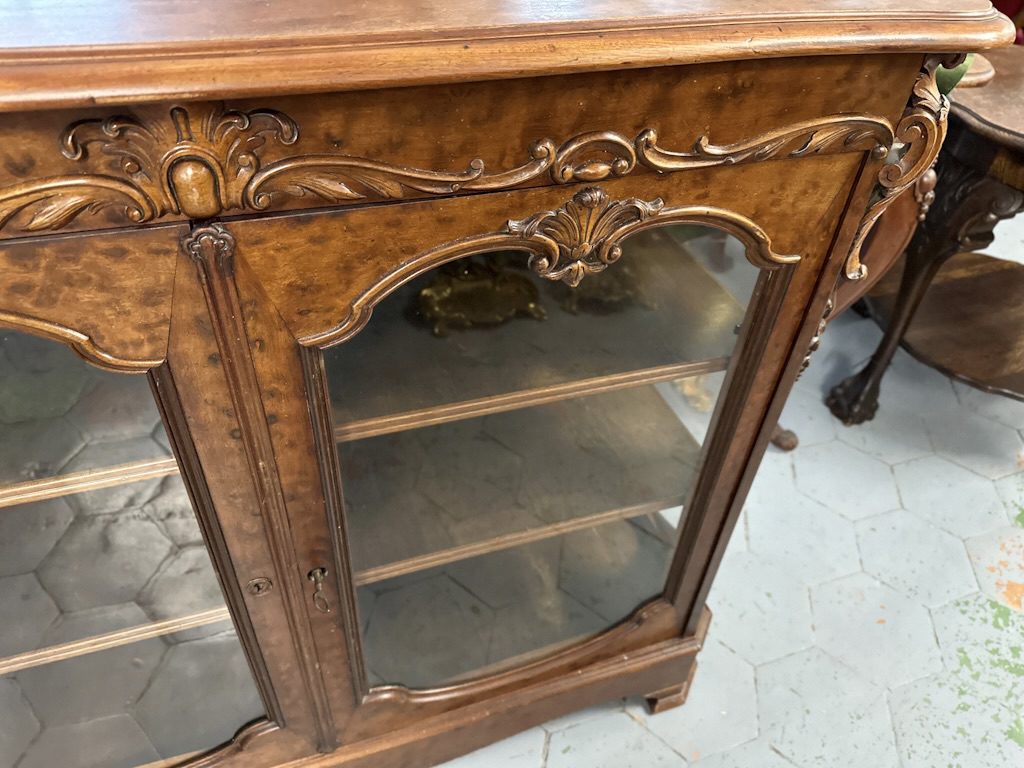
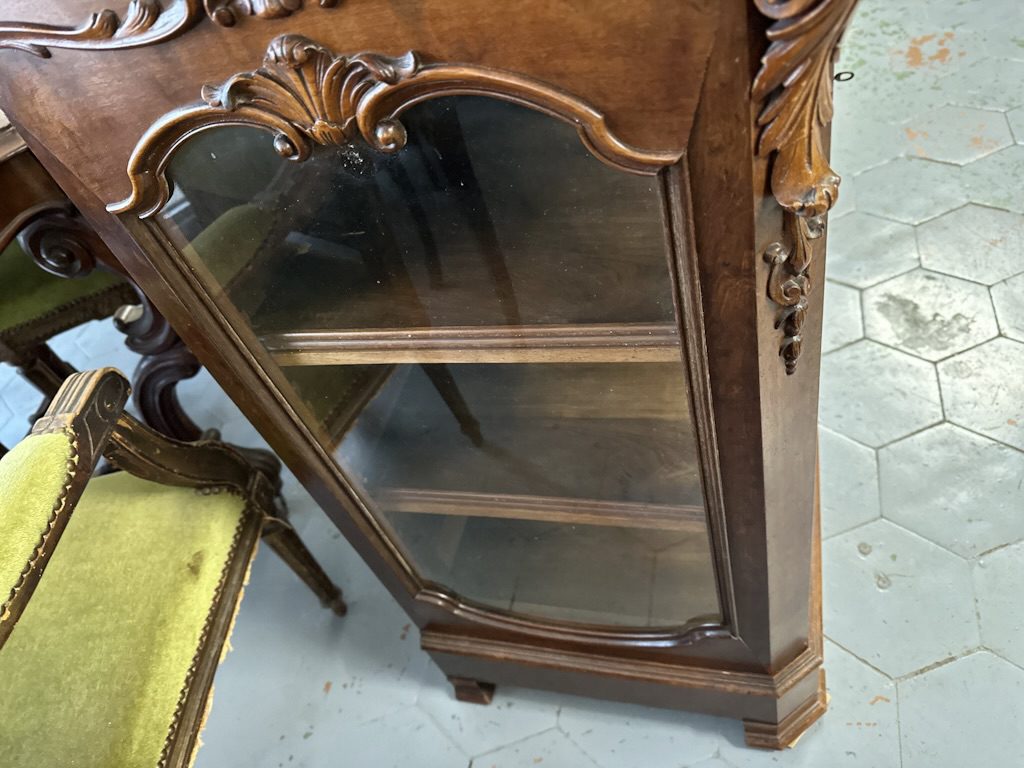
Šis iespaidīgais skapnis radīts Belle Époque priekšvakarā un tās pirmajā ziedā — laikmetā, kad Historicisms Eiropas galdniecībā sasniedza savu māksliniecisko kulmināciju. Stilistiski priekšmets pieder Luija XV (Louis Quinze) atdzimšanas viļņam, kas pārņēma Rietumeiropas salonu kultūru ap 1860.–1890. gadiem: izliekts, serpentine formas korpuss, bagātīgas rocaille un akantus lapu kokgriezumu frīzes, cartouche formas stikla durvju loki un dziļi griezti stūru ornamenti runā vienā estētiskajā valodā ar 18. gadsimta Francijas galma tradīciju.
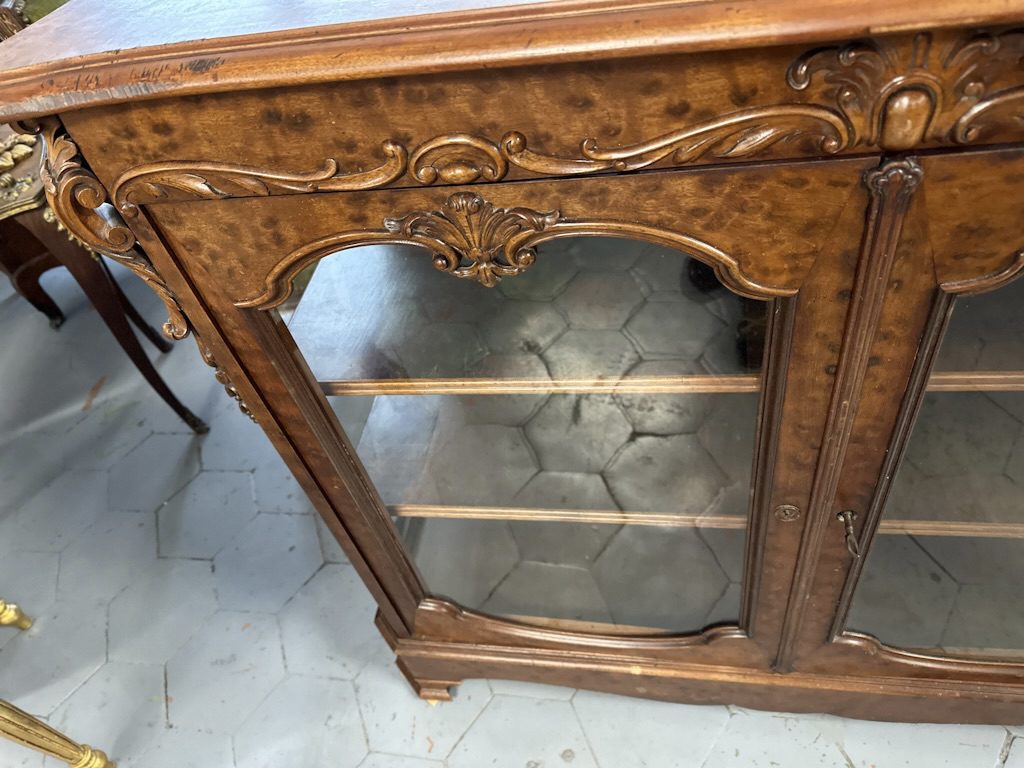
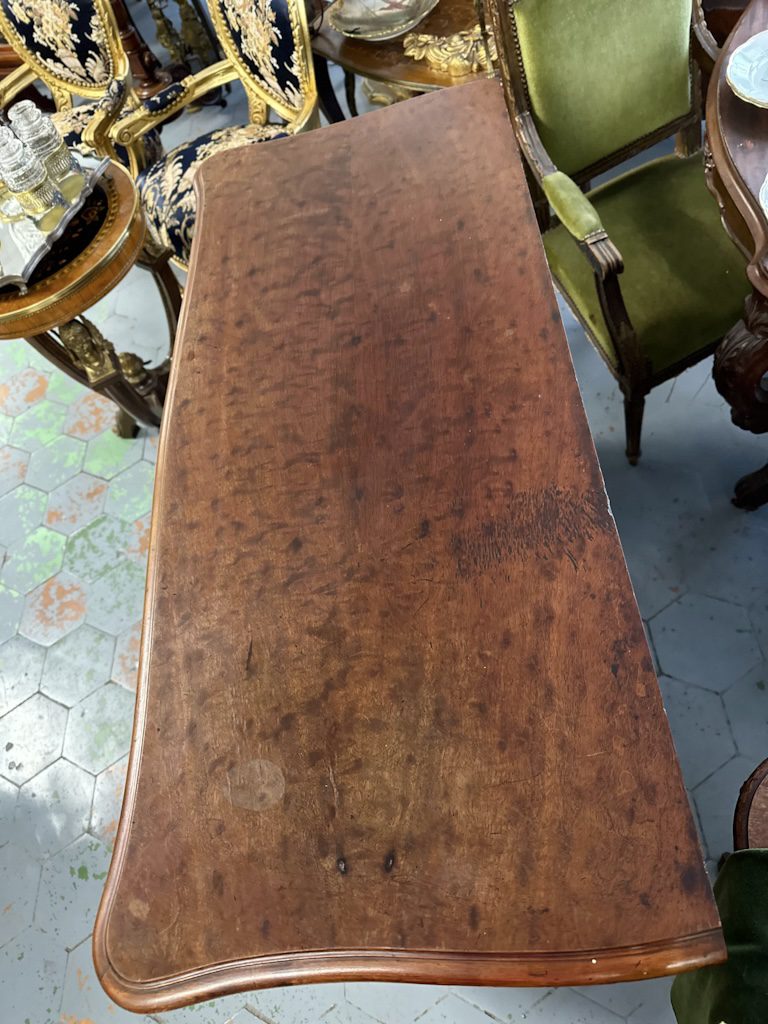
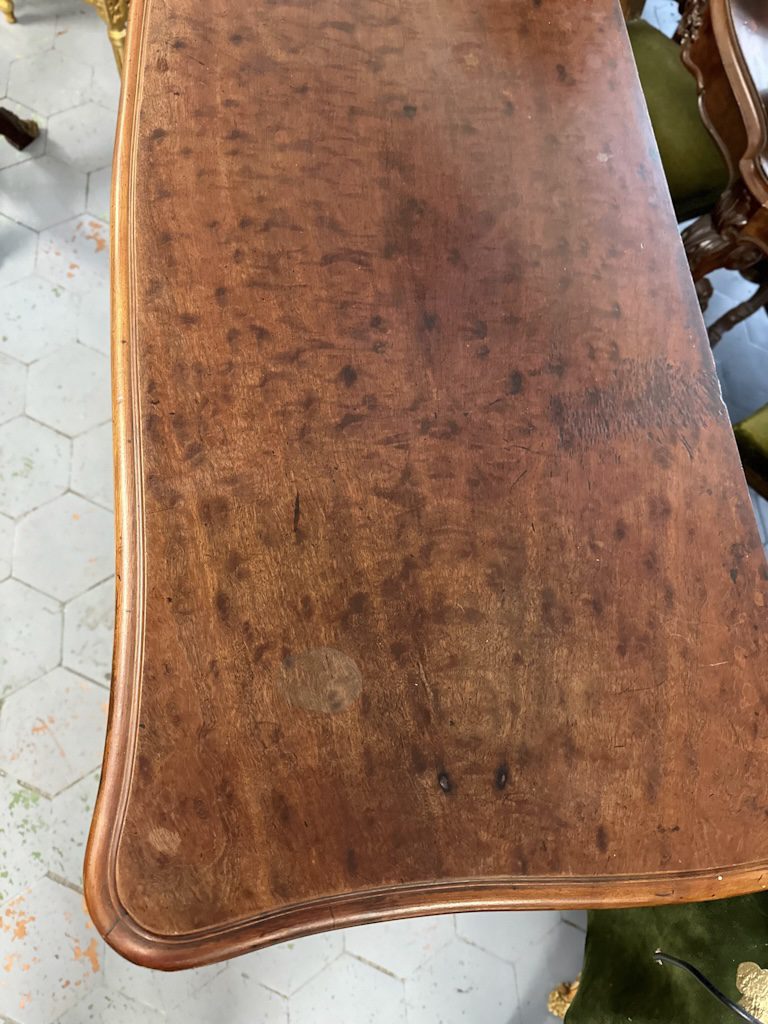
Īpaši izcils ir riekstakoka (noyer) un kārpainā riekstakoka (loupe de noyer) izmantojums — tā tipiskais rakstainais, virpuļojošais graudojums piešķir skapi gandrīz glezniecisku dzīvīgumu, ko neviens cits materiāls nevar atdarināt. Šāds koks bija 19. gadsimta prestižākais galdnieku materiāls un liecina par augstu pasūtījuma klasi.
Belle Époque momentuzņēmums: 1867. gadā Parīzē notika Pasaules izstāde — viena no lielākajām, ko pilsēta jebkad redzēja. Galdnieku un ebenististu (ébénistes) paviljons bija viens no apmeklētākajiem, un tieši šādi skapji — ar loupe de noyer virsmu un rokdarba kokgriezumiem — ieguva lielākās ovācijas. Ķeizariene Ežēnija staigāja pa izstādes alejām tajā pašā nedēļā. Šis skapis varēja būt gatavs tieši tam mirklim.
―――――――――――――――――――――
⚜️ RAŽOTĀJS UN MANUFAKTŪRAS ZĪMOGS
Konkrēts ražotāja marķējums nav redzams, taču konstrukcijas kvalitāte, loupe de noyer furnieru precizitāte un kokgriezumu dziļums un plastiskums liecina par Francijas vai Beļģijas augstākās klases ébéniste darbnīcu — visticamāk Parīze, Lježa vai Brisele, ap 1860.–1890. Šāda tipa divdurvju vitrīnas-kumodes ar izliektu fasādi un sānu bombé formu bija tā laika prestižāko galdniecības darbnīcu specializācija un rotāja turīgo buržuāzisko māju ēdamistabas un salonus. Kokgriezumu cartouche un coquille motīvi centrā virs durvīm ir augsti profesionāla roku darba izpildījums.
―――――――――――――――――――――
💎 RETUMS UN NOZĪME
Šāda izmēra un proporciju Luija XV stila vitrīnas-kumodes no loupe de noyer (kārpainā riekstakoka) ar pilnīgu kokgriezumu programmu — frīze, stūru akantus kompozīcijas, cartouche virs durvīm — ir ievērojami retākas nekā standarta Biedermeier vai vienvirsmas furniera skapji. Izlieктais serpentine korpuss un izliektas stikla durvis pievieno papildu sarežģītības pakāpi, kas prasīja augstas klases galdniecības prasmes. Kolekcionāri un interjera dizaineri meklē tieši šāda piano nobile formāta gabalus — pietiekami plaši, lai kalpotu kā reprezentatīvs eksponēšanas objekts, bet ne tik masīvi, lai dominētu telpā. Pieprasījums Rietumeiropas tirgū ir stabils.
―――――――――――――――――――――
🕯️ PIELIETOJUMS INTERJERĀ, DIZAINĀ UN FOTOGRĀFIJĀ
Šī vitrīna-kumode ir izcils daudzfunkcionāls interjera elements. Tās platā virsma kalpo kā konsoles galda ekvivalents — dekoratīvajiem priekšmetiem, lampai, pogāmam vai akcentam —, kamēr stikla durvis ar trim plauktiem iekšpusē sniedz plašas iespējas kolekciju eksponēšanai. Tā iekļaujas klasiskā, eklektiskā vai grandeur interjerā kā galvenais akcentgabals ēdamistabā, bibliotēkā, kabinetā vai hallē. Interjera fotografiem un kinematogrāfistiem šādi skapji ir ļoti pieprasīti kā autentisks laikmeta fons.
―――――――――――――――――――――
🎁 DĀVANA UN PERSONALIZĀCIJA
Šī vitrīna-kumode ir reprezentatīva dāvana augstākā līmenī — mājas iekārtošanas entuziastam, arhitektam, juristam vai ārstam ar augstu estētisku jūtīgumu, kā arī korporatīva vai diplomatiska dāvana, kas apliecina rūpīgu gaumi un cieņu pret saņēmēju. Tā ir tikpat piemērota privātai dzīvojamai telpai kā reprezentatīvam biznesa kabinetam.
―――――――――――――――――――――
🔍 STĀVOKLIS
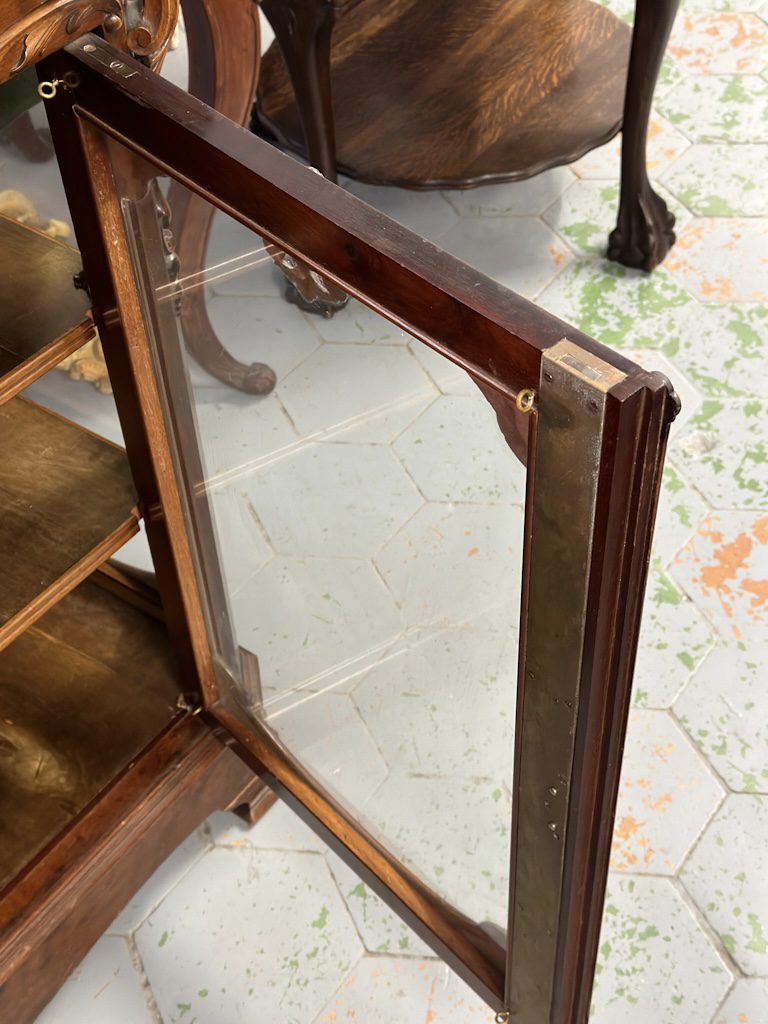
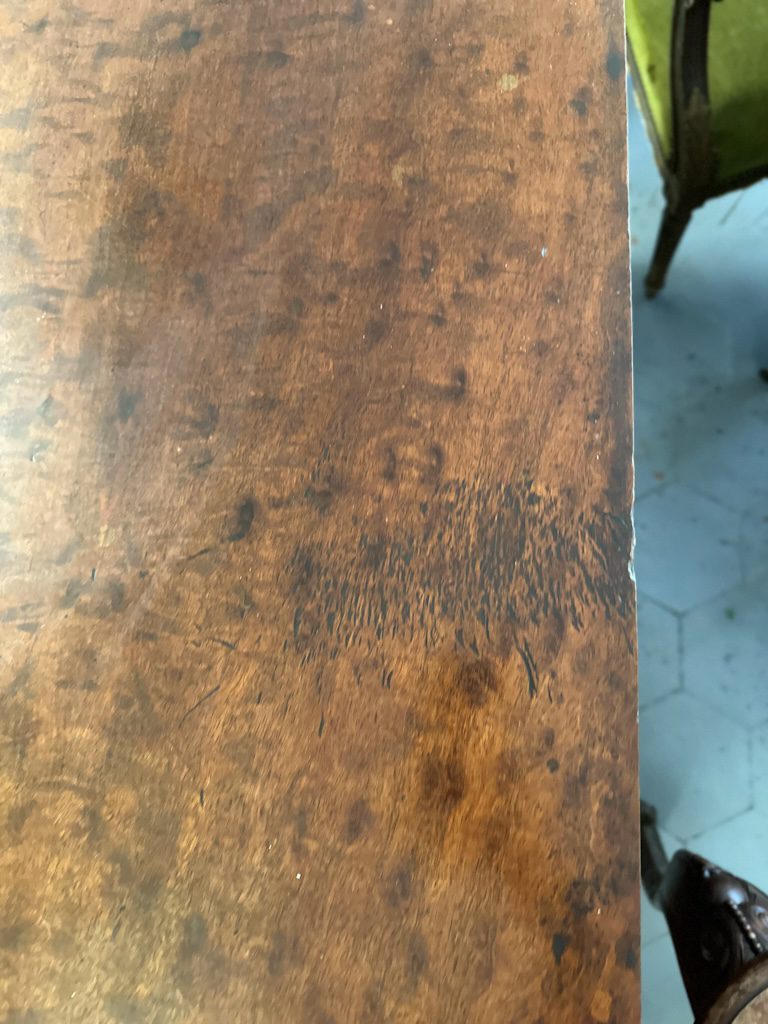
Vitrīna atrodas labā antikvārā stāvoklī, atbilstoši vecumam. Loupe de noyer virsma ar raksturīgo virpuļojošo graudojumu. Bagātīgi kokgriezumi saglabājuši plastiskumu un detaļu asumu. Stikla durvis — abas klāt, funkcionē. Iekšpuse ar trim koka plauktiem. Nelielas vecuma pēdas uz virsmas un stūriem, kas raksturīgas autentiskai Belle Époque mēbelei un apliecina priekšmeta patiesumu. Vienam stikla stūrim ir plaisājums (labi redzams fotogrāfijā). Lietas stāvoklis pilnībā atspoguļots fotogrāfijās.
―――――――――――――――――――――
🇬🇧 DESCRIPTION IN ENGLISH
📐 DIMENSIONS Height 98 cm × Length 116 cm × Depth 50 cm.
―――――――――――――――――――――
Burr Walnut Glazed Cabinet-Vitrine with Carved Decoration — Louis XV Style, France/Belgium, c. 1860–1890.
―――――――――――――――――――――
🏛️ PERIOD, ARTISTIC STYLE, ERA
This impressive cabinet was made on the eve of and in the early flowering of the Belle Époque — an era when Historicism in European cabinetmaking reached its artistic peak. Stylistically the piece belongs to the Louis XV (Louis Quinze) revival that swept Western European salon culture from approximately 1860 to 1890: the serpentine bowed corpus, richly carved rocaille and acanthus friezes, cartouche-arched glazed door panels and deeply carved corner ornaments all speak in one aesthetic language, drawing directly from the 18th-century French court tradition.
Particularly notable is the use of burr walnut (loupe de noyer) — its characteristic swirling, figural grain gives the cabinet an almost painterly vitality that no other material can replicate. This timber was the most prestigious cabinetmaking material of the 19th century and speaks to the high quality of the original commission.
Belle Époque snapshot: In 1867 Paris hosted one of the greatest World Exhibitions the city had ever seen. The pavilion of cabinetmakers and ébénistes was among the most visited, and precisely these pieces — loupe de noyer surfaces with hand-carved ornament — drew the loudest admiration. Empress Eugénie walked the exhibition’s avenues that very week. This cabinet could have been made for exactly that moment.
―――――――――――――――――――――
⚜️ MAKER AND PROVENANCE
No specific maker’s mark is visible, but the construction quality, the precision of the loupe de noyer veneers and the depth and plasticity of the carved decoration point firmly to a high-grade French or Belgian ébéniste workshop — most likely Paris, Liège or Brussels, circa 1860–1890. Two-door glazed cabinets of this type with bowed fronts and bombé side panels were the speciality of the era’s most prestigious cabinetmaking ateliers, and graced the dining rooms and drawing rooms of the prosperous bourgeoisie across Western Europe. The central cartouche and coquille carvings above the doors represent a high level of professional hand craftsmanship.
―――――――――――――――――――――
💎 RARITY AND SIGNIFICANCE
Louis XV revival glazed cabinets of this scale and proportion in burr walnut (loupe de noyer), retaining a complete carved programme — frieze, corner acanthus compositions, central cartouche — are considerably rarer than standard Biedermeier or single-veneer cabinets. The serpentine bowed corpus and curved glazed doors add a further degree of technical complexity that demanded a master-class workshop. Collectors and interior designers specifically seek pieces of this piano nobile format — broad enough to serve as a major display object, yet not so massive as to dominate a room. Demand in Western European markets remains steady.
―――――――――――――――――――――
🕯️ INTERIOR, DESIGN AND PHOTOGRAPHY
This cabinet-vitrine is an outstanding multi-functional interior element. Its wide top surface serves as the equivalent of a console table — for decorative objects, a lamp or a curated accent display — while the glazed doors with three internal shelves offer generous scope for displaying a collection. It integrates naturally into a classical, eclectic or grandeur interior as a focal piece in a dining room, library, study or entrance hall. For interior photographers and film-makers, cabinets of this kind are highly sought after as authentic period backdrops.
―――――――――――――――――――――
🎁 AS A GIFT
This cabinet-vitrine makes a representational gift of the highest order — for a connoisseur of interior design, an architect, a lawyer or a physician with refined aesthetic sensibility, or as a corporate or diplomatic gift that conveys careful taste and respect for the recipient. It is equally suited to a private living space and to a distinguished business office.
―――――――――――――――――――――
🔍 CONDITION
The cabinet is in good antique condition, consistent with its age. The loupe de noyer surfaces retain their characteristic swirling grain and warm patina. The carved decoration retains its plasticity and sharpness of detail. Both glazed doors are present and functional. Interior with three wooden shelves. Minor age-related wear to the top surface and corners, consistent with an authentic Belle Époque piece and confirming its genuineness. One glass panel has a hairline crack (clearly visible in the photographs). The condition of the item is fully reflected in the photographs.
―――――――――――――――――――――