
Izvelkams Rieksta Koka Ēdamgalds ar Kokgriezumiem — Luija XV stils, Francija/Beļģija, 19.gs. (1138)
Izvelkams Rieksta Koka Ēdamgalds ar Kokgriezumiem — Luija XV stils, Francija/Beļģija, 19.gs. (1138)
€750.00
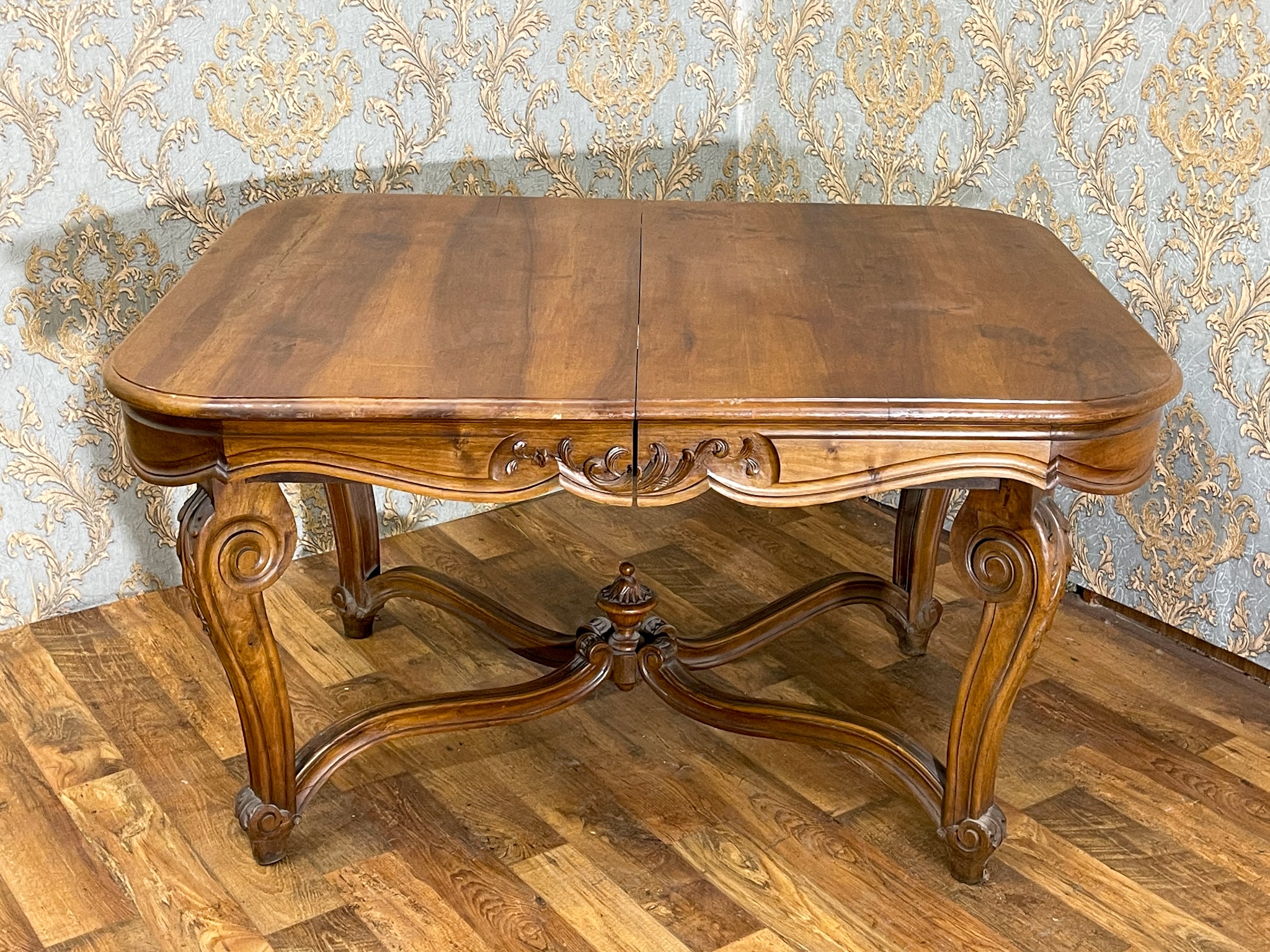
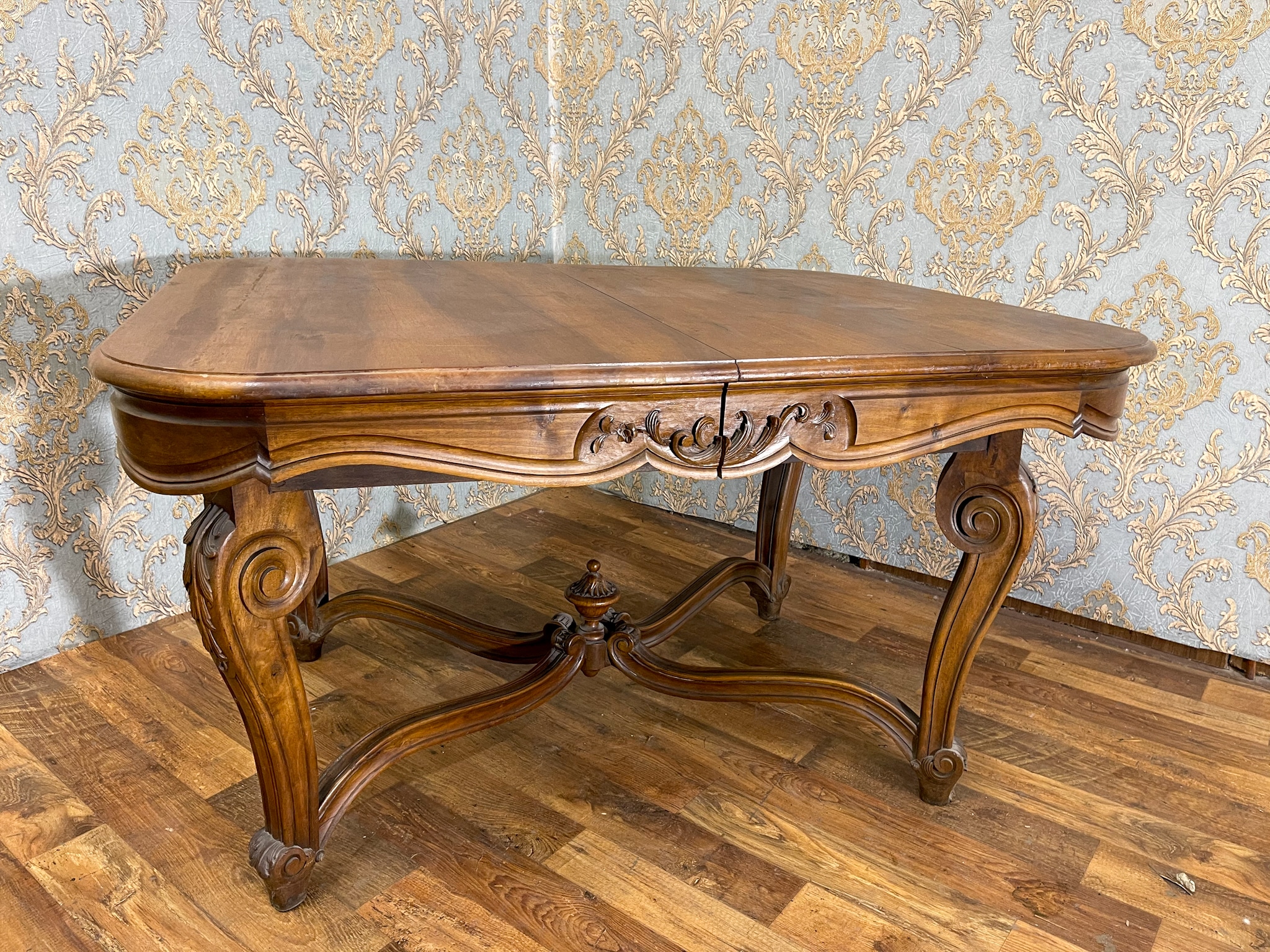
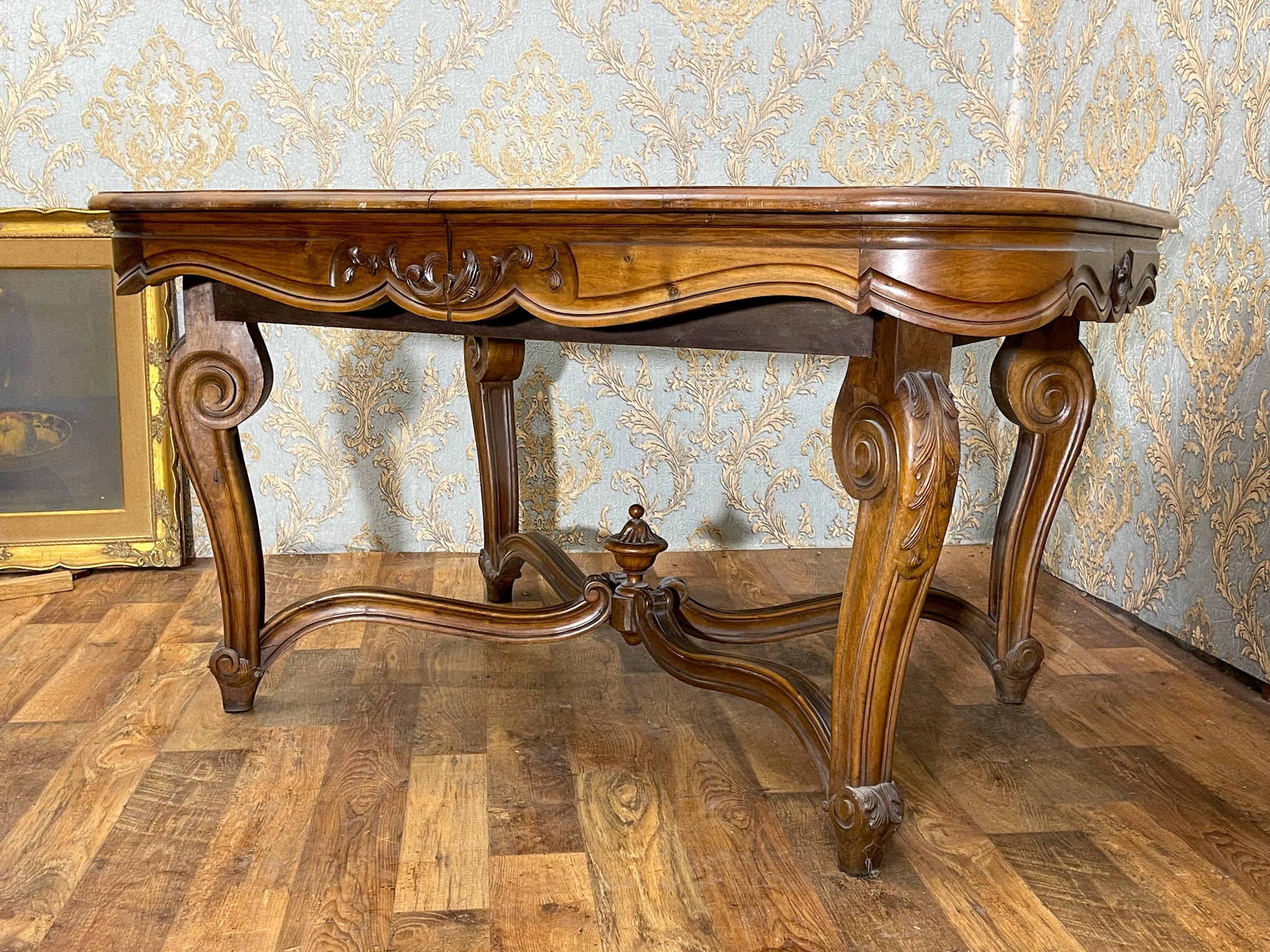
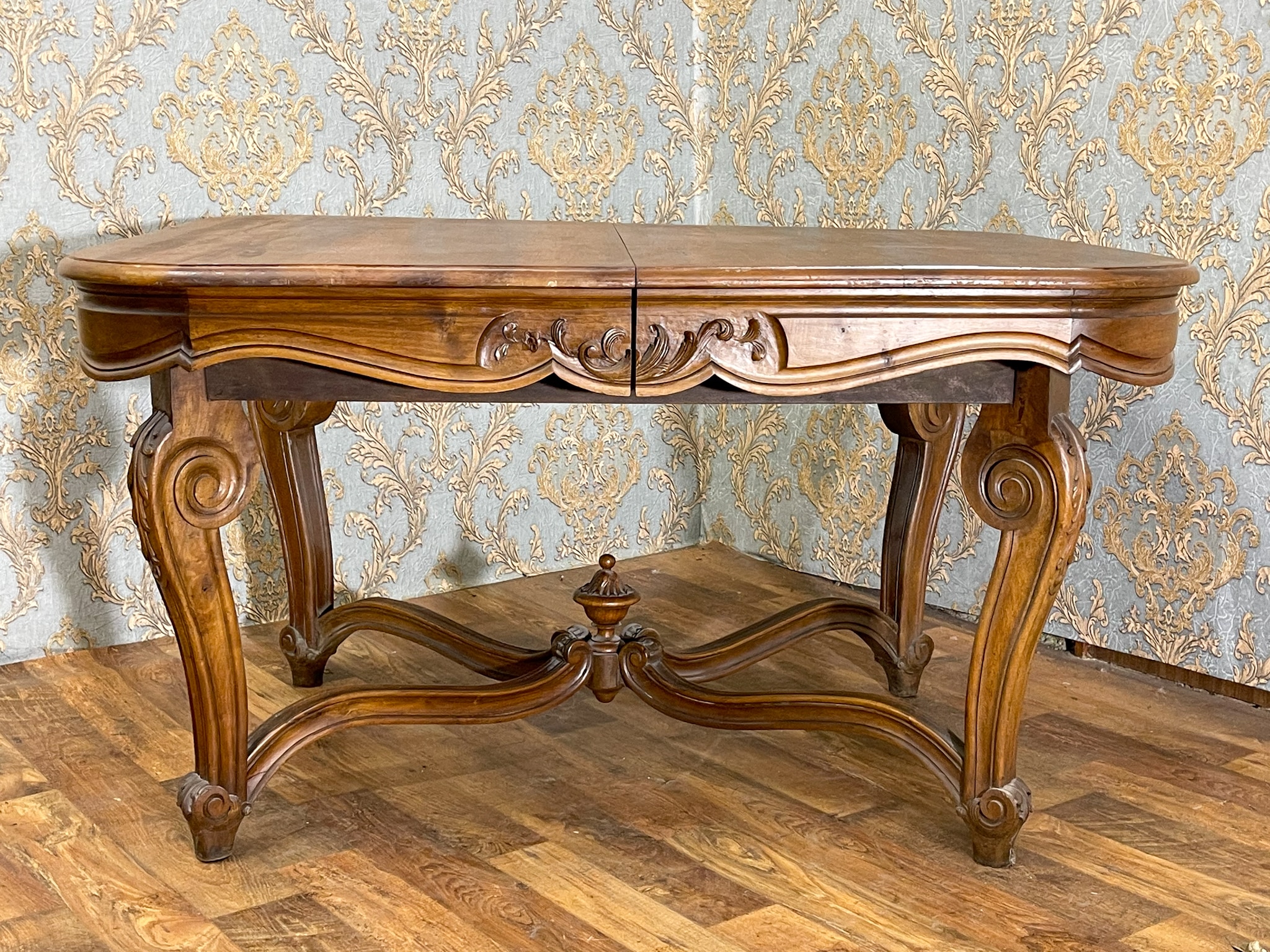
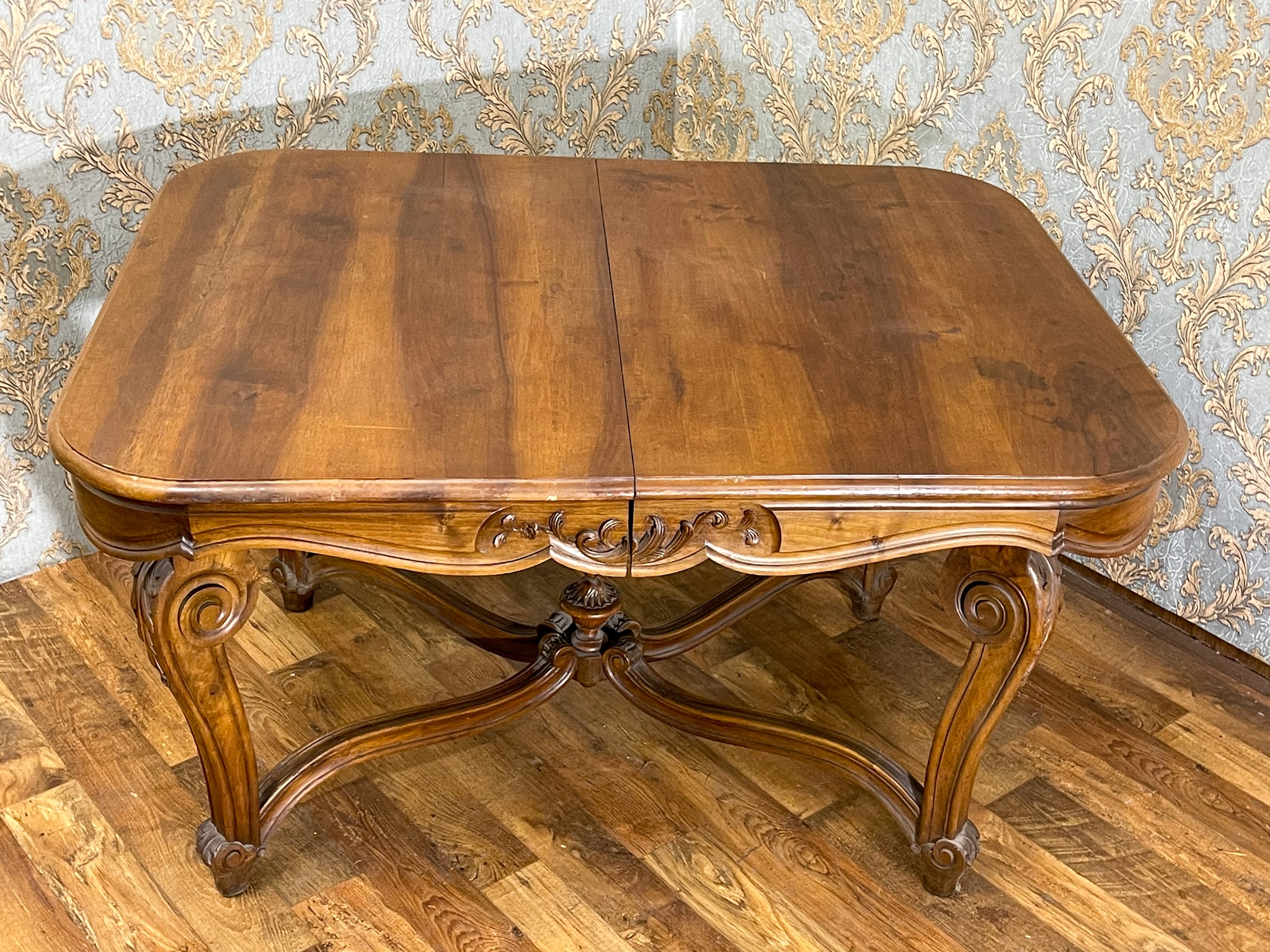
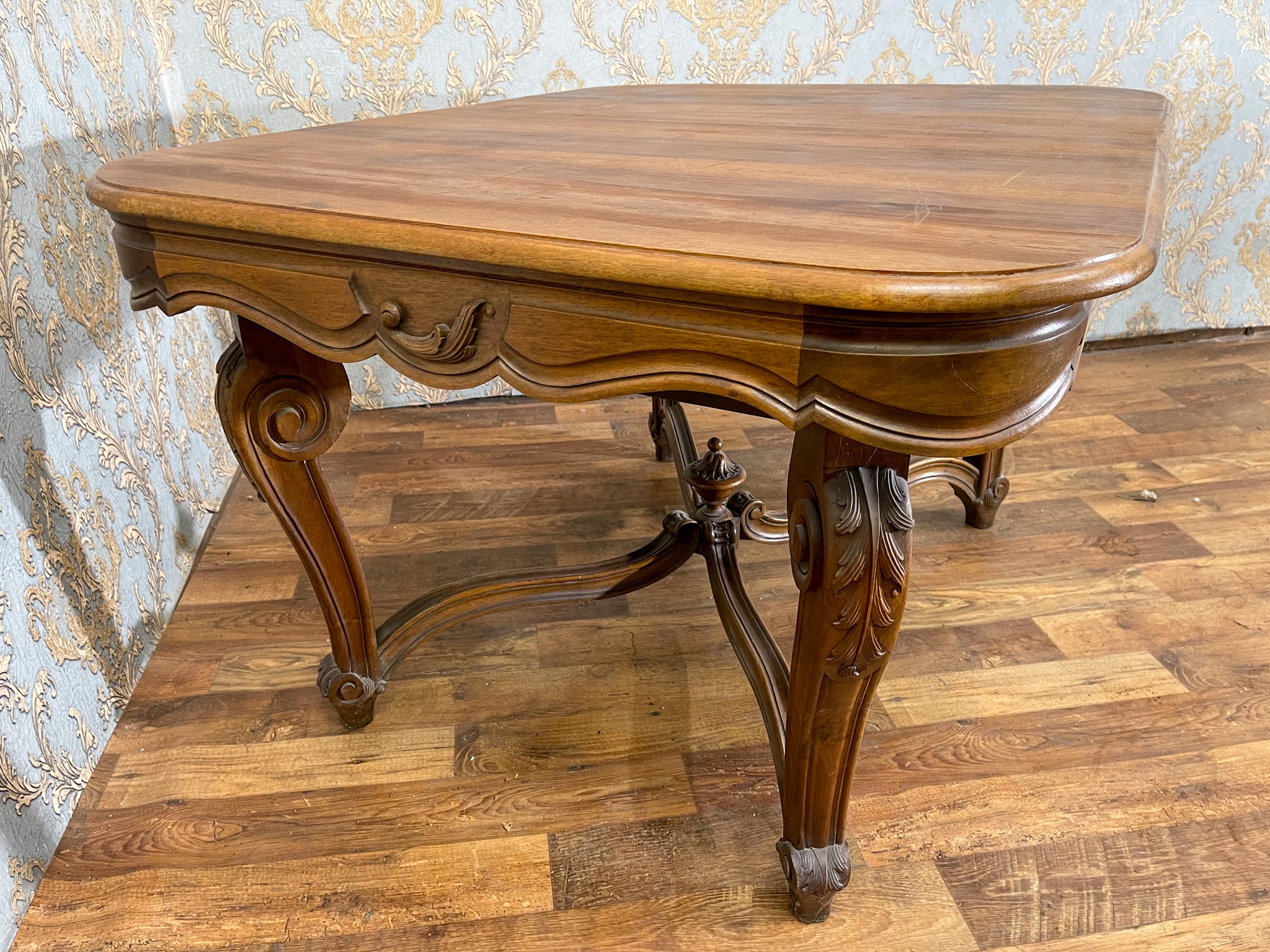
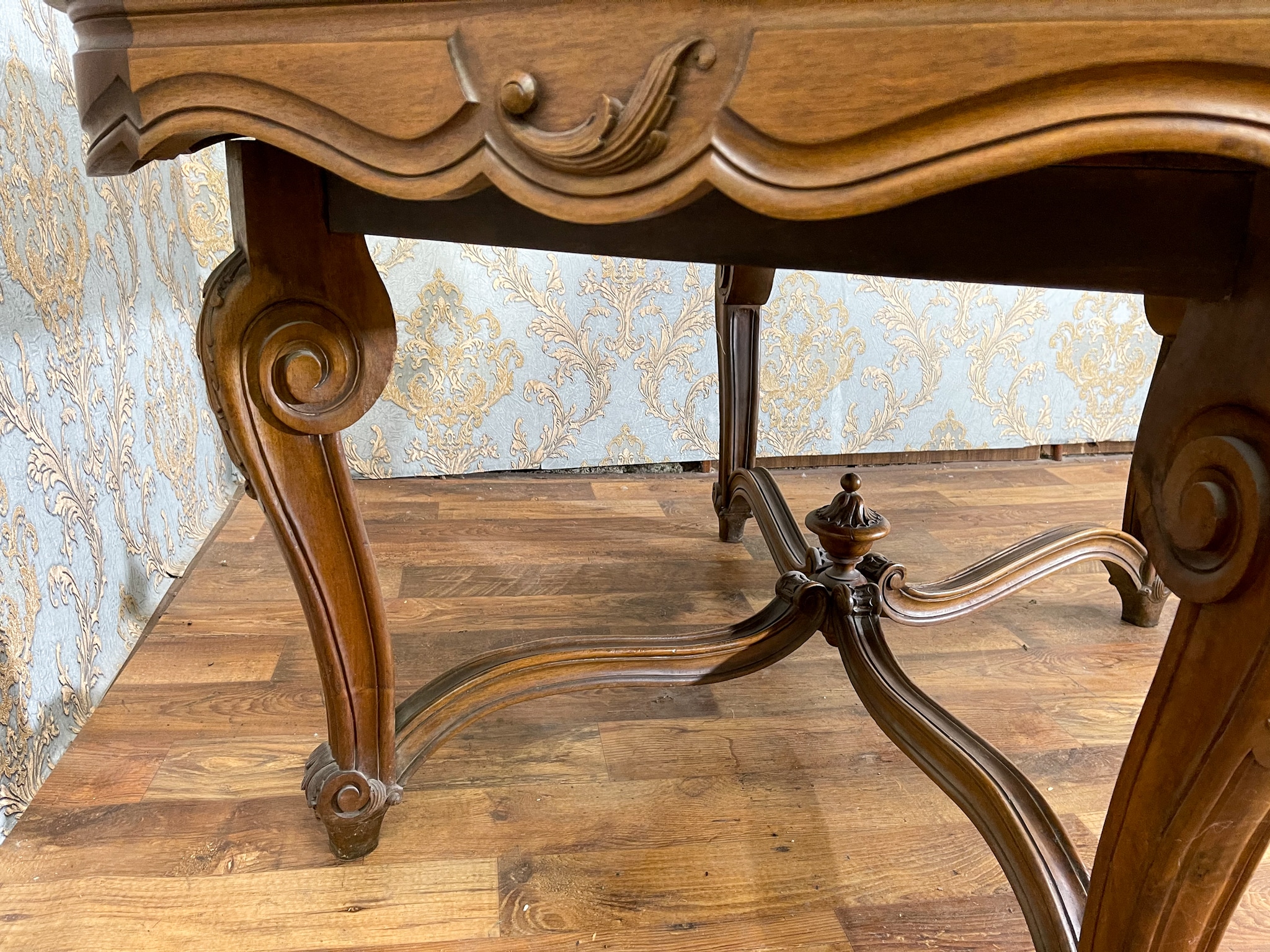
Masīvs izvelkams ēdamgalds no rieksta koka ar bagātīgi greznotu frīzi un kabriolkājām ar volūtām. Centrālais X pamatnes savienojums ar urnu. Luija XV stils / Neorokoko, Francija/Beļģija, ap 1860.–1900. Garums 126,5 cm × platums 99,5 cm × augstums 72,5 cm. Ļoti smags.
📐 IZMĒRI
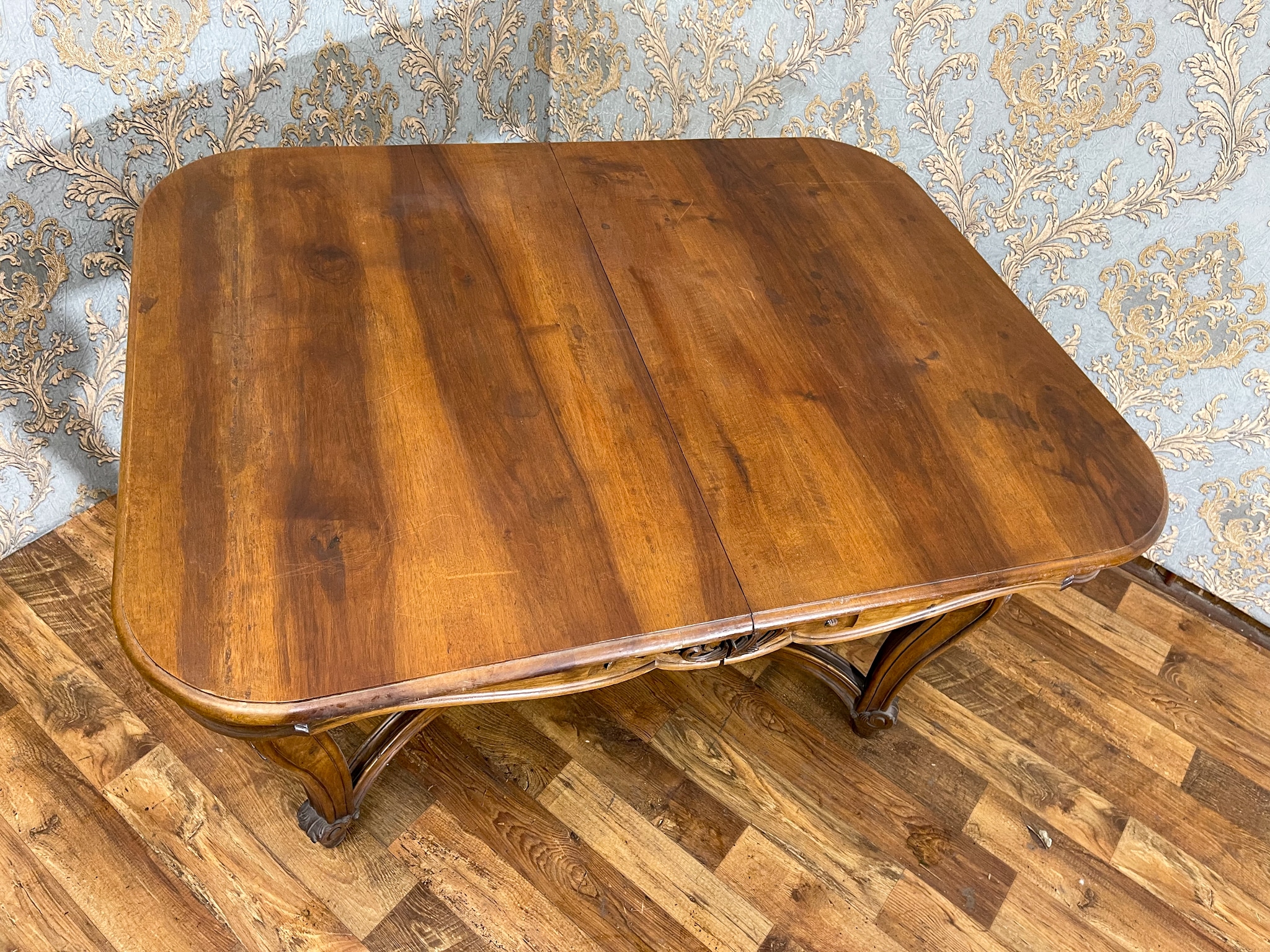
Garums 126,5 cm × platums 99,5 cm × augstums 72,5 cm. Izvelkams. Ļoti smags, masīva rieksta koka konstrukcija.
―――――――――――――――――――――
Izvelkams Rieksta Koka Ēdamgalds ar Kokgriezumiem — Luija XV stils / Neorokoko, Francija/Beļģija, ap 1860.–1900.
―――――――――――――――――――――
🏛️ IZGATAVOŠANAS PERIODS, MĀKSLAS STILS, LAIKMETS
Šis smagais un iespaidīgais ēdamgalds pieder Belle Époque laikmetam — tam ziedošajam periodam no 1871. līdz 1914. gadam, kad Eiropas labākās mājas ģērba savus interjerus vēstures lielāko stilu reinterpretācijās. Konkrētais mākslinieciskais stils šeit ir Luija XV — rocaille un kabriol tradīcija, kas 19. gadsimta otrajā pusē piedzīvoja grandiozu atdzimšanu Neorokoko formā.
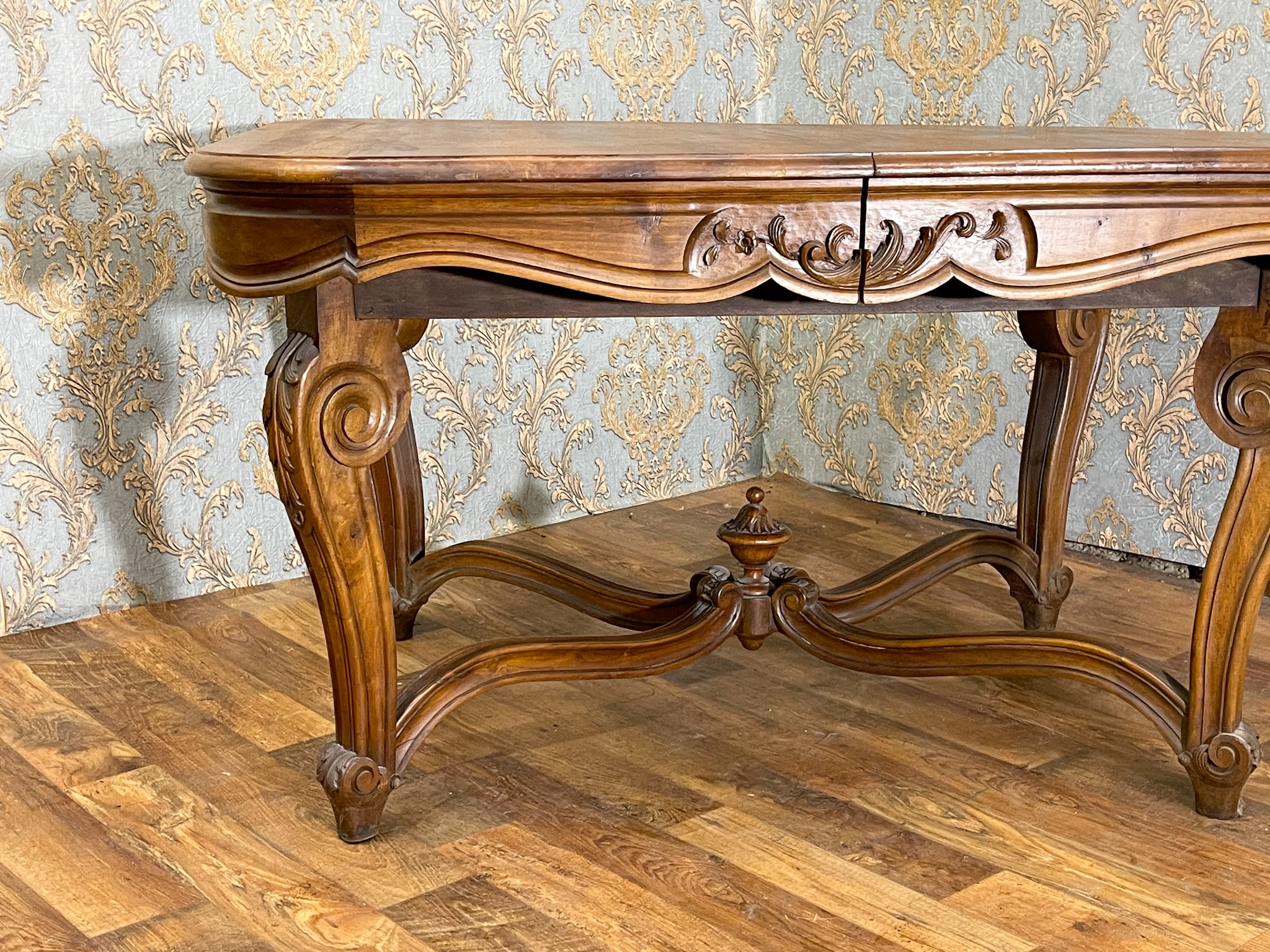
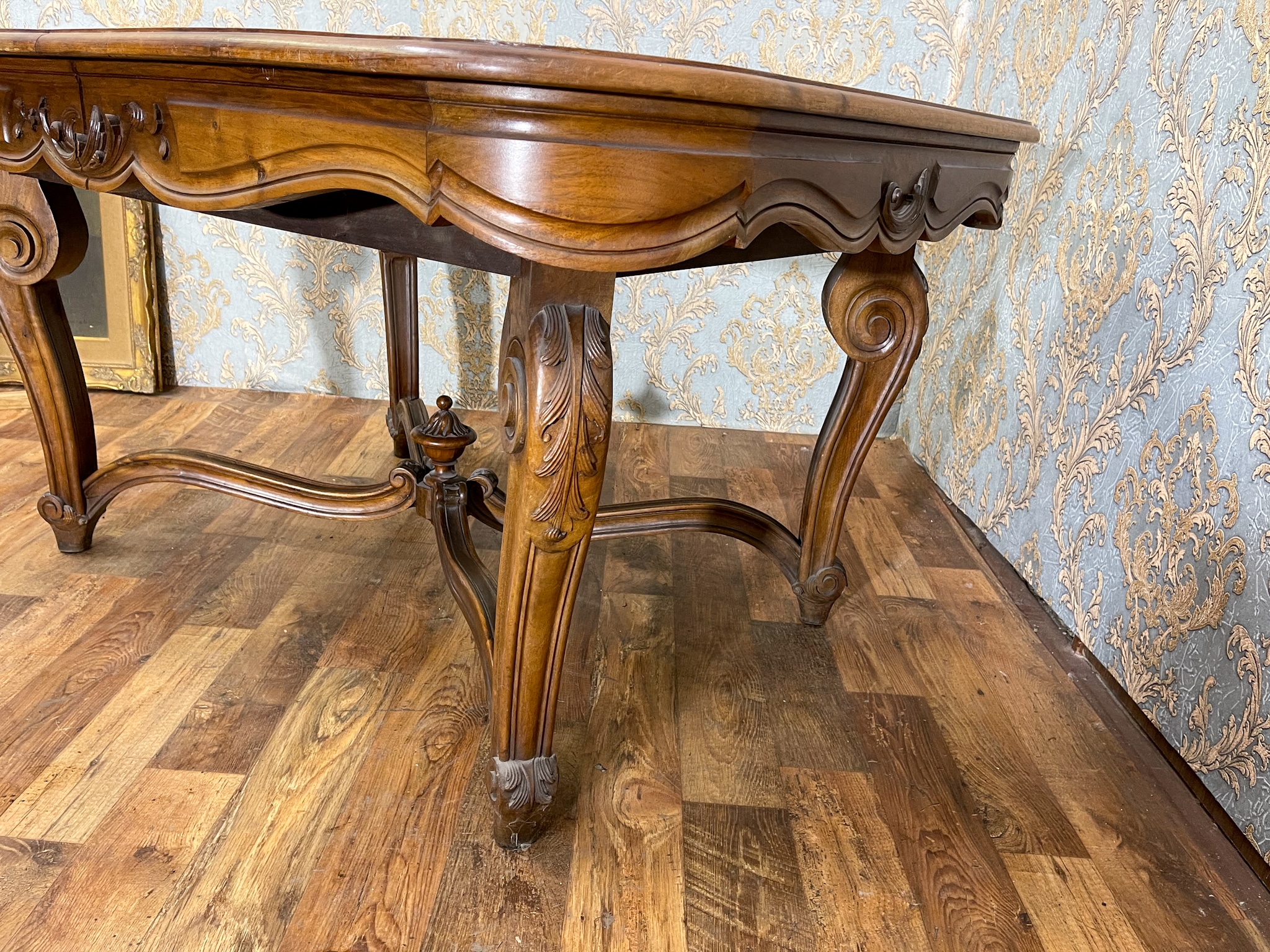
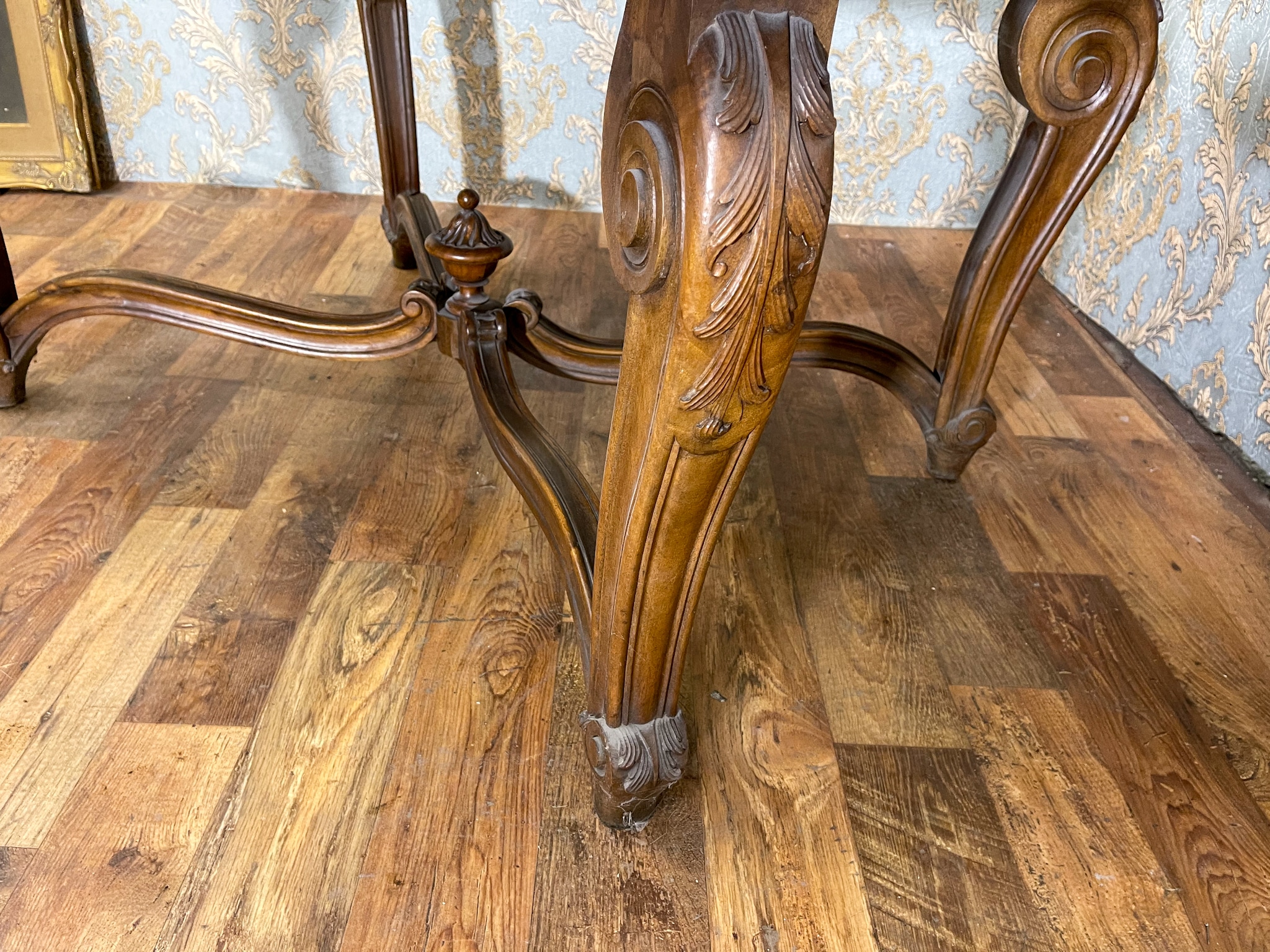
Galds runā ar 18. gadsimta franču galmiskās mēbelniecības vārdiem: izlocītā serpentīna forma galda malā, brīvi plūstošā rokoko frīze ar akantus vīteņojumiem un volūtām, masīvās kabriolkājas ar izkaltiem akantus lapu motīviem augšdaļā un elegantiem volūtu papēžiem — un to visu vainago centrālais X formas pamatnes savienojums ar urnas finiali. Katrs elements ir rokdarbs, katrs griezums — lēmums.
Šis priekšmets pieder tam auglīgajam pārejas brīdim, kad Historicisms vēl turēja savu vēsturisko bagātību, bet Belle Époque jau atnesa jaunu vieglumu un dzīves baudījuma estētiku — abas šīs noskaņas šajā galdā sadzīvo pilnīgā harmonijā.
Žils Verns tajā laikā rakstīja savu slaveno romānu Apkārt zemeslodei astoņdesmit dienās — un tieši pie šāda galda Pārijā sanāca tie, kas finansēja viņa izdevniecību, diskutēja par zinātni un literatūru, un dzēra Bordo vīnu no kristāla glāzēm. Šis galds piederēja tai pašai pasaulei.
―――――――――――――――――――――
⚜️ RAŽOTĀJS UN MANUFAKTŪRAS ZĪMOGS
Redzama zīmoga nav konstatēts. Tomēr kokgriezumu dziļums, rieksta koka kvalitāte un konstrukcijas soliditāte ļauj ar pārliecību attiecināt šo gabalu uz Francijas vai Beļģijas augstākās kategorijas ébénisterie tradīciju — mēbeļu darbnīcām, kas 19. gadsimta otrajā pusē radīja gabalu augstākajai buržuāzijai un aristokrātijai. Luija XV stila mēbeles šajā periodā bija īpaši pieprasītas Parīzē un Briselē, un labākās darbnīcas piegādāja tās gan vietējiem klientiem, gan eksportēja uz visu Eiropu. Galda izvelkamā konstrukcija liecina par praktiskuma un elegances apvienojumu — raksturīgu labākajiem ēdamistabas galdiem, kas paredzēti gan ikdienas, gan svētku maltītēm.
―――――――――――――――――――――
💎 RETUMS UN NOZĪME
Luija XV stila izvelkamie ēdamgaldi ar pilnu kabriolkāju komplektu un X pamatni ir vieni no meklētākajiem 19. gadsimta mēbeļu gabaliem starptautiskajā antikvāru tirgū. Šī galda saglabātības līmenis — īpaši kokgriezumu asums un kāju formas integritāte — to padara par īpaši vērtīgu atradumu. Kolekcionāri, kas veido autentiskus Belle Époque vai Neorokoko salonu ansambļus, šāda veida centrālos gabalus meklē ilgi.
―――――――――――――――――――――
🕯️ PIELIETOJUMS INTERJERĀ, DIZAINĀ UN FOTOGRĀFIJĀ
Ēdamistabā šis galds uzņemas galvenā aktiera lomu bez piepūles — ap to organiski veidojas telpa un noskaņa. Klasiskā vai eklektiskā interjerā tas darbojas kā enkurs; mūsdienu minimālista vidē tas kļūst par dramatisku kontrastakcentu, kas piešķir telpai dvēseli. Interjeru dizaineriem tas ir retums — funkcionāls un vienlaikus skulpturāls objekts. Fotogrāfiem galda kabriolkāju siluets un frīzes cirpumu ēnas nodrošina izcilu vizuālo dinamiku.
―――――――――――――――――――――
🎁 DĀVANA UN PERSONALIZĀCIJA
Šāda mēroga vēsturisks ēdamgalds ir reprezentatīva dāvana augstākajā līmenī — piemērots kā korporatīvs vai diplomātisks dāvinājums, kā arī kā izcils papildinājums privātai kolekcijai vai jaunas ģimenes mājas ēdamistabai, kur tas kļūs par paaudžu mantojumu.
―――――――――――――――――――――
🔍 STĀVOKLIS
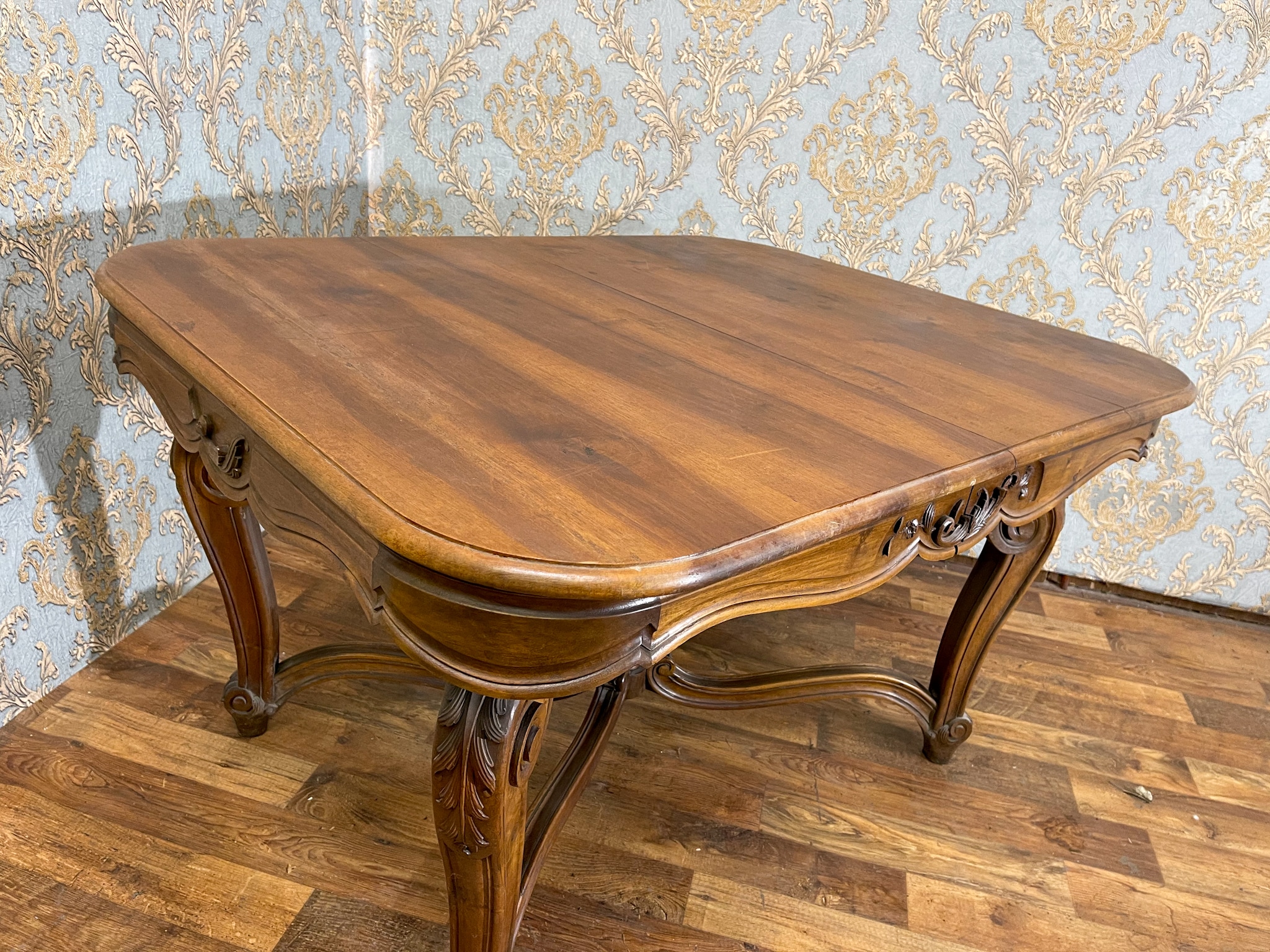
Galds ir labā vispārējā stāvoklī atbilstoši vecumam. Virsma uzrāda dzīves zīmes un nolietojuma pēdas — sīkas skrāpējumu un lietošanas zīmes, kas liecina par ilgu aktīvu dzīvi. Kokgriezumi saglabājušies ļoti labi — volūtas, akantus lapas un frīzes ornaments ir skaidri un labi definēti. Konstrukcija stabila un solīda. Lietas stāvoklis pilnībā atspoguļots fotogrāfijās.
―――――――――――――――――――――
🇬🇧 DESCRIPTION IN ENGLISH
―――――――――――――――――――――
📐 DIMENSIONS
Length 126.5 cm × width 99.5 cm × height 72.5 cm. Extendable. Extremely heavy, solid walnut construction.
―――――――――――――――――――――
Extendable Carved Walnut Dining Table — Louis XV Style / Neo-Rococo, France/Belgium, c. 1860–1900
―――――――――――――――――――――
🏛️ PERIOD, ART STYLE, EPOCH
This heavy and commanding dining table belongs to the Belle Époque — that flourishing period from 1871 to 1914 when Europe’s finest homes dressed their interiors in grand reinterpretations of history’s greatest styles. The specific artistic language here is Louis XV — the rocaille and cabriole tradition that experienced a magnificent revival in the second half of the 19th century as Neo-Rococo.
The table speaks in the vocabulary of 18th-century French court furniture: the sinuous serpentine shaping of the table edge, the freely flowing rococo apron with acanthus scrollwork and volutes, the massive cabriole legs with carved acanthus leaf motifs at the knee and elegant volute feet — all crowned by the central X-form stretcher with its urn finial. Every element is handwork; every carved line a decision.
This piece belongs to that richly productive transitional moment when Historicism still held its historical richness while the Belle Époque was already bringing a new lightness and aesthetic of life’s pleasures — both moods coexist in this table in complete harmony.
Jules Verne was writing Around the World in Eighty Days in those same years — and it was precisely at tables like this in Paris that those who financed his publisher gathered, debating science and literature over Bordeaux wine in crystal glasses. This table belonged to that same world.
―――――――――――――――――――――
⚜️ MAKER AND MARK
No visible maker’s mark has been identified. However, the depth of the carving, the quality of the walnut, and the solidity of the construction allow this piece to be attributed with confidence to the French or Belgian ébénisterie tradition at its finest — the workshops that in the second half of the 19th century produced furniture for the haute bourgeoisie and aristocracy. Louis XV style pieces were especially sought after in Paris and Brussels during this period, and the finest workshops supplied both local clients and the export market across Europe. The extendable construction reflects the combination of practicality and elegance characteristic of the best dining tables — made for both daily use and grand occasions.
―――――――――――――――――――――
💎 RARITY AND SIGNIFICANCE
Extendable Louis XV style dining tables with a full set of cabriole legs and X-form stretcher are among the most sought-after 19th-century furniture pieces on the international antiques market. The level of preservation here — particularly the sharpness of the carving and the integrity of the leg forms — makes this an especially valuable find. Collectors assembling authentic Belle Époque or Neo-Rococo salon ensembles search long for centrepieces of this quality.
―――――――――――――――――――――
🕯️ USE IN INTERIORS, DESIGN AND PHOTOGRAPHY
In a dining room this table assumes the role of the principal actor without effort — the space and atmosphere organise themselves around it naturally. In a classical or eclectic interior it serves as an anchor; in a contemporary minimalist setting it becomes a dramatic counterpoint that gives the room a soul. For interior designers it is a rarity — functional and simultaneously sculptural. For photographers, the silhouette of the cabriole legs and the carved shadows of the apron provide exceptional visual dynamism.
―――――――――――――――――――――
🎁 GIFT AND PERSONALISATION
A historic dining table of this scale is a representative gift at the highest level — appropriate as a corporate or diplomatic presentation, or as an outstanding addition to a private collection or a new family home, where it will become a treasured heirloom across generations.
―――――――――――――――――――――
🔍 CONDITION
The table is in good overall condition consistent with its age. The surface shows honest signs of wear and use — minor marks and scratches that speak of a long and active life. The carved decoration is very well preserved throughout — the volutes, acanthus leaves, and apron ornament remain crisp and clearly defined. The structure is solid and stable throughout. The condition of the item is fully reflected in the photographs.