
Ozolkoka Vitrīna ar Skulpturālo Griešanu un Senajiem Stikliem — Neorokoko, Francija/Beļģija, 19.gs. (5659)
Ozolkoka Vitrīna ar Skulpturālo Griešanu un Senajiem Stikliem — Neorokoko, Francija/Beļģija, 19.gs. (5659)
€2,200.00
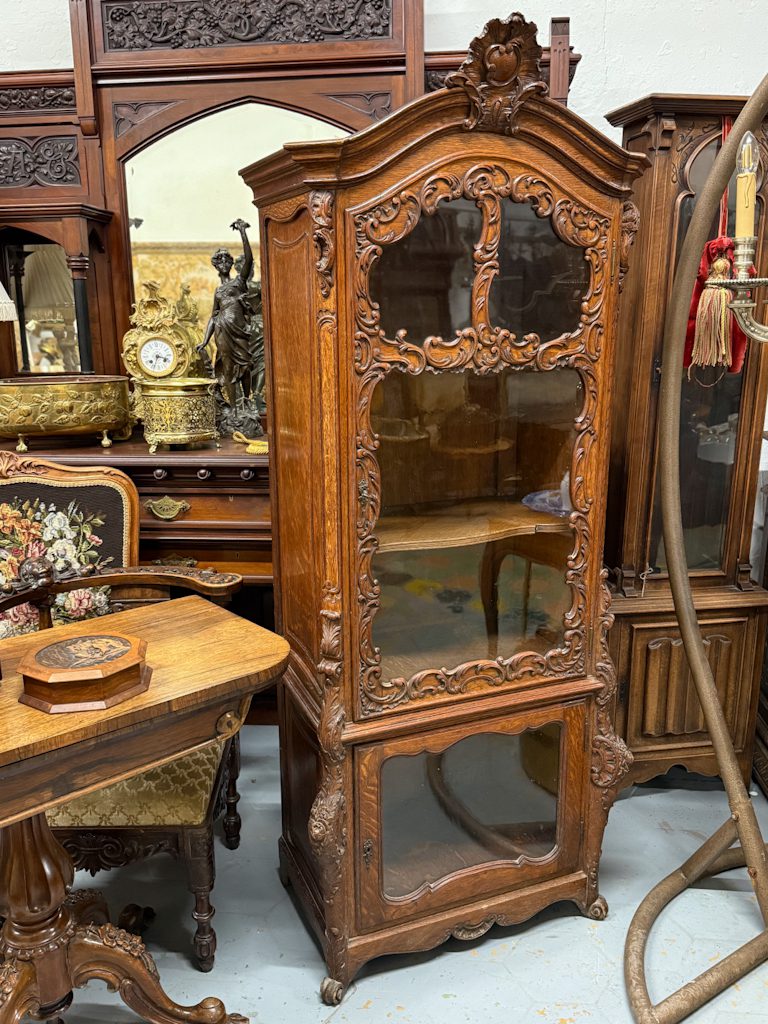
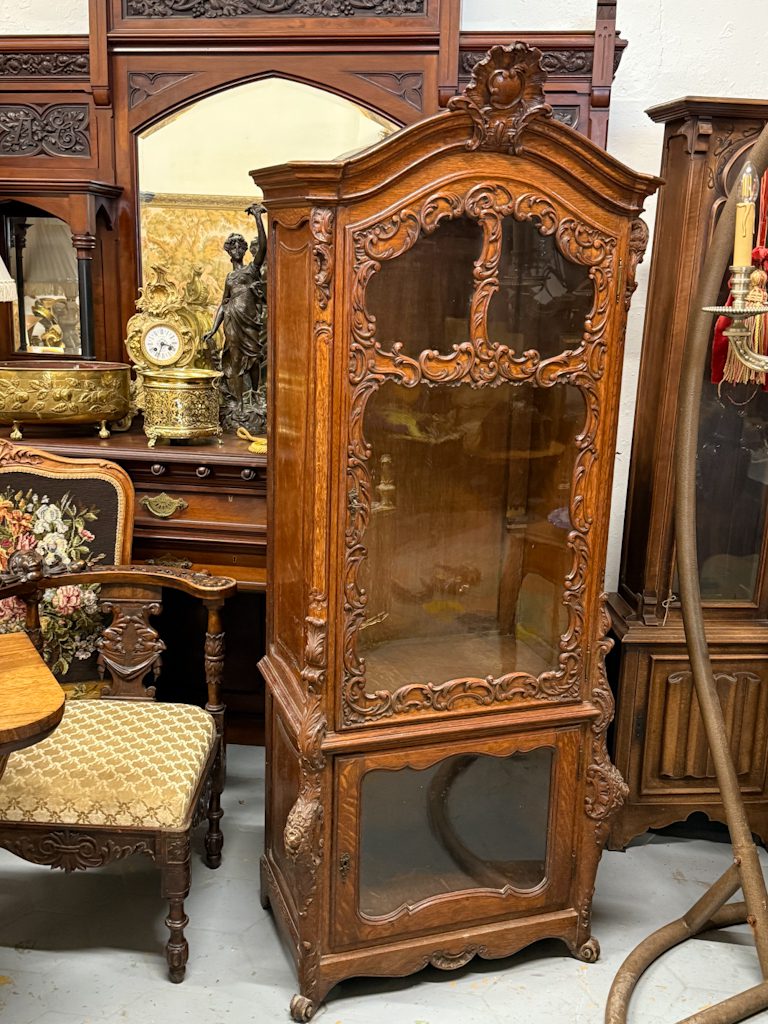
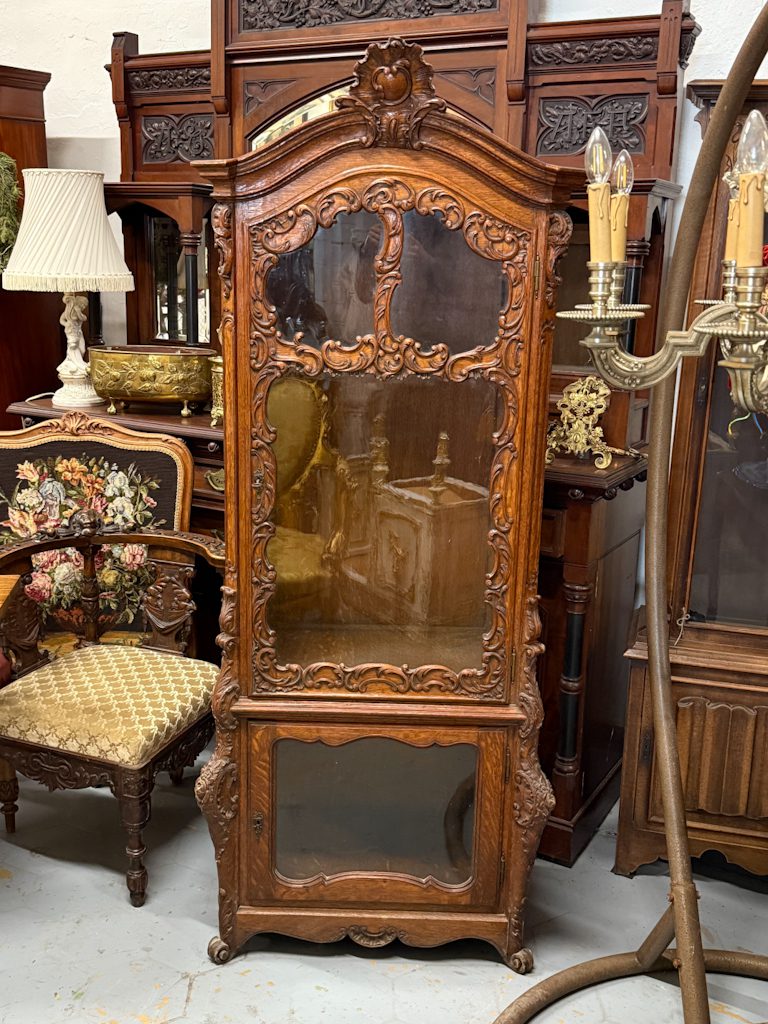
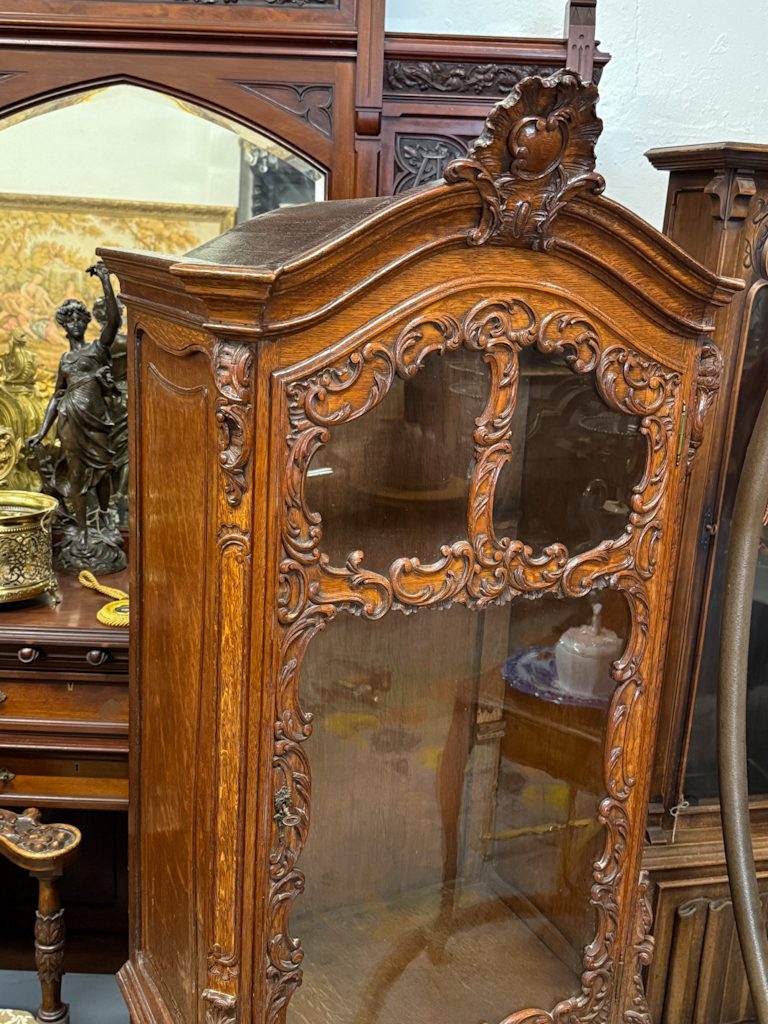
Masīva ozolkoka vitrīna ar bagātīgu roku griešanu rocaille un akantus ornamentā, senajiem viļņainajiem stikliem un izliektiem plauktiem iekšpusē. Neorokoko / Luija XV stils, Francija vai Beļģija, ap 1880.–1900. Augstums 179 cm × platums 72 cm × dziļums 47 cm.
―――――――――――――――――――――
📐 IZMĒRI Augstums 179 cm × platums 72 cm × dziļums 47 cm.
―――――――――――――――――――――
Ozolkoka Vitrīna ar Bagātīgu Skulpturālo Griešanu un Senajiem Stikliem — Neorokoko / Luija XV stils, Francija vai Beļģija, ap 1880.–1900.
―――――――――――――――――――――
🏛️ IZGATAVOŠANAS PERIODS, MĀKSLAS STILS, LAIKMETS
Šī vitrīna pieder tam auglīgajam 19. gadsimta nogales periodam, kad Historicisms un Neorokoko sasniedza savu dekoratīvo kulmināciju — kad franču un beļģu galdnieki ar neparastu meistarlību atdzīvināja Luija XV laikmeta (Louis XV) mēbeļu valodu, ietērpjot to masīvā ozolkokā ar rokdarba apjomu un precizitāti, kas bija tipiska labākajām rūpnīcām Lionā, Lježā un Briseles rajonā.
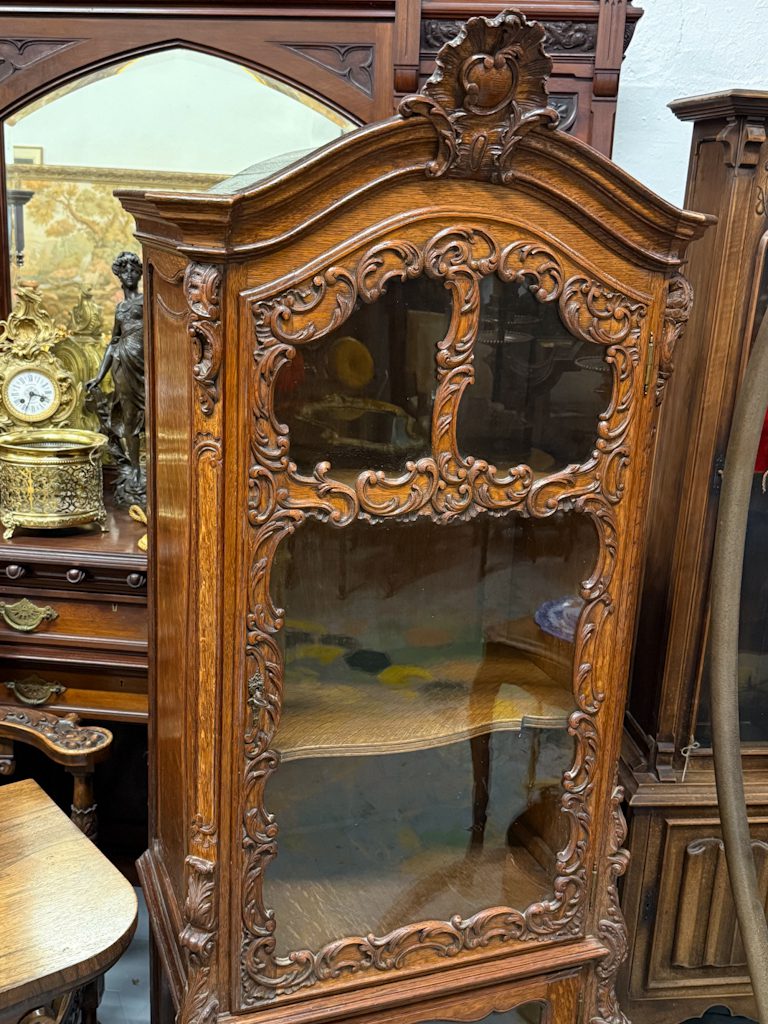
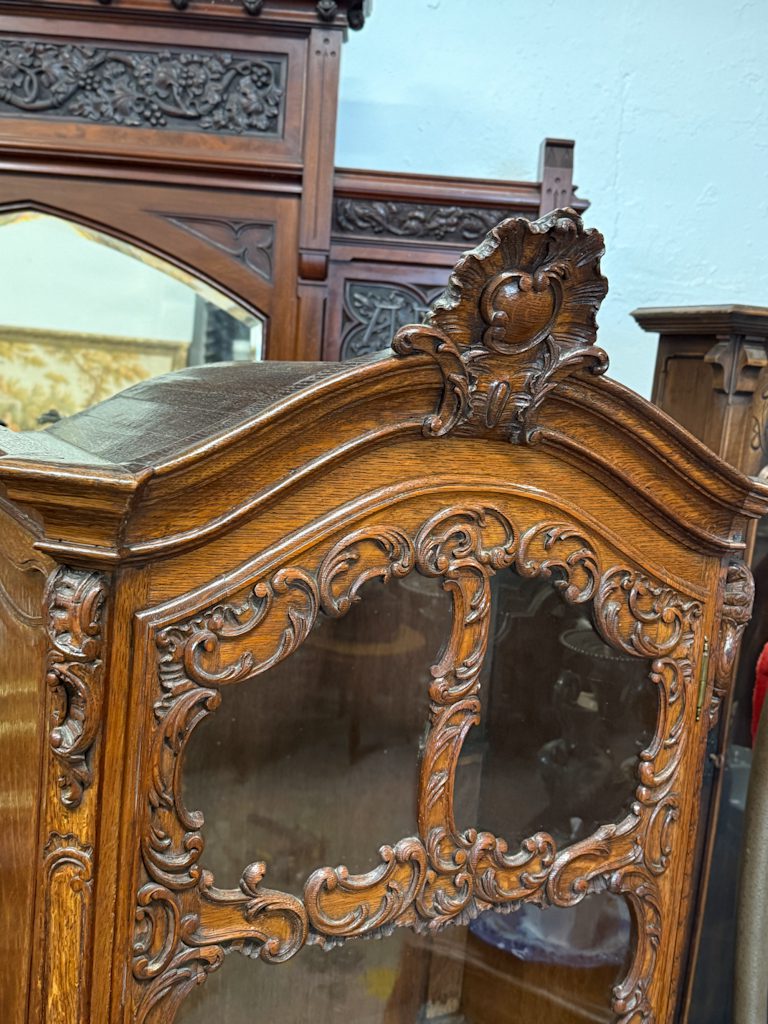
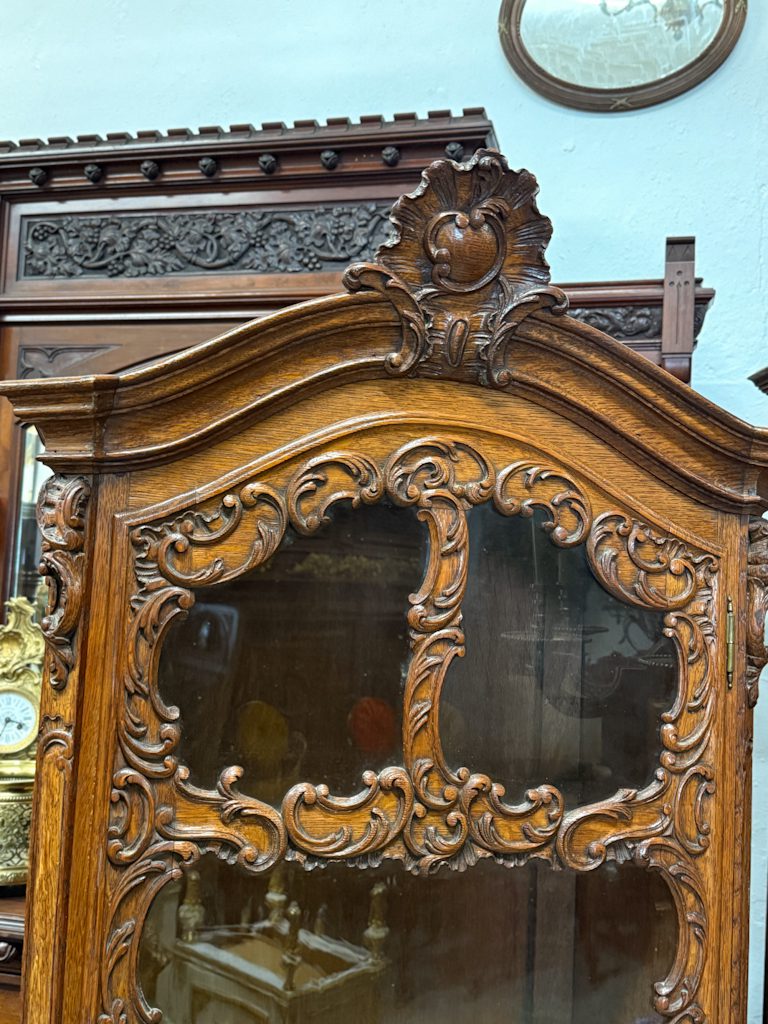
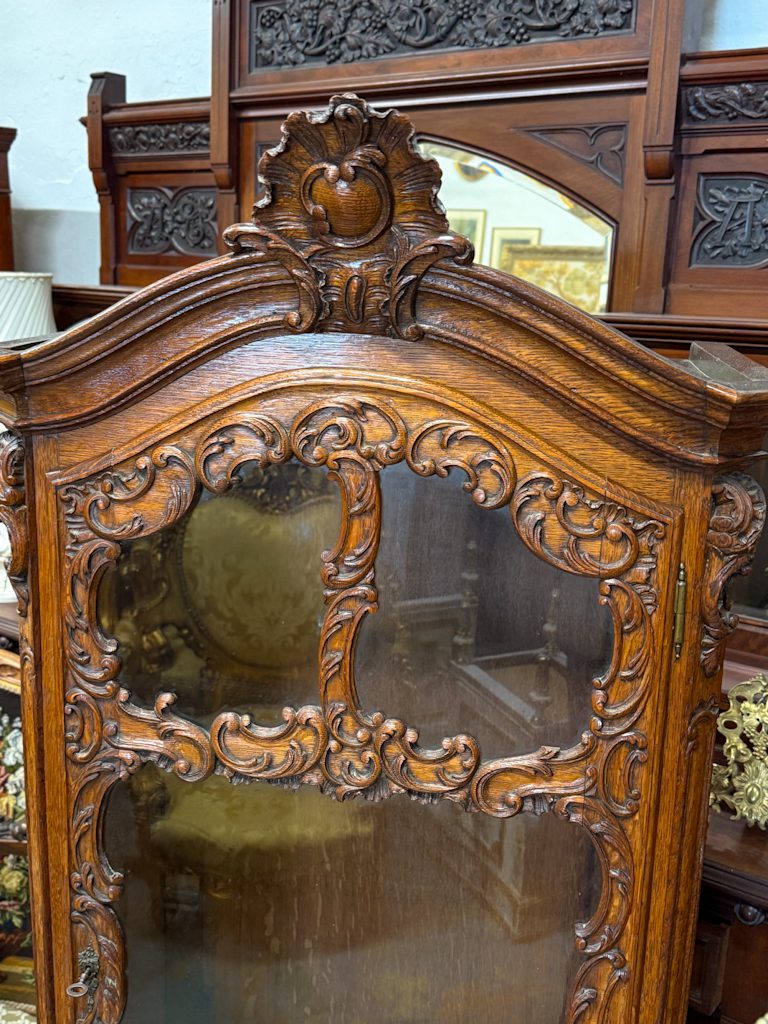
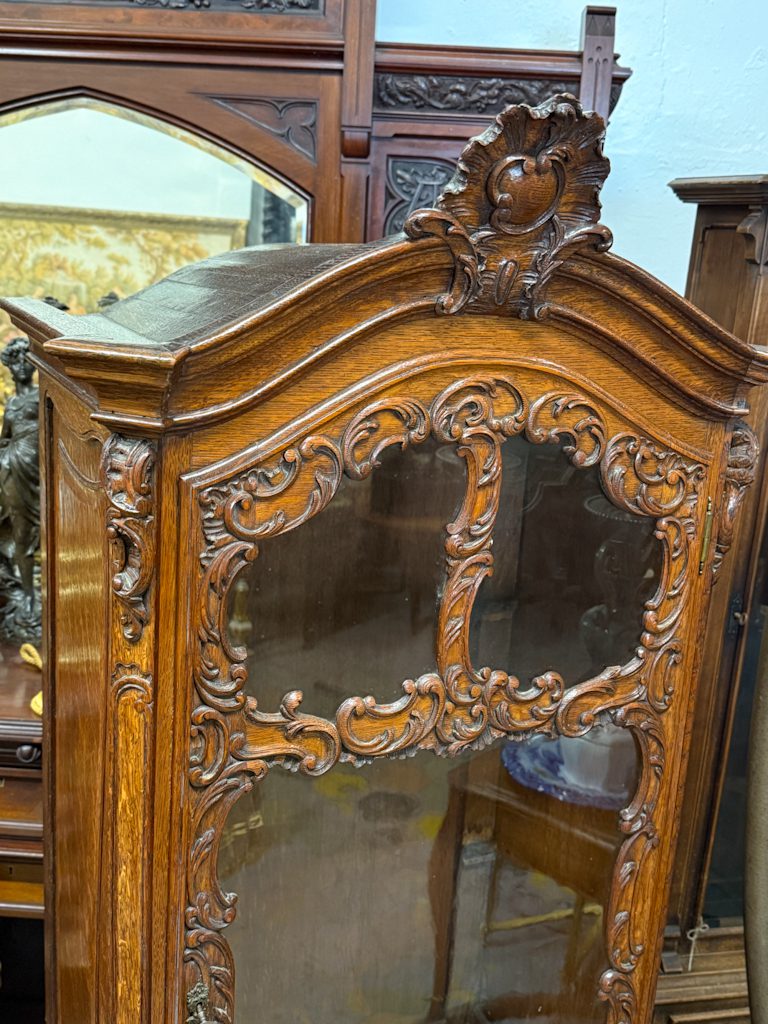
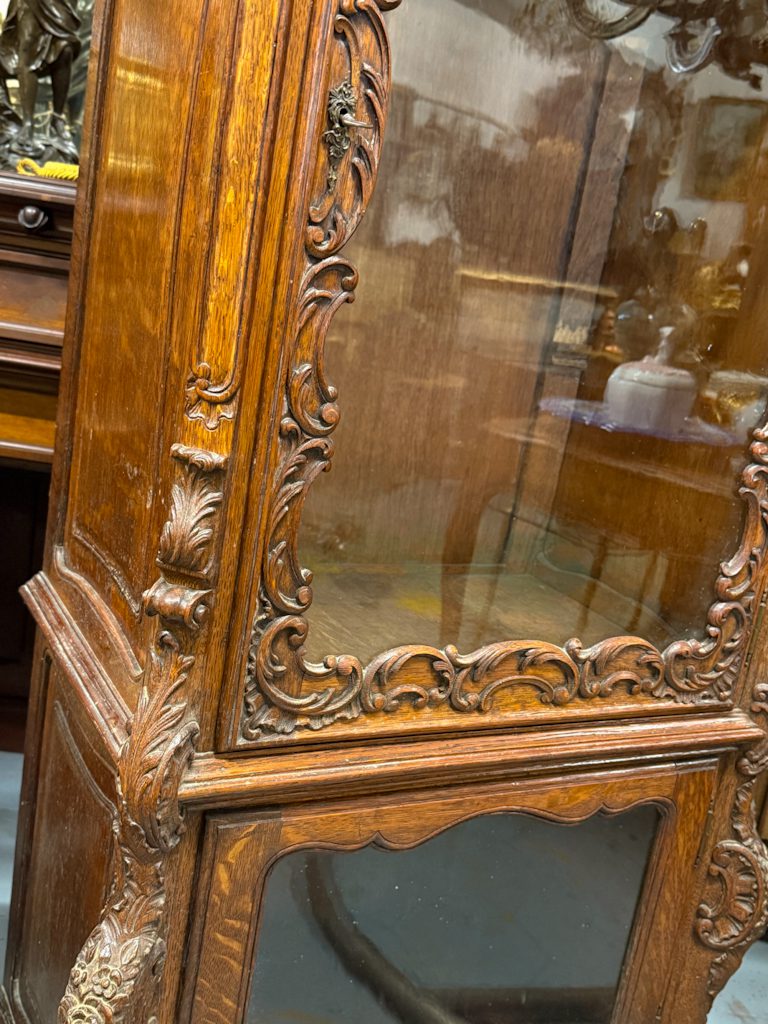
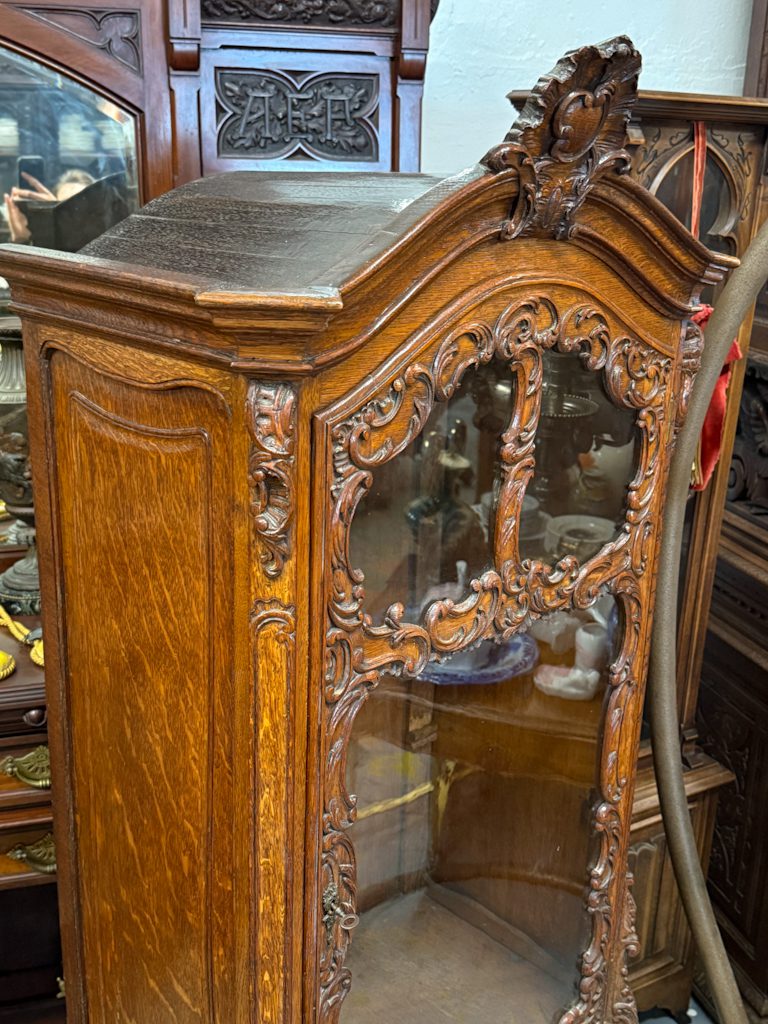
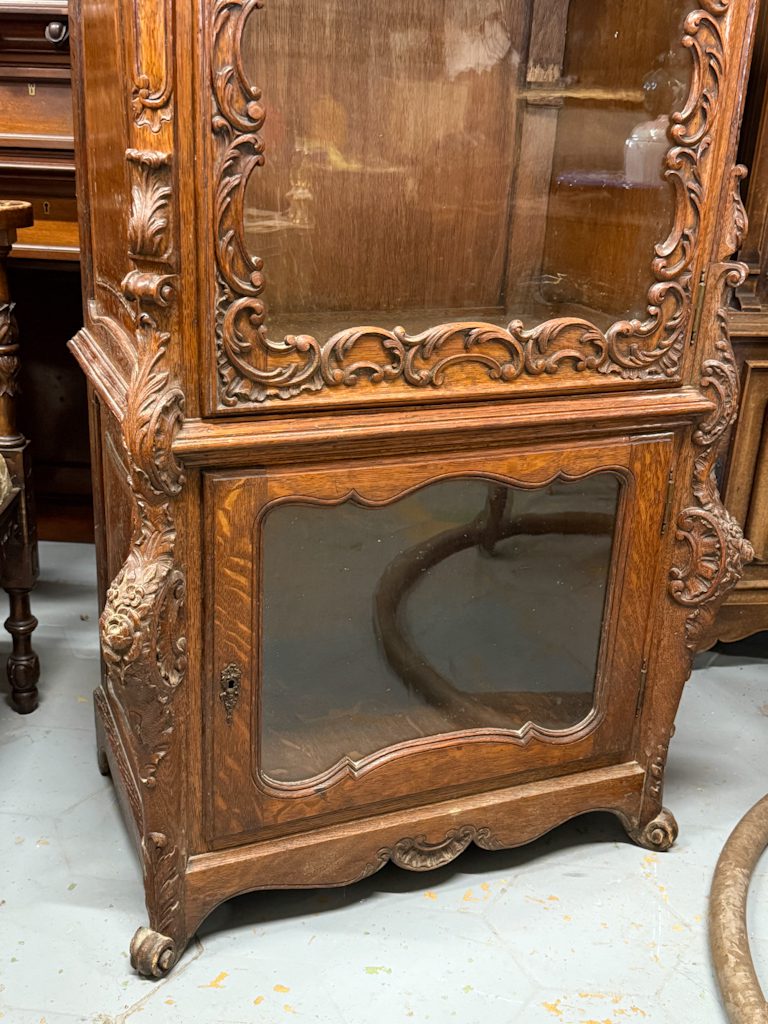
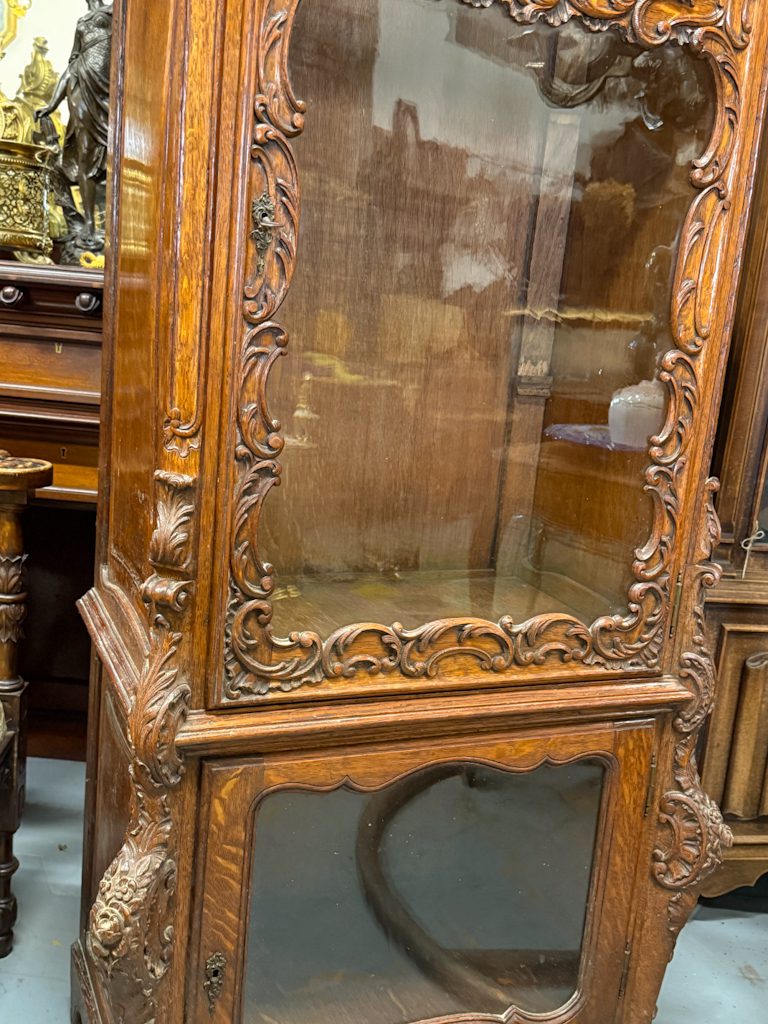
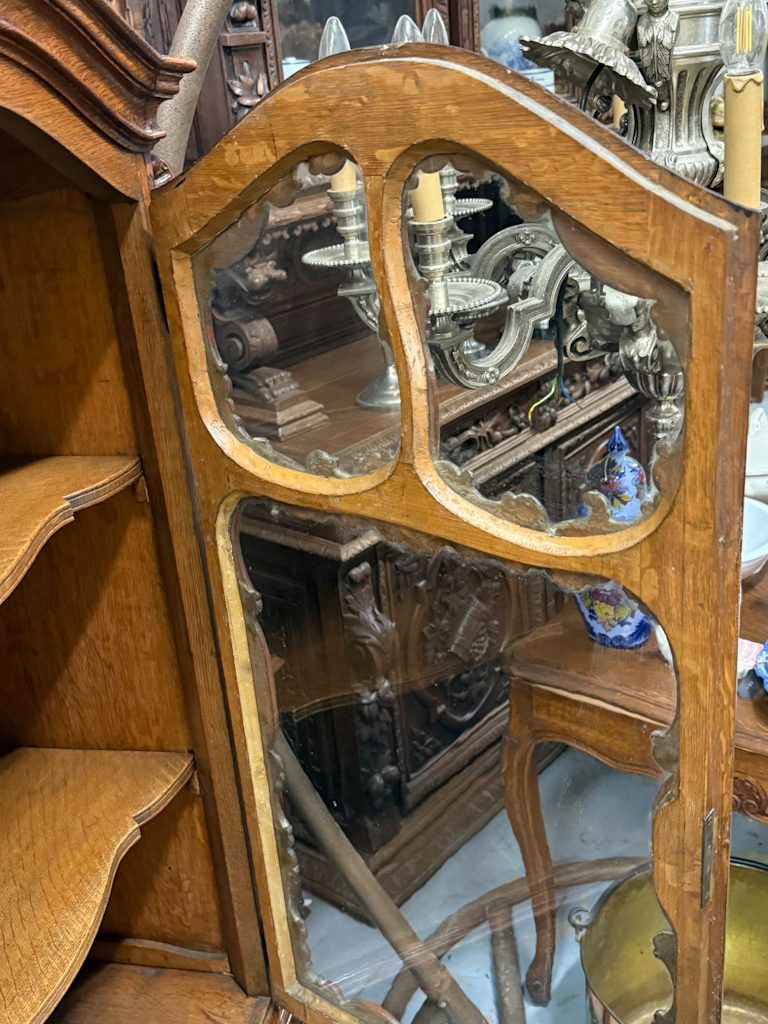
Korpuss — masīvs chêne (ozols), ar izteiktu dabiskā koka tekstūru, kas izgriešanai piešķir papildu dziļumu un dzīvīgumu. Vitrīnas priekšpuse veidota kā vienlaidu kompozīcija: augšdaļā — bombé (izliekta) fasāde ar lielu stikla logu, kura rāmi ieskauj blīvs rocaille ornaments ar akantus lapu virtenēm un asimetriskiem volutu papildinājumiem — klasisks Rokokō valodas elements. Durvju augšdaļā — papildu ovāls stikla laukums ar rāmi, kas atstāj iespaidu par sarežģītu kartušu (cartouche) veidojumu.
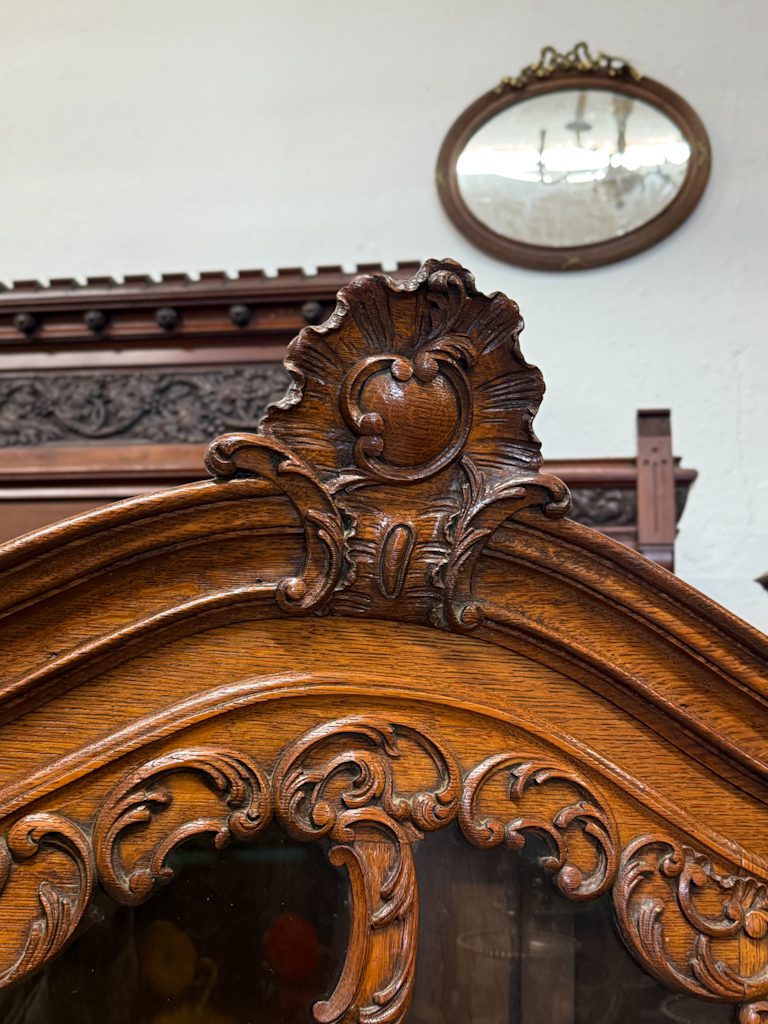
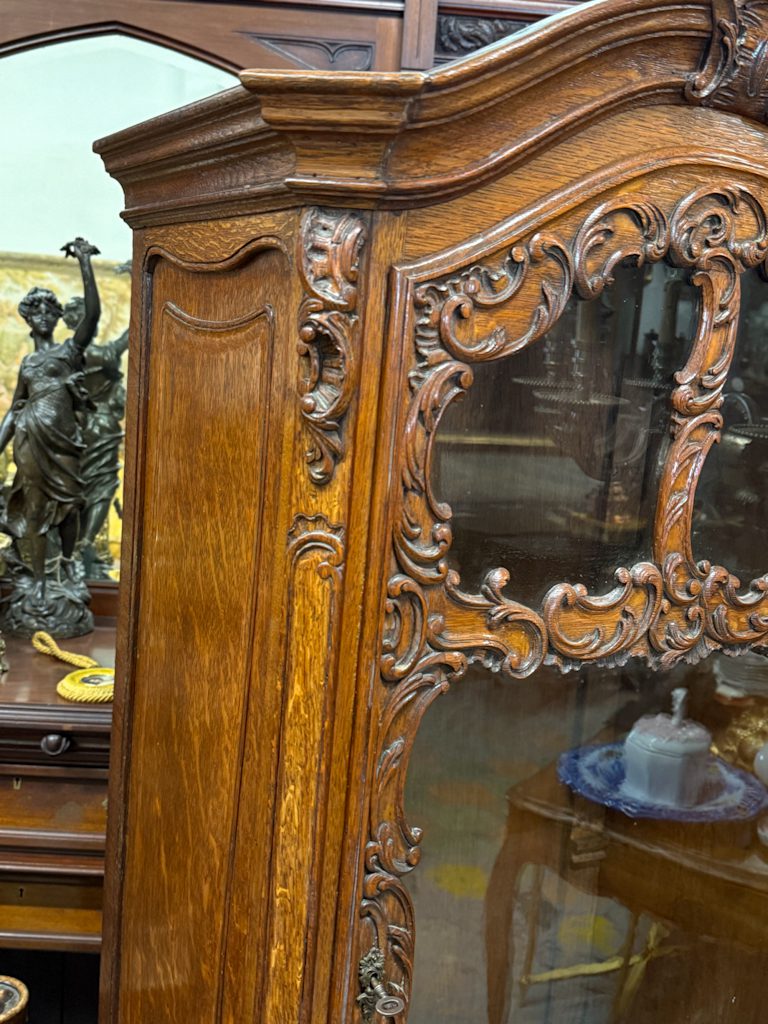
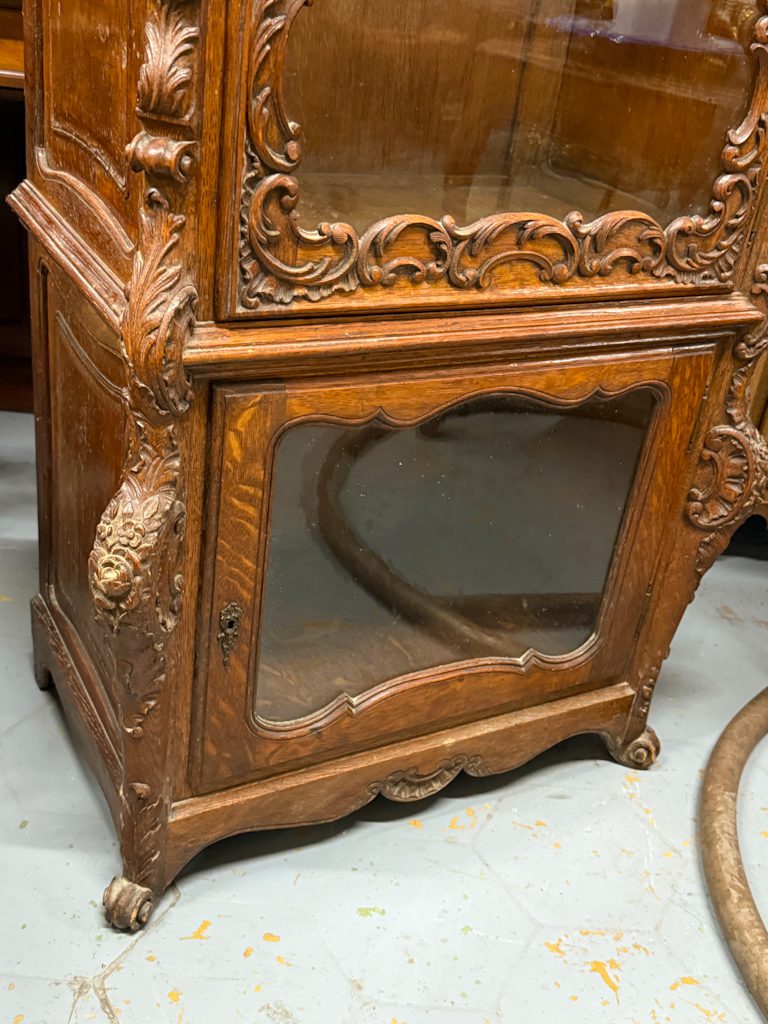
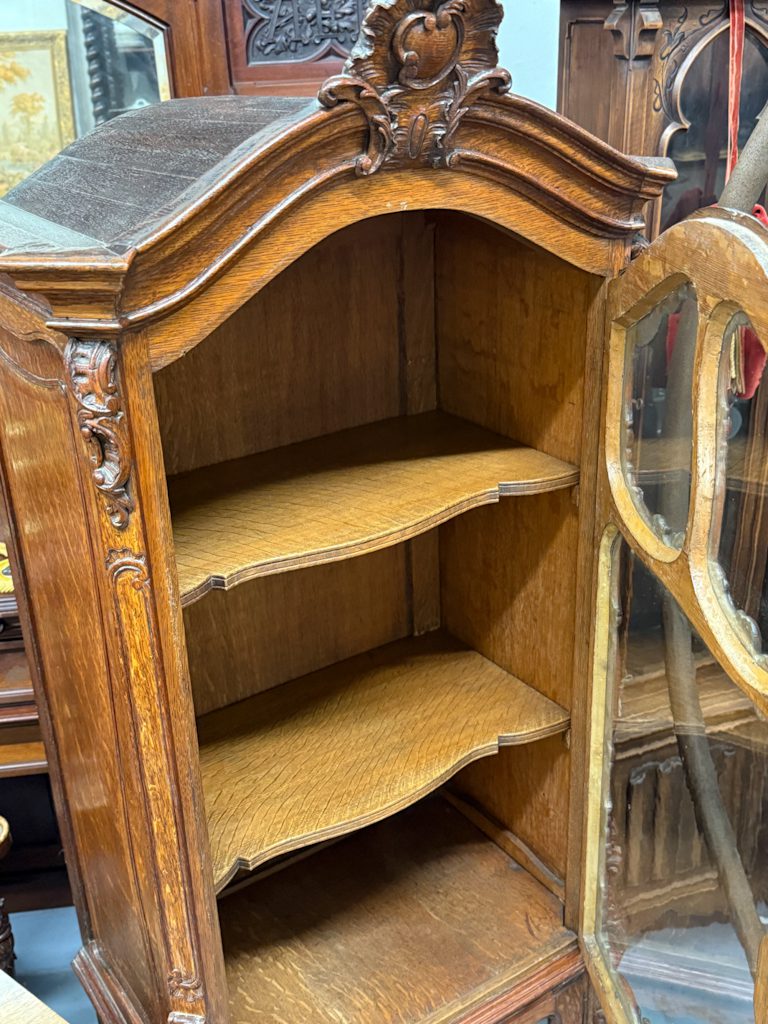
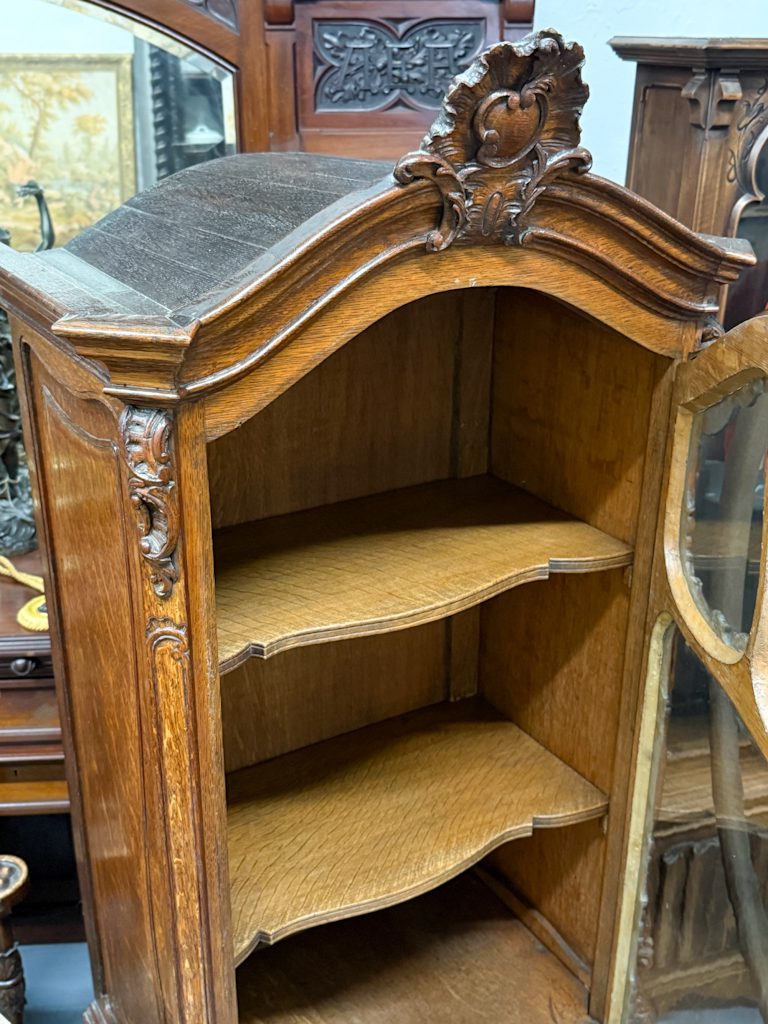
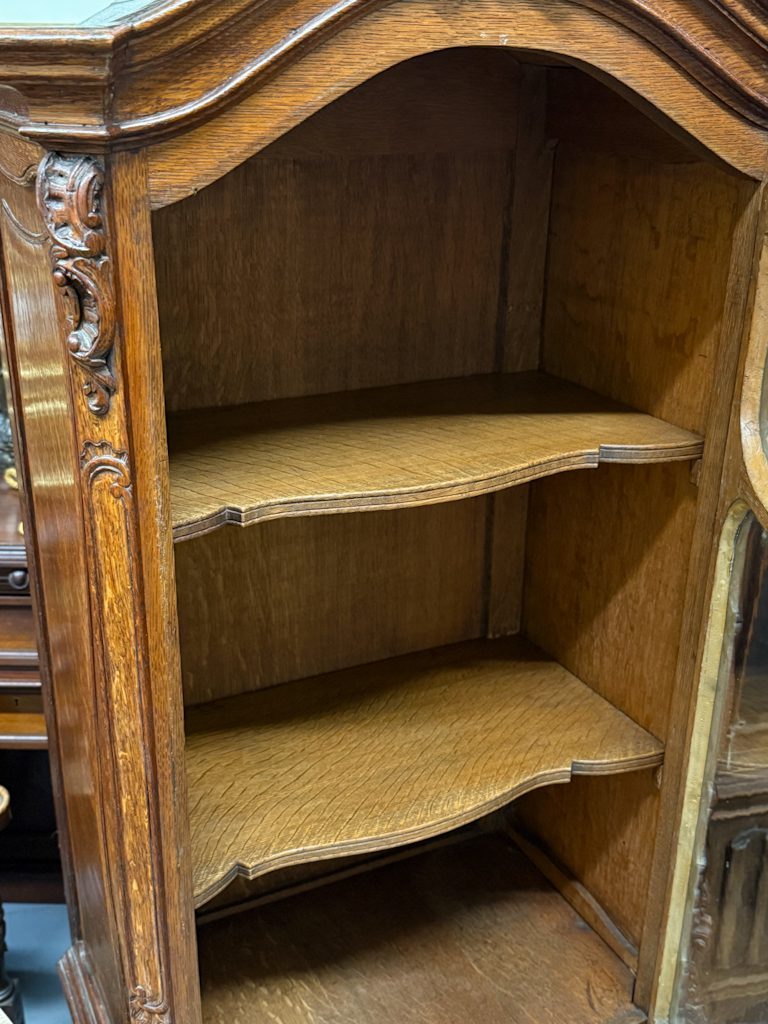
Jumta fronton beidzas ar monumentālu centrālo rokaju (rocaille) akmens formas kroņa motīvu — izciļņu, kas atgādina izplaukušu gliemežvāku apvienojumā ar lapu ritmu — viena no izsmalcinātākajām Neorokoko galdniecības kulminācijām. Stūru vertikālie stabi — ar dziļi izgrieztu akantus lapu ornamentiku. Apakšdaļā — atsevišķs mazāks aizstiklots sektors ar savu slēdzamo durtiņu. Iekšpusē — divi izliekti (serpentine) noapaļoti plaukti. Kājas — izliektas cabriole tipa ar smalki izgrieztiem papēžiem.
Stikli — senie, ar viegliem viļņojumiem un optiskajiem efektiem, kas apliecina to 19. gs. izcelsmi un piešķir skatam papildu romantiku.
―――――――――――――――――――――
⚜️ RAŽOTĀJS UN MANUFAKTŪRAS ZĪMOGS
Marķējuma nav redzams. Konstrukcija, ozolkoka izvēle un griešanas stils norāda uz Franciju vai Beļģiju — abas valstis bija vadošie Louis XV un Neorokoko mēbeļu ražošanas centri 19. gadsimta otrajā pusē. Francijā šāda tipa mēbeles ražoja tādos centros kā Liona (Lyon) un Parīze; Beļģijā — Lježa (Liège) un Brisele (Bruxelles) bija pazīstamas ar augstvērtīgu ozolkoka mēbeļu eksportu visā Eiropā, tostarp uz Krievijas impērijas un Baltijas tirgiem.
Šāda tipa vitrīnas atradās labākajos Parīzes interjera veikalos un tika pasūtītas aristokrātiskiem saloniem, advokātu un ārstu darba kabinetiem, kā arī bagātīgi iekārtotiem bourgeois mājokļiem.
―――――――――――――――――――――
💎 RETUMS UN NOZĪME
Vitrīnas ar tik intensīvu un koherentu griešanas programmu — kur ornaments nav tikai dekorācija, bet strukturāli organisks — ir ievērojami retākas nekā standarta 19. gs. mēbeles. Šis eksemplārs izceļas ar īpaši augstu galdnieku darba līmeni: griešana nav stampēta vai lieta, bet ar roku darināta, ar raksturīgu dzīvīgumu un nelielu asimetriju, kas piešķir tai autentiskas mākslas darba vērtību. Pieprasīts kolekcionāru un interjera dizaineru vidū visā Eiropā.
―――――――――――――――――――――
🕯️ PIELIETOJUMS INTERJERĀ, DIZAINĀ UN FOTOGRĀFIJĀ
Šī vitrīna ir interjera paziņojums — nevis mēbele, bet centrālais akords telpā. Lieliski iekļaujas klasiskā franču, eklektiskā, romantiskā vai neoklasicistiskā interjerā. Var kalpot kā keramikas, stikla, grāmatu vai citu kolekciju eksponēšanas telpa. Interjera dizaineri izmanto šāda tipa mēbeles kā sala elementu dzīvojamā istabā vai bibliotēkā. Fotogrāfiem — izcila rekvizītu un fona siena ar dziļu vizuālo sarežģītību.
―――――――――――――――――――――
🎁 DĀVANA UN PERSONALIZĀCIJA
Monarhiska dāvana — reprezentatīva gan kā korporatīva, gan kā personiska. Šādu mēbeli dāvina ar nozīmi — tā ir paziņojums par gaumi, vērtībām un cieņu pret saņēmēju. Piemērota kā īpaša dāvana mājas iekārtošanas gadījumā, interjera atjaunošanas vai kolekcijas sākšanas kontekstā.
―――――――――――――――――――――
🔍 STĀVOKLIS
Vitrīna kopumā labā un konstruktīvi stabilā stāvoklī. Koka virsma ar vecuma patīnu un nelielu nolietojumu, kas atbilst tās vecumam — bez būtiskiem bojājumiem griešanas ornamentā. Senie stikli saglabāti ar viļņaino optiku un liecina par oriģinalitāti. Durvju eņģes un slēdzenes darbojas. Iekšējie plaukti — labā stāvoklī. Lietas stāvoklis pilnībā atspoguļots fotogrāfijās.
―――――――――――――――――――――
🇬🇧 DESCRIPTION IN ENGLISH
―――――――――――――――――――――
📐 DIMENSIONS Height 179 cm × width 72 cm × depth 47 cm.
―――――――――――――――――――――
Oak Display Cabinet with Rich Sculptural Carving and Period Glass — Neo-Rococo / Louis XV Style, France or Belgium, circa 1880–1900.
―――――――――――――――――――――
🏛️ PERIOD, ARTISTIC STYLE, ERA
This cabinet belongs to that fertile late 19th-century period when Historicism and Neo-Rococo reached their decorative culmination — when French and Belgian cabinetmakers revived the Louis XV furniture vocabulary with extraordinary skill, rendering it in solid oak with a depth of hand-carving typical of the finest workshops in Lyon, Liège, and the Brussels region.
The body is solid chêne (oak), with a pronounced natural grain that lends additional depth and vitality to the carving. The front elevation is conceived as a unified composition: the upper section features a bombé (bowed) facade with a large glazed door, its frame enveloped in dense rocaille ornament with acanthus leaf tendrils and asymmetric volute scrolls — quintessential Rococo language. The door’s upper register is further divided by an ovoid glazed panel framed to resemble an elaborate cartouche.
The bonnet pediment terminates in a monumental central rocaille crown motif — a sculptural eruption evoking an opened shell combined with cascading leaf rhythms — one of the most refined achievements of Neo-Rococo cabinetmaking. The corner stiles carry deeply cut acanthus leaf carving throughout. The lower section has a separate smaller glazed compartment with its own lockable door. Inside — two shaped serpentine shelves. The feet are curved cabriole type with finely carved knees.
The glazing is period glass, with gentle undulations and optical effects confirming its 19th-century origin and lending an additional romanticism to the display.
―――――――――――――――――――――
⚜️ MAKER AND MANUFACTURER’S MARK
No maker’s mark is visible. The construction, choice of oak, and carving style point to France or Belgium — both leading centres of Louis XV and Neo-Rococo furniture production in the second half of the 19th century. In France, such pieces were produced in Lyon and Paris; in Belgium, Liège and Brussels were renowned for high-quality oak furniture exported throughout Europe, including to Imperial Russian and Baltic markets. Cabinets of this type were found in the finest Parisian interior shops and commissioned for aristocratic salons, lawyers’ and physicians’ studies, and affluent bourgeois residences.
―――――――――――――――――――――
💎 RARITY AND SIGNIFICANCE
Display cabinets with such an intense and coherent carving programme — where the ornament is not merely decorative but structurally organic — are considerably rarer than standard 19th-century furniture. This example stands out for its exceptionally high level of craftsmanship: the carving is not stamped or cast, but hand-executed, with the characteristic vitality and slight asymmetry that gives it the value of an authentic work of art. In demand among collectors and interior designers throughout Europe.
―――――――――――――――――――――
🕯️ USE IN INTERIORS, DESIGN AND PHOTOGRAPHY
This cabinet is an interior statement — not merely a piece of furniture, but the central chord of a room. It integrates beautifully into classical French, eclectic, romantic, or neoclassical interiors. It may serve as a display space for ceramics, glassware, books, or other collections. Interior designers use pieces of this type as a focal island element in a drawing room or library. For photographers and set designers — an outstanding backdrop and prop with deep visual complexity.
―――――――――――――――――――――
🎁 AS A GIFT
A gift of monarchic register — representative in both corporate and personal contexts. A piece of this kind is given with intention — it is a declaration of taste, values, and respect for the recipient. Appropriate as an exceptional gift for a home furnishing occasion, an interior renovation, or the beginning of a collection.
―――――――――――――――――――――
🔍 CONDITION
The cabinet is in overall good and structurally stable condition. The wood surface carries age-appropriate patina and minor wear consistent with its period — with no significant damage to the carved ornament. The period glass is intact, retaining its characteristic undulation and confirming originality. Door hinges and locks are functional. Interior shelves are in good condition. The condition of the item is fully reflected in the photographs.
―――――――――――――――――――――