Apsudrabotu Svečturu Pāris ar Akantus Lapu Dekoru — Neobaroks, Francija/Beļģija, 19.gs. (5308)
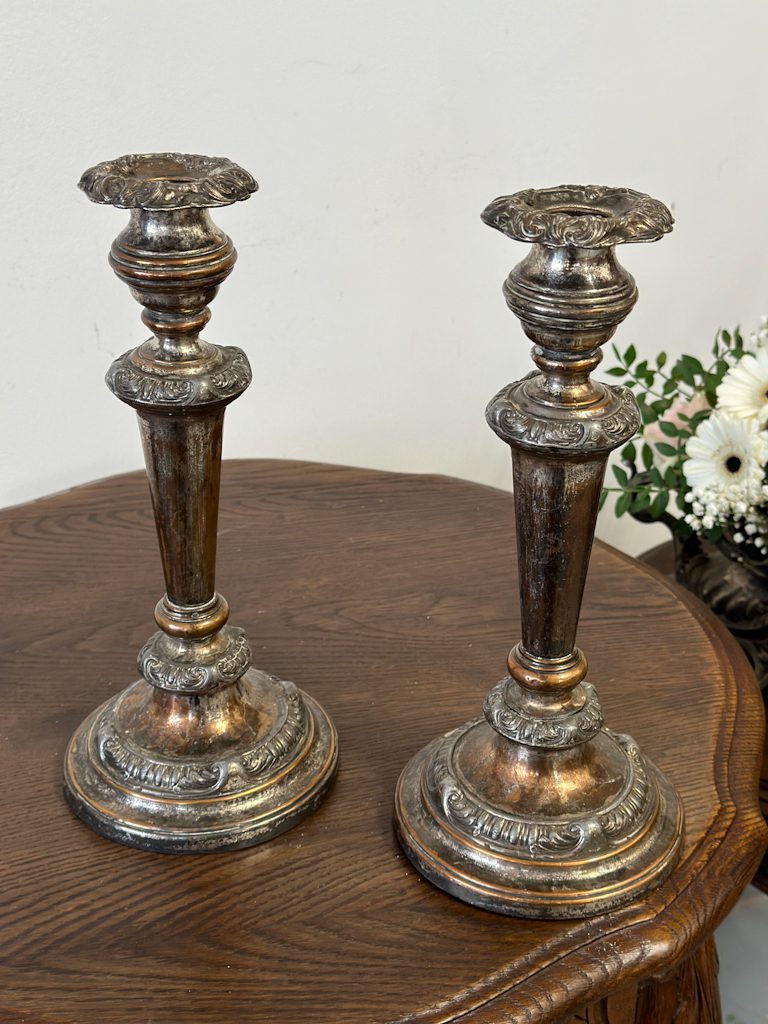
Apsudrabotu Svečturu Pāris ar Akantus Lapu Dekoru — Neobaroks, Francija/Beļģija, 19.gs. (5308)
€320.00
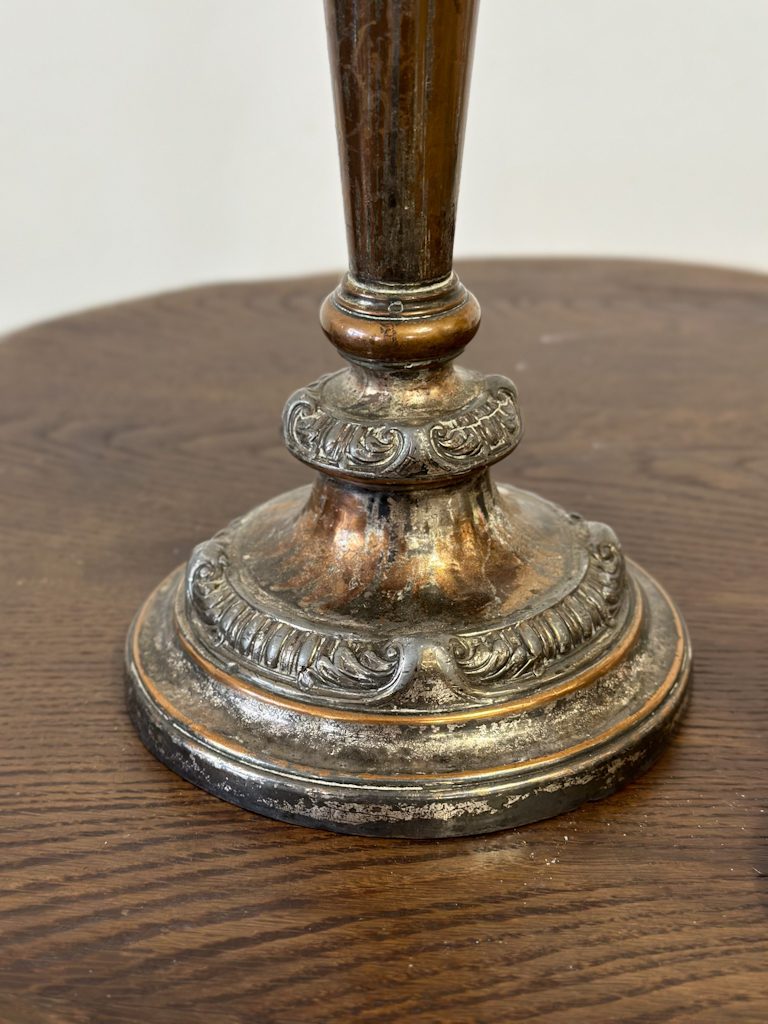
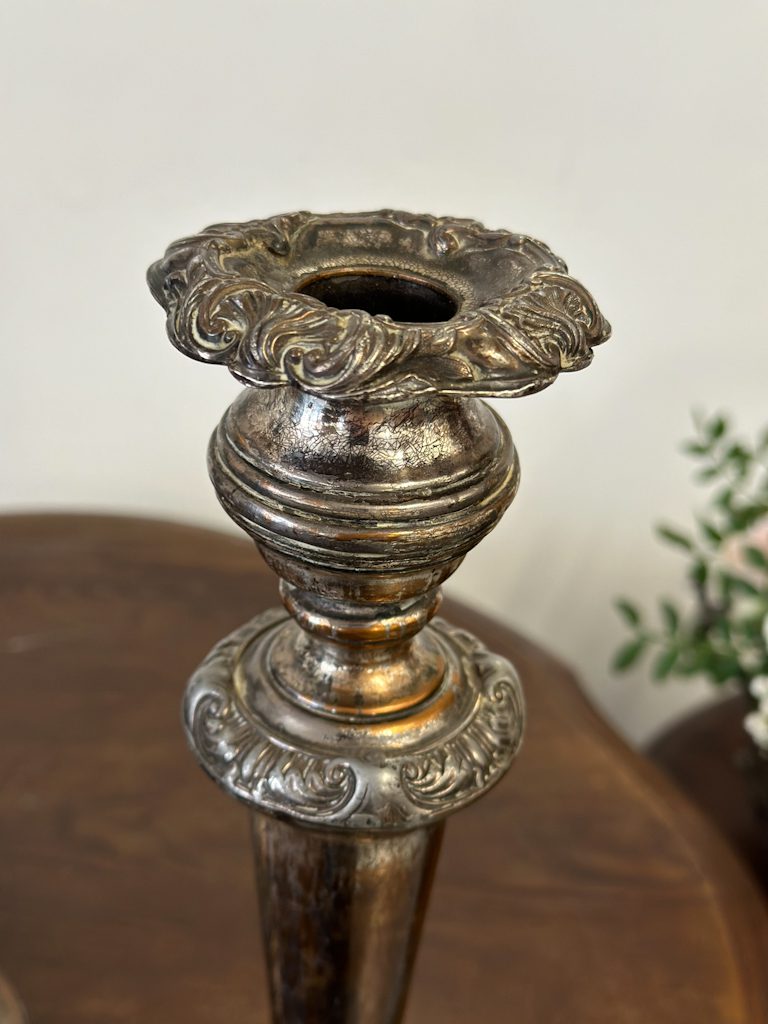
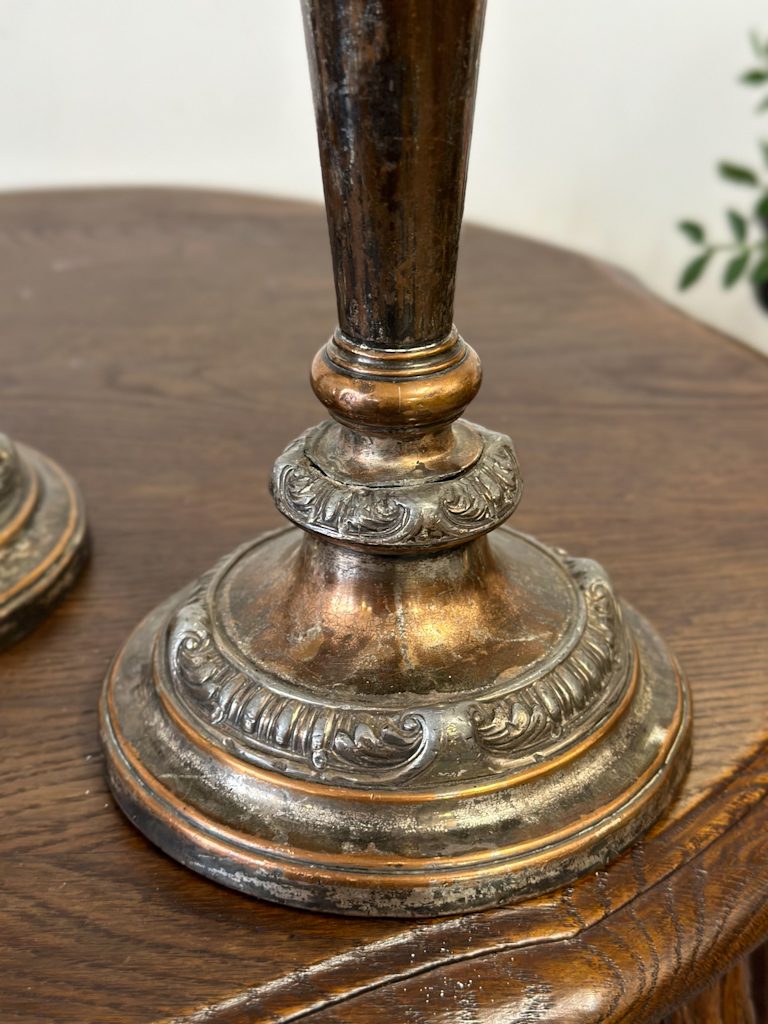
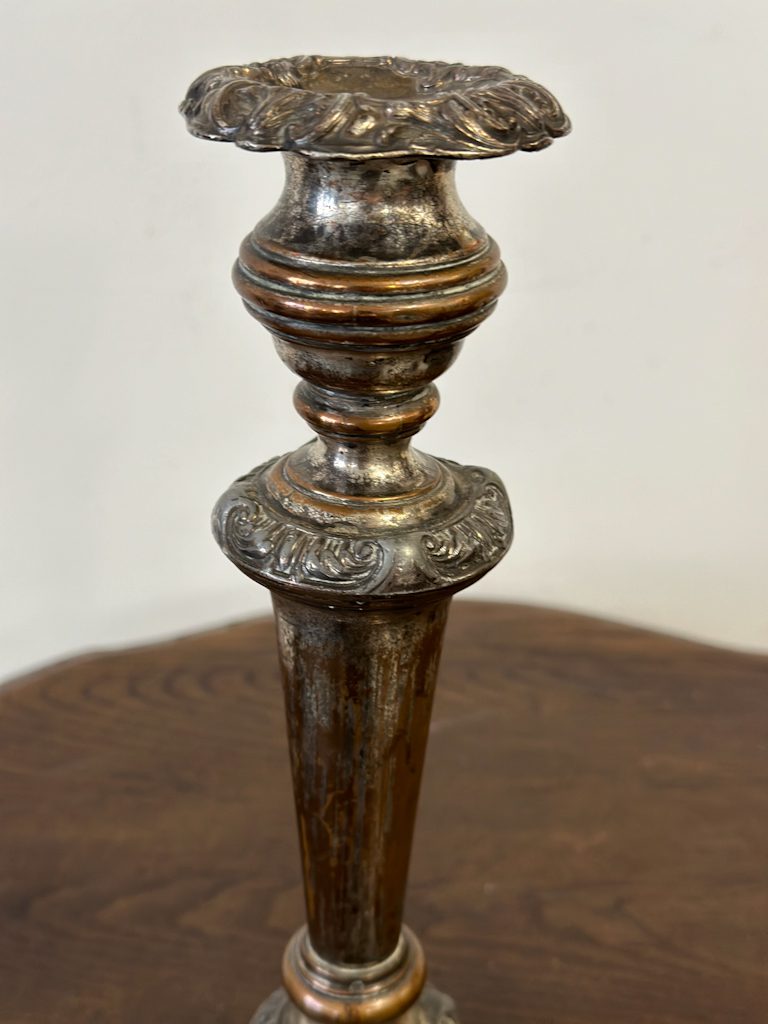
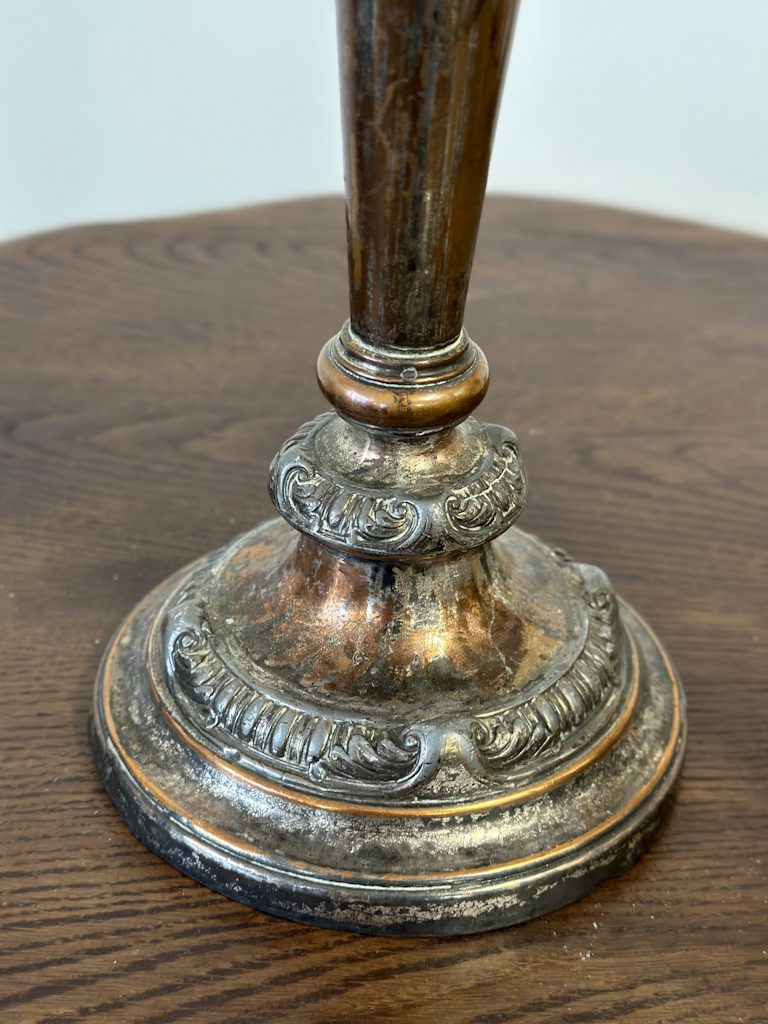
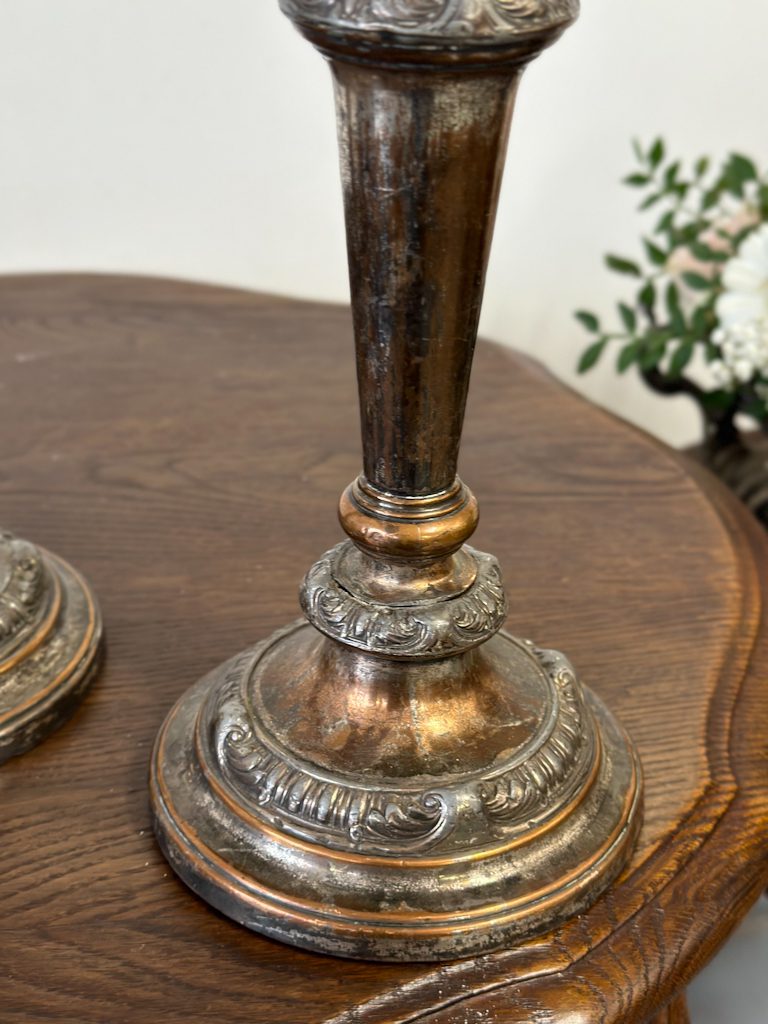
Apsudrabotu svečturu pāris ar akantus lapu sveču kausu, volutu pamatni un gadroona joslu. Sudrabojums daļēji nodilis — redzams vara pamatmetāls. Neobaroks / Historicisms, Francija vai Beļģija, ap 1870.–1900. Augstums 29 cm × platums 13,5 cm.
📐 Augstums 29 cm × platums 13,5 cm.
―――――――――――――――――――――
Apsudrabotu Svečturu Pāris ar Akantus Lapu Dekoru — Neobaroks / Historicisms, Francija vai Beļģija, ap 1870.–1900.
―――――――――――――――――――――
🏛️ IZGATAVOŠANAS PERIODS, MĀKSLAS STILS, LAIKMETS
Šis svečturu pāris pieder Belle Époque laikmeta dekoratīvajai metāla mākslai — tam krāšņajam periodam no 1871. līdz 1914. gadam, kad Eiropas darbnīcas ar sudrabošanas tehnoloģijām radīja priekšmetus, kas izskatījās kā sudrabs, bet bija pieejami plašākam pircēju lokam. Mākslinieciskais stils — Neobaroks ar Historicisma elementiem — izpaužas bagātīgajā reljefdekoru valodā: apaļā pamatne ar volutu un akantus ornamentiem un gadroona joslu, koniskais stumbrs ar vertikālu rievājumu, un sveču kauss ar izliektu, plastiski modelētu akantus lapu vainagu — katrs elements runā par baroka grezni krāšņo ornamentālo tradīciju, kas Belle Époque periodā atgriezās jaunā, rūpnieciskā izpildījumā.
Šis pāris atrodas interesantā stilistiskā dialogā starp Empire disciplīnu — kas jūtama koniskajā stumbrā un apaļajā pamatnē — un Neobaroka enerģiju, ko izsaka bagātīgais akantus lapu sveču kauss. Šis ir tieši tas pārejas brīdis, kad Historicisms vēl turēja klasiskās formas, bet Neobaroks jau atnesa plastiskāku, dzīvīgāku ornamentālo valodu — abas estētikas šeit sadzīvo vienā objektā.
Tieši šajos gados Rihards Vāgners pabeidza savu Gredzenu ciklu un Bairoitas festivāls pirmo reizi atvēra durvis — visa Eiropa bija apsēsta ar pagātnes grandiozitāti. Parīzes un Briseles darbnīcas ražoja svečturus, kas izskatījās kā mantojums no senčiem, bet patiesībā tika lējuši vakar.
―――――――――――――――――――――
⚜️ RAŽOTĀJS UN MANUFAKTŪRAS ZĪMOGS
Fotogrāfijās nav redzams ražotāja zīmogs. Sudrabojuma nodiluma raksturs — vara/bronzas pamatmetāls redzams stumbram un pamatnes augšdaļai — liecina par galvaniskā sudrabojuma (galvanic silver plating) tehnoloģiju, kas bija plaši izplatīta Francijā un Beļģijā 19. gadsimta otrajā pusē. Pamatnes volutu un gadroona ornamentācijas kvalitāte un sveču kausa akantus lapu plastiskā precizitāte norāda uz pieredzējušu manufaktūru, kas specializējās reprezentatīvu galda piederumu ražošanā vidējai un augstākai buržuāzijai.
―――――――――――――――――――――
💎 RETUMS UN NOZĪME
Apsudrabotu svečturu pāri ar redzamu, autentisku nodilumu — kur cauri spīd vara pamatmetāls — mūsdienu kolekcionāru vidū tiek novērtēti kā patinas un vecuma liecinieki. Šāds izskats nav trūkums — tas ir laika zīme, ko mākslīgi nevar reproducēt. Vintage un antique interjeru entuziastu vidū tieši šāda “nodilusi sudraba” estetika ir ļoti meklēta.
―――――――――――――――――――――
🕯️ PIELIETOJUMS INTERJERĀ, DIZAINĀ UN FOTOGRĀFIJĀ
Šie svečturi ar raksturīgo nodilušā sudrabojuma patinu ir ideāli vintage, dark academia, rustic chic vai bohemian interjera stiliem. Vara pamatmetāla izspiešanās caur sudrabojumu rada divkrāsainu, siltu efektu — sudrabs un varš vienā objektā —, kas fotogrāfijās izskatās ārkārtīgi bagātīgi. Stilisti un fotogrāfi šādus priekšmetus meklē īpaši, jo tie nav “pārāk nevainojami” un piešķir uzņēmumam autentiskumu un dvēseli.
―――――――――――――――――――――
🎁 DĀVANA UN PERSONALIZĀCIJA
Šis pāris ir izsmalcināta dāvana cilvēkam ar vintage vai eklektisko interjeru, kas novērtē autentiku un laika raksturu vairāk nekā nevainojamu izskatu. Piemērots arī kā dāvana māksliniekiem, fotogrāfiem un stilistiem.
―――――――――――――――――――――
🔍 STĀVOKLIS
Sudrabojums ievērojami nodilis — stumbram un pamatnes virsmai redzams vara/bronzas pamatmetāls. Šis nodilums ir vienmērīgs un raksturīgs priekšmetu vecumam, veidojot autentisku patinu. Pamatnes volutu un akantus ornamenti saglabājušies skaidri. Sveču kausu akantus lapu apmale ir neskaita. Lietas stāvoklis pilnībā atspoguļots fotogrāfijās.
―――――――――――――――――――――
🇬🇧 DESCRIPTION IN ENGLISH
📐 Height 29 cm × Width 13.5 cm.
―――――――――――――――――――――
Pair of Silver-Plated Candlesticks with Acanthus Leaf Décor — Neo-Baroque / Historicism, France or Belgium, c. 1870–1900.
―――――――――――――――――――――
🏛️ PERIOD, ARTISTIC STYLE, ERA
This pair of candlesticks belongs to the decorative metalwork of the Belle Époque — that splendid period from 1871 to 1914, when European workshops used silver-plating technologies to produce objects that looked like silver but were accessible to a wider buying public. The artistic style — Neo-Baroque with Historicism elements — is expressed in the richly modelled ornamental vocabulary: a circular base with volute and acanthus relief and a gadroon band, a conical stem with vertical ribbing, and a candle cup with a plastically modelled acanthus leaf crown — each element speaking of the Baroque tradition of lavish ornament, reborn in the Belle Époque in a new, industrially produced form.
This pair stands at an interesting stylistic dialogue between Empire discipline — felt in the conical stem and circular base — and Neo-Baroque energy, expressed in the richly modelled acanthus leaf cup. This is precisely the transitional moment when Historicism still held classical forms, while Neo-Baroque already brought a more plastic, animated ornamental language — both aesthetics coexist within a single object.
In these very years, Richard Wagner completed his Ring cycle and the Bayreuth Festival opened its doors for the first time — all of Europe was gripped by an obsession with past grandeur. Workshops in Paris and Brussels produced candlesticks that looked like heirlooms from ancestors, but had in fact been cast only yesterday.
―――――――――――――――――――――
⚜️ MAKER AND HALLMARK
No maker’s mark is visible in the photographs. The pattern of silver wear — with the copper/bronze base metal showing through on the stem and upper base — indicates galvanic silver plating technology, widely used in France and Belgium in the second half of the 19th century. The quality of the volute and gadroon ornamentation on the base, and the plastic precision of the acanthus leaf candle cup, point to an experienced manufacturer specialising in representative table accessories for the middle and upper bourgeoisie.
―――――――――――――――――――――
💎 RARITY AND SIGNIFICANCE
Silver-plated candlestick pairs with visible, authentic wear — where the copper base metal shows through — are valued by today’s collectors as witnesses to patina and time. This appearance is not a flaw — it is a mark of age that cannot be artificially reproduced. Among vintage and antique interior enthusiasts, this “worn silver” aesthetic is particularly sought after.
―――――――――――――――――――――
🕯️ USE IN INTERIORS, DESIGN AND PHOTOGRAPHY
These candlesticks, with their characteristic worn silver patina, are ideal for vintage, dark academia, rustic chic, or bohemian interior styles. The copper base metal showing through the silver creates a two-tone, warm effect — silver and copper in a single object — that photographs extraordinarily richly. Stylists and photographers actively seek out pieces like this, as they are not “too perfect” and lend shoots an authenticity and soul that polished pieces cannot provide.
―――――――――――――――――――――
🎁 AS A GIFT
This pair makes a refined gift for someone with a vintage or eclectic interior who values authenticity and the character of time over a pristine appearance. Also suitable as a gift for artists, photographers, and stylists.
―――――――――――――――――――――
🔍 CONDITION
The silver plating is considerably worn — the copper/bronze base metal is visible on the stem and upper surface of the base. This wear is even and characteristic of the age of the pieces, forming an authentic patina. The volute and acanthus ornaments on the base remain clearly defined. The acanthus leaf rim of the candle cups is intact. The condition of the item is fully reflected in the photographs.
―――――――――――――――――――――