
Ozolkoka kokgriezumu skapis ar eņģeļiem — Baroks / Luija XIV stils, Francija (Elzasa vai Burgundija), ap 1680.–1720.(329)
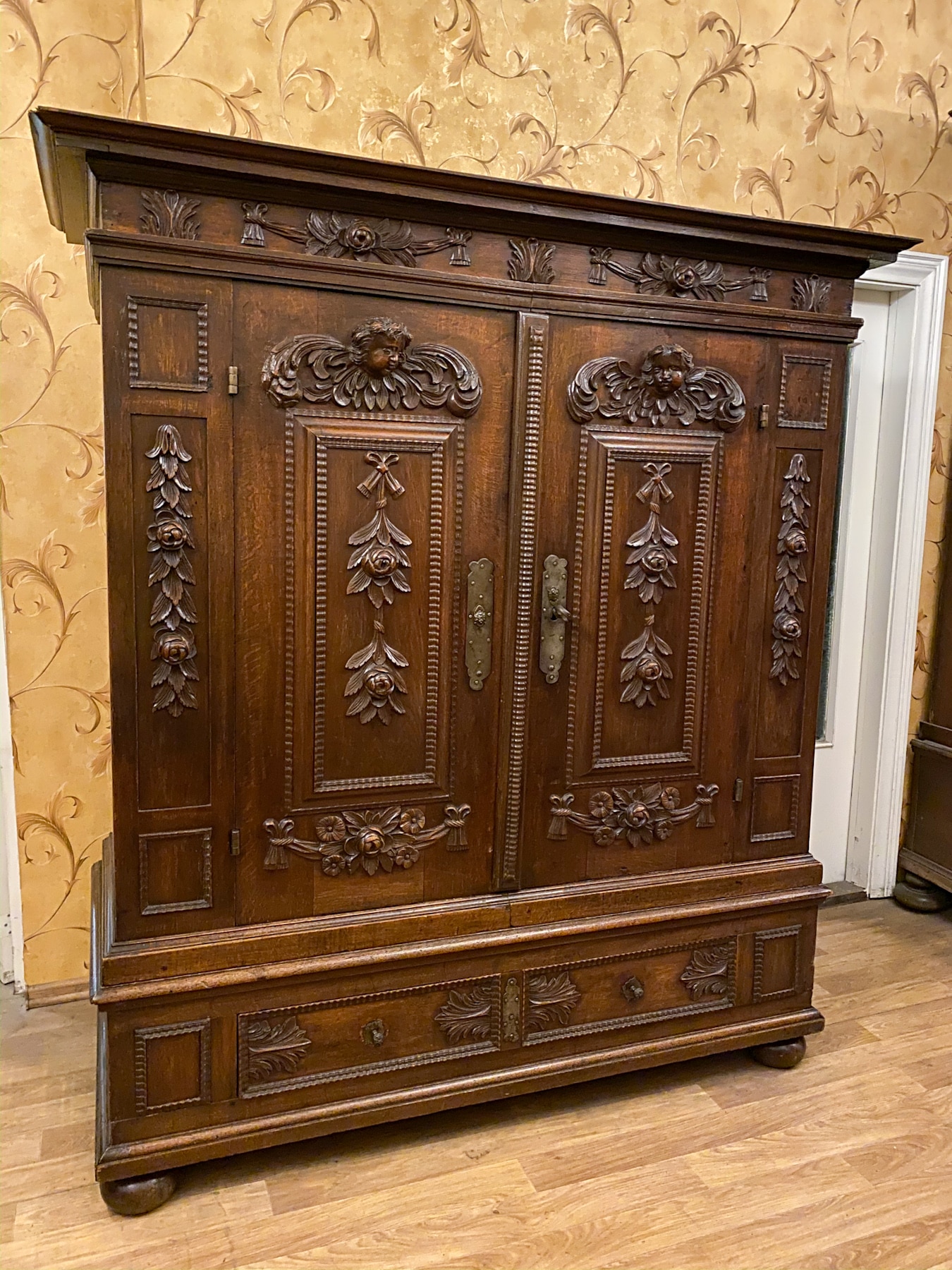
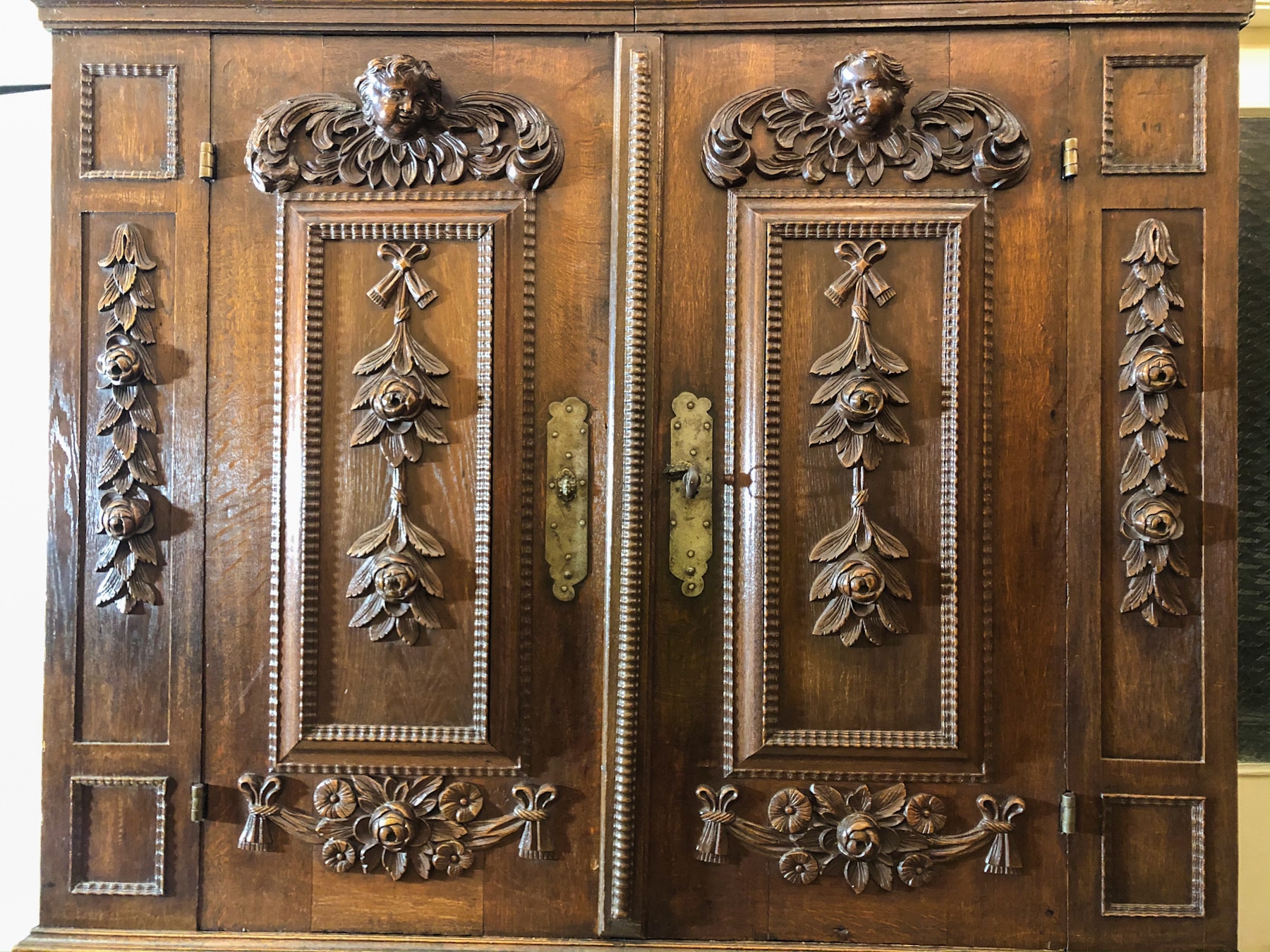
Ozolkoka kokgriezumu skapis ar eņģeļiem — Baroks / Luija XIV stils, Francija (Elzasa vai Burgundija), ap 1680.–1720.
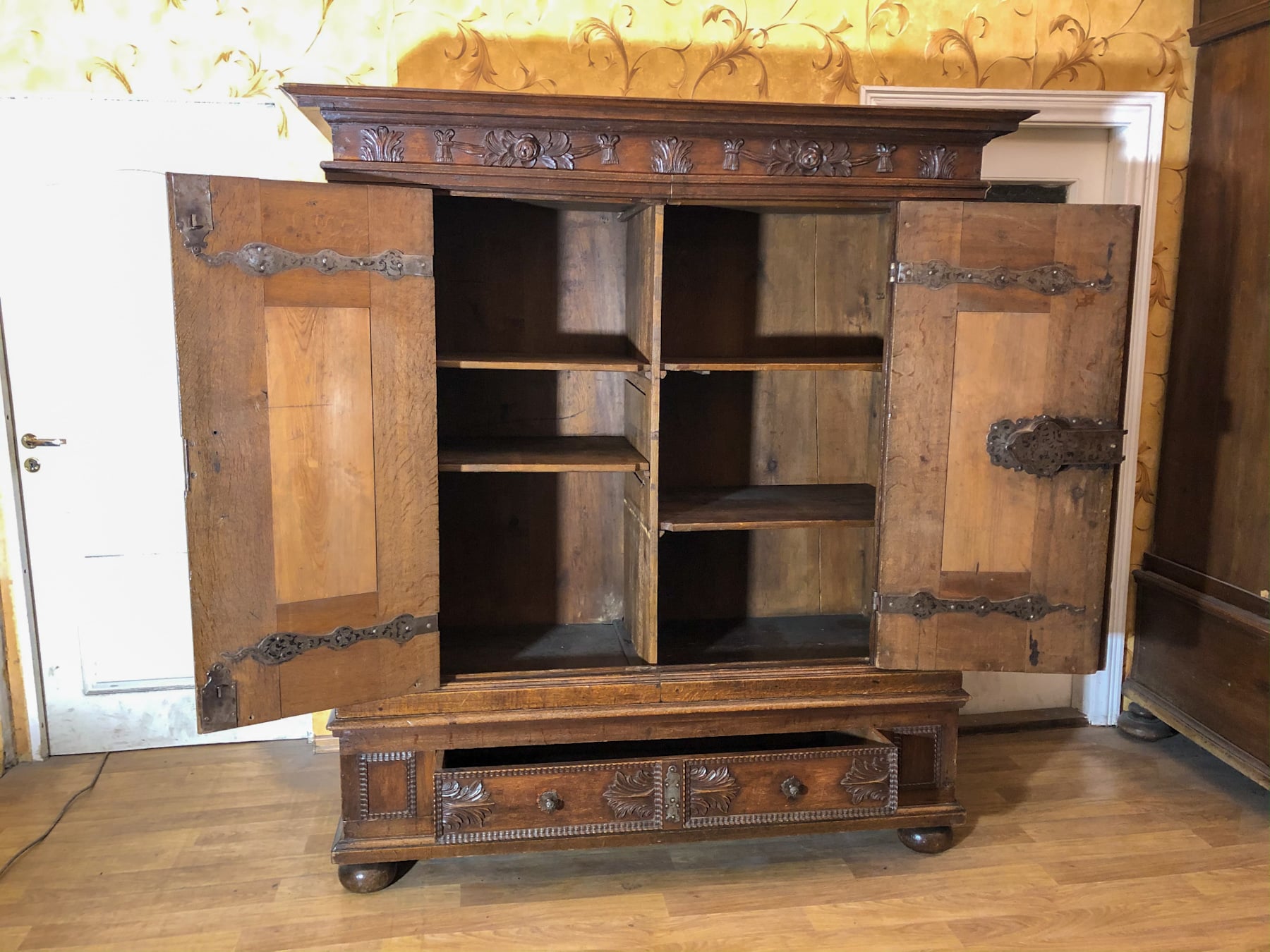
📐 Augstums 191 cm × Platums 173 cm × Dziļums 71 cm
―――――――――――――――――――――
🏛️ IZGATAVOŠANAS PERIODS, MĀKSLAS STILS, LAIKMETS
Šis monumentālais ozolkoka skapis radīts aptuveni 1680.–1720. gadā — laikmetā, ko Eiropas kultūrvēsturē dēvē par Luija XIV jeb Lielā baroka periodu. Tā ir ēra, kurā Francijas galms Versaļā diktēja estētiskos likumus visai Eiropai, un amatnieku ģildes provinces pilsētās — Strasbūrā, Dīžonā, Kolmārā — sacensās savā starpā, kurš spēs tuvāk atkārtot galma izsmalcinātību masīvā ozolā un dzelzī.
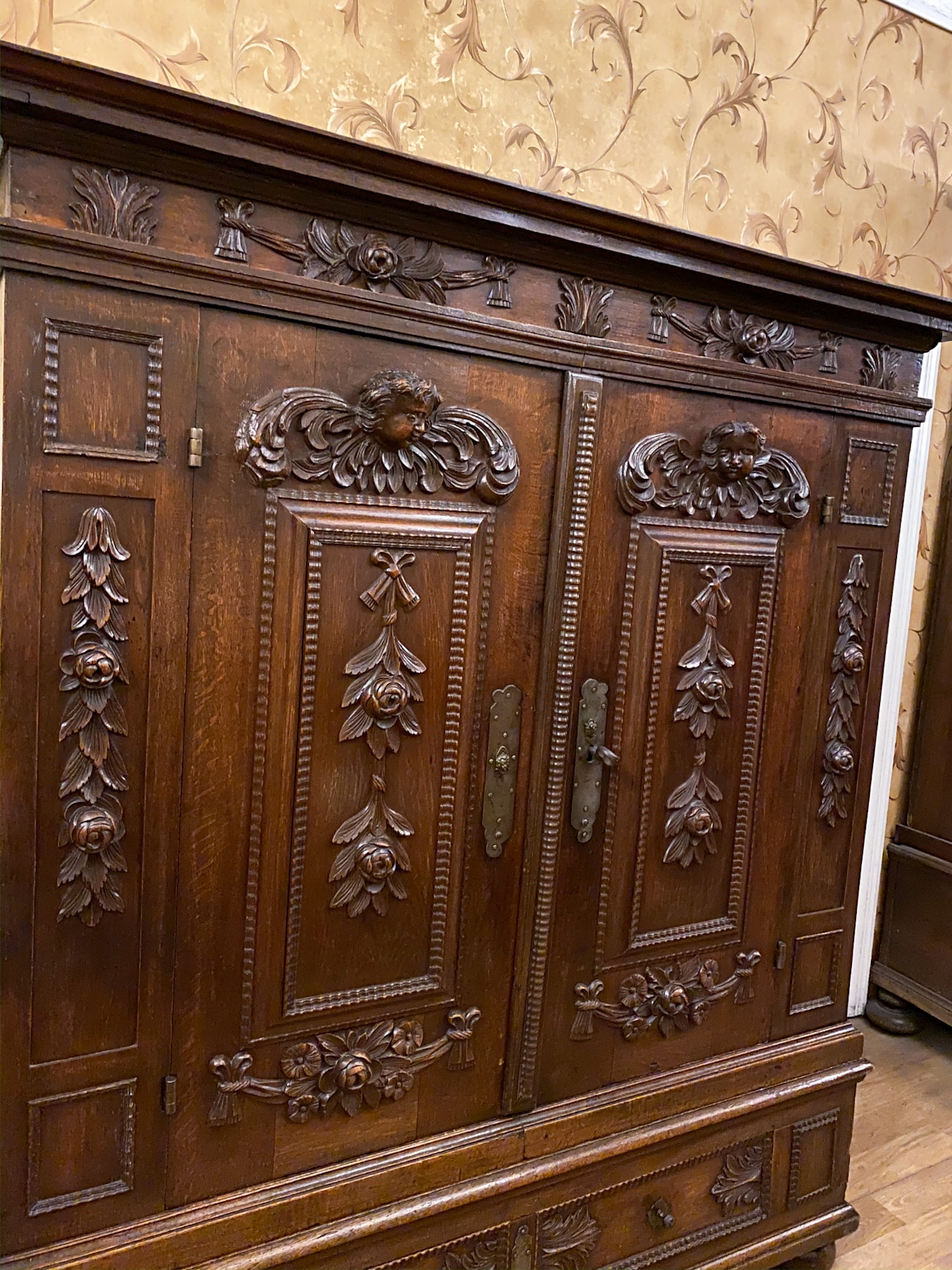
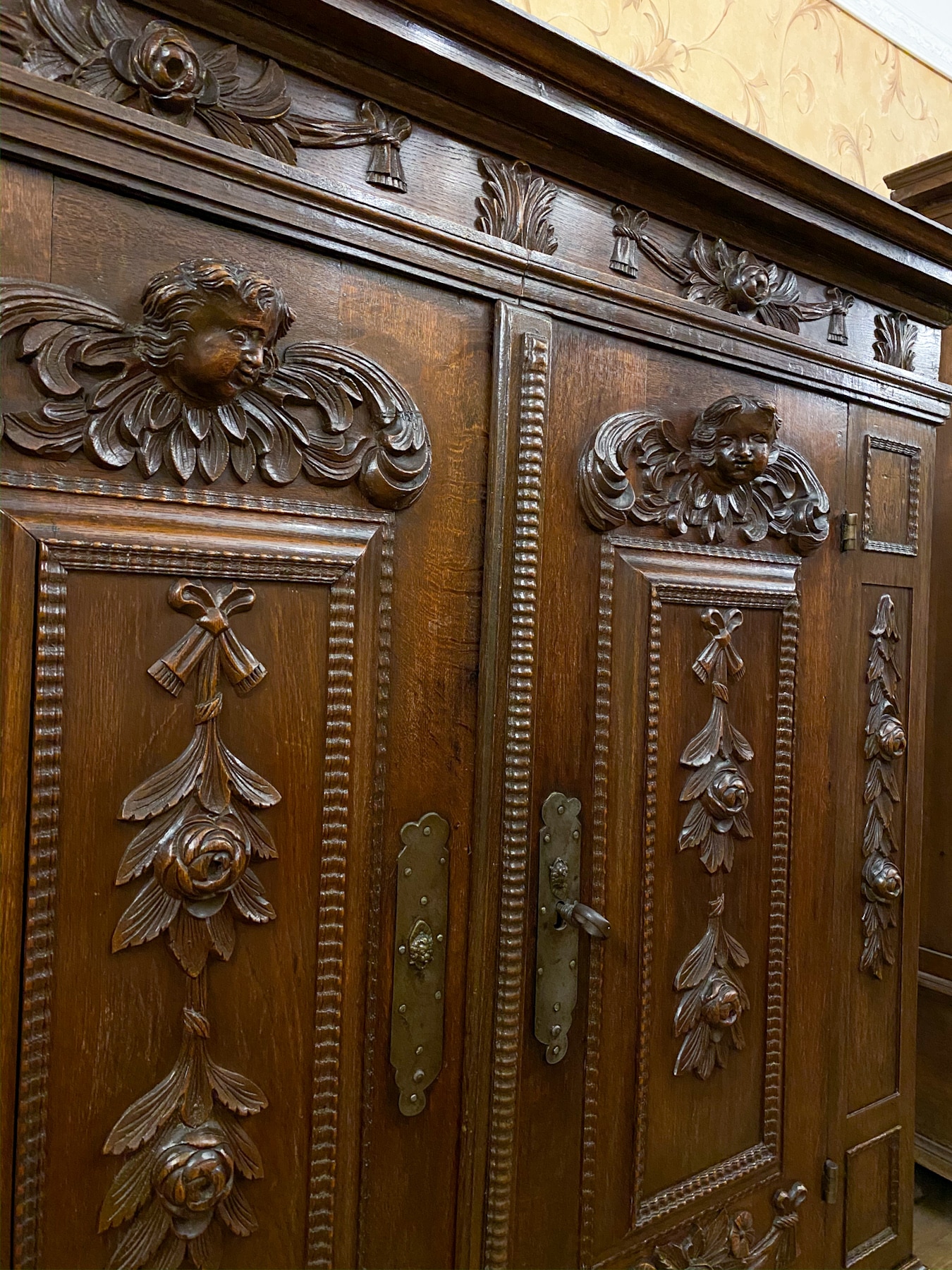
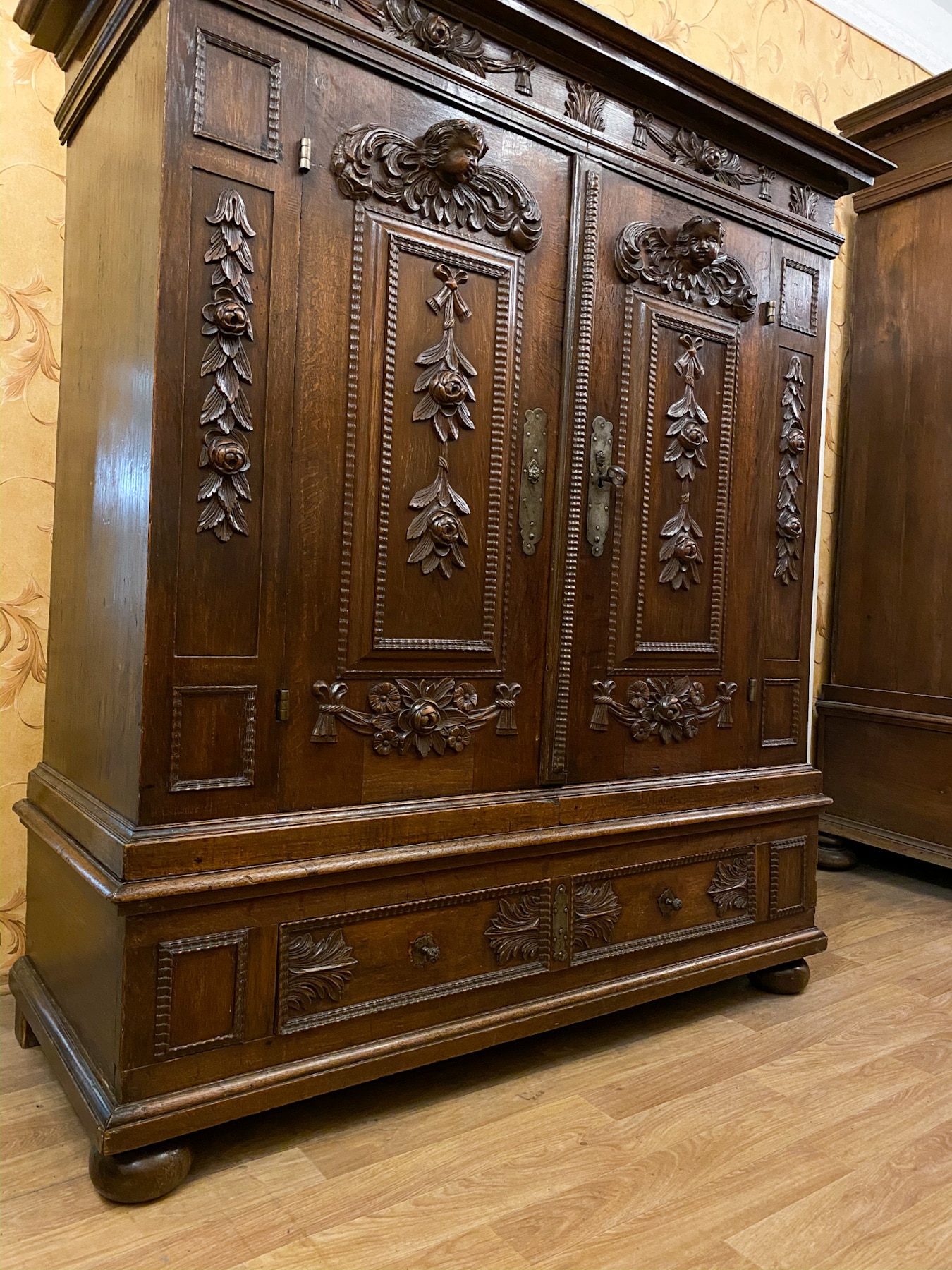
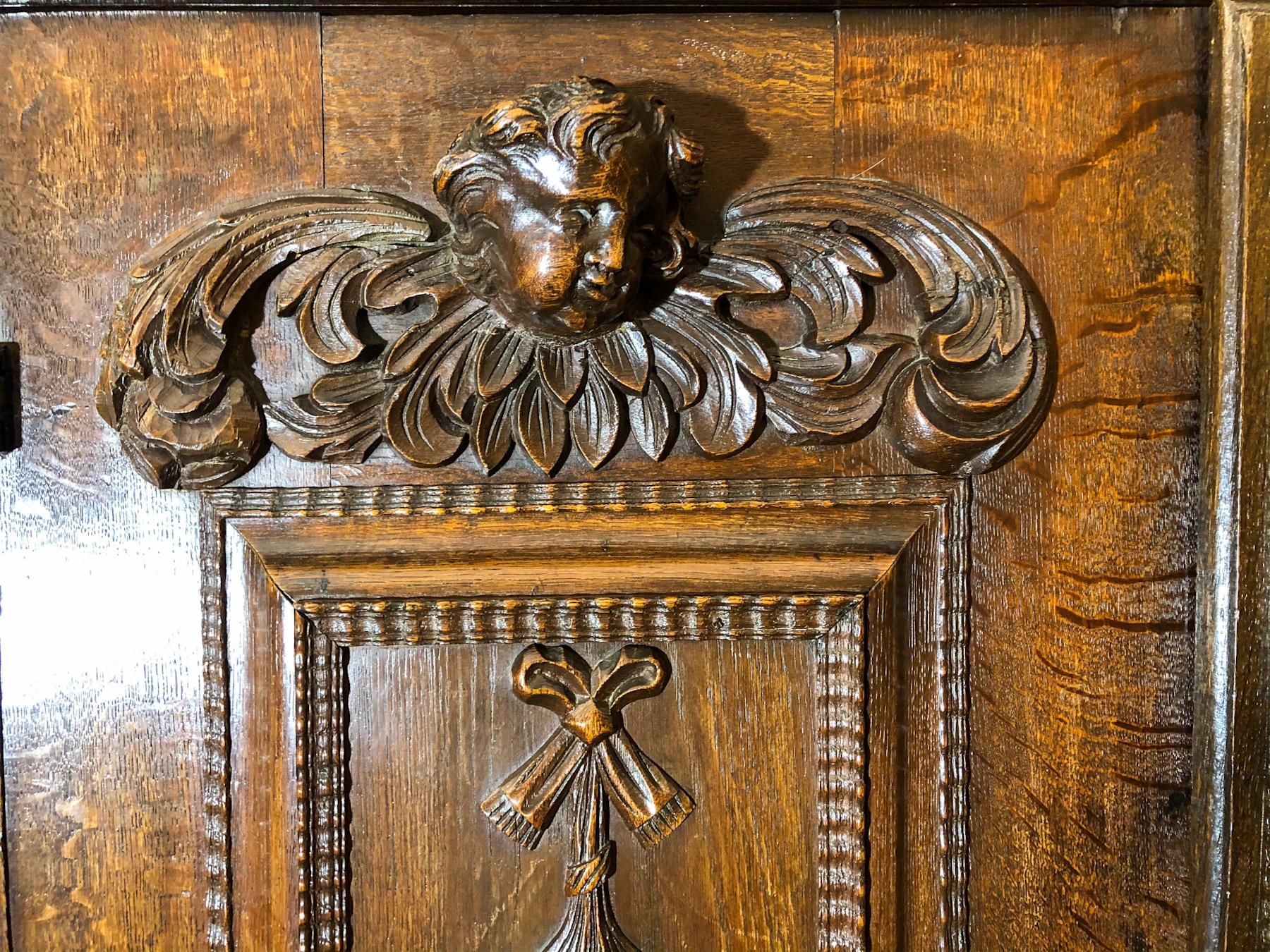
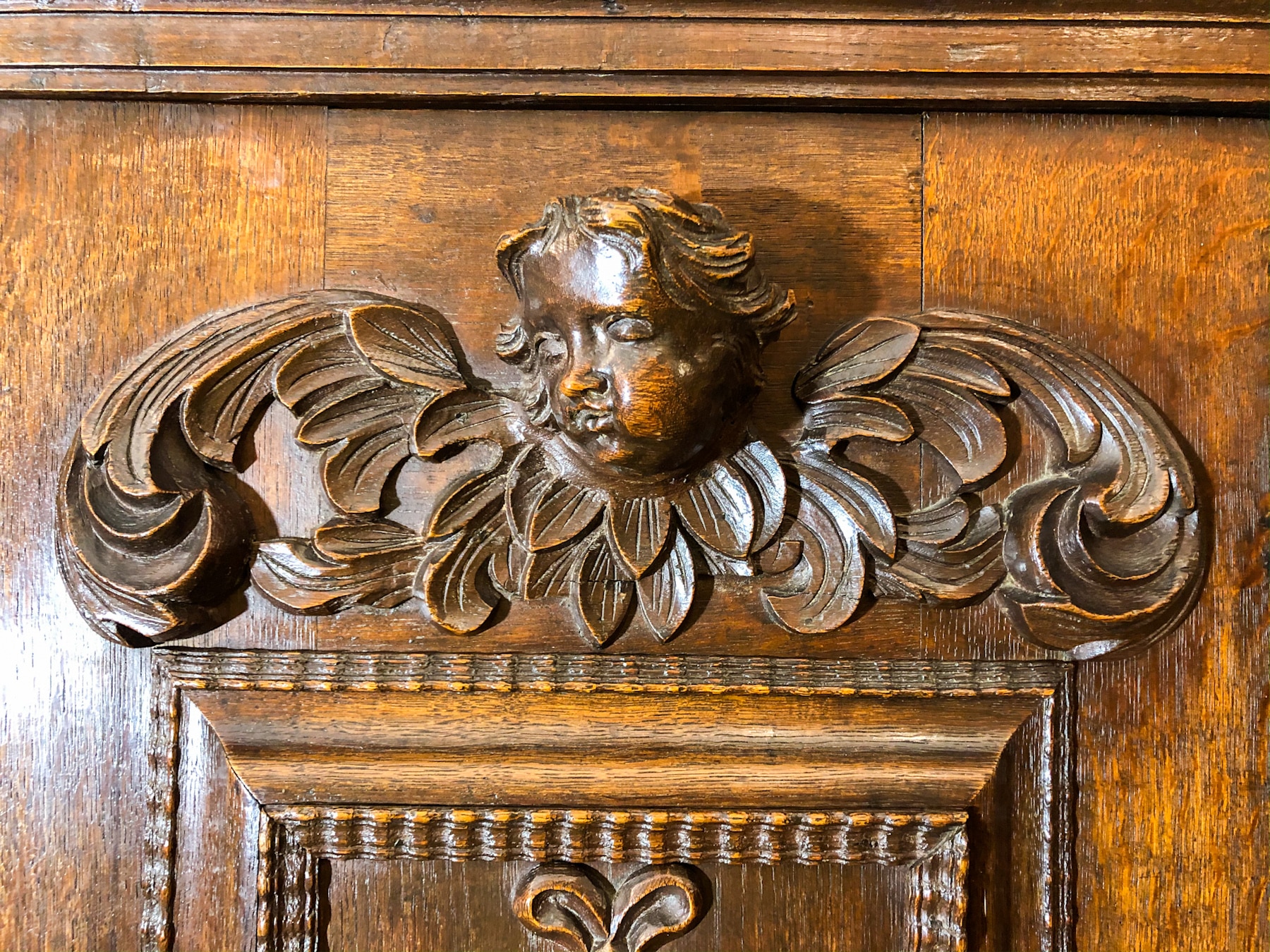
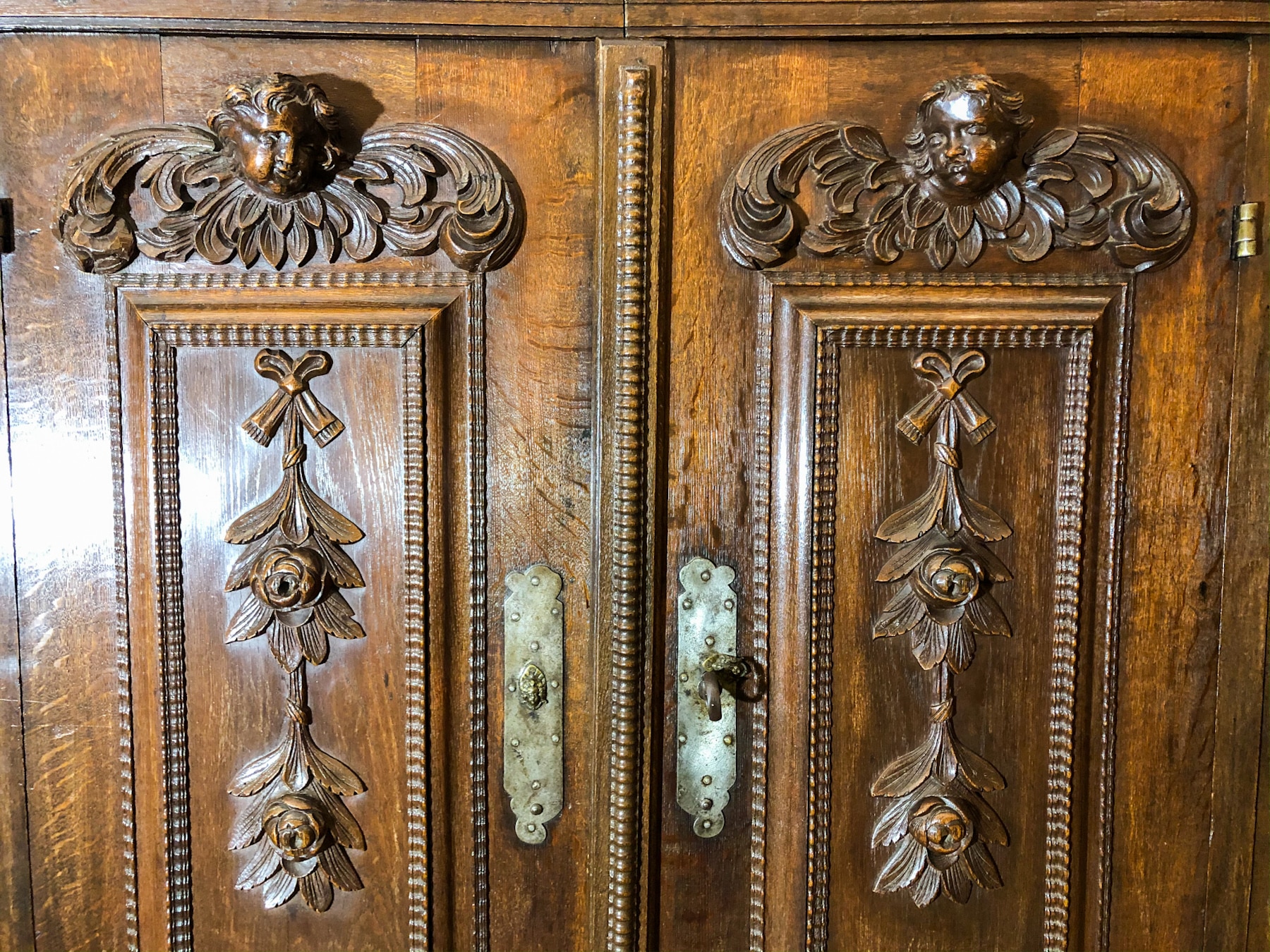
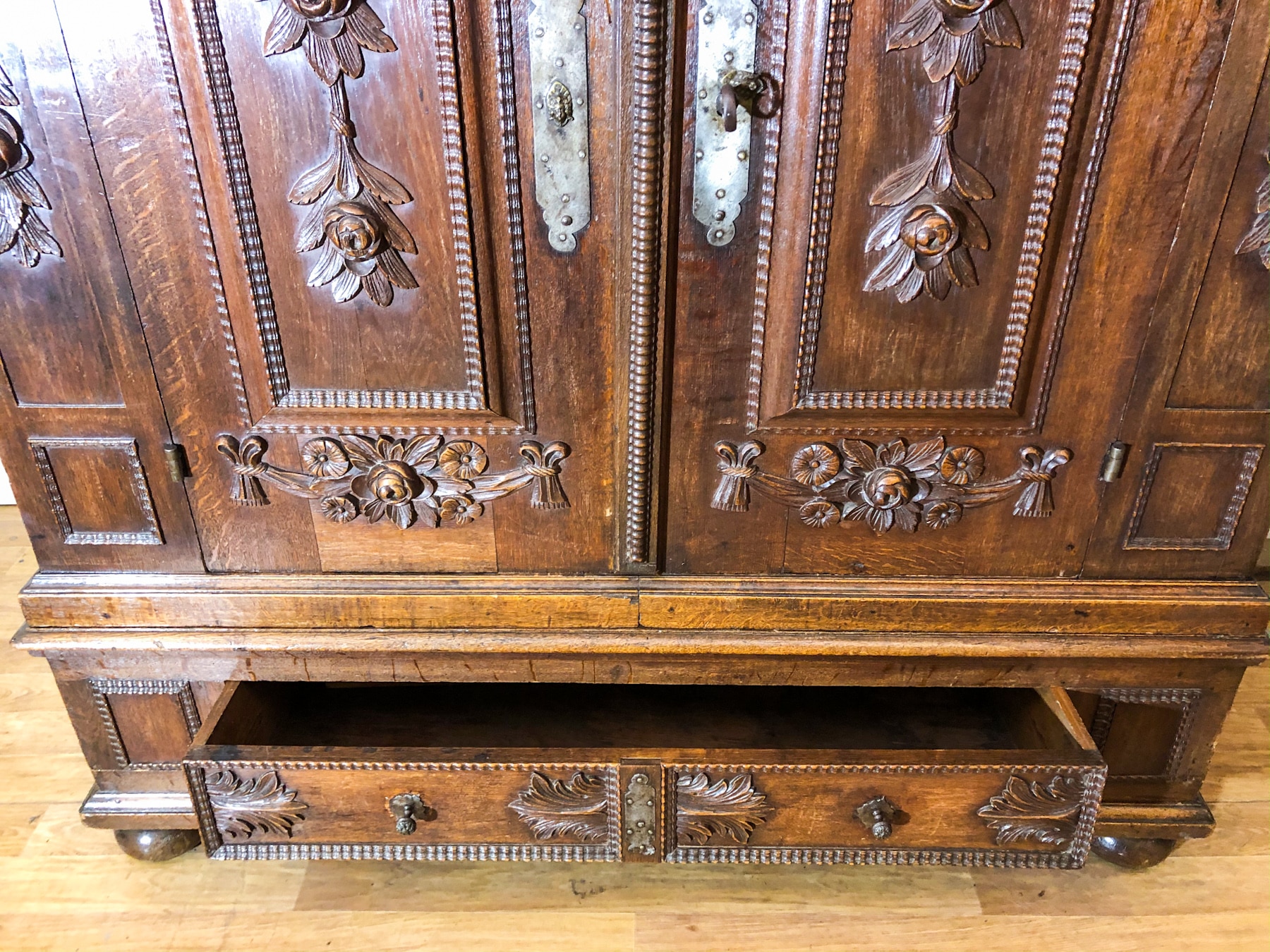
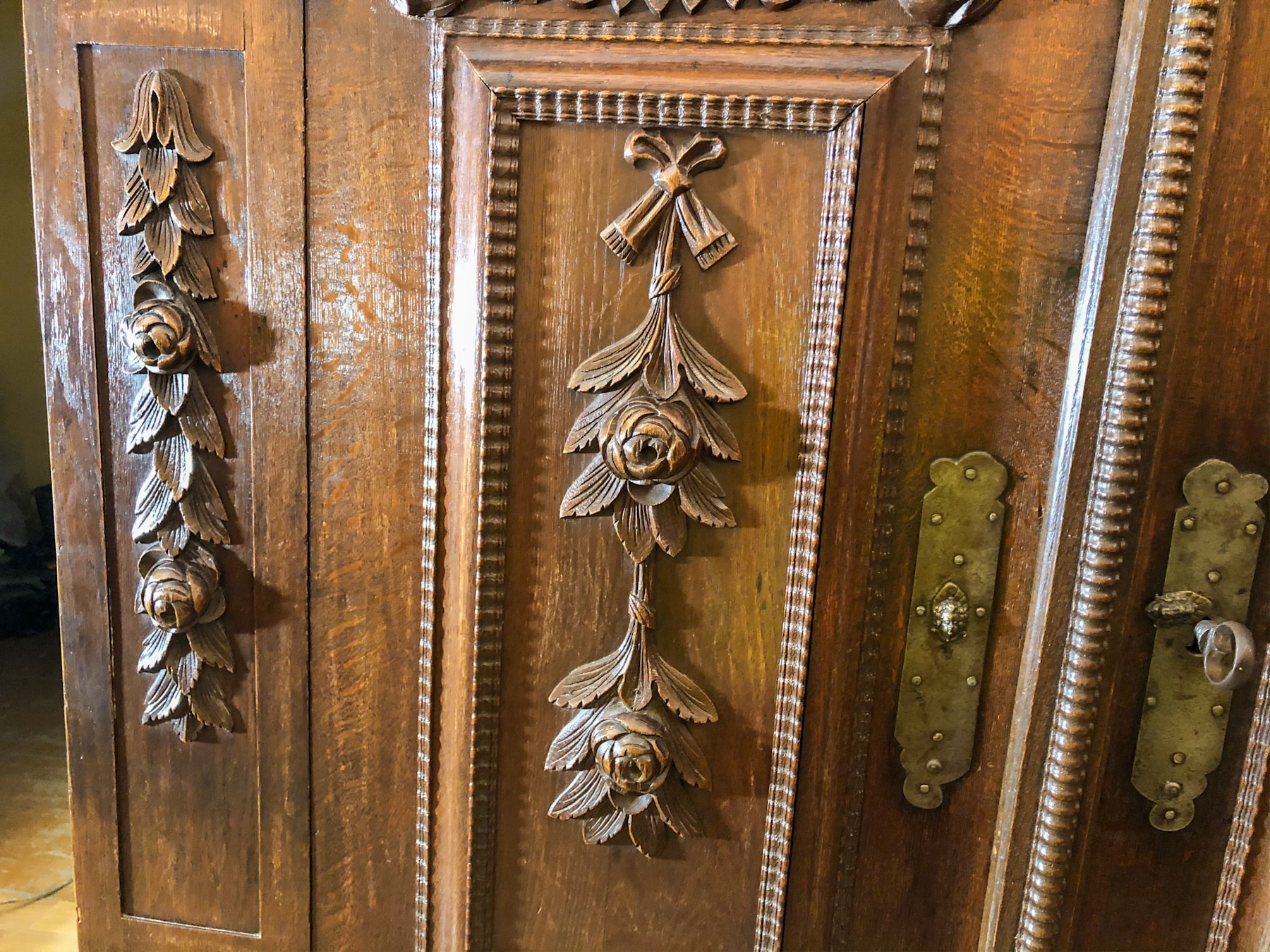
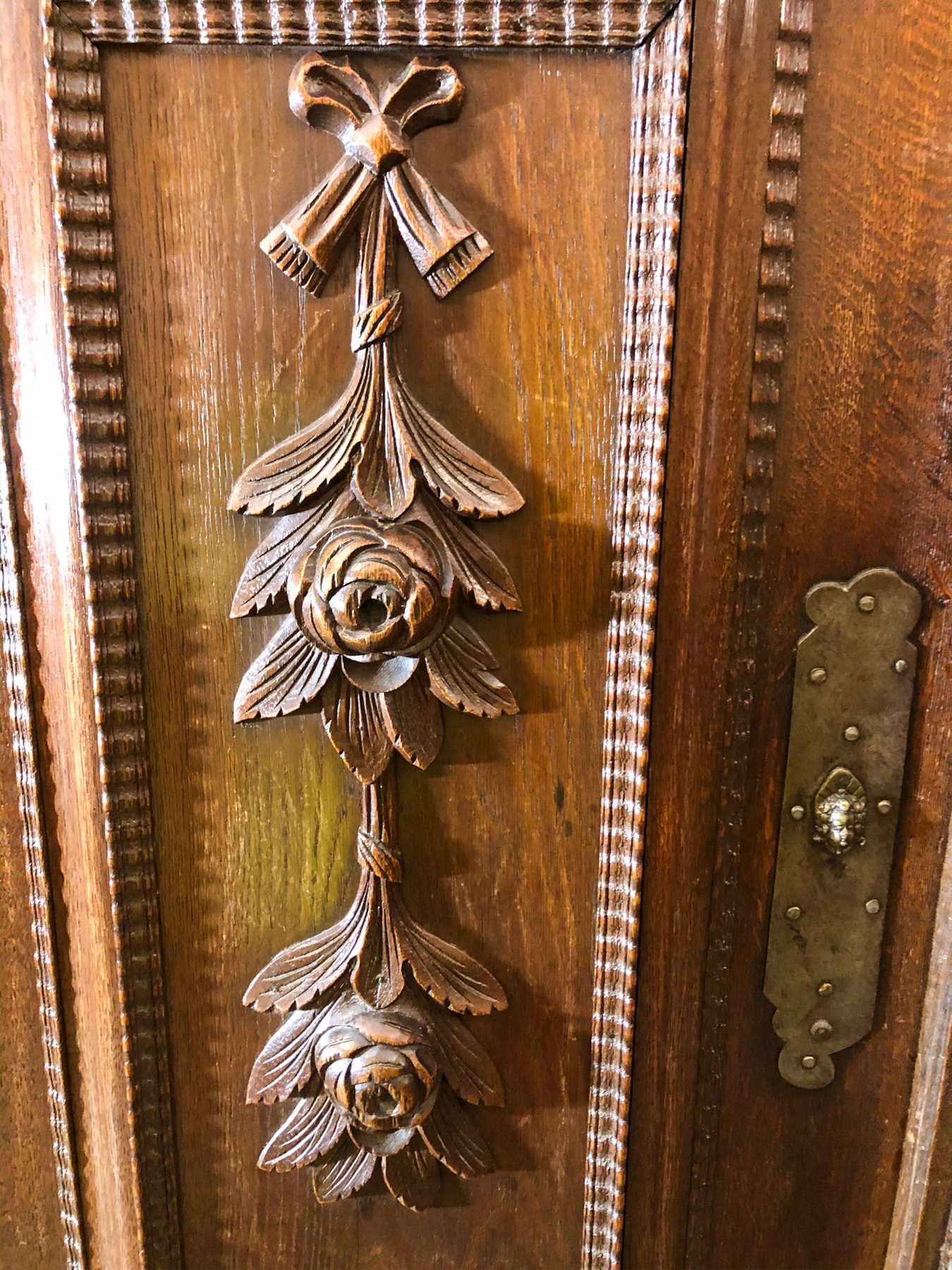
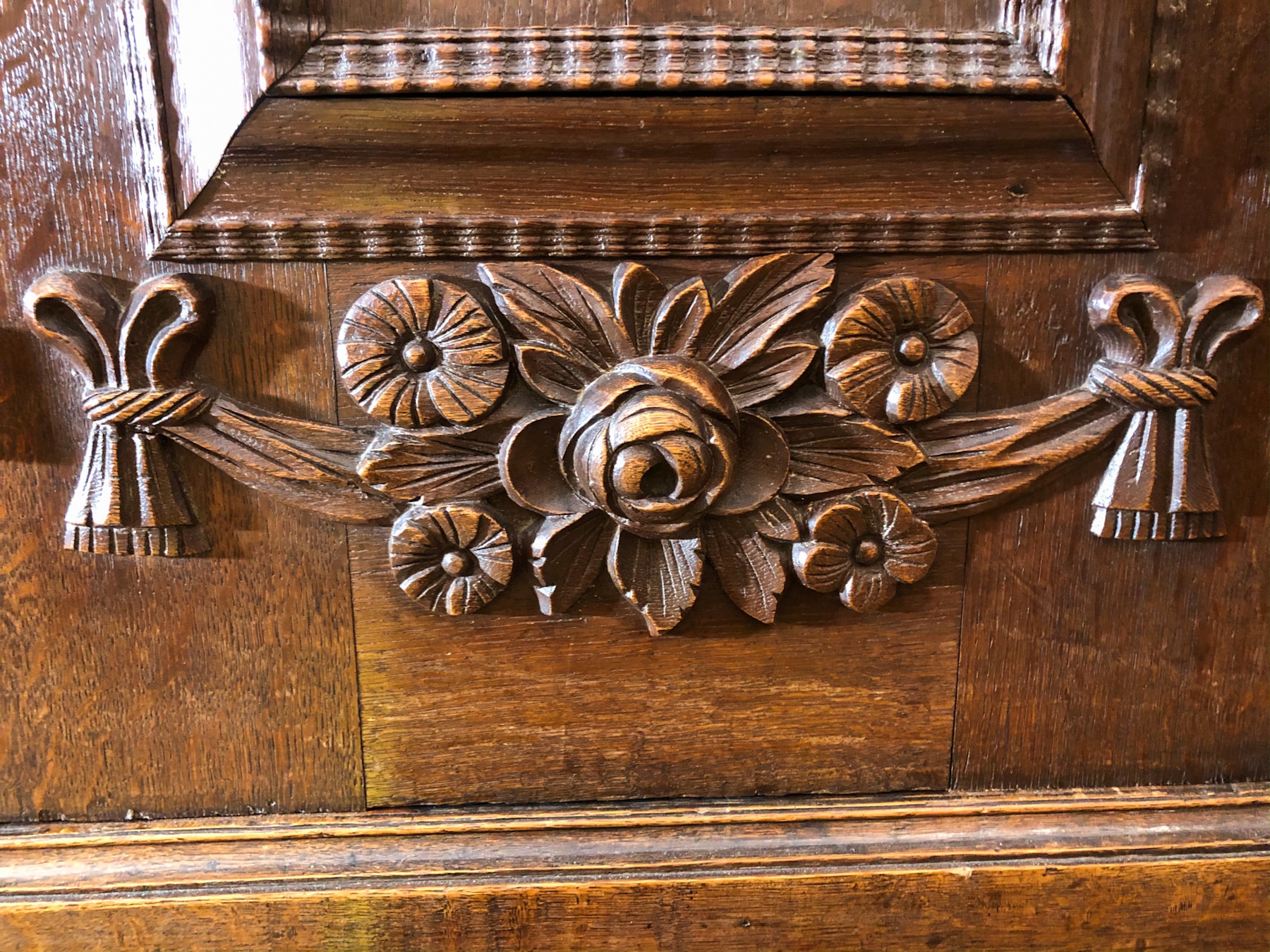
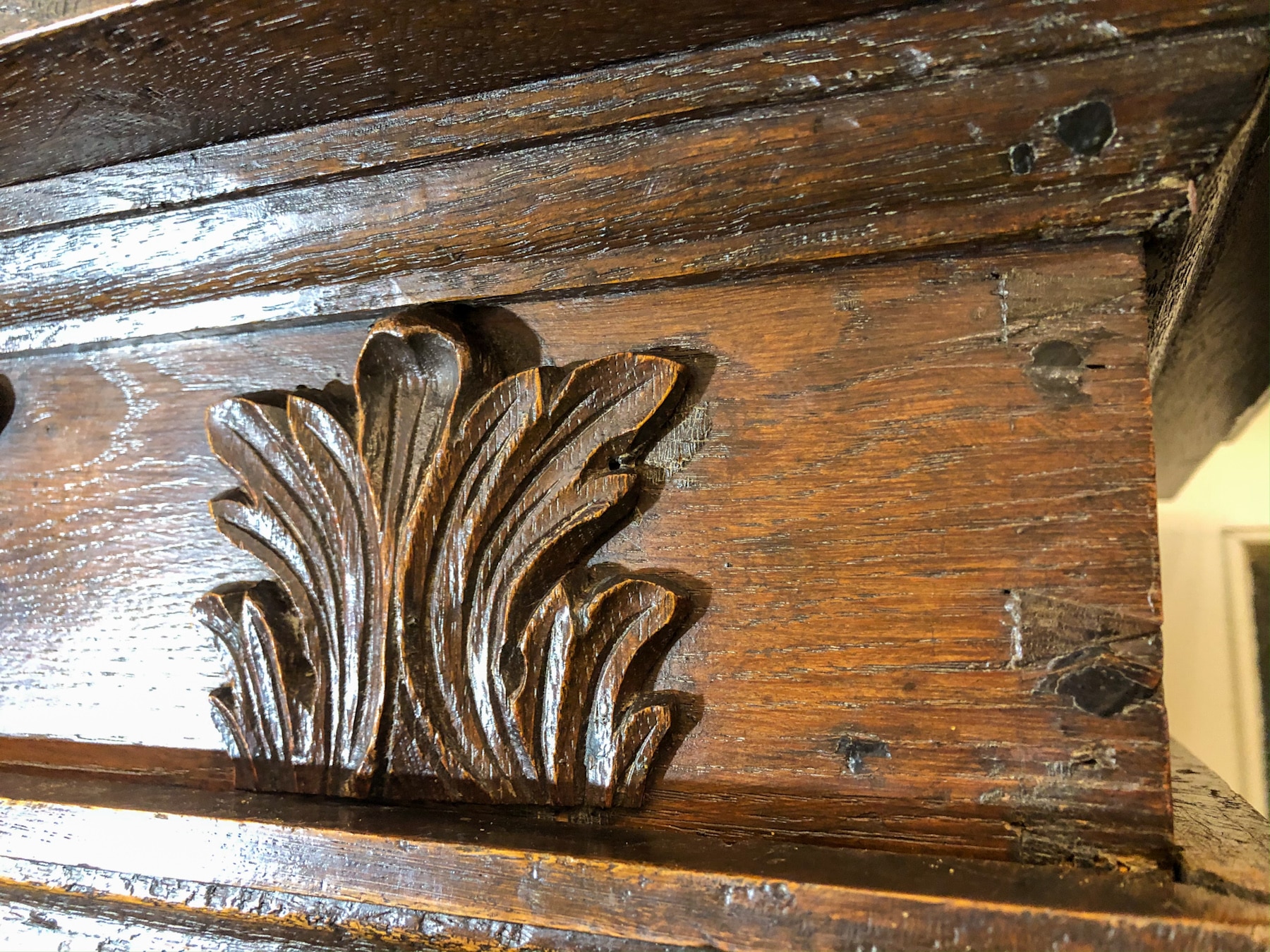
Baroka stils šeit izpaužas ar visu savu dramatiski dekoratīvo spēku: dziļi griezti putto — bērna eņģeļu — tēli virs abām durvīm, bagātīgas akantus lapu vītnes, rožu girlandas, kas sasietas ar lentēm un bārkstainām saitēm, kā arī smalki profilēti rāmji un lodveida kājas apakšā. Visas dekoratīvās programmas centrā stāv divi putto sejas — barokālie simboli Dievišķās aizgādības un mājas svētības, kas šajos gadsimtos ievietoti visdārgākajās mēbelēs.
Šis laikmets Francijā bija arī laiks, kad vēl svaigā atmiņā bija leģendārā 1661. gada ballīte Vo le Vikontā — finanšu ministra Nikola Fukets grandiozā rezidence, kuras baroka krāšņums tik ļoti apžilbināja un sadusmoja Lūiju XIV, ka viņš pavēlēja Fuketu arestēt. Šo arestu personīgi izpildīja karaliskais mušketieris Šarls de Bac — vēsturē pazīstams kā d’Artanjana prototips. Skapis, kas radīts tūlīt pēc šiem notikumiem, nes sevī tā paša laikmeta garu — to pašu monumentālo baroka valodu, to pašu amatnieku ģilžu meistarību, kas kalpoja Francijas augstākajai sabiedrībai.
―――――――――――――――――――――
⚜️ RAŽOTĀJS UN IZGATAVOŠANAS TRADĪCIJA
Uz skapja nav redzams individuāls meistara zīmogs, taču viss izpildījums — gan kokgriezumu dziļums un plastika, gan metāla furnitūras kvalitāte — norāda uz Francijas provinces ģildes meistara darbu augstākajā kvalifikācijas pakāpē. 17. un 18. gadsimta mijā Francijā strādāja stingri reglamentētas amatnieku ģildes (corporations des menuisiers-ébénistes), kurās meistara grāds tika iegūts tikai pēc vairāku gadu māceklības un pārbaudījumu — tostarp chef-d’œuvre, meistarstiķa izgatavošanas, kas bija jāprezentē ģildes padomei.
Īpaši nozīmīga ir šā skapja stilistiskā saikne ar Château d’Anet tradīciju — Diānas de Puatjē rezidenci, ko ap 1550. gadu projektēja arhitekts Philibert de l’Orme. Šā skapja dvīņubrālis — praktiski identisks pēc konstrukcijas un dekoratīvās programmas — šodien atrodas Château d’Anet galvenajā vestibilā kā viens no pils reprezentatīvākajiem mēbeļu eksponātiem. Pils saimnieki divdesmit un vairāk gadus meklēja tieši šādu gabalu savam interjeram — fakts, kas viennozīmīgi apliecina šāda tipa skapju ārkārtējo retumu un kolekcionāru vērtību.
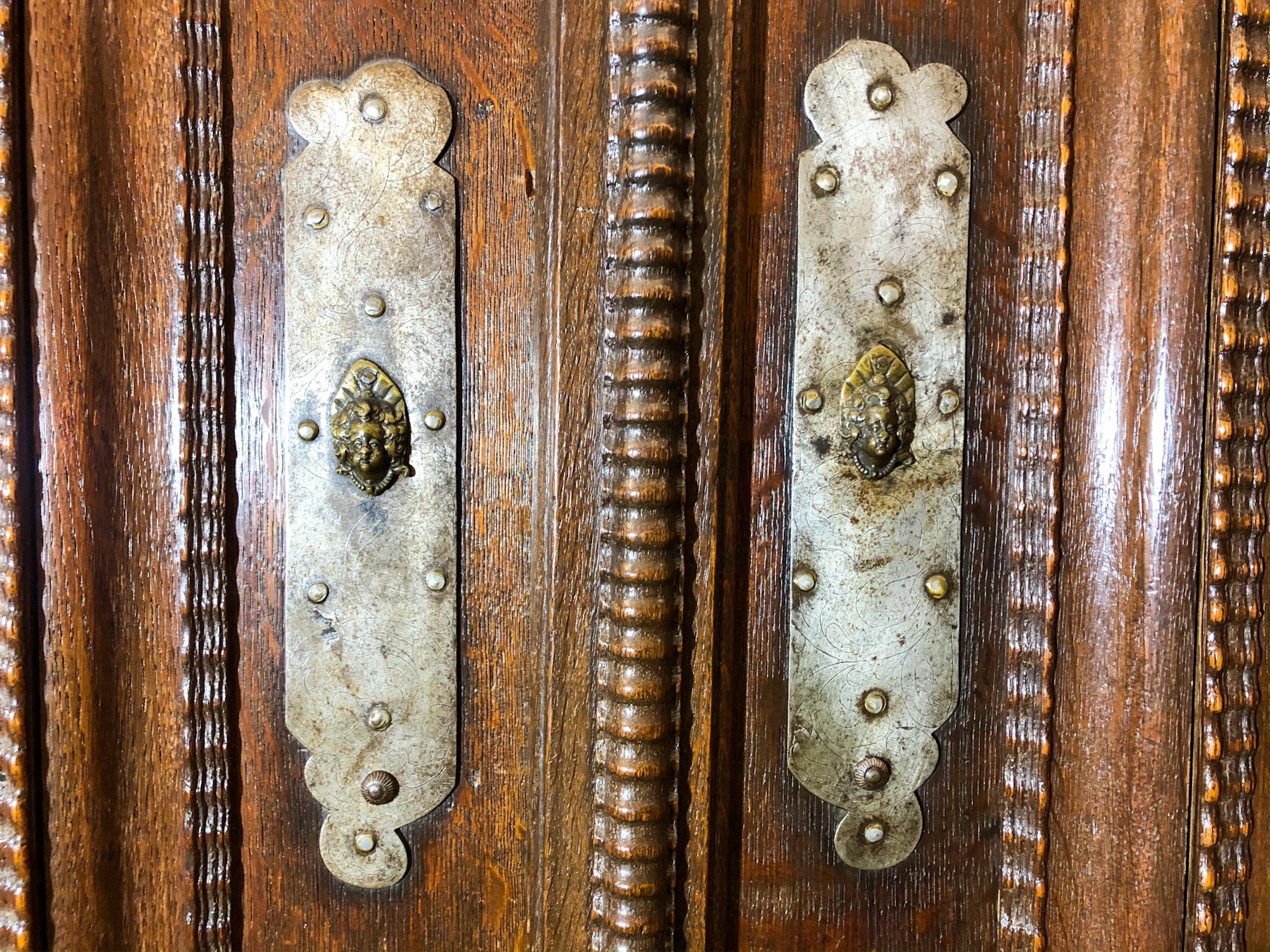
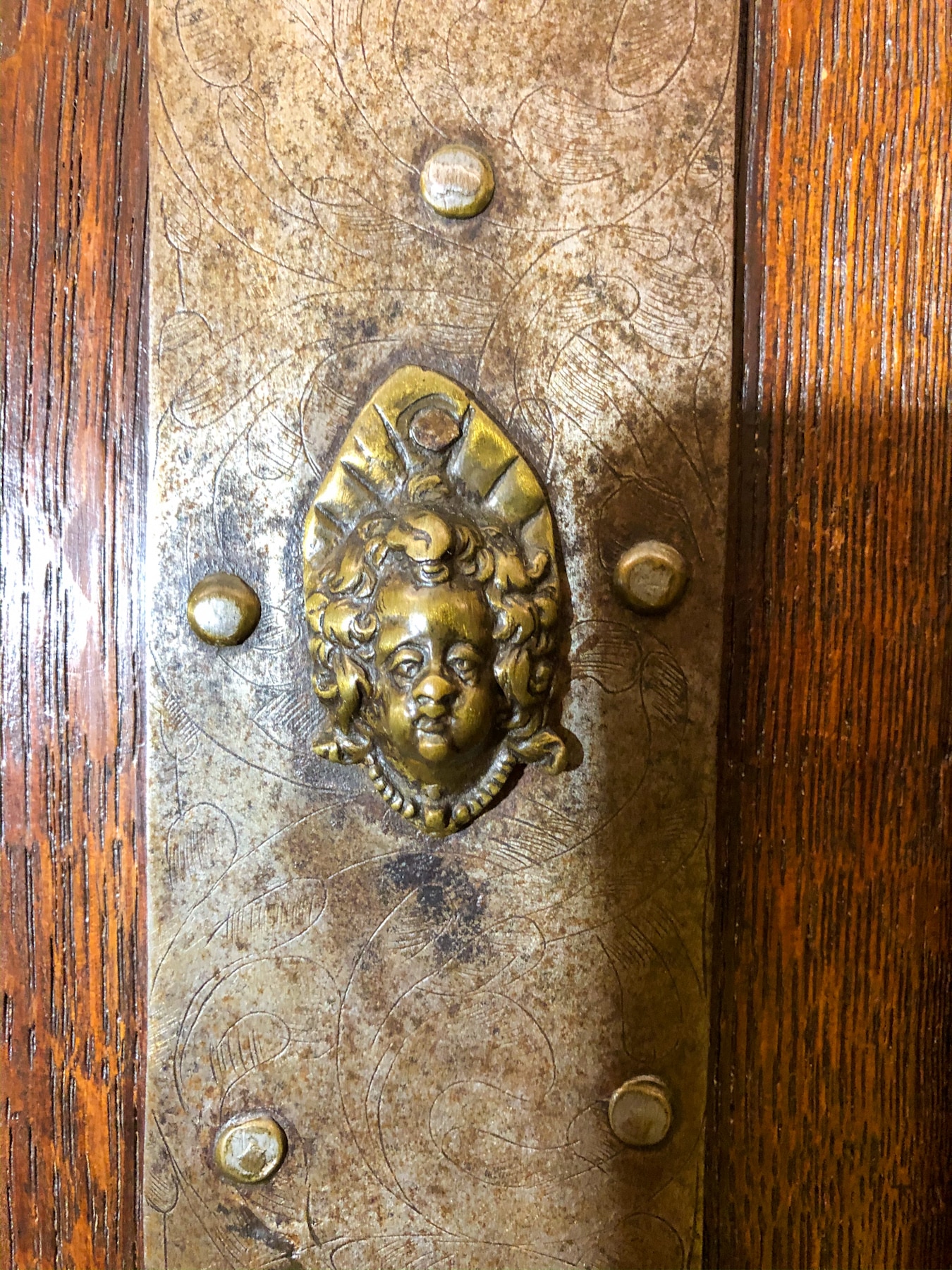
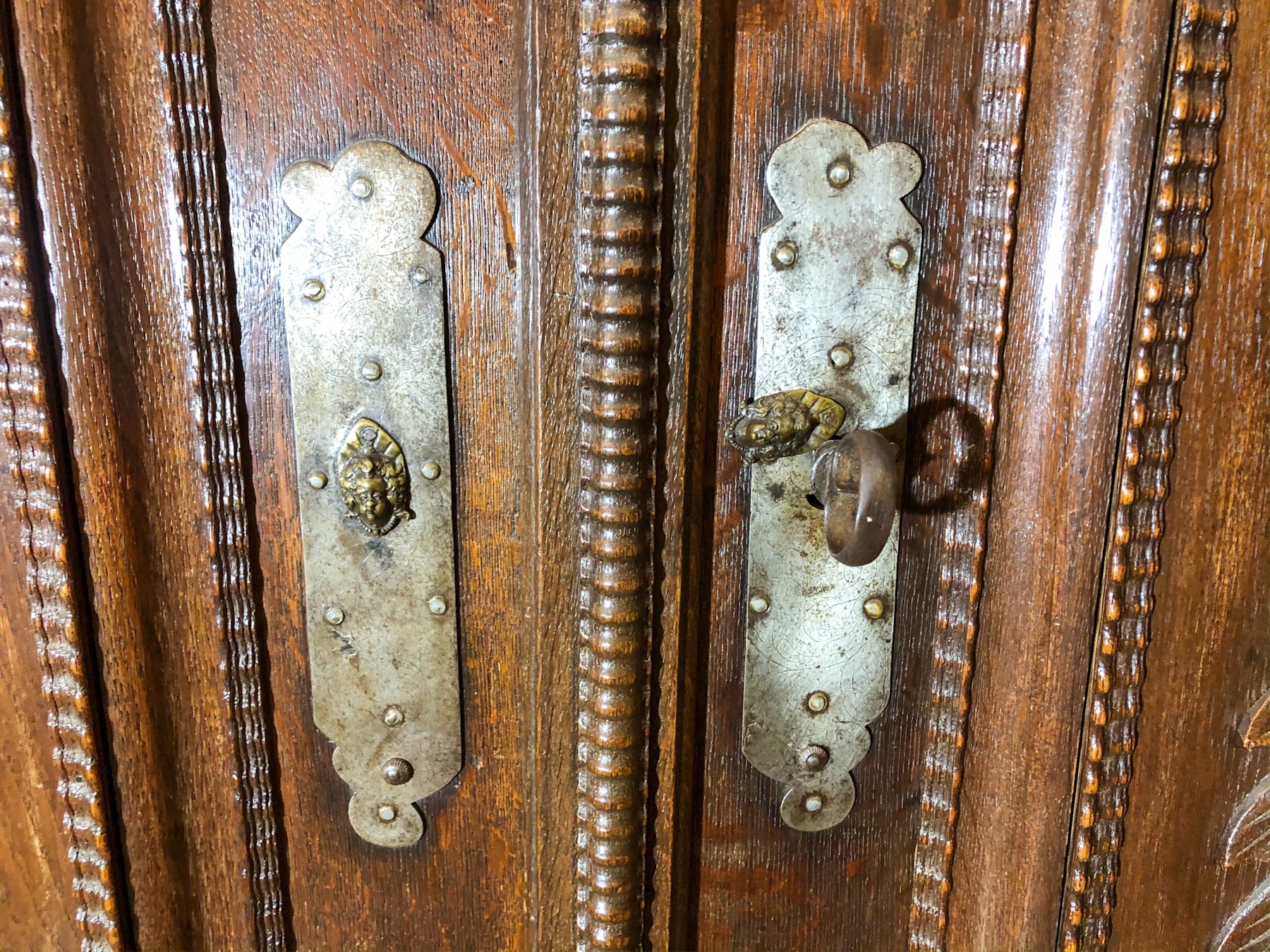
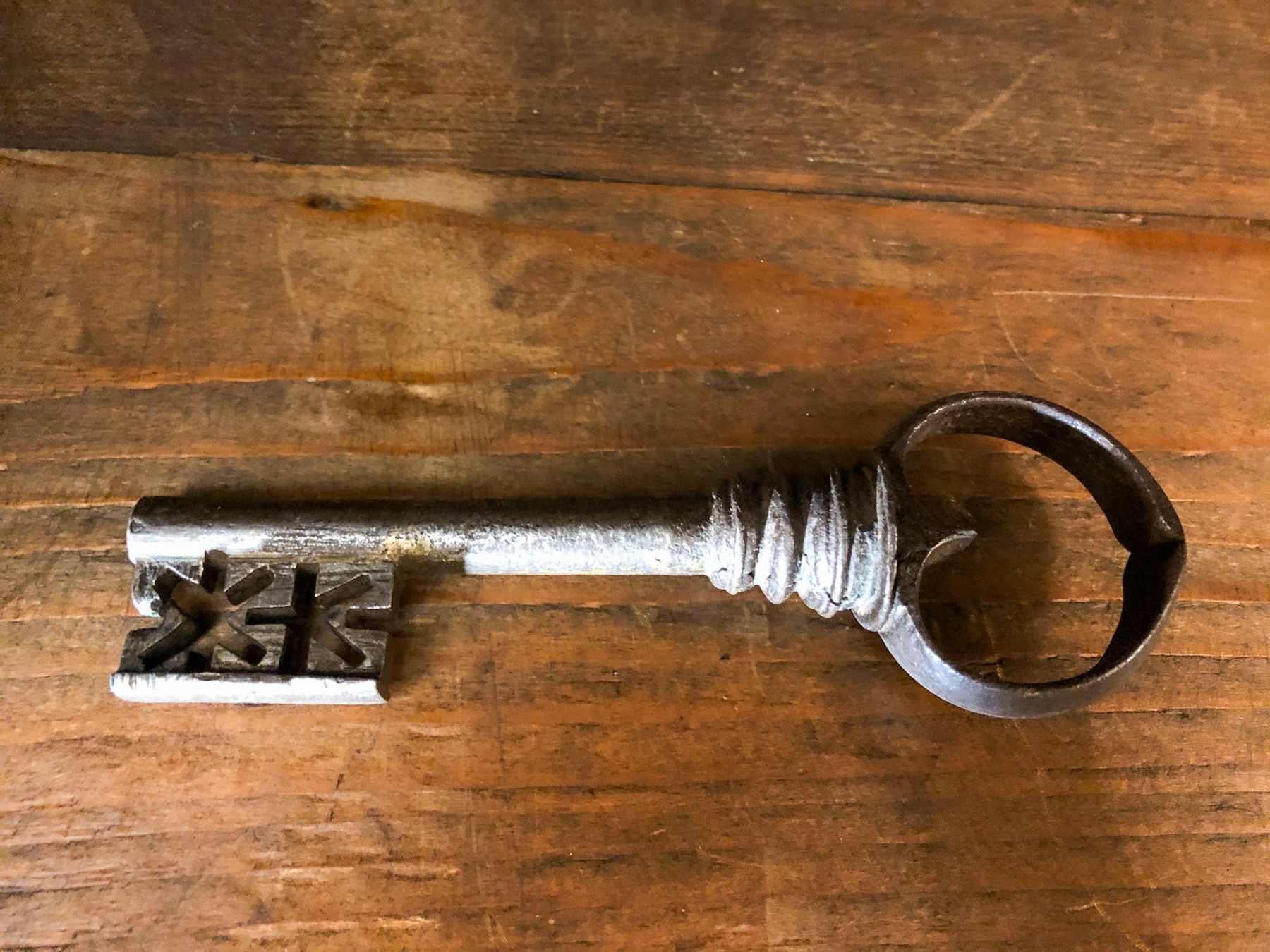
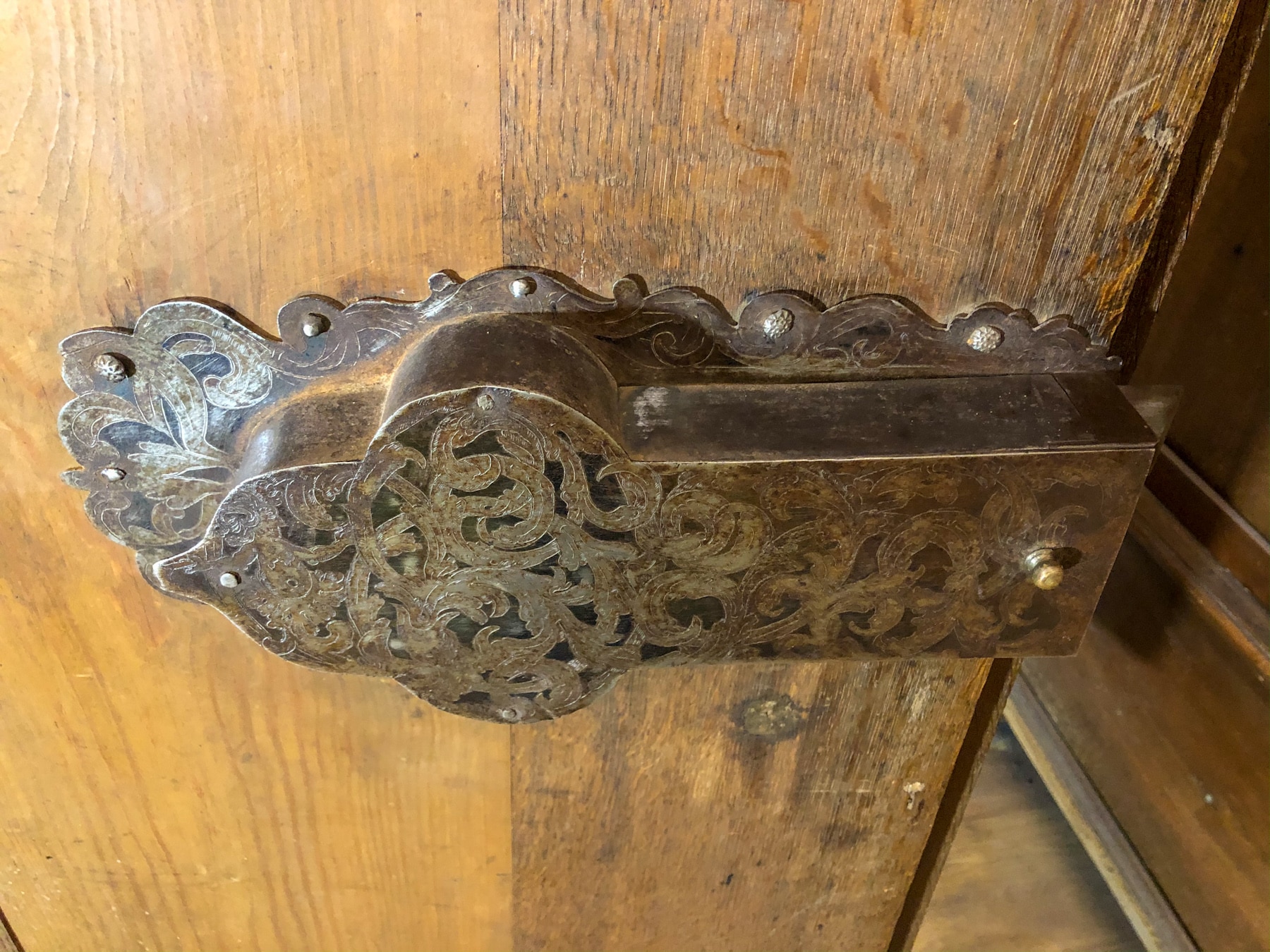
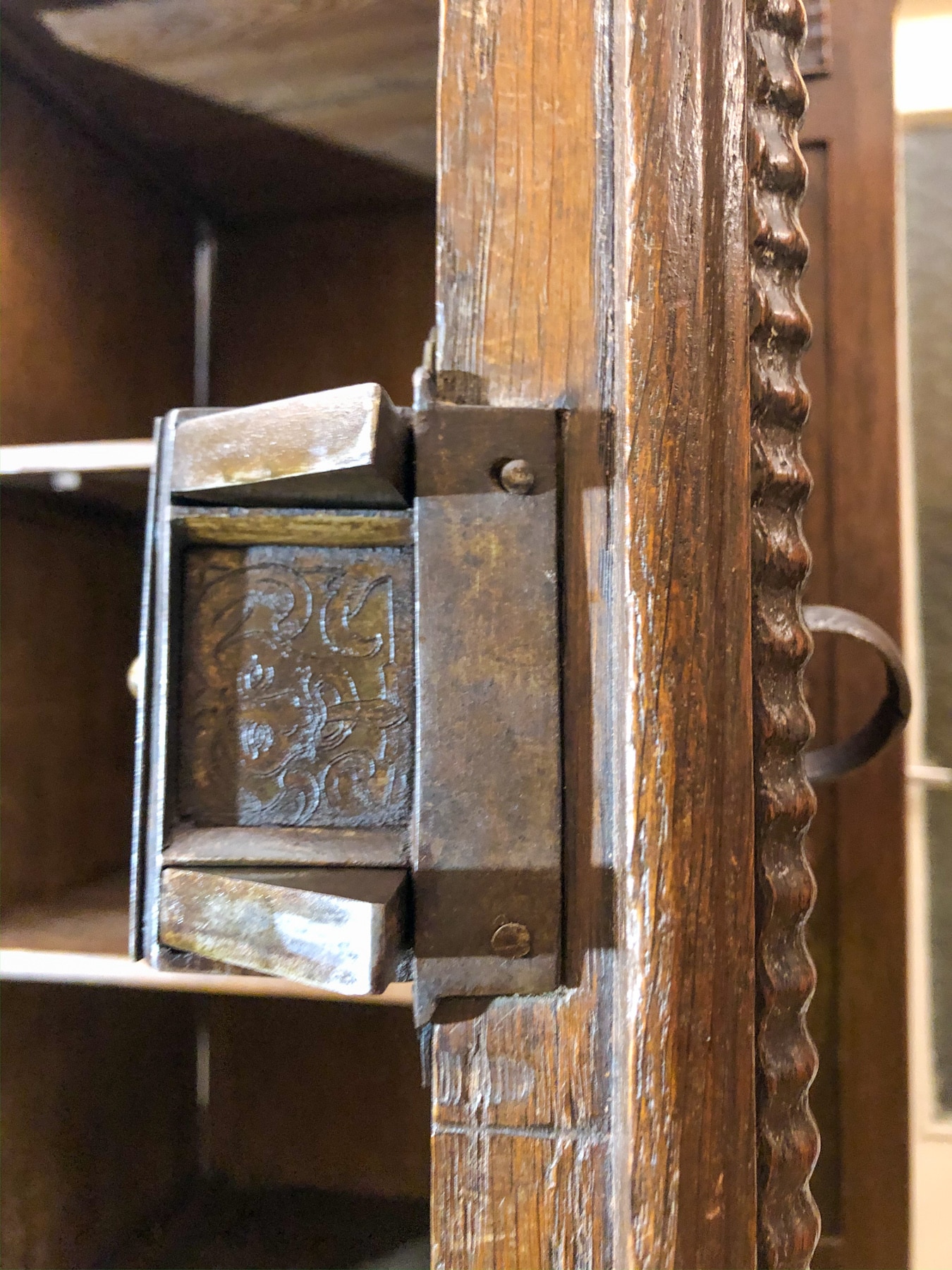
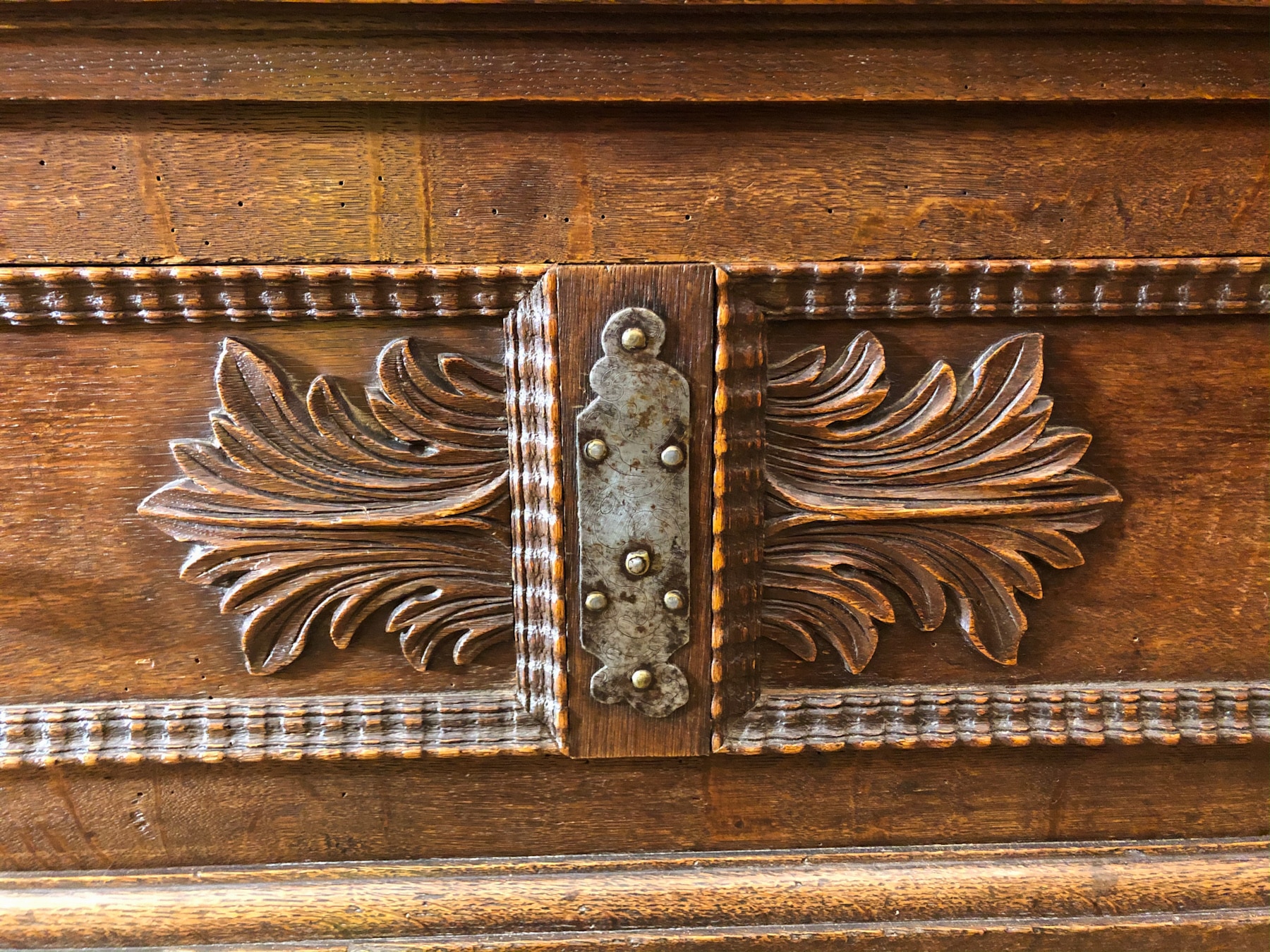
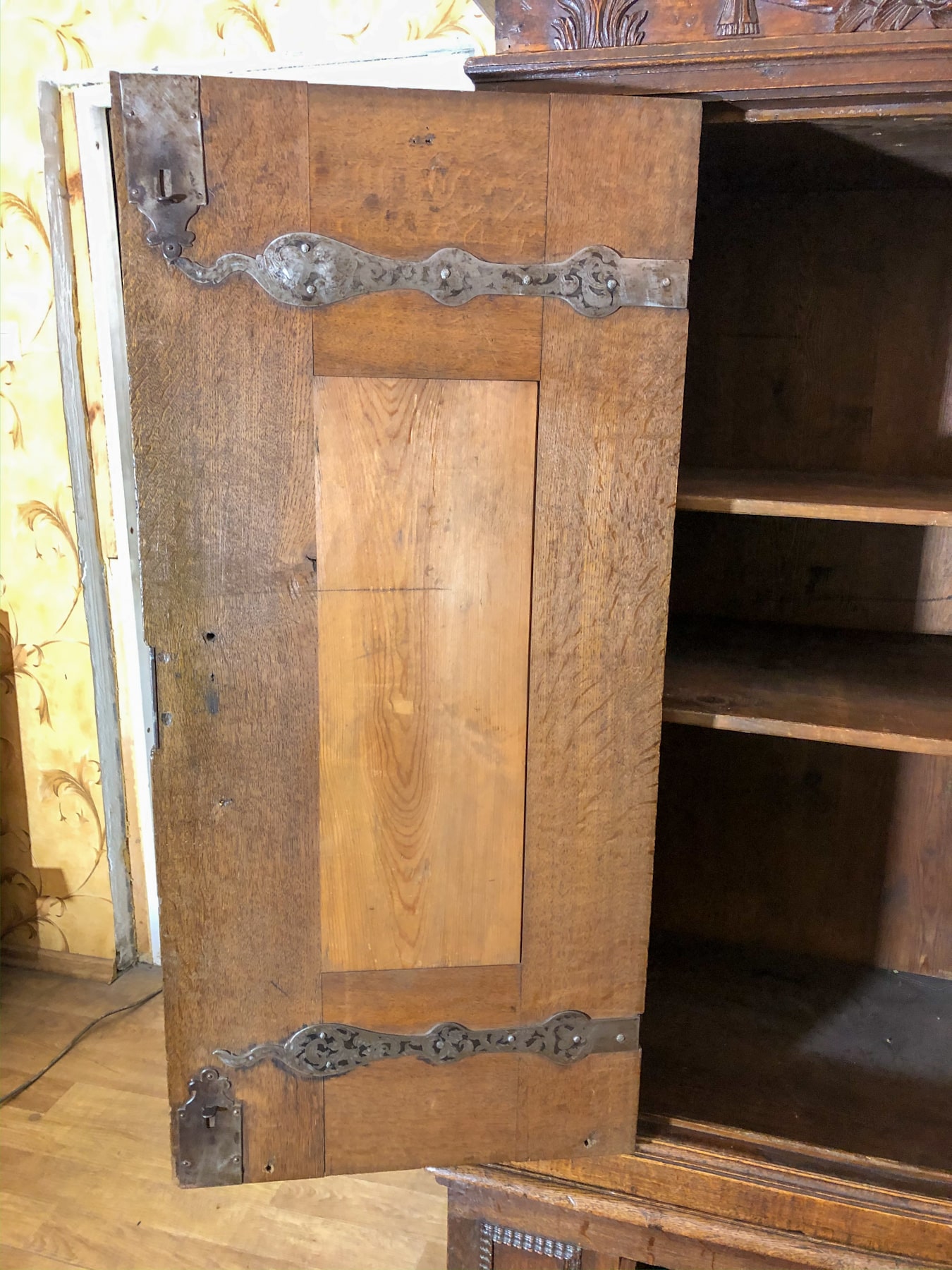
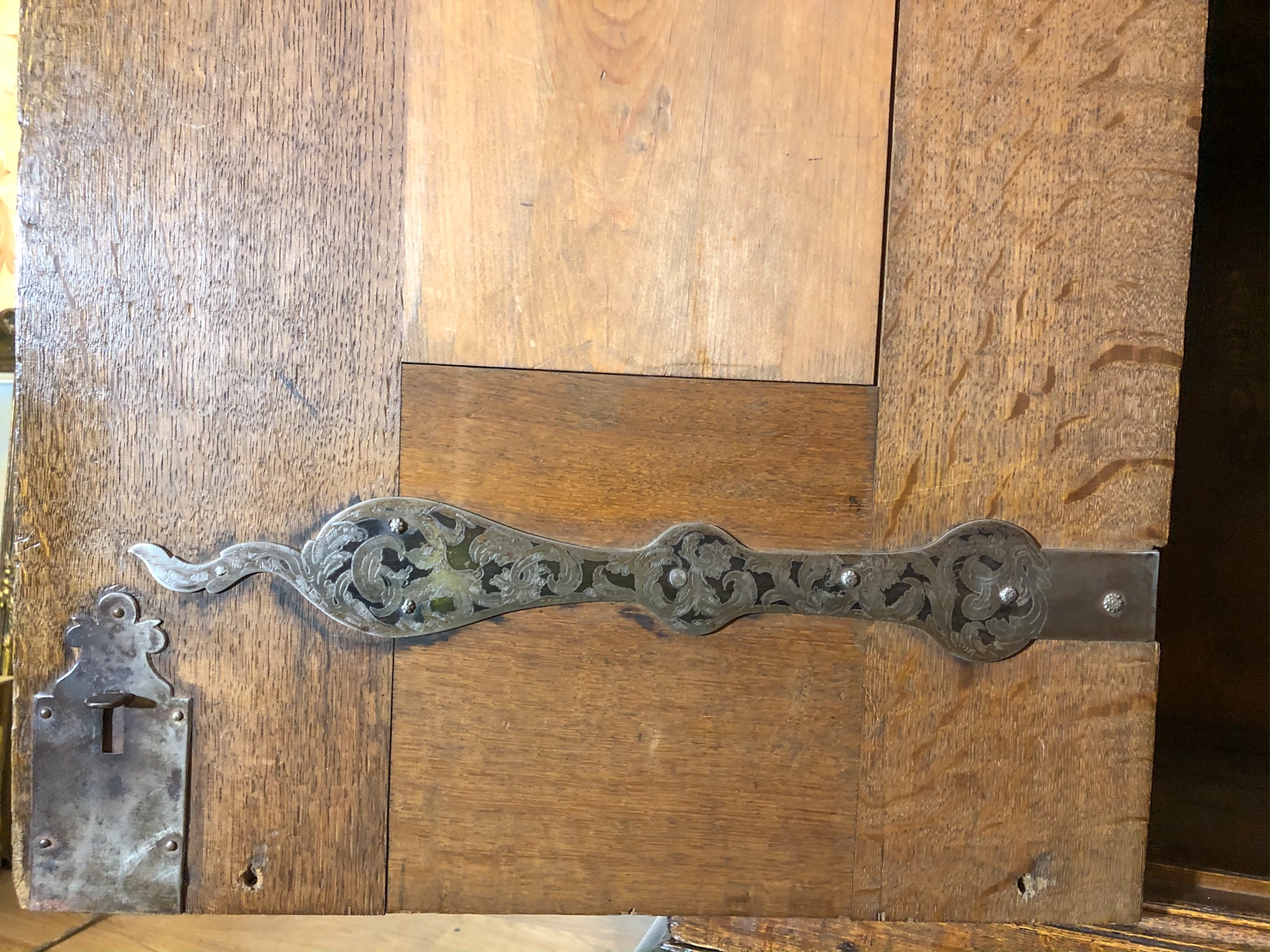
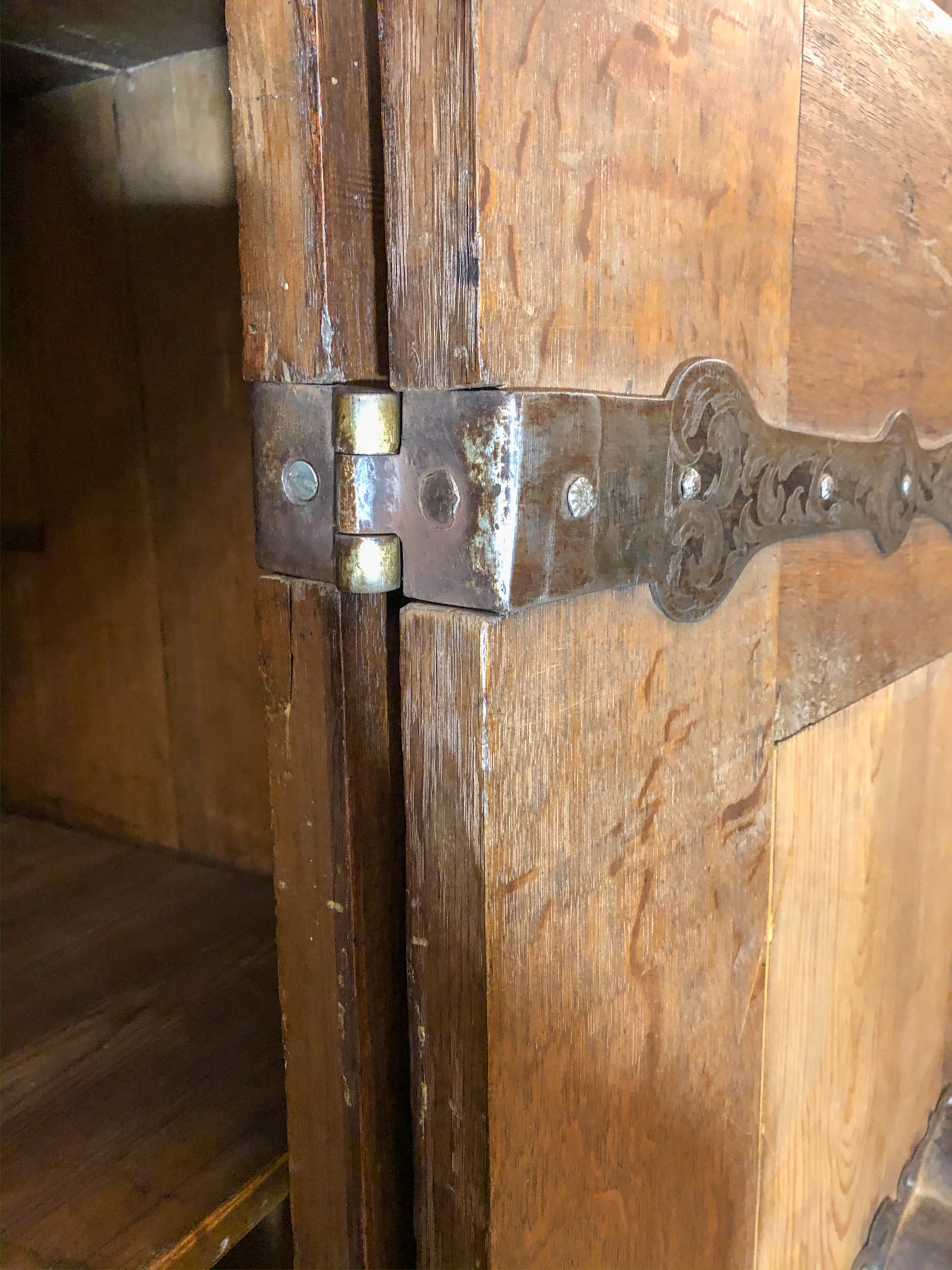
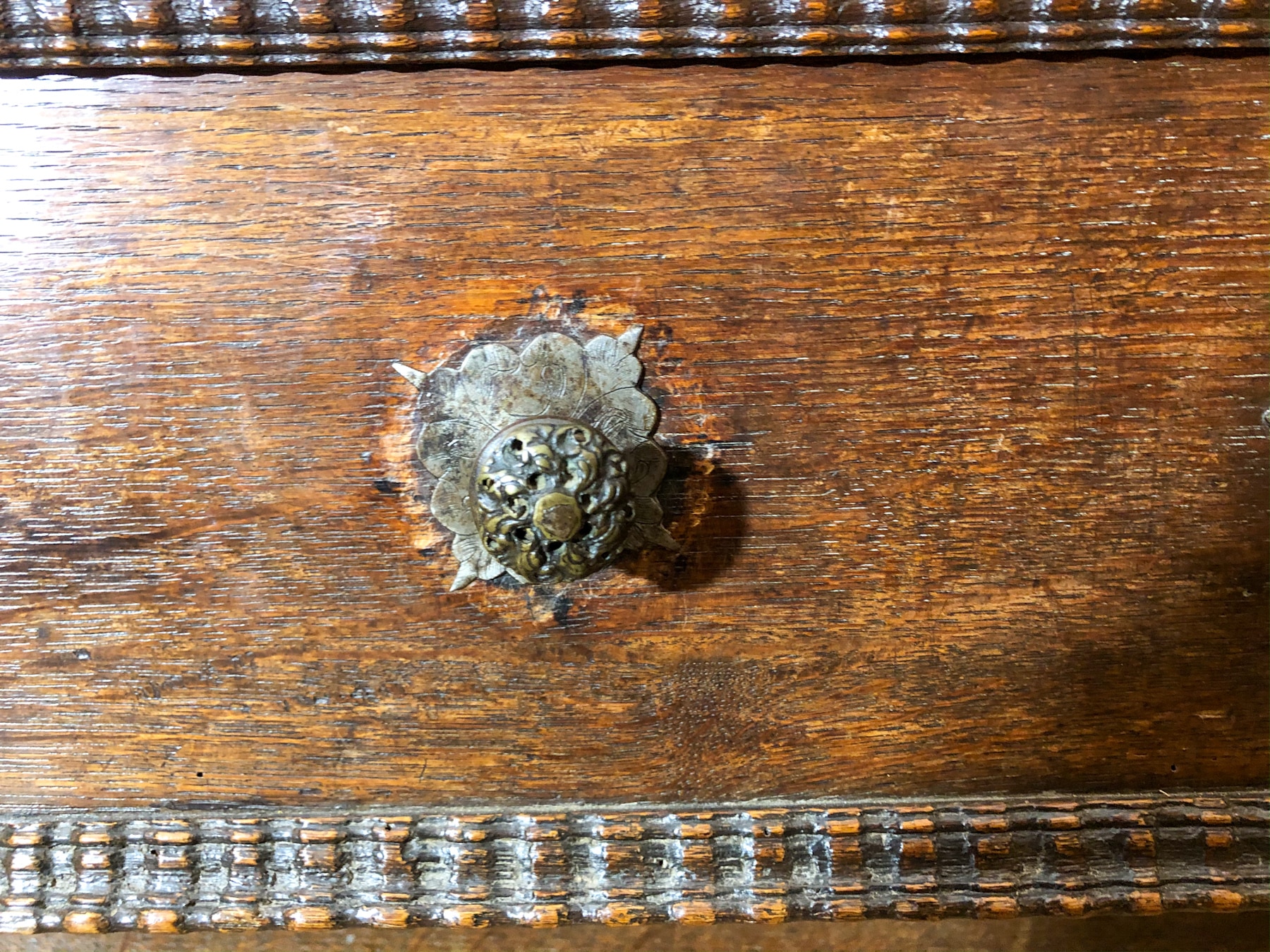
Metāla furnitūra — gravētās dzelzs eņģes ar caurgrieztu akantusu ornamentu, slēdzeņu plāksnes ar bronzas sejas relefu un masīvā dzelzs atslēga ar simetriski grieztu bitu — ir franču kalēja un slēdznieka meistara (serrurier) augstākā klase, kāda šajā periodā apkalpoja aristokrātiskās un augstās buržuāziskās ģimenes.
―――――――――――――――――――――
💎 RETUMS UN NOZĪME
Pilnībā saglabājušies Luija XIV laikmeta franču provinces skapji ar oriģinālu metāla furnitūru, kokgriezumiem un atslēgu ir ārkārtīgi reti kolekcionāru tirgū. Lielākā daļa šā perioda mēbeļu ir izirušas, pārveidotas vai nonākušas muzejos. Šis gabals ir saglabājies ar visiem oriģinālajiem elementiem — eņģēm, slēdzenēm, atslēgu un kokgriezumu pilnību — kas to padara par īpašu izņēmumu.
Stilistiskā un konstruktīvā paralēle ar Château d’Anet eksemplāru — vienu no Francijas renesanses un manierisms laikmeta ikoniskākajām privātrezidencēm, kas saistīta ar Diānas de Puatjē, Katrīnas Mediči un Luija XIV laikmeta vēsturi — piešķir šim skapim papildu kultūrvēsturisku dimensiju, kas pārsniedz parasta antīkā priekšmeta statusu.
Eiropas nozīmīgākajos antīko mēbeļu izsoļu namos — Christie’s, Sotheby’s, Drouot — šāda kalibra franču baroka skapji tiek meklēti gan privātkolekcionāriem, gan muzejiem, gan vēsturisko interjeru restaurācijas projektiem.
―――――――――――――――――――――
🕯️ PIELIETOJUMS INTERJERĀ, DIZAINĀ UN FOTOGRĀFIJĀ
Šis skapis ir interjera dominante — gabals, kas nosaka telpas raksturu un laikmetu. Tas organiski iekļaujas klasiskā, eklektiskā vai jaukta stila interjerā: muižas vai pilsētas villa bibliotēkā, reprezentācijas zālē, ieejā vai guļamistabā ar augstiem griestiem. Tā monumentālais apjoms un tumši zeltainais ozola tonis rada siltu, aristokrātisku atmosfēru.
Interjera dizaineri to izmanto kā vizuālo enkuru telpā — ap šādu gabalu tiek veidota visu pārējo elementu palete. Fotogrāfi un stilisti iesaista šādus skapjus luksusa žurnālu, modes un parfimērijas kampaņu uzņēmumos, kur nepieciešams autentisks Eiropas aristokrātiskā mantojuma fons. Château d’Anet un Vo le Vikont — abi šīs skapju tradīcijas liecinieki — ir kalpojuši arī kā Džeimsa Bonda filmu lokācijas, kas apliecina šo interjeru mūžīgo vizuālo spēku arī mūsdienu kultūrā.
―――――――――――――――――――――
🔍 STĀVOKLIS
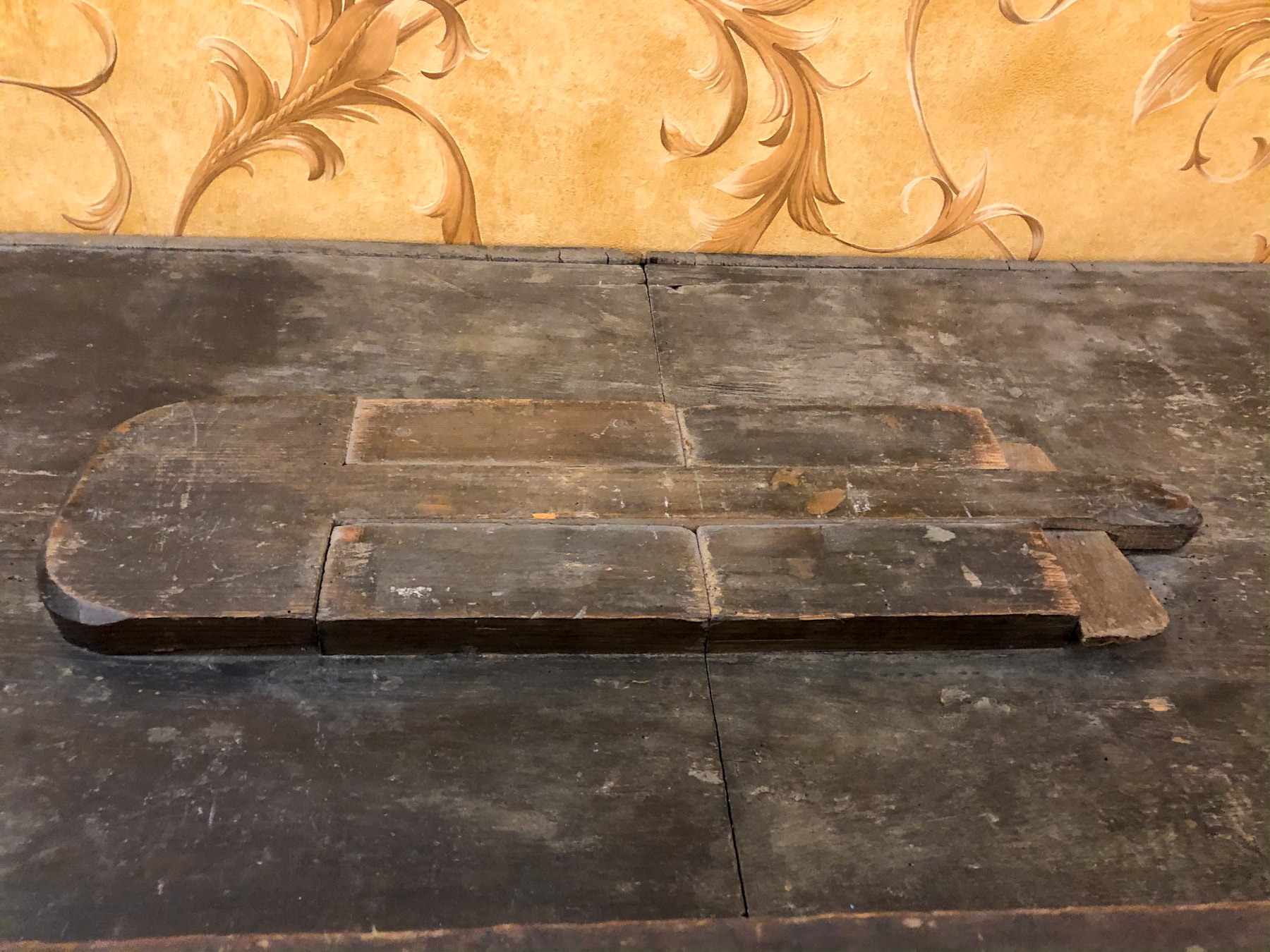
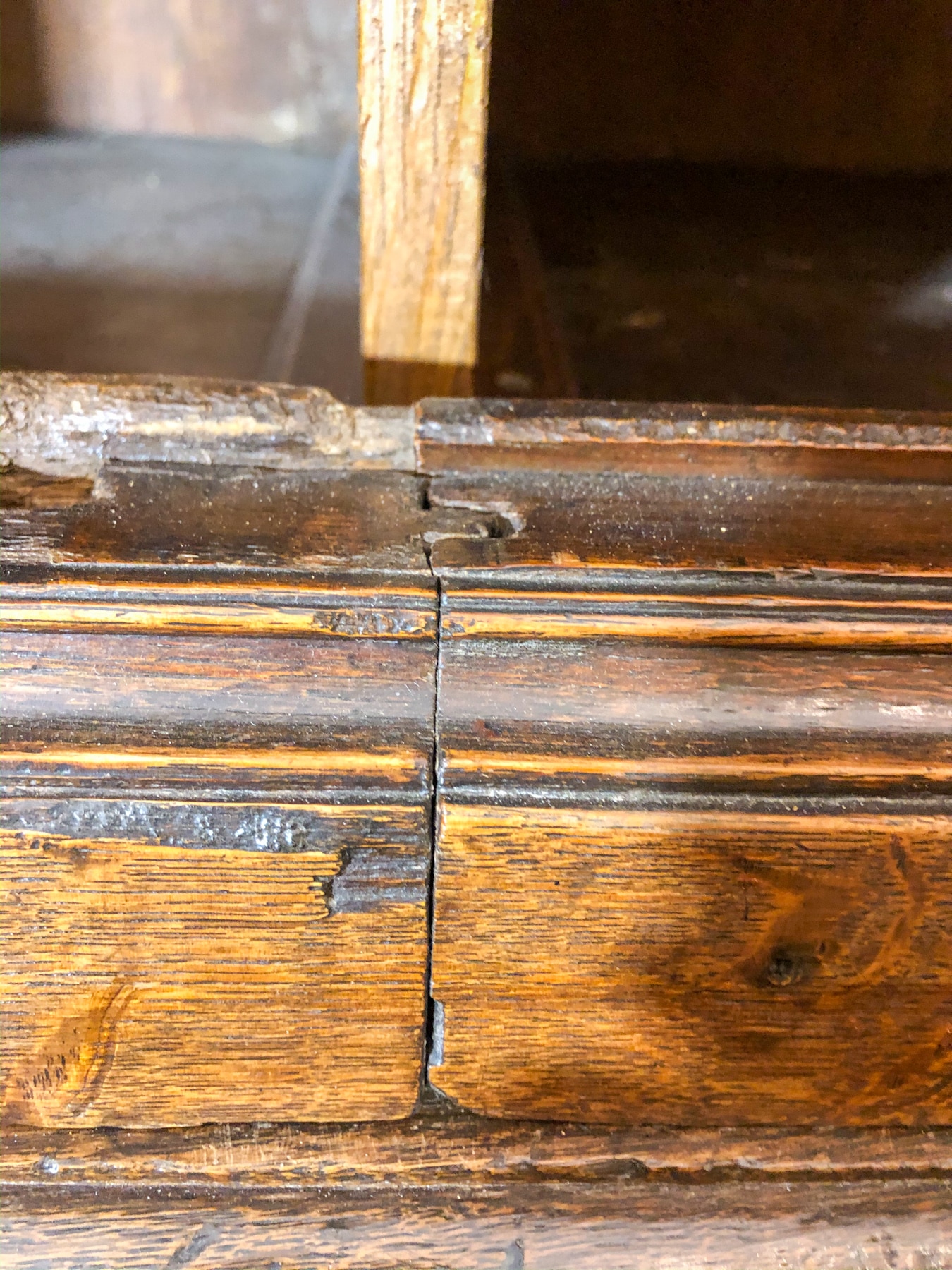
Skapis atrodas ļoti labā stāvoklī, ņemot vērā tā aptuveno vecumu — 300–340 gadi. Ozolkoks ir iegūvis bagātu, dziļi zeltaini brūnu patīnu, kas liecina par ilgstošu, rūpīgu lietošanu. Kokgriezumi ir skaidri, ar labu plastiku un detaļu saglabātību. Metāla furnitūra — eņģes, slēdzeņu plāksnes un atslēga — ir oriģināla un funkcionāla. Redzamas nelielas dabiskas koka plaisas, kas ir absolūti normāla masīva ozolkoka reakcija uz klimata pārmaiņām gadsimtu gaitā un nekādā veidā nemazina gabala integritāti vai vērtību. Nelielas virsmas nolietojuma pēdas atbilst priekšmeta godīgajam vecumam. Restaurācijas pazīmes nav konstatētas.
Lietas stāvoklis pilnībā atspoguļots fotogrāfijās.
―――――――――――――――――――――
🇬🇧 DESCRIPTION IN ENGLISH
Carved Oak Cabinet with Angels — Baroque / Louis XIV Style, France (Alsace or Burgundy), circa 1680–1720
📐 Height 191 cm × Width 173 cm × Depth 71 cm
―――――――――――――――――――――
🏛️ PERIOD, ARTISTIC STYLE AND HISTORICAL CONTEXT
This monumental carved oak cabinet was crafted approximately between 1680 and 1720 — the era known in European cultural history as the Louis XIV or High Baroque period. It was a time when the French court at Versailles dictated aesthetic law across the whole of Europe, and guild craftsmen in provincial cities — Strasbourg, Dijon, Colmar — competed to bring the refinement of the royal court into solid oak and iron.
The Baroque style is expressed here with full dramatic force: deeply carved putto — cherubic angel faces — above both doors, generous acanthus leaf scrolls, rose garlands tied with ribbons and tasselled cords, and finely profiled mouldings throughout. At the centre of the entire decorative programme stand two putto heads — Baroque symbols of Divine Providence and domestic blessing, placed in the most precious furnishings of the age.
This era in France was also one in which the legendary fête of 1661 at Vaux-le-Vicomte — the grandiose residence of finance minister Nicolas Fouquet — remained vivid in living memory. The Baroque splendour of that evening so dazzled and enraged Louis XIV that he ordered Fouquet’s arrest, carried out in person by the royal musketeer Charles de Batz — the historical prototype of d’Artagnan. A cabinet born in the immediate aftermath of these events carries within it the very spirit of that age — the same monumental Baroque vocabulary, the same guild mastery that served the highest levels of French society.
―――――――――――――――――――――
⚜️ MAKER AND CRAFT TRADITION
No individual maker’s mark is visible on the cabinet, yet the entire execution — the depth and plasticity of the carvings, the quality of the metal hardware — points unmistakably to the work of a French provincial guild master at the highest level of qualification. In the late 17th and early 18th centuries, French cabinetmakers operated within strictly regulated guilds (corporations des menuisiers-ébénistes), where the rank of master was achieved only after years of apprenticeship and examination — including the presentation of a chef-d’œuvre before the guild council.
Of particular significance is this cabinet’s stylistic kinship with the Château d’Anet tradition — the residence of Diane de Poitiers, designed circa 1550 by the architect Philibert de l’Orme. The twin brother of this cabinet — virtually identical in construction and decorative programme — stands today in the main vestibule of Château d’Anet as one of the château’s most representative furnishing pieces. The château’s custodians searched for more than twenty years for precisely such a piece — a fact that unambiguously confirms the extreme rarity and collector value of cabinets of this type.
The metal hardware — engraved iron hinges with pierced acanthus ornament, lock plates with bronze figural relief, and the substantial iron key with its symmetrically cut bit — represents the highest class of French locksmith work (serrurier) of this period, of the kind commissioned for aristocratic and haute-bourgeois households.
―――――――――――――――――――――
💎 RARITY AND SIGNIFICANCE
Fully intact Louis XIV-period French provincial cabinets retaining their original metal hardware, carvings and key are exceptionally rare on the collector’s market. The great majority of furniture from this period has been dispersed, altered or absorbed into museum collections. This piece has survived with all its original elements — hinges, lock plates, key and the full integrity of its carvings — which makes it a remarkable exception.
The stylistic and structural parallel with the Château d’Anet example — one of the most iconic private residences of the French Renaissance and Mannerist era, associated with Diane de Poitiers, Catherine de’ Medici and the world of the Valois court — lends this cabinet a cultural and historical dimension that transcends the status of an ordinary antique.
At Europe’s leading auction houses — Christie’s, Sotheby’s, Drouot — French Baroque cabinets of this calibre are sought by private collectors, museums and historic interior restoration projects alike.
―――――――――――――――――――――
🕯️ USE IN INTERIOR DESIGN AND PHOTOGRAPHY
This cabinet is an interior centrepiece — a piece that defines the character and era of a room. It integrates naturally into a classical, eclectic or mixed-style interior: a manor library, a reception hall, an entrance hall or a bedroom with high ceilings. Its monumental volume and deep golden oak tone create a warm, aristocratic atmosphere.
Interior designers use pieces of this kind as the visual anchor of a room, around which all other elements — palette, textiles, lighting — are composed. Photographers and stylists engage such cabinets in luxury magazine shoots, fashion and fragrance campaigns wherever an authentic background of European aristocratic heritage is required. Both Château d’Anet and Vaux-le-Vicomte — witnesses to this very cabinet tradition — have served as locations for James Bond films, testament to the enduring visual power of these interiors in contemporary culture.
―――――――――――――――――――――
🔍 CONDITION
The cabinet is in very good condition considering its approximate age of 300 to 340 years. The oak has acquired a rich, deeply golden-brown patina, evidence of long and careful use. The carvings are crisp, with strong relief and good retention of detail. The metal hardware — hinges, lock plates and key — is original and functional. Minor natural splits are visible in the wood, which are an entirely normal response of solid oak to centuries of climate variation and in no way diminish the integrity or significance of the piece. Light surface wear is consistent with the cabinet’s honest age. No evidence of restoration has been identified.
The condition of this piece is fully represented in the photographs.