Bronzēts Čuguna Puķu Galdiņš ar Keriem un Melnu Koka Virsmu — Neorokoko, Rietumeiropa, 19.gs. (5915)
Bronzēts Čuguna Puķu Galdiņš ar Keriem un Melnu Koka Virsmu — Neorokoko, Rietumeiropa, 19.gs. (5915)
€450.00
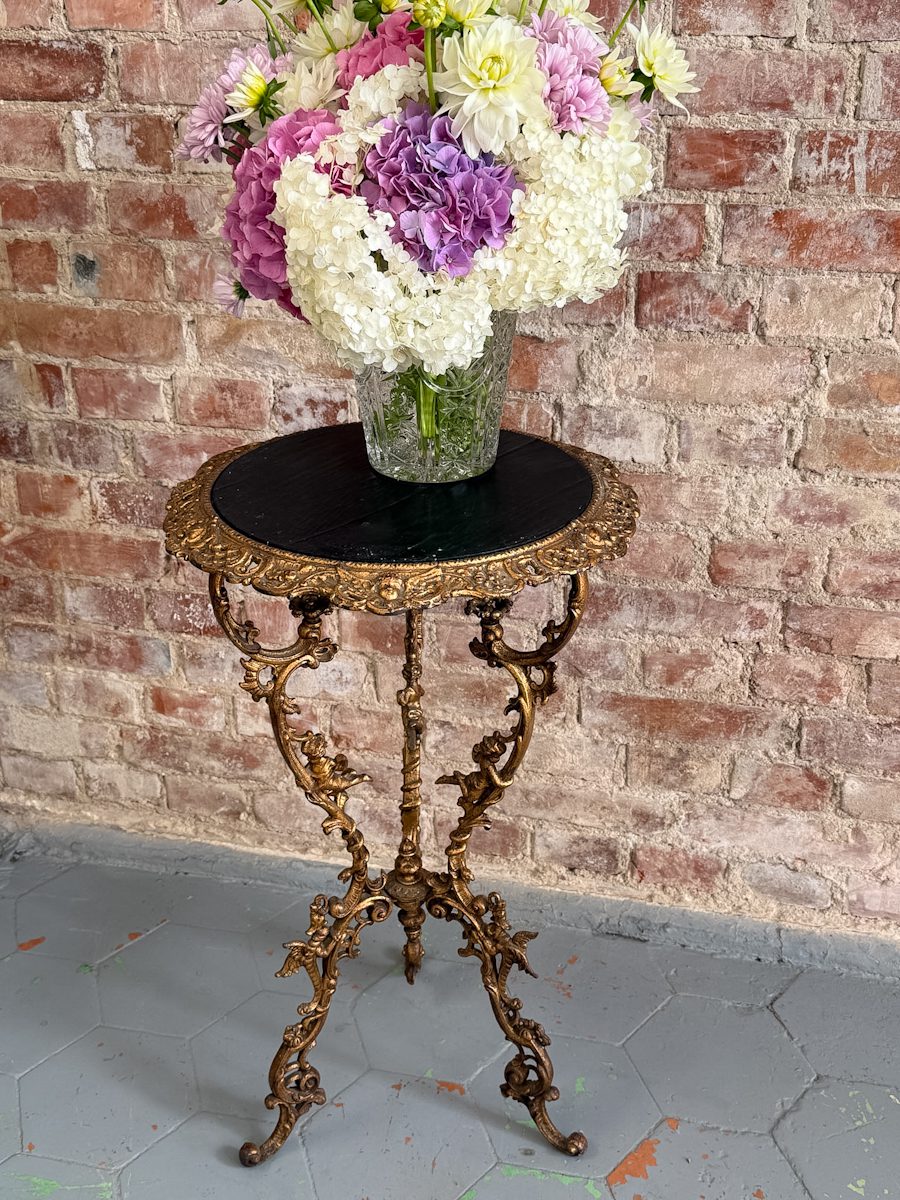
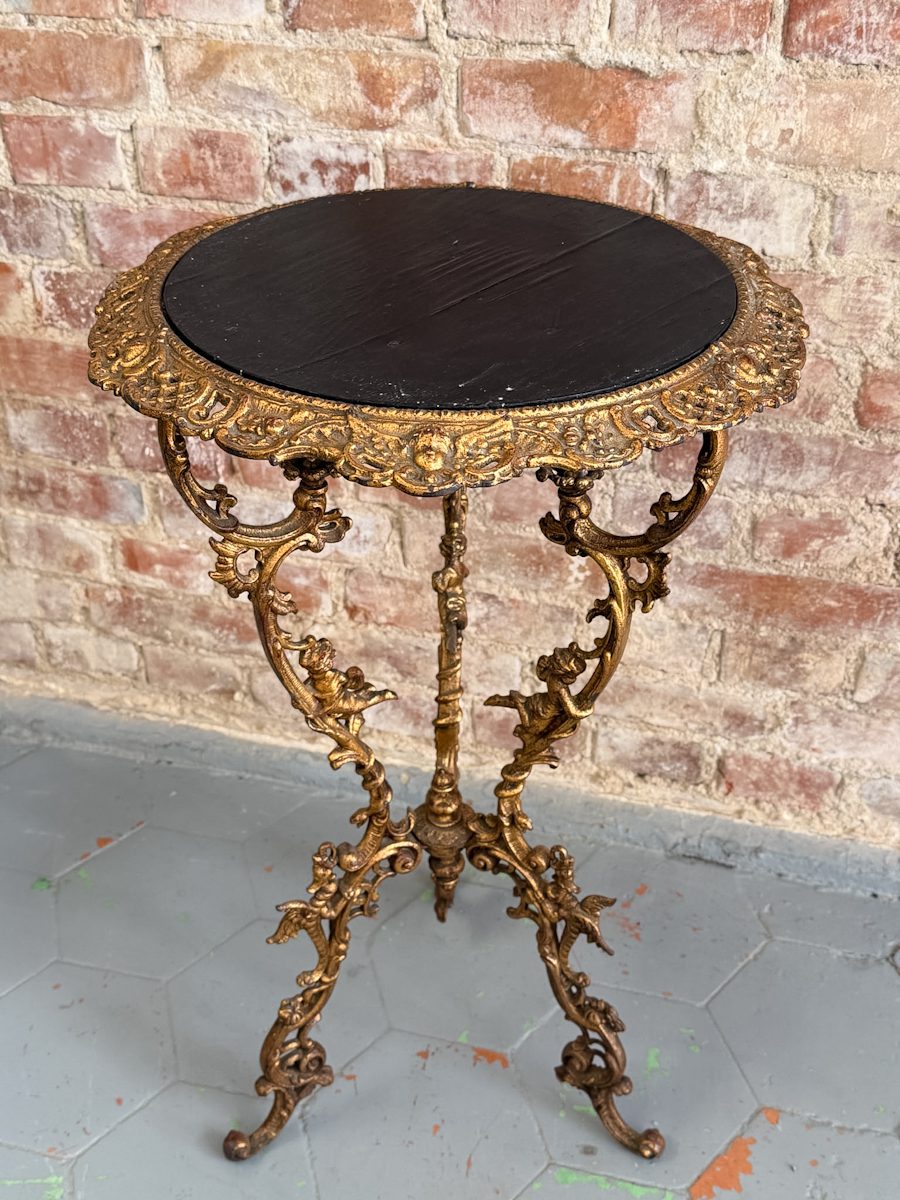
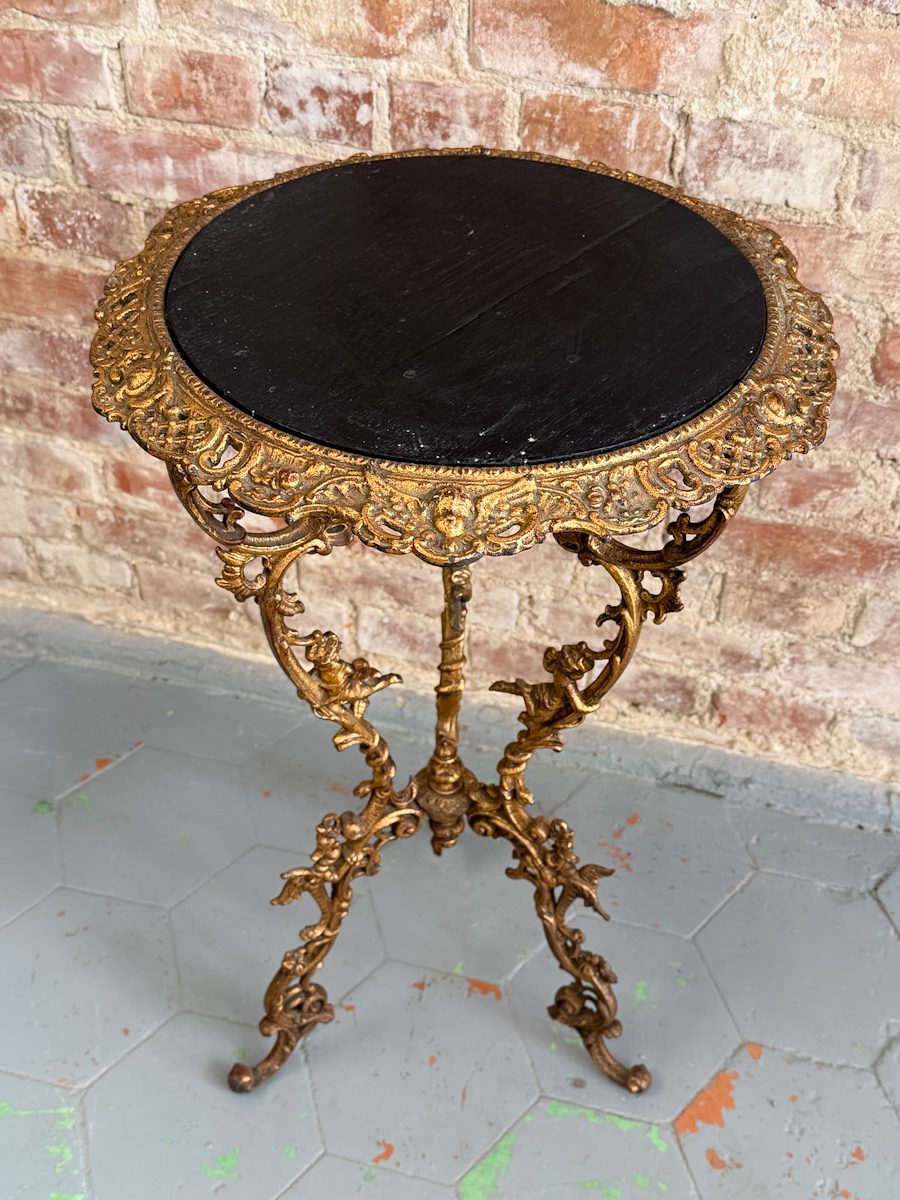
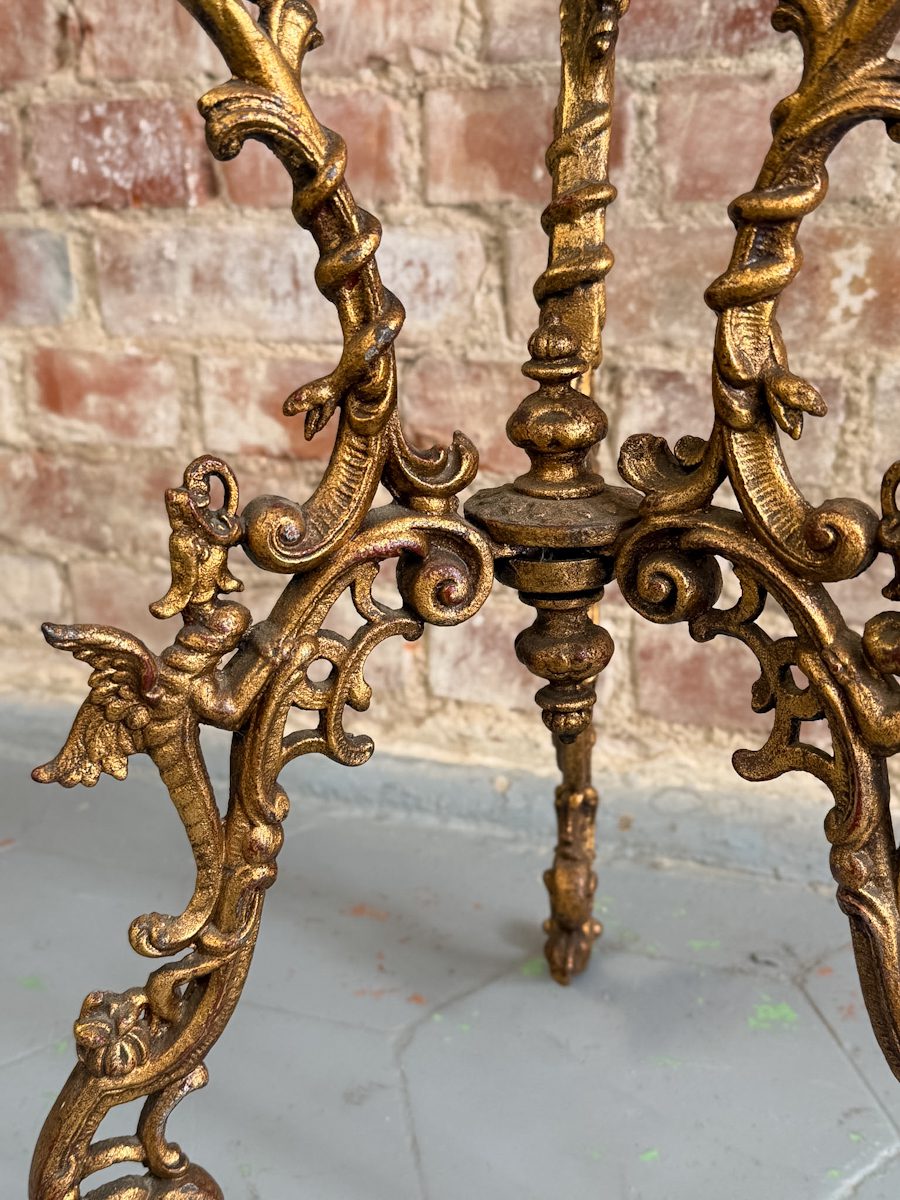
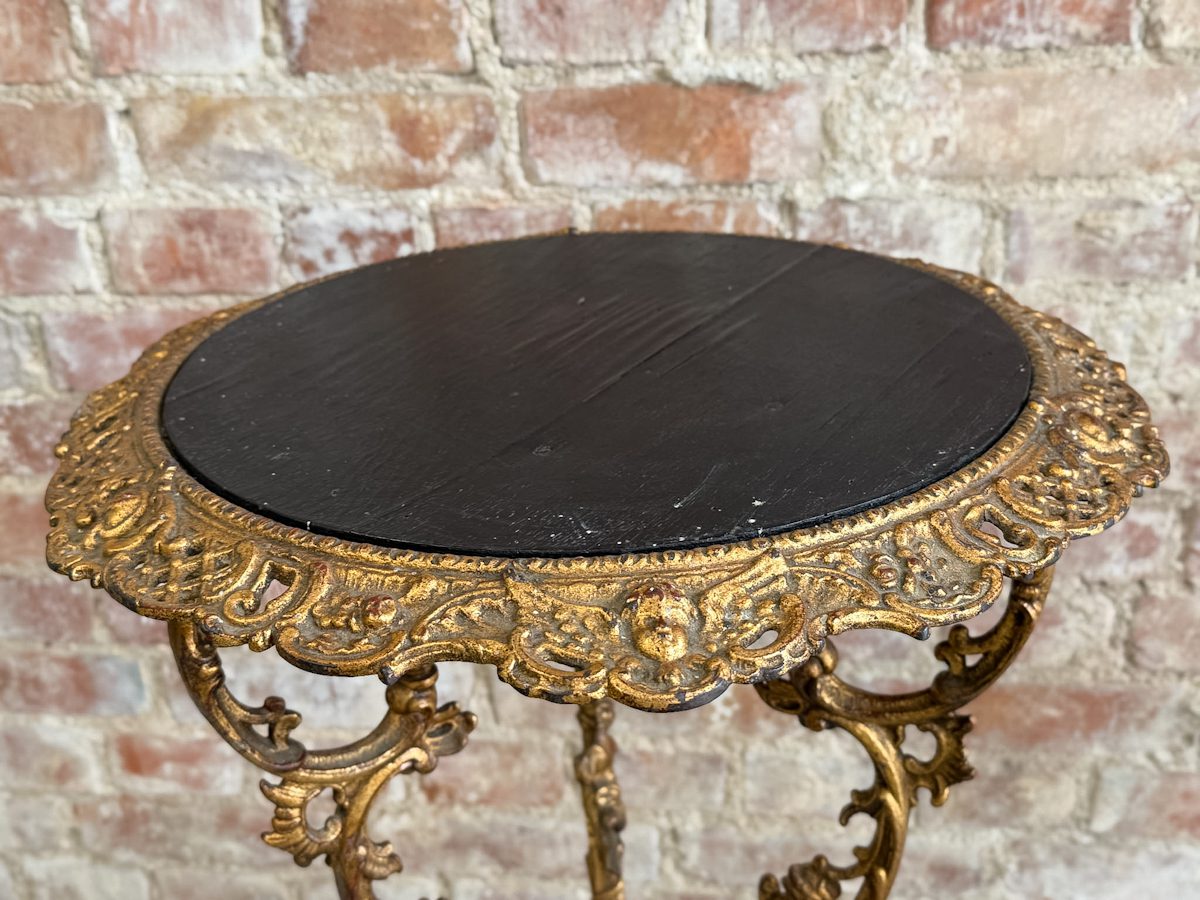
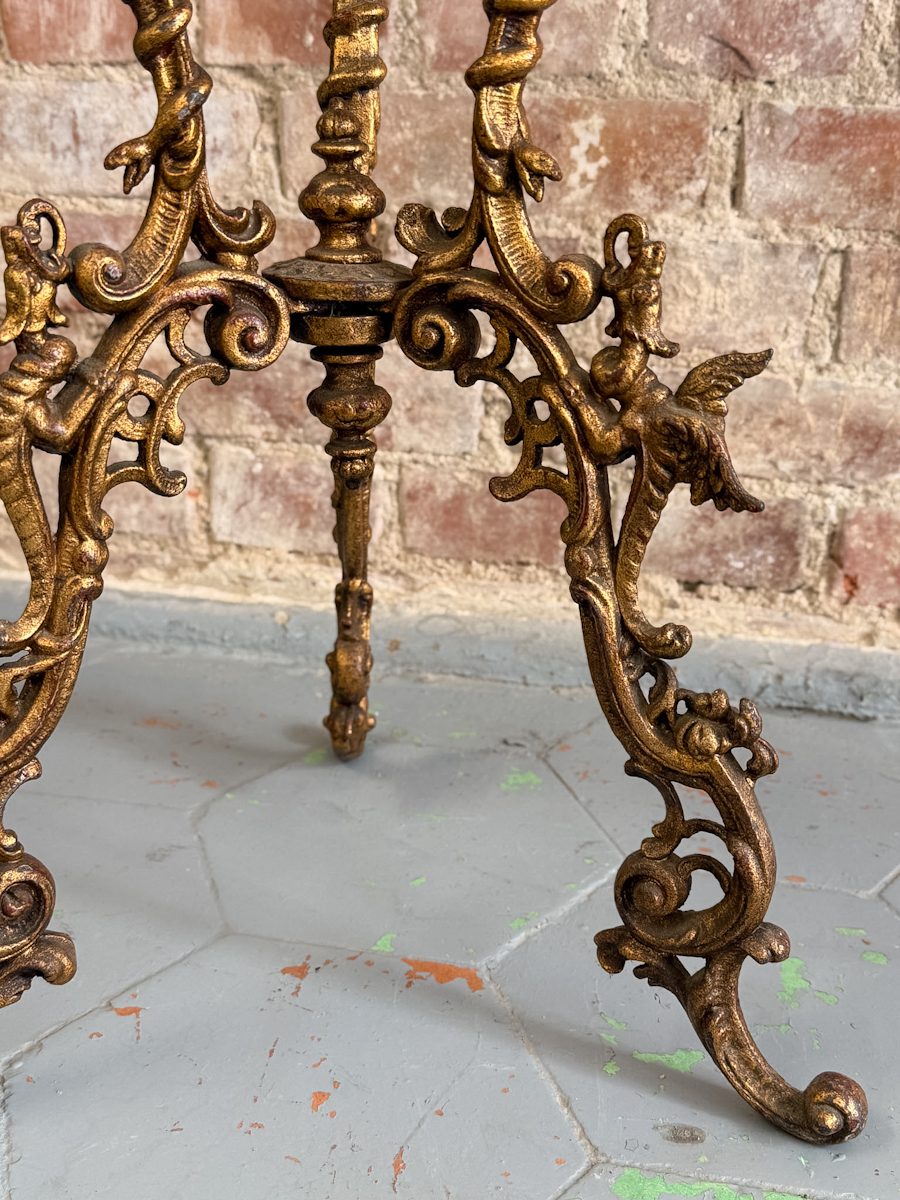
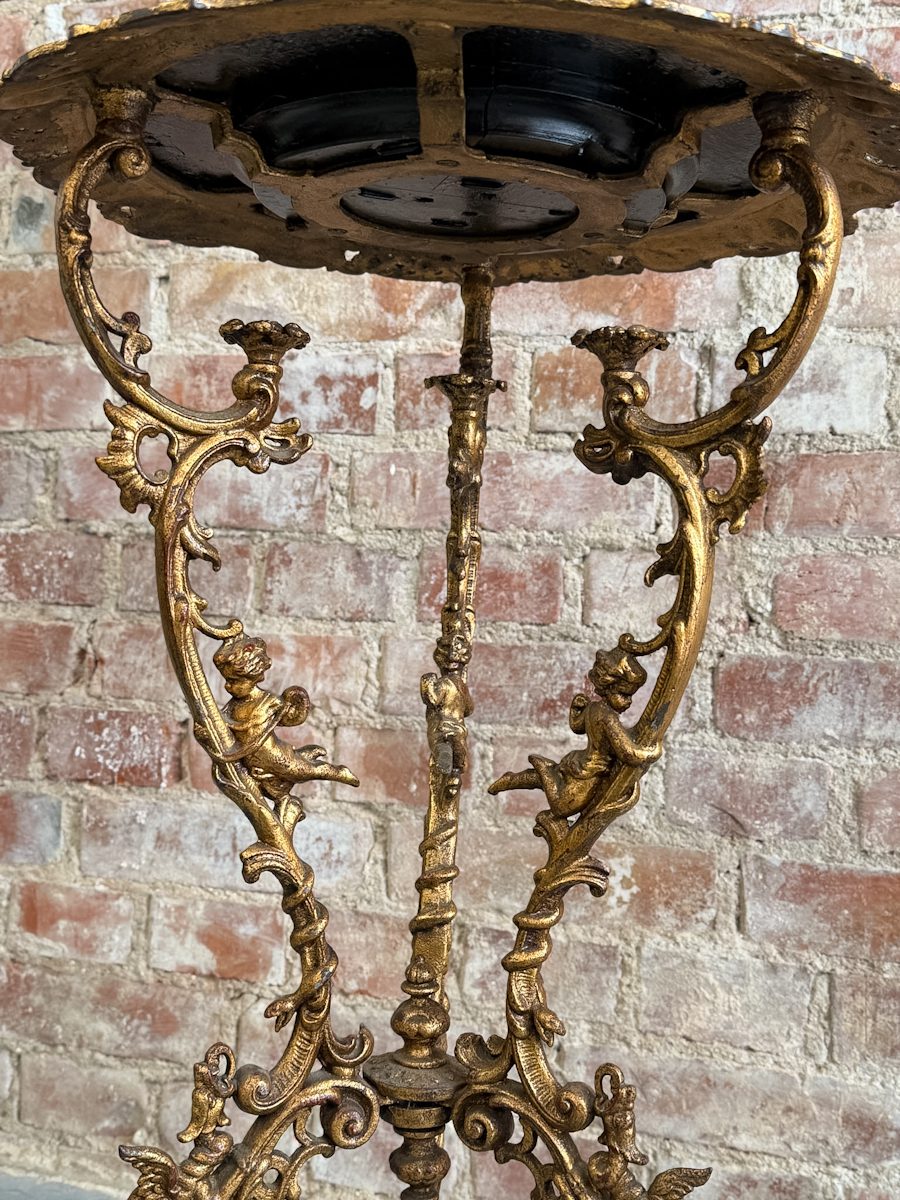
Bronzēts lieta metāla puķu galdiņš ar melnotu koka virsmu. Trīs izliektas kājas ar putti keriem un spārnotiem pūķiem, bagātīgs rocaille reljefs apmalē. Neorokoko / Historicisms, Rietumeiropa, ap 1870.–1900. Augstums 78,5 cm × platums 45,5 cm.
📐 IZMĒRI Augstums 78,5 cm × platums 45,5 cm.
―――――――――――――――――――――
Bronzēts Čuguna Puķu Galdiņš ar Melnu Koka Virsmu un Keru Figūrām — Neorokoko / Historicisms, Rietumeiropa, ap 1870.–1900.
―――――――――――――――――――――
🏛️ IZGATAVOŠANAS PERIODS, MĀKSLAS STILS, LAIKMETS
Šis izsmalcinātais galdiņš pieder tam auglīgajam periodam, kad Historicisms vēl turēja savas monumentālās formas, bet Neorokoko jau atnesa jaunu vieglumu, kaprīzi un teatrālu dekoratīvismu — abas estētikas šeit sadzīvo vienā objektā ar retāk sastopamu harmoniju. Tā ir tipisks Second Empire vai vēlā Viktorijas laikmeta guéridon tipa galdiņš — neliels apaļš blakusgaldiņš (table à fleurs vai jardinière stand), kas rotāja aristokrātisku un haute bourgeoisie interjeru salon telpās.
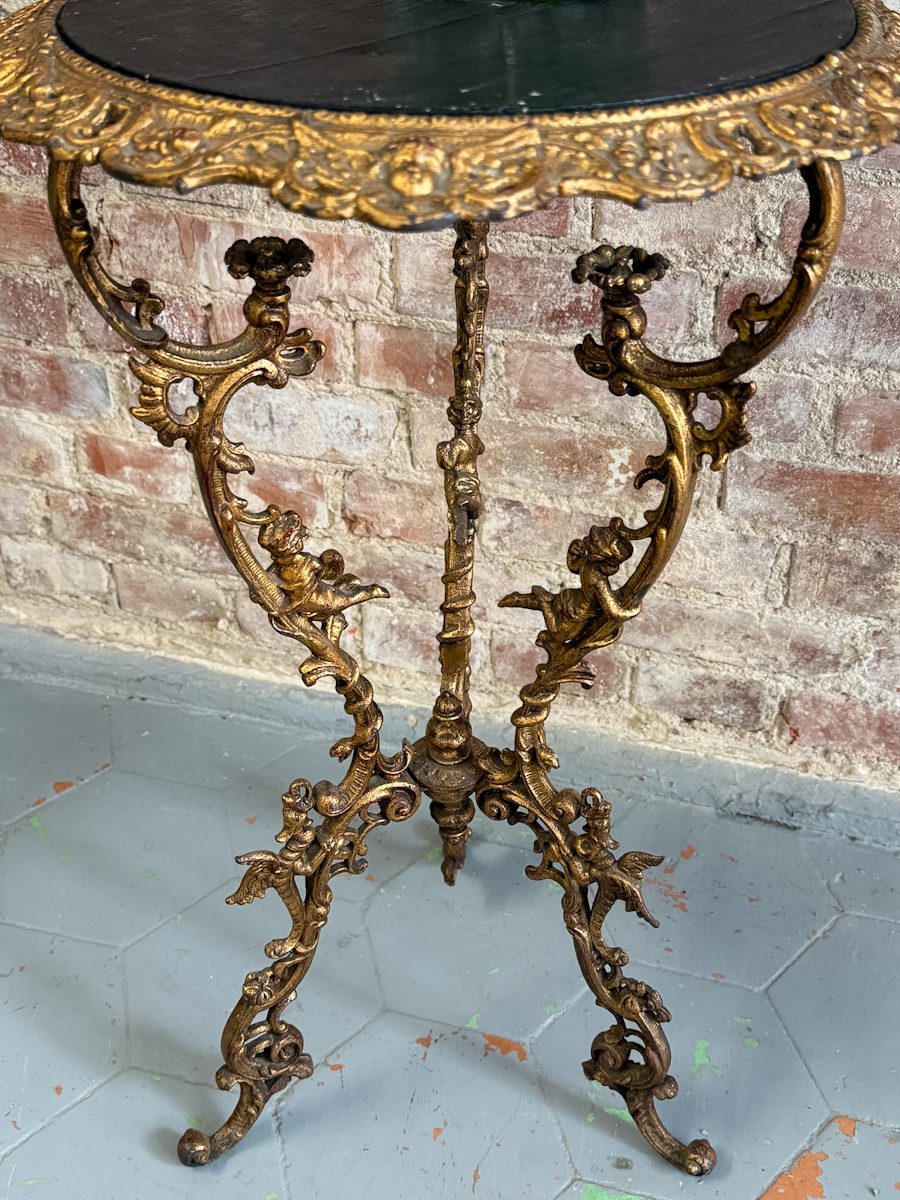
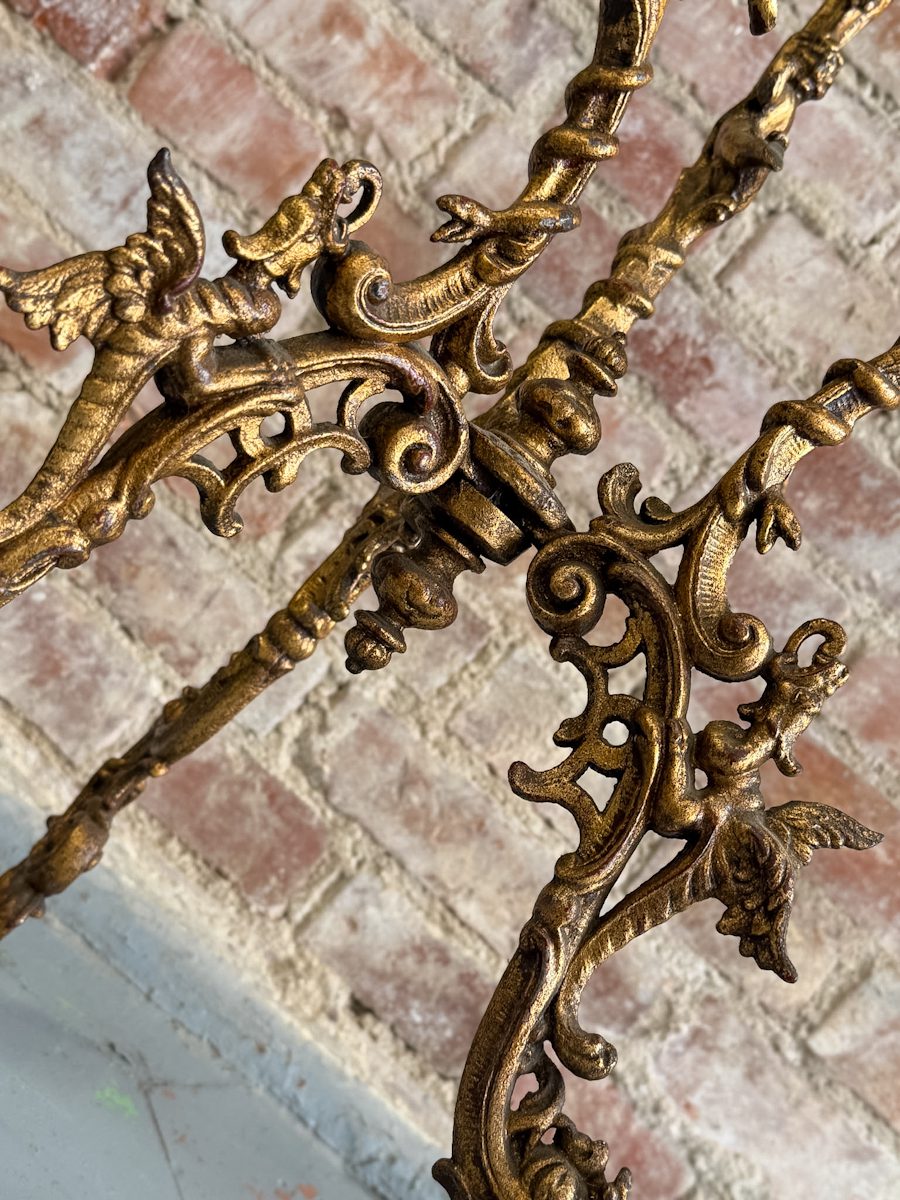
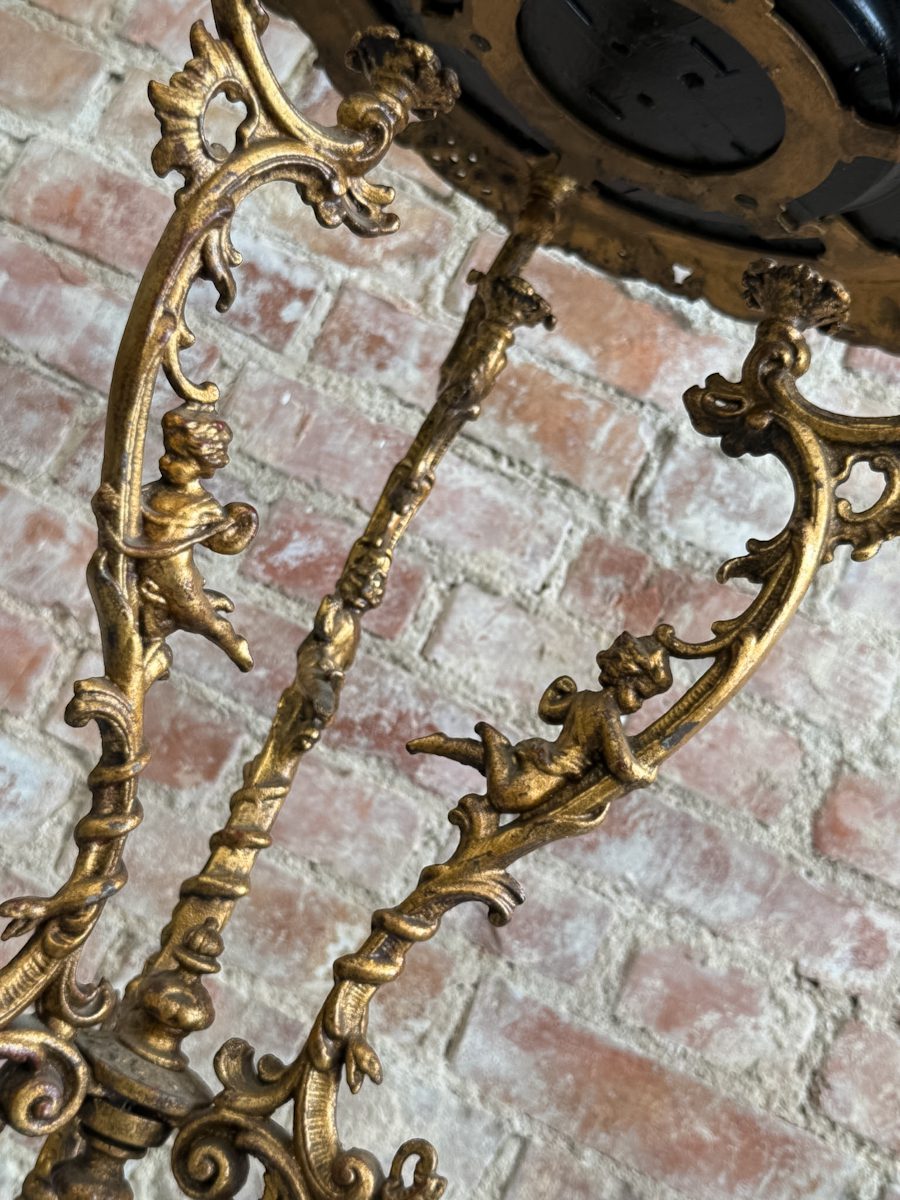
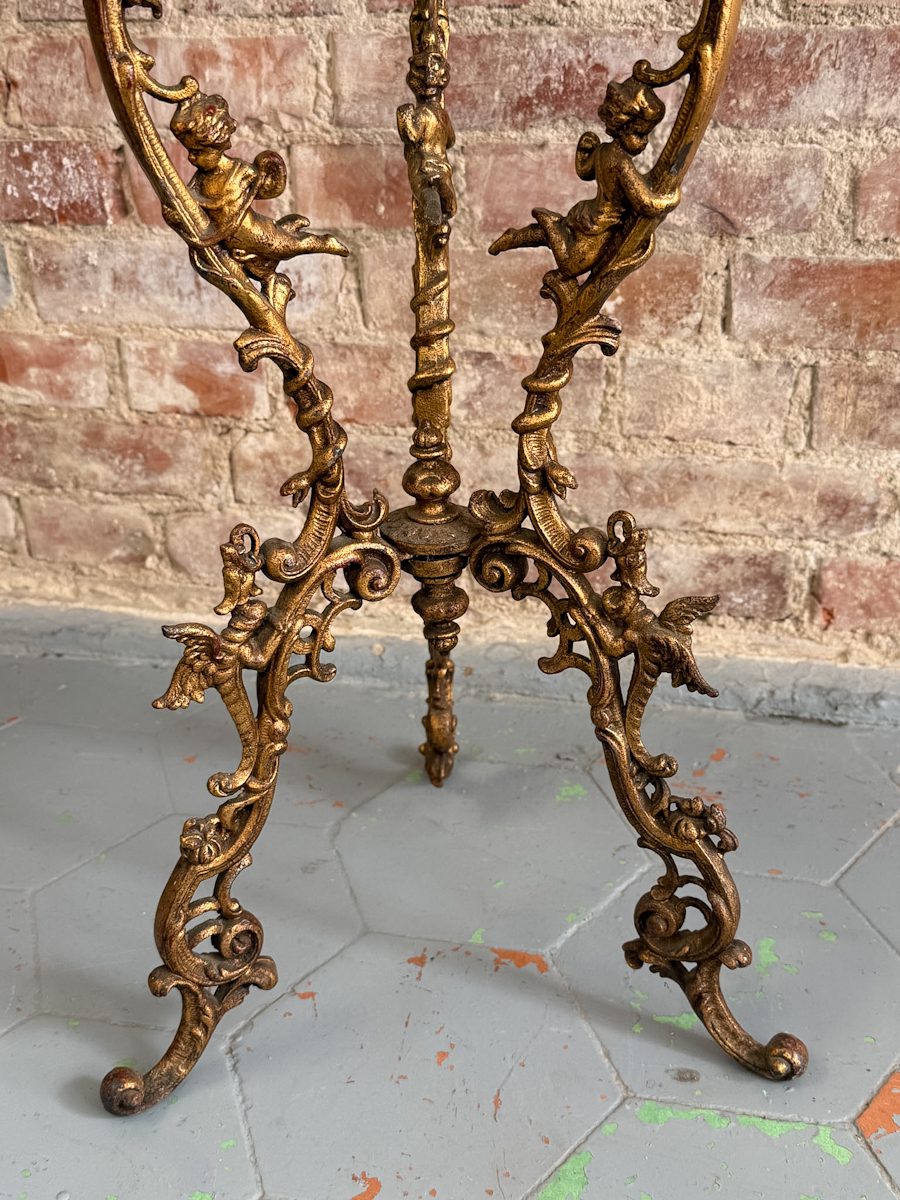
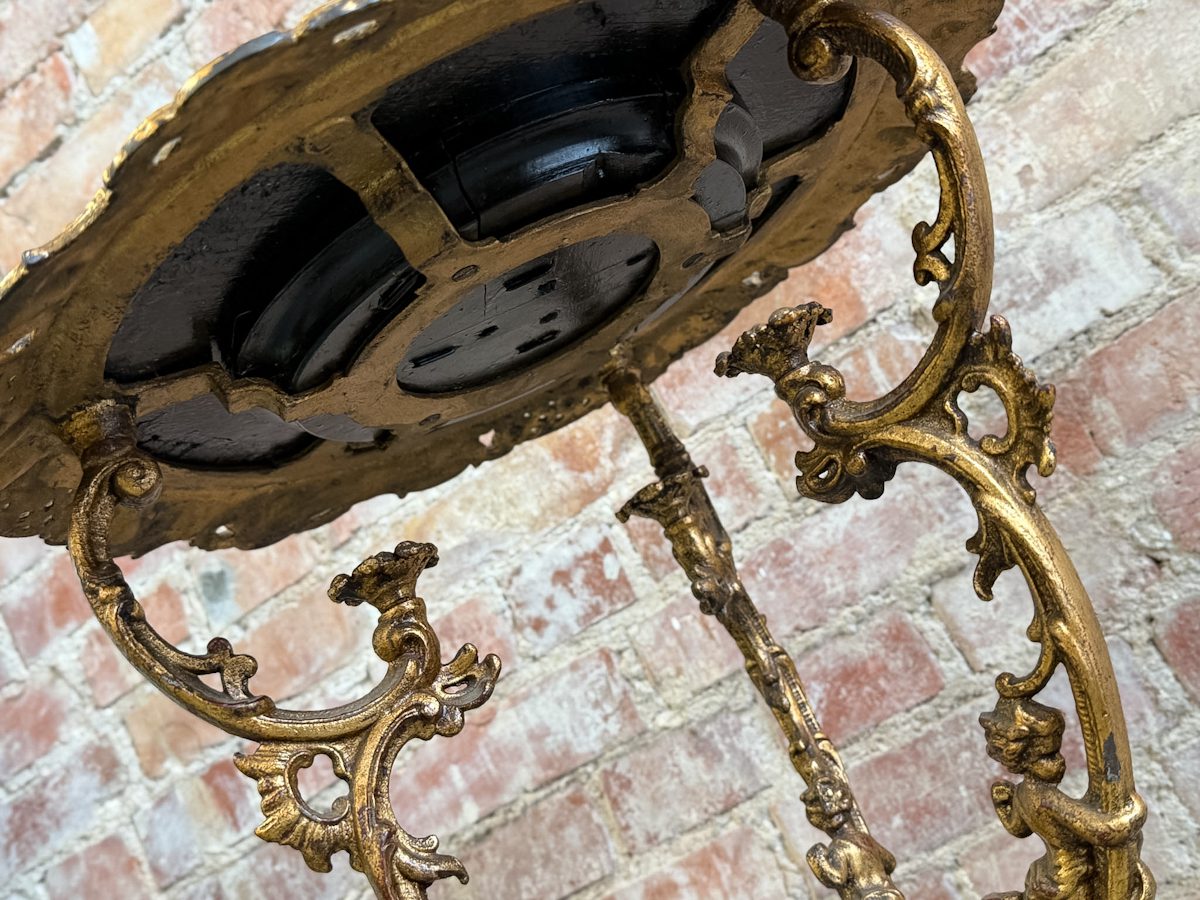
Korpuss — lieta bronzēta metāla (visticamāk čuguns ar bronzas pārklājumu vai spelter — cinka sakausējums, kas bija populārs 19. gs. dekoratīvajā ražošanā Francijā un Beļģijā). Trīs izliektās kājas saplūst centrālā baluster stieņā ar dekoratīvu mezglu — klasiska guéridon konstrukcija. Kāju virsējos lokos iestrādātas putti (keri) figūras — bērna ķermenī atveidoti spārnotie kuperīši, kas uzrāpušies uz volūtu zariņiem — tipisks Rokokō un Neorokoko motīvs, kas 19. gs. otrajā pusē piedzīvoja īpaši populāru atdzimšanu.
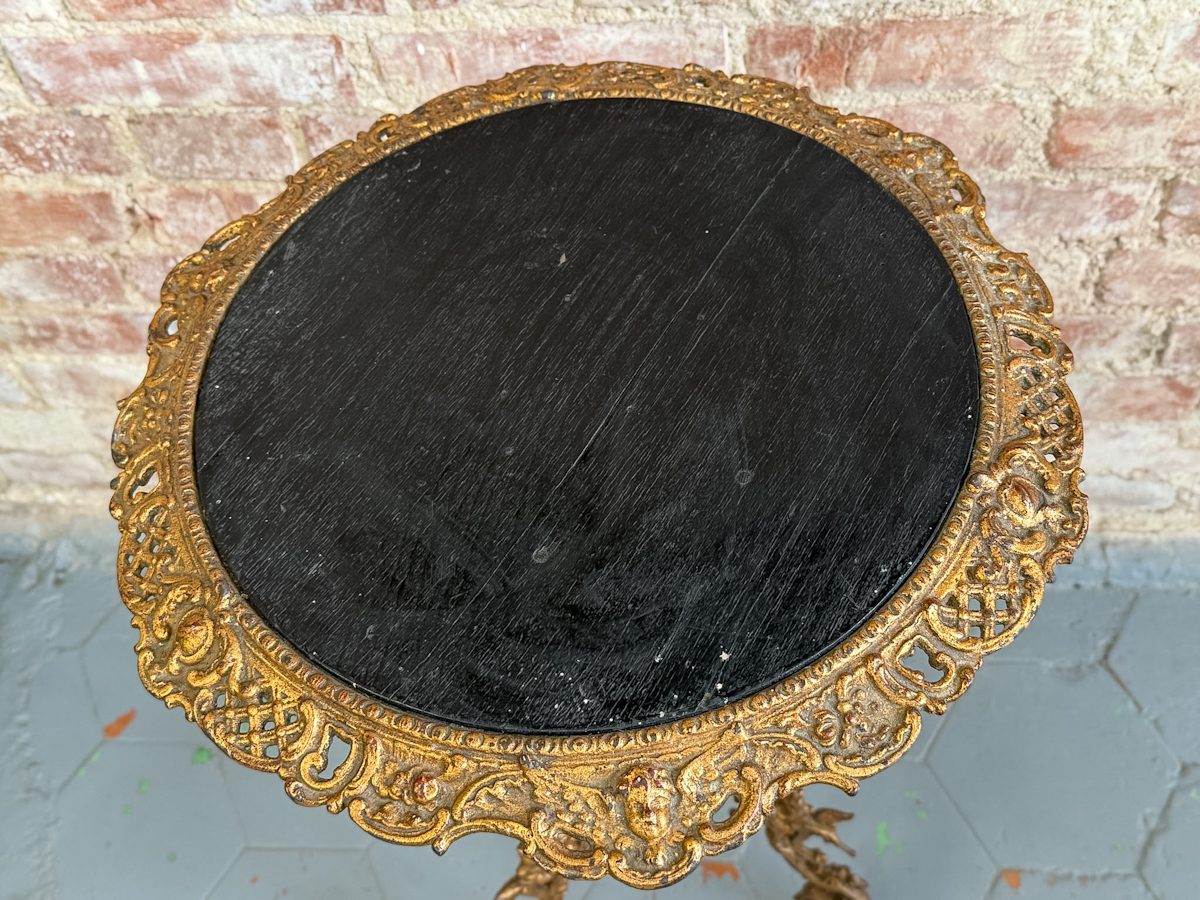
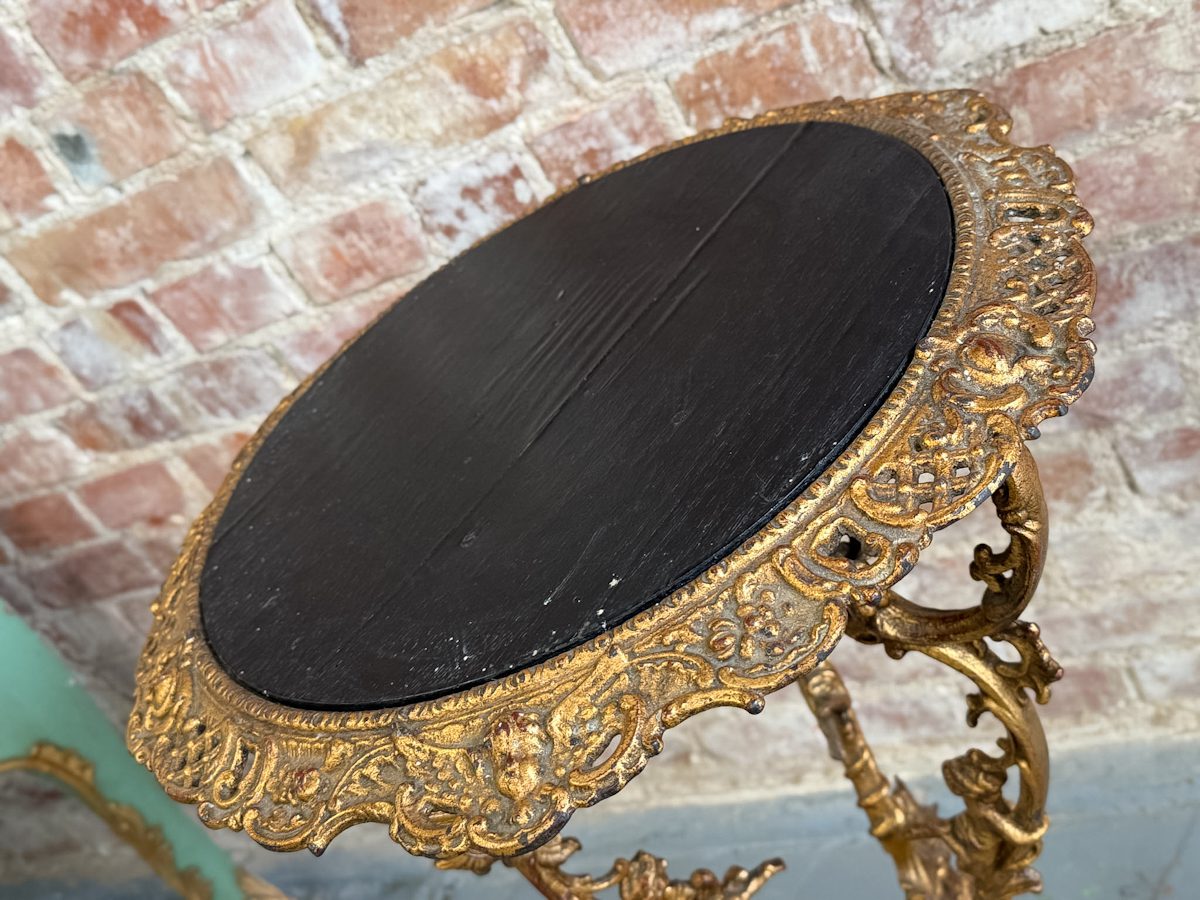
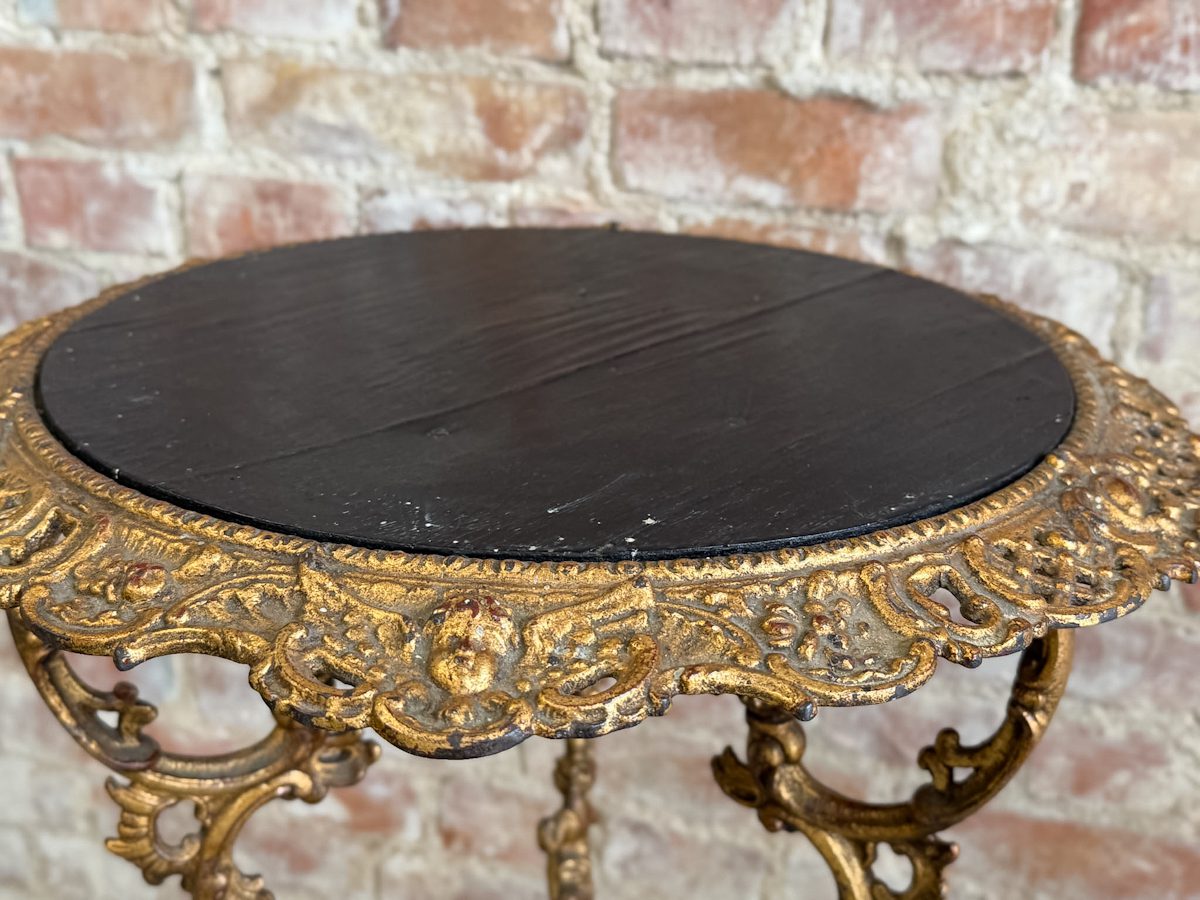
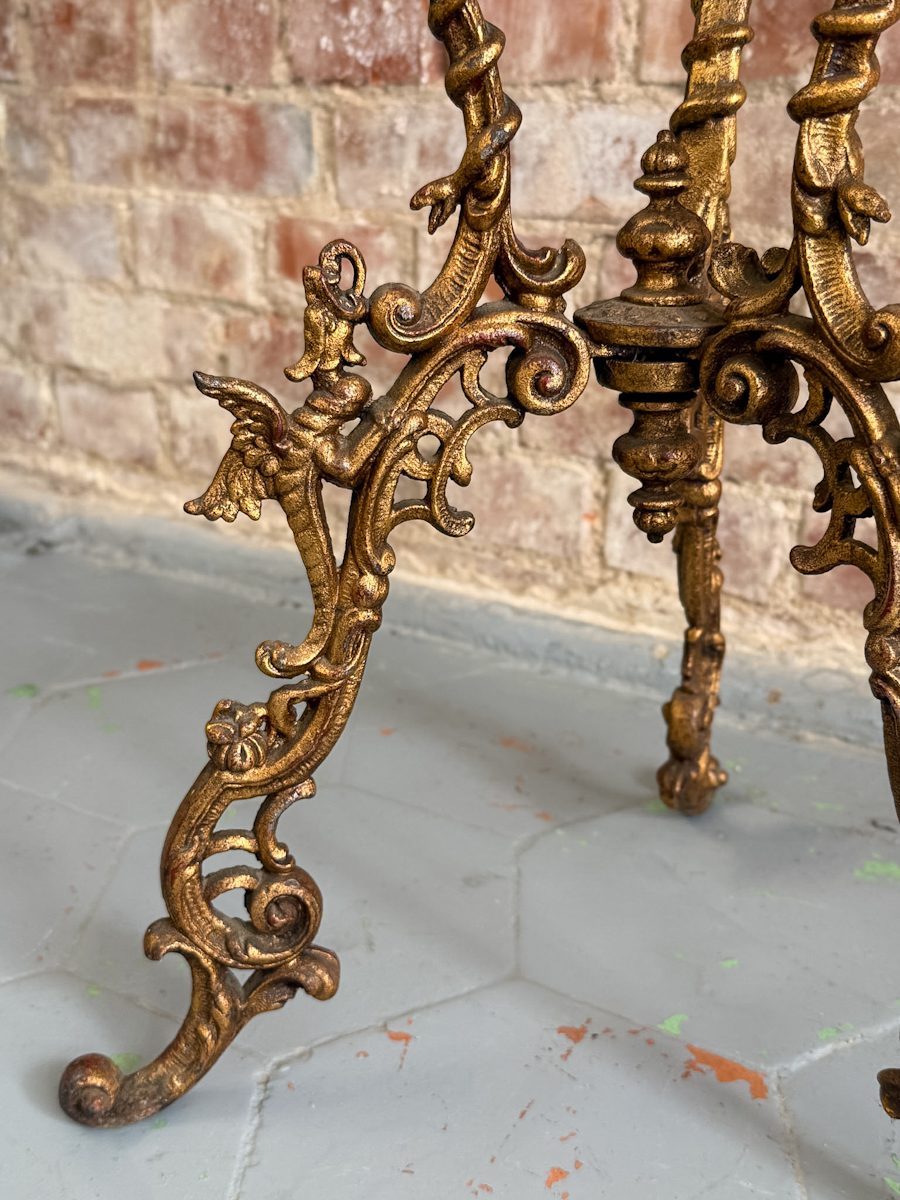
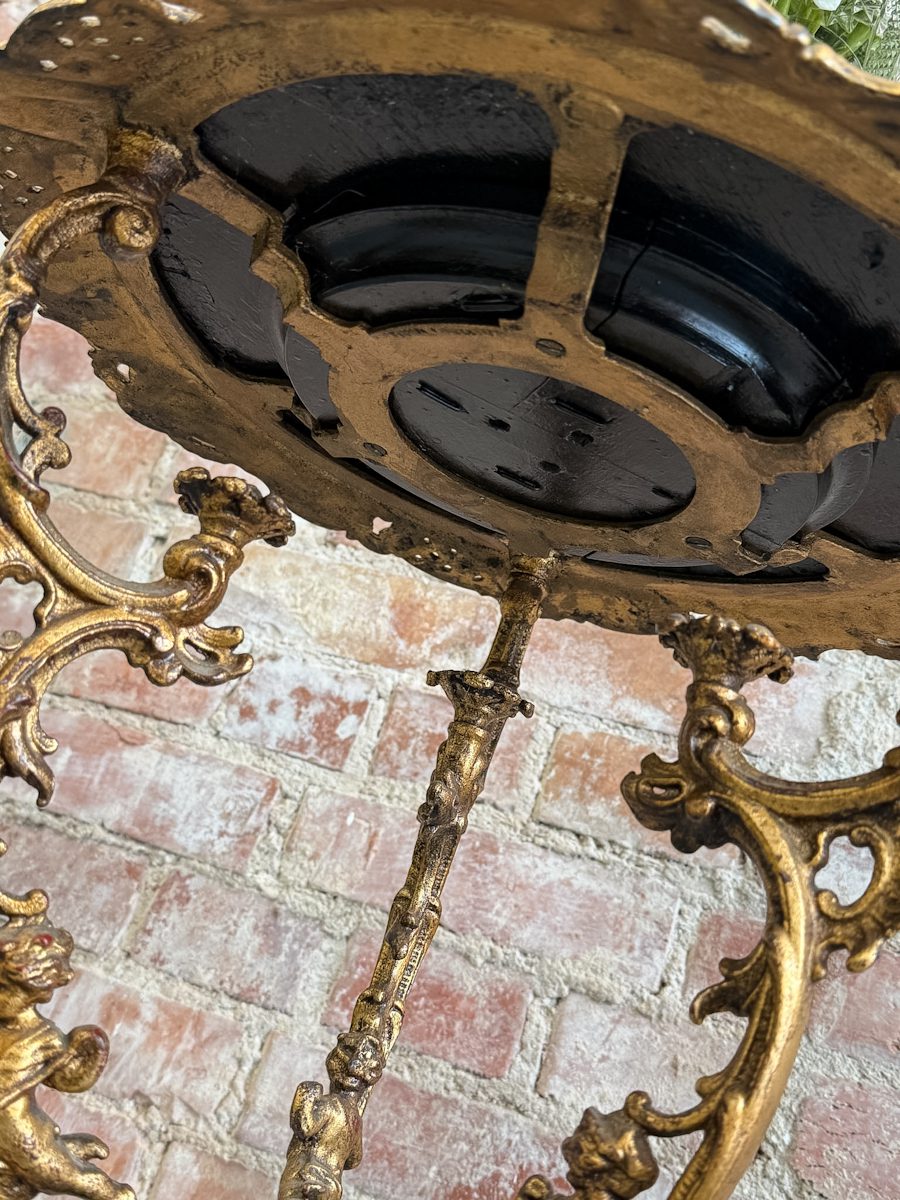
Galda apmalē — bagātīgs liets reljefs (repoussé stilā) ar akantus lapām, rocaille volutām un maskaronu sejas motīviem. Kājas rotā spārnotie pūķa tipa tēli (dragons ailés) — eksotisks Eklektikas elements. Centrālais stieņu mezgls veidots kā dekoratīva baluster urna. Galda virsma — melnots koks, iestiprinātа metāla rāmī no apakšas ar koka ķīļiem.
―――――――――――――――――――――
⚜️ RAŽOTĀJS UN MANUFAKTŪRAS ZĪMOGS
Ražotāja marķējuma nav redzams. Konstrukcija, spelter vai čuguna materiāls un figūru kvalitāte norāda uz Franciju vai Beļģiju — galvenajiem šāda tipa dekoratīvās metāla mēbeļu ražošanas centriem 19. gs. otrajā pusē. Parīzes un Briseles manufaktūras ražoja šāda tipa galdiņus lielos apjomos — gan eksportam, gan vietējiem tirgiem, gan universālveikaliem kā Au Bon Marché un Grands Magasins du Louvre, kas šādus priekšmetus piedāvāja savā katalogā.
Šāda tipa guéridon ar keriem un Neorokoko ornamentiku tika ražoti arī Vācijā (Berlīne, Drēzdene) un eksportēti visā Eiropā, tostarp Krievijas impērijas tirgū.
―――――――――――――――――――――
💎 RETUMS UN NOZĪME
Pilnīgi saglabāti guéridon tipa galdiņi ar figūrālu putti un dragon dekorāciju — pieprasīts antikvāru tirgū, jo bieži tiek atrasti ar bojātām kājām vai bez oriģinālās virsmas. Šis eksemplārs ir konstruktīvi vesels. Ker figūras un spārnotie tēli uz kājām piešķir šim galdiņam skulpturālu dimensiju, kas paceļ to virs parastā dekoratīvā priekšmeta statusa. Pieprasīts gan interjera dizaineru, gan kolekcionāru vidū Rietumeiropā un Ziemeļamerikā.
―――――――――――――――――――――
🕯️ PIELIETOJUMS INTERJERĀ, DIZAINĀ UN FOTOGRĀFIJĀ
Ideāls kā puķu galdiņš — tāda bijusi tā oriģinālā funkcija, un tas joprojām to pilda perfekti. Ar vāzi uz tā, kā redzams fotogrāfijās, tas kļūst par absolūtu interjera akcentu. Lieliski iekļaujas klasiskā, romantiskā vai eklektiskā interjerā, kā arī modernā telpā kā kontrasta elements. Interjera stilisti izmanto šāda tipa galdiņus kā focal point pie ieejas vai dzīvojamā istabā. Fotogrāfiem un scenogrāfiem — izcils rekvizīts ar bagātu skulpturālu faktūru.
―――――――――――――――――――――
🎁 DĀVANA UN PERSONALIZĀCIJA
Reprezentatīva un neviltota dāvana — gan privātpersonai ar izsmalcinātu gaumi, gan korporatīvā kontekstā. Keri (putti) kā bērnu figūras nes sevī mīlestības, laimes un aizsardzības simboliku — piemērots dāvinājums kāzām, jubilejai vai mājas iesvētībai. Pietiekami monumentāls, lai atstātu iespaidu, un pietiekami elegants, lai rotātu jebkuru izsmalcinātu telpu.
―――――――――――――――――――――
🔍 STĀVOKLIS
Galdiņš kopumā labā stāvoklī, ar vecuma patīnu un nolietojuma pēdām, kas atbilst tā vecumam. Bronzējums vietām nodilis, redzami metāla pamata toņi. Koka virsma ar skrāpējumiem un nelieliem nodiluma bojājumiem. Konstrukcija stabila. Lietas stāvoklis pilnībā atspoguļots fotogrāfijās.
―――――――――――――――――――――
🇬🇧 DESCRIPTION IN ENGLISH
―――――――――――――――――――――
📐 DIMENSIONS Height 78.5 cm × width 45.5 cm.
―――――――――――――――――――――
Gilded Cast Metal Flower Table with Black Wooden Top and Putti Figures — Neo-Rococo / Historicism, Western Europe, circa 1870–1900.
―――――――――――――――――――――
🏛️ PERIOD, ARTISTIC STYLE, ERA
This refined side table belongs to that fertile period when Historicism still held its monumental forms, while Neo-Rococo introduced a new lightness, caprice, and theatrical decorativeness — both aesthetics coexist here with rare harmony. It is a classic Second Empire or late Victorian guéridon — a small round occasional table (table à fleurs or jardinière stand) that once adorned the salon interiors of aristocratic and haute bourgeoisie households.
The frame is cast gilded metal — most likely cast iron with a bronze or spelter (zinc alloy) finish, widely used in 19th-century decorative production in France and Belgium. Three curved legs merge into a central baluster shaft with a decorative knop — the classic guéridon construction. Incorporated into the upper arches of the legs are putti figures — winged cherubs rendered in childlike form, perched upon volute branches — a quintessential Rococo and Neo-Rococo motif that enjoyed exceptional popularity during the second half of the 19th century.
The table apron bears a richly cast relief with acanthus leaves, rocaille scrolls, and mascaron face motifs. The legs are further animated by winged dragon-type figures (dragons ailés) — an exotic Eclectic accent. The central shaft junction is formed as a decorative baluster urn. The tabletop is ebonised wood, secured into the metal frame from below with wooden wedges.
―――――――――――――――――――――
⚜️ MAKER AND MANUFACTURER’S MARK
No maker’s mark is visible. The construction, metal composition, and quality of the figural casting point to France or Belgium — the primary centres for this type of decorative metal furniture in the second half of the 19th century. Parisian and Brussels manufacturers produced such tables in large quantities for export and for domestic markets, as well as for grand department stores such as Au Bon Marché and Grands Magasins du Louvre, which featured similar pieces in their catalogues. This type of guéridon with putti and Neo-Rococo ornament was also produced in Germany (Berlin, Dresden) and exported throughout Europe, including to the Russian Imperial market.
―――――――――――――――――――――
💎 RARITY AND SIGNIFICANCE
Fully intact guéridon tables with figural putti and dragon decoration are sought after on the antiques market, as they are frequently found with damaged legs or missing their original tops. This example is structurally complete. The putti figures and winged creatures on the legs give the table a sculptural dimension that elevates it well above the status of an ordinary decorative piece. In demand among interior designers and collectors across Western Europe and North America.
―――――――――――――――――――――
🕯️ USE IN INTERIORS, DESIGN AND PHOTOGRAPHY
An ideal flower table — as was its original purpose, and one it fulfils perfectly still. With a vase placed upon it, as seen in the photographs, it becomes an absolute focal point of any interior. It integrates beautifully into classical, romantic, or eclectic settings, and equally serves as a striking contrast element in a modern space. Interior designers use tables of this type as a focal point at an entrance or in a drawing room. For photographers and set designers — an outstanding prop with rich sculptural texture.
―――――――――――――――――――――
🎁 AS A GIFT
A representative and genuine gift — suitable for a private individual with refined taste, or in a corporate context. The putti figures carry symbolism of love, happiness, and protection — making this an appropriate gift for a wedding, anniversary, or housewarming. Sufficiently monumental to make an impression, and sufficiently elegant to grace any refined space.
―――――――――――――――――――――
🔍 CONDITION
The table is in overall good condition with age-appropriate patina and wear consistent with its period. The gilding is worn in places, revealing the base metal beneath. The wooden top shows scratches and minor surface wear. The structure is stable. The condition of the item is fully reflected in the photographs.
―――――――――――――――――――――